
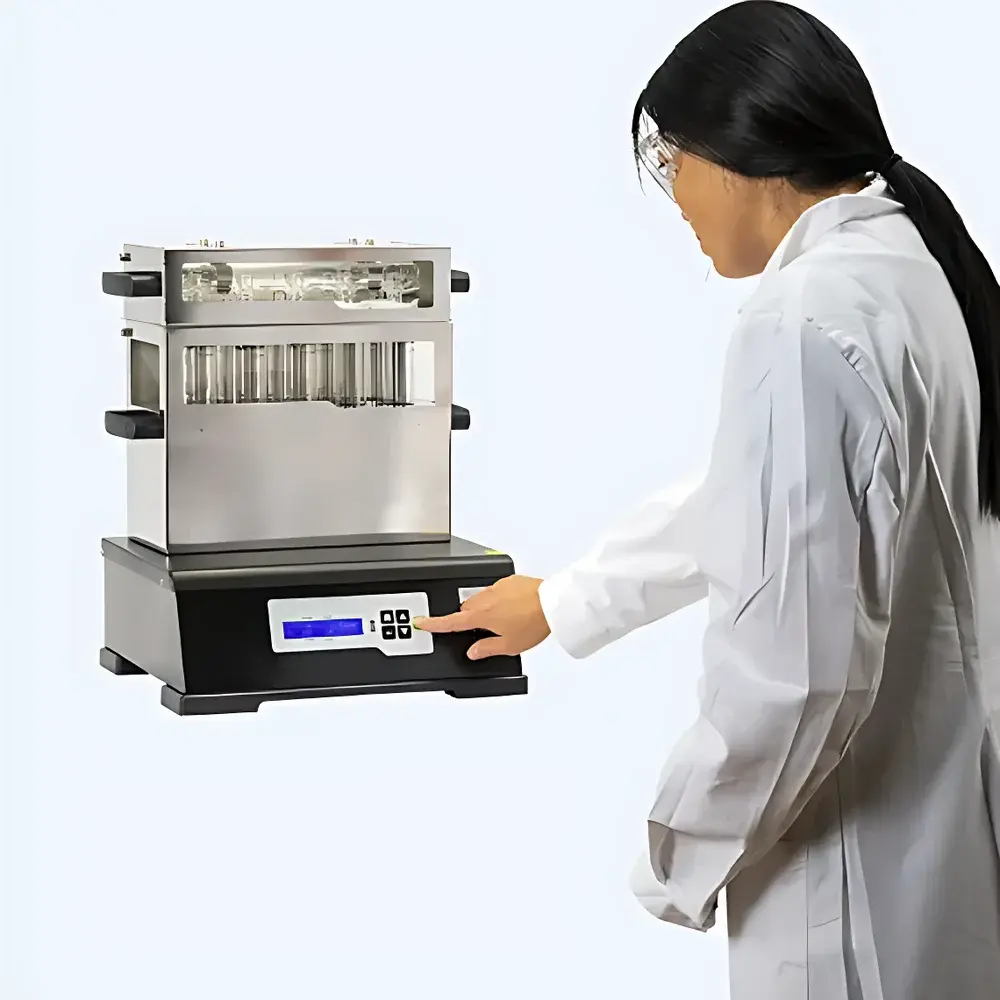
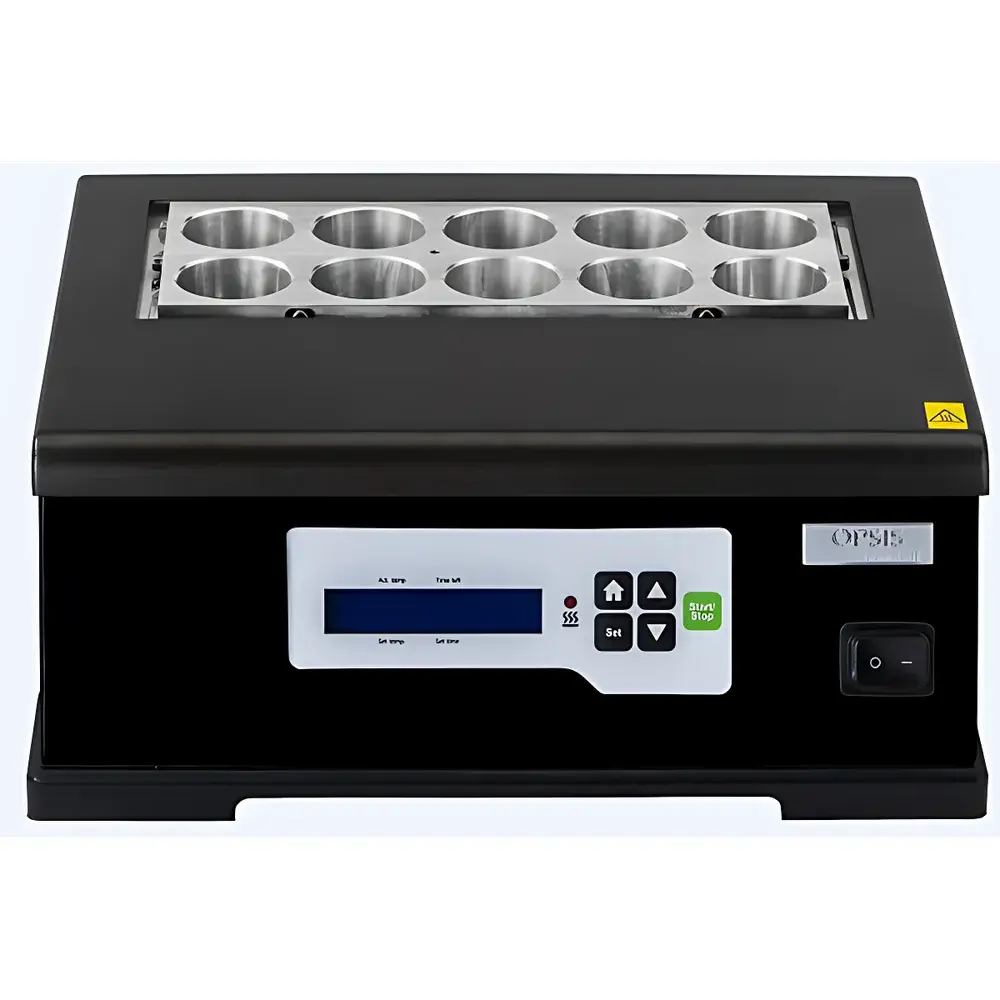
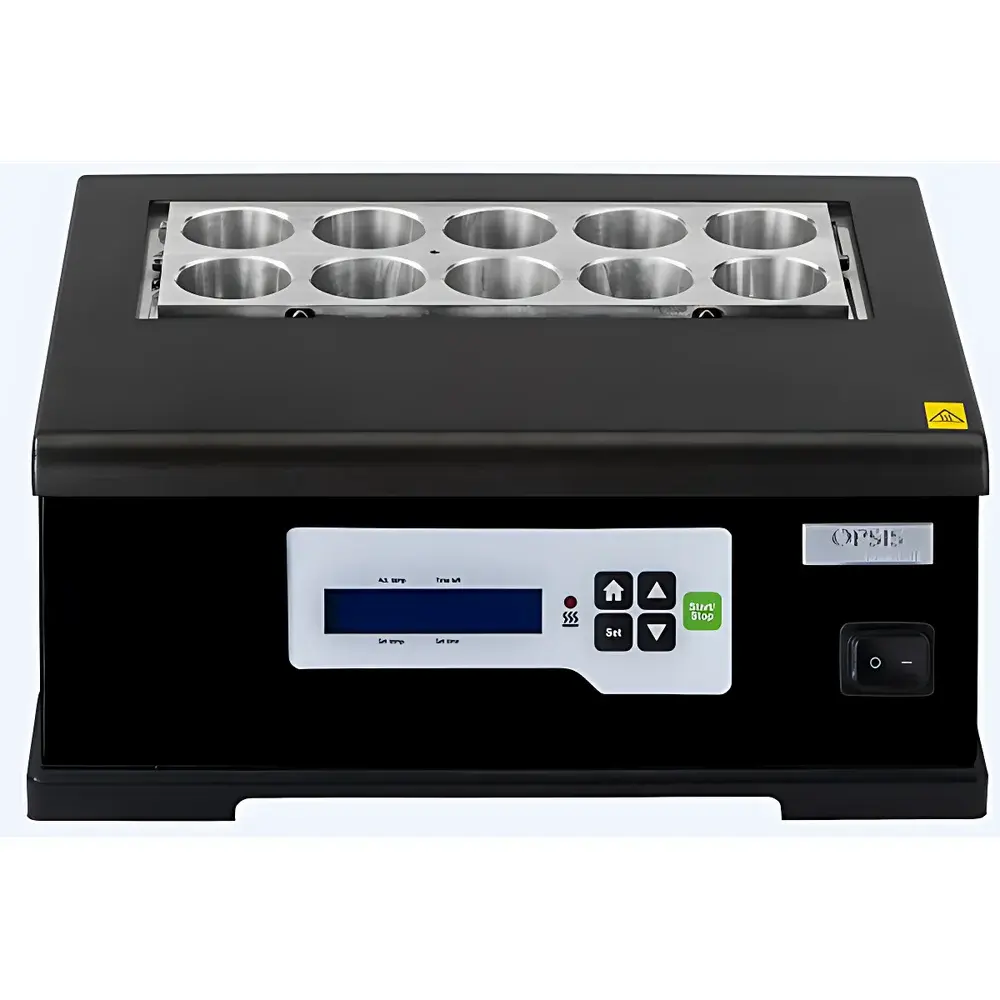
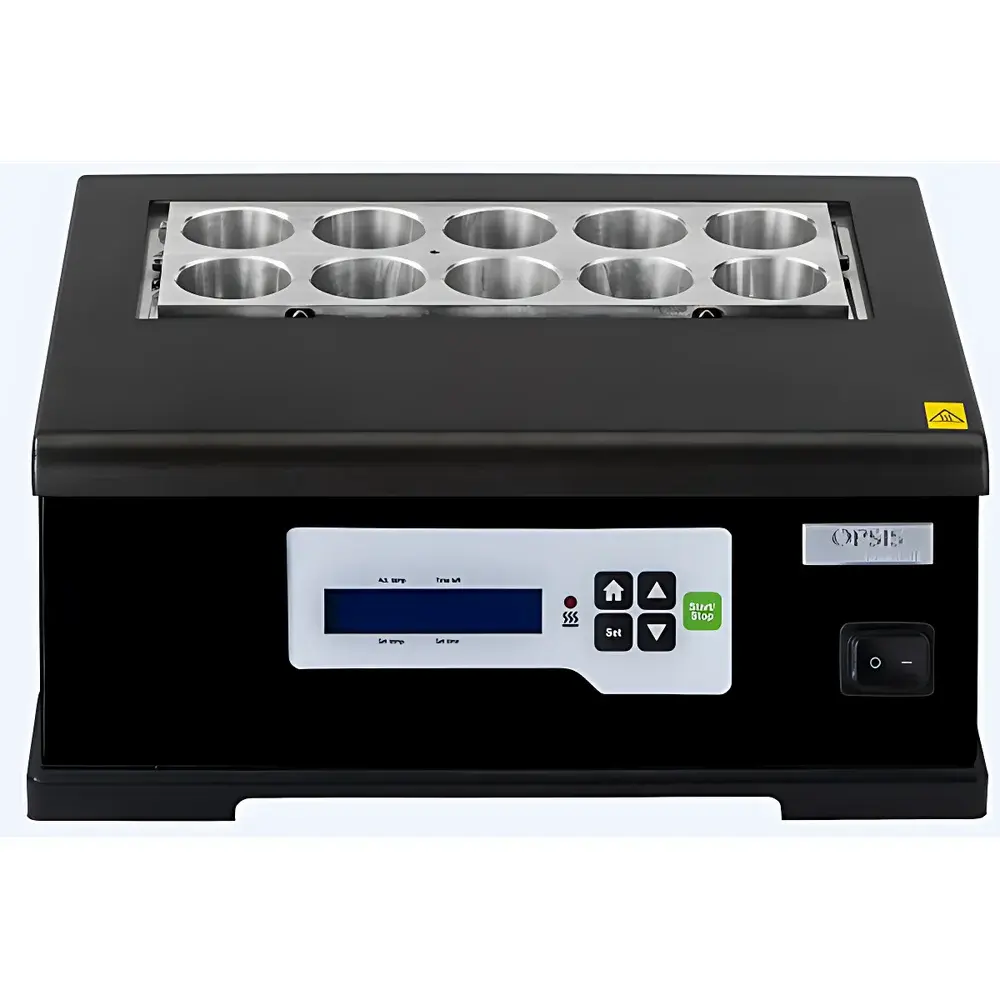
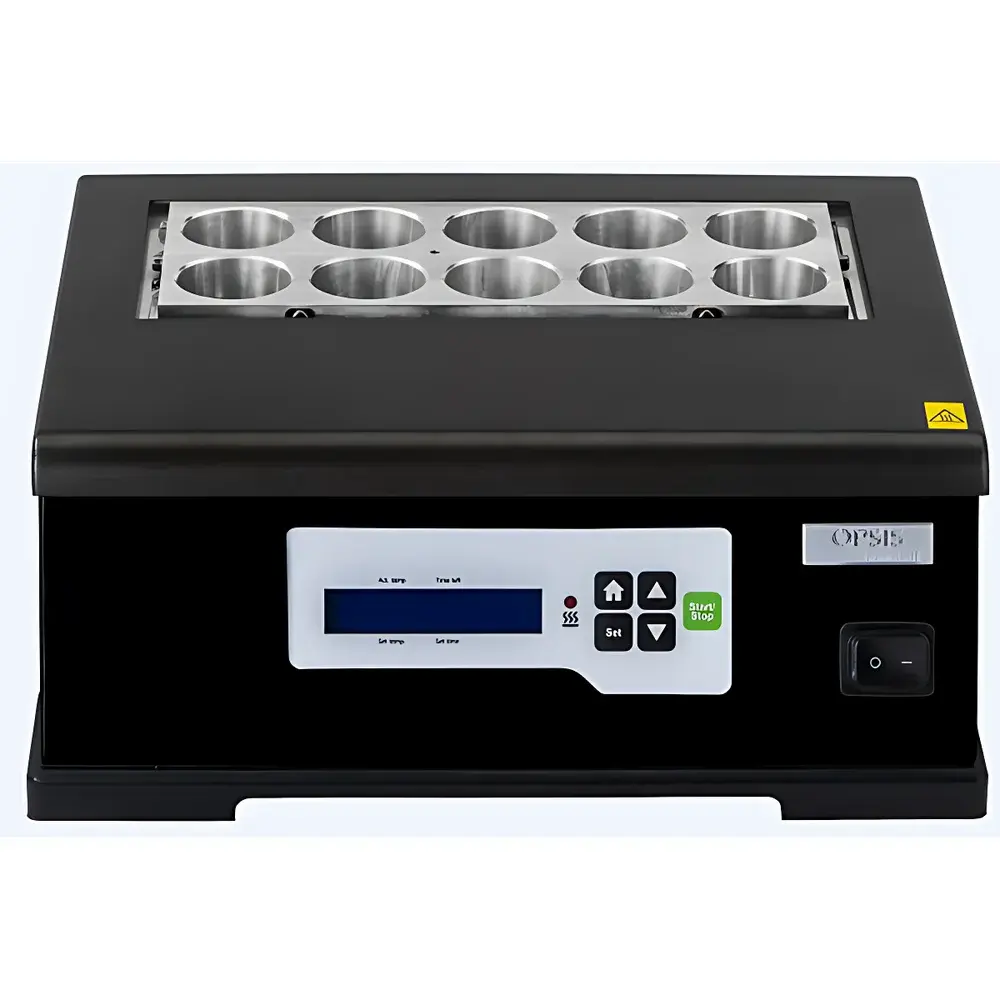
OPSIS DI-220 20-Position Automated Electric Digestion Block
| Brand | OPSEUS/OPSIS |
|---|---|
| Origin | Sweden |
| Manufacturer Type | Authorized Distributor |
| Origin Category | Imported |
| Model | DI-220 |
| Instrument Type | Electric Heating Digestion System |
| Automation Level | Fully Automatic |
| Digestion Positions | 20 |
| Max. Heating Temperature | 450 °C |
| Temperature Control Accuracy | ±0.5 °C |
| Heating Principle | Resistive Electric Heating |
| Reagent Channels | 20 |
Overview
The OPSEUS/OPSIS DI-220 is a fully automated, 20-position electric digestion block engineered for high-throughput, reproducible sample preparation in accordance with classical Kjeldahl digestion protocols. Designed and manufactured in Sweden, the system employs precise resistive heating elements integrated with PID-controlled thermal management to deliver uniform, gradient-programmable temperature profiles across all 20 digestion tubes. Unlike open-flame or oil-bath digesters, the DI-220 eliminates variability caused by ambient drafts, uneven heat transfer, or manual intervention—ensuring consistent decomposition of organic matrices (e.g., proteins, nucleic acids, complex polymers) into ammonium sulfate under concentrated sulfuric acid catalysis. Its architecture supports full compliance with ISO 8586, AOAC 984.27, and ASTM D1319–22 for nitrogen determination, and serves as the primary digestion module in integrated Kjeldahl systems—including distillation and titration units—for food, feed, environmental, pharmaceutical, and agrochemical laboratories operating under GLP or ISO/IEC 17025 frameworks.
Key Features
- Fully automated 20-position digestion platform with independent thermal control per zone, minimizing inter-sample thermal drift
- Programmable multi-step heating ramping (0–999 min per step), enabling optimized digestion kinetics for diverse sample types—from high-fat dairy products to refractory soil matrices
- Digital PID temperature regulation with ±0.5 °C accuracy over 0–450 °C range; auto-electronic sensor calibration at power-on eliminates field recalibration requirements
- Integrated safety architecture: dual-stage overtemperature cutoff, audible alarm, automatic cooldown sequence upon cycle completion, and physical isolation between electronics and heating modules
- RS232 and USB interfaces support direct connection to LIMS or laboratory PCs for method transfer, audit trail logging, and remote monitoring
- LCD display with multilingual UI (English, German, French, Spanish, Chinese) and real-time visualization of setpoint, actual temperature, elapsed time, and sample ID
- Robust ceramic-coated aluminum heating block ensures long-term thermal stability, corrosion resistance to H₂SO₄/H₂O₂ fumes, and uniform tube-to-tube temperature distribution (±1.2 °C max deviation)
- Optional exhaust manifold compatible with centralized acid gas scrubbing systems (e.g., NaOH or NaOCl traps), meeting OSHA PEL and EU Directive 2004/108/EC emission limits
Sample Compatibility & Compliance
The DI-220 accommodates standard Kjeldahl digestion tubes (15 mL liquid or 5 g solid maximum load) and is validated for use with AOAC-certified reference materials (e.g., NIST SRM 2384, BCR-690). It meets the thermal performance criteria specified in ISO 5983-1:2022 (Animal feeding stuffs — Determination of nitrogen content) and supports method validation per ICH Q2(R2) guidelines when deployed in pharmaceutical QC environments. All firmware and hardware revisions are traceable via embedded serial logging, satisfying FDA 21 CFR Part 11 requirements for electronic records and signatures when paired with compliant software.
Software & Data Management
The embedded microprocessor stores up to 99 user-defined digestion methods, each with up to 5 programmable temperature/time segments. Data export (CSV format) includes timestamped temperature logs, cycle start/stop events, operator ID, and error codes. Optional PC software enables batch method deployment, version-controlled protocol archiving, and integration with ELN platforms via REST API. Audit trails record all parameter modifications with user authentication, supporting GMP-compliant change control procedures.
Applications
- Protein quantification in cereals, meat, dairy, and plant-based foods per AOAC 981.10 and ISO 8968-1
- Non-protein nitrogen (NPN) and volatile basic nitrogen (VBN) analysis in seafood and fermented products
- Total Kjeldahl nitrogen (TKN) determination in wastewater, sludge, and agricultural soils (EPA Method 351.2, ISO 11261)
- Formaldehyde, ammonia, and cyanide liberation prior to colorimetric or ion chromatographic detection
- Pre-digestion conditioning for ICP-MS and AAS analysis of trace metals in biological tissues
FAQ
What sample throughput can be achieved with the DI-220?
Up to 20 samples per run, with typical digestion cycles completed in ≤60 minutes for homogeneous food matrices.
Is the DI-220 compatible with third-party Kjeldahl distillation units?
Yes—standardized tube geometry and thermal output ensure seamless integration with OPSEUS/OPSIS distillers (e.g., DK-220) and other CE-marked Kjeldahl systems.
Does the system support GLP-compliant data integrity?
Yes—when used with validated software, it provides full audit trail, electronic signature capability, and secure method storage per 21 CFR Part 11 Annex 11 requirements.
Can digestion programs be edited remotely?
Via optional Ethernet/Wi-Fi module (not included), users may upload, modify, and verify methods using web-based interface or SCADA-compatible OPC UA drivers.
What maintenance is required for long-term reliability?
Annual verification of temperature uniformity and sensor linearity; no routine calibration needed due to self-calibrating platinum RTD sensors and sealed heating element design.



