
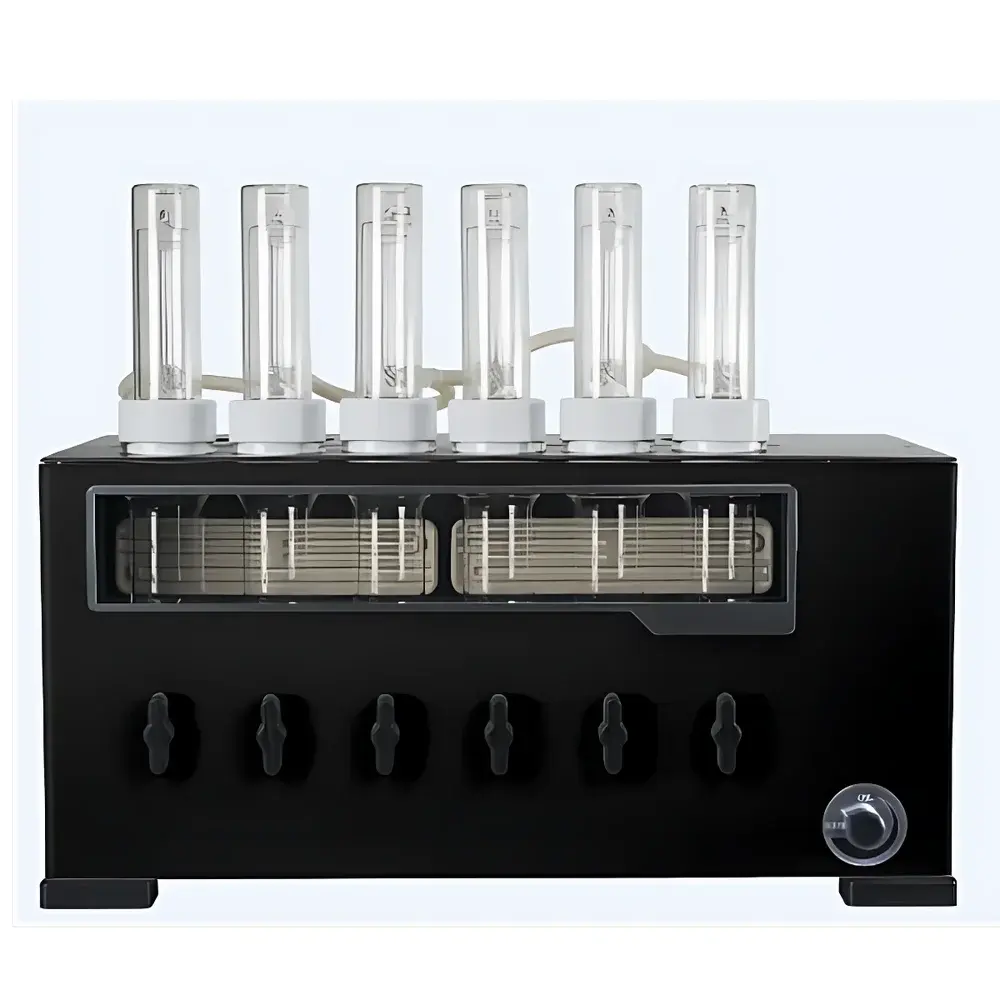
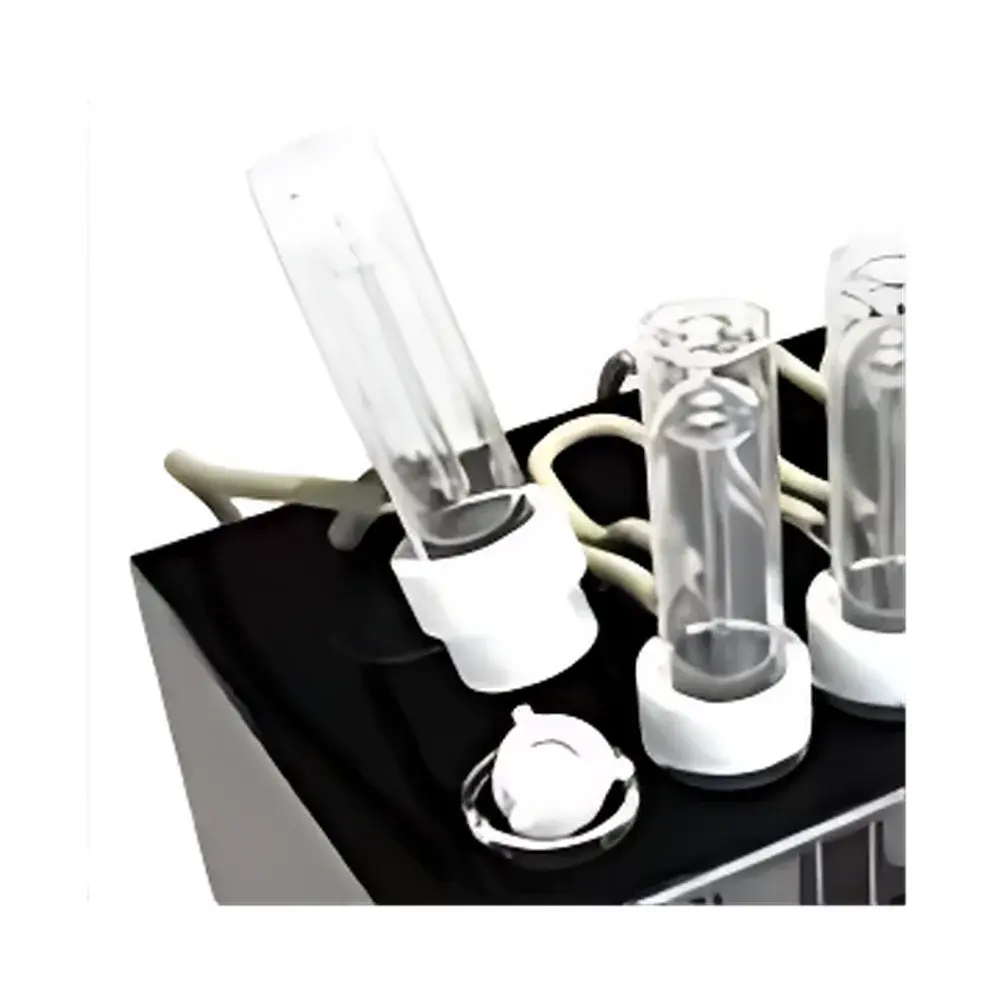
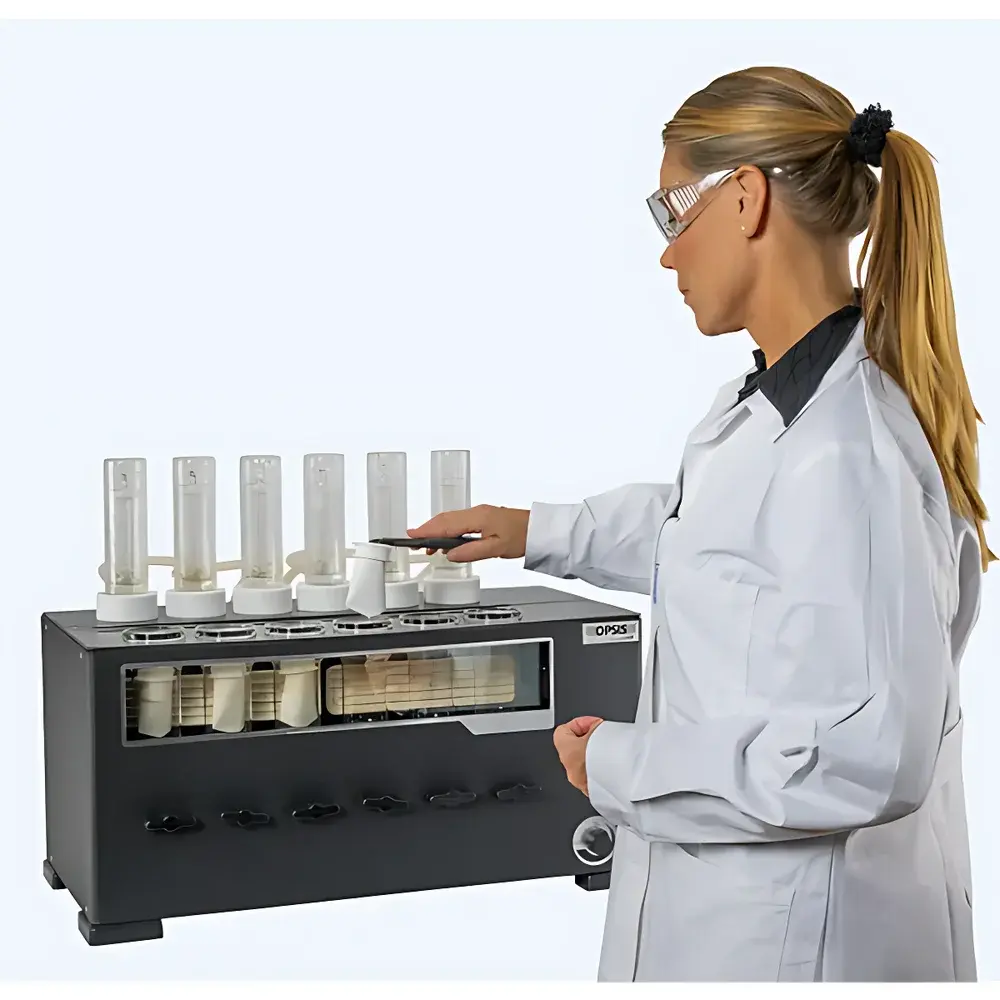
OPSIS SX-110 Acid Hydrolysis System
| Brand | OPISIS |
|---|---|
| Country of Origin | Sweden |
| Manufacturer Type | Authorized Distributor |
| Origin Category | Imported |
| Model | SX-110 |
| Quotation | Upon Request |
| Extraction Chamber Volume | 300 mL |
| Receiving Flask Volume | 230 mL |
| Temperature Range | 30–300 °C |
| Temperature Control Accuracy | ±1 °C |
| Number of Channels | 6 |
Overview
The OPISIS SX-110 Acid Hydrolysis System is a fully enclosed, programmable laboratory instrument engineered for precise and reproducible acid hydrolysis of food and feed samples prior to fat extraction. Designed in accordance with AOAC Official Method 991.36 and ISO 1444–1, the system enables complete liberation of bound lipids—particularly triglycerides encapsulated within protein matrices or fibrous structures—through controlled mineral acid (typically HCl) digestion under elevated temperature and pressure conditions. Unlike open-beaker hydrolysis, the SX-110 operates as a sealed, six-position parallel processing unit, minimizing operator exposure to corrosive reagents while ensuring uniform thermal distribution across all channels. Its integrated filtration architecture allows direct transfer of hydrolyzed residues from the hydrolysis chamber to fat analyzers (e.g., Soxhlet or automated fat extractors), eliminating intermediate handling steps that introduce mass loss, cross-contamination, or analytical bias.
Key Features
- Six-channel parallel processing capacity for high-throughput sample preparation—enabling simultaneous hydrolysis of up to six 300 mL samples.
- Programmable temperature control (30–300 °C) with ±1 °C stability, validated across full operational range using calibrated PT100 sensors.
- Sealed hydrolysis chamber design compliant with IEC 61010-1 safety standards, preventing acid vapor release during digestion and cooling phases.
- Reusable, chemically resistant filtration units compatible with concentrated HCl at 100–120 °C; each filter supports ≥50 consecutive hydrolysis cycles without performance degradation.
- Integrated drain-and-rinse sequence: automated acid discharge via solenoid valve followed by deionized water flush—performed without manual contact with acidic effluent.
- Modular compatibility with major fat extraction platforms (including Gerhardt, Buchi, and C. Gerhardt fat analyzers), accepting standard 230 mL receiving flasks and solvent cup adapters.
Sample Compatibility & Compliance
The SX-110 accommodates heterogeneous solid and semi-solid matrices including meat products, dairy derivatives (cheese, yogurt), seafood, cereal grains, oilseeds (sunflower, peanut, walnut), chocolate, and animal feed formulations. All operational protocols align with AOAC 991.36 (Total Fat in Foods), ISO 1444–1 (Animal Feeding Stuffs), and USP residual solvent guidance where applicable. The system’s closed-loop architecture meets GLP requirements for traceability, and its temperature logging function supports 21 CFR Part 11-compliant electronic records when paired with validated LIMS integration. Filter reuse documentation and calibration logs are retained per ISO/IEC 17025 internal audit requirements.
Software & Data Management
The SX-110 operates via an embedded microcontroller with front-panel membrane keypad and LCD display. While it does not include proprietary PC software, all temperature setpoints, dwell times, and cycle counts are stored in non-volatile memory with timestamped event logging (start/end time, max temperature reached, error codes). Optional RS-232 or USB-to-serial interface enables connection to laboratory information management systems (LIMS) for automated data export. Audit trails comply with FDA 21 CFR Part 11 when used with validated third-party data acquisition software supporting electronic signatures and user access controls.
Applications
- Determination of total fat content in AOAC-mandated food surveillance programs.
- Preparatory hydrolysis for gravimetric or solvent-based fat quantification in regulatory compliance testing (EU Regulation No 1169/2011, USDA FSIS directives).
- Method validation studies requiring inter-laboratory reproducibility of bound lipid recovery.
- Quality control workflows in dairy processing plants and pet food manufacturing facilities.
- Research applications investigating lipid-protein interactions in novel plant-based meat analogs.
FAQ
What standards does the SX-110 support for acid hydrolysis?
AOAC Official Method 991.36, ISO 1444–1, and ASTM D7213 for total fat determination in complex matrices.
Can the same filter be used for both hydrolysis and subsequent fat extraction?
Yes—the reusable sintered glass or PTFE-coated metal filters are designed for dual-phase use: first as hydrolysis substrates, then directly mounted into solvent extraction cups without transfer.
Is the SX-110 compatible with automated fat analyzers other than OPISIS models?
Yes—it accepts standard 230 mL round-bottom receiving flasks and interfaces mechanically with Gerhardt Soxtherm, Buchi E-816, and C. Gerhardt Soxtec systems via universal solvent cup brackets.
How is operator safety ensured during acid handling?
All hydrolysis occurs in sealed chambers; acid addition, heating, cooling, and drainage are fully automated. Manual intervention is limited to loading/unloading filters and flasks—no direct contact with hot HCl solutions.
What maintenance is required for long-term filter performance?
Filters require periodic cleaning in 10% NaOH at 80 °C for 30 minutes, followed by thorough rinsing with deionized water and drying at 105 °C—no replacement needed under normal usage per ISO 17025 documented procedures.



