
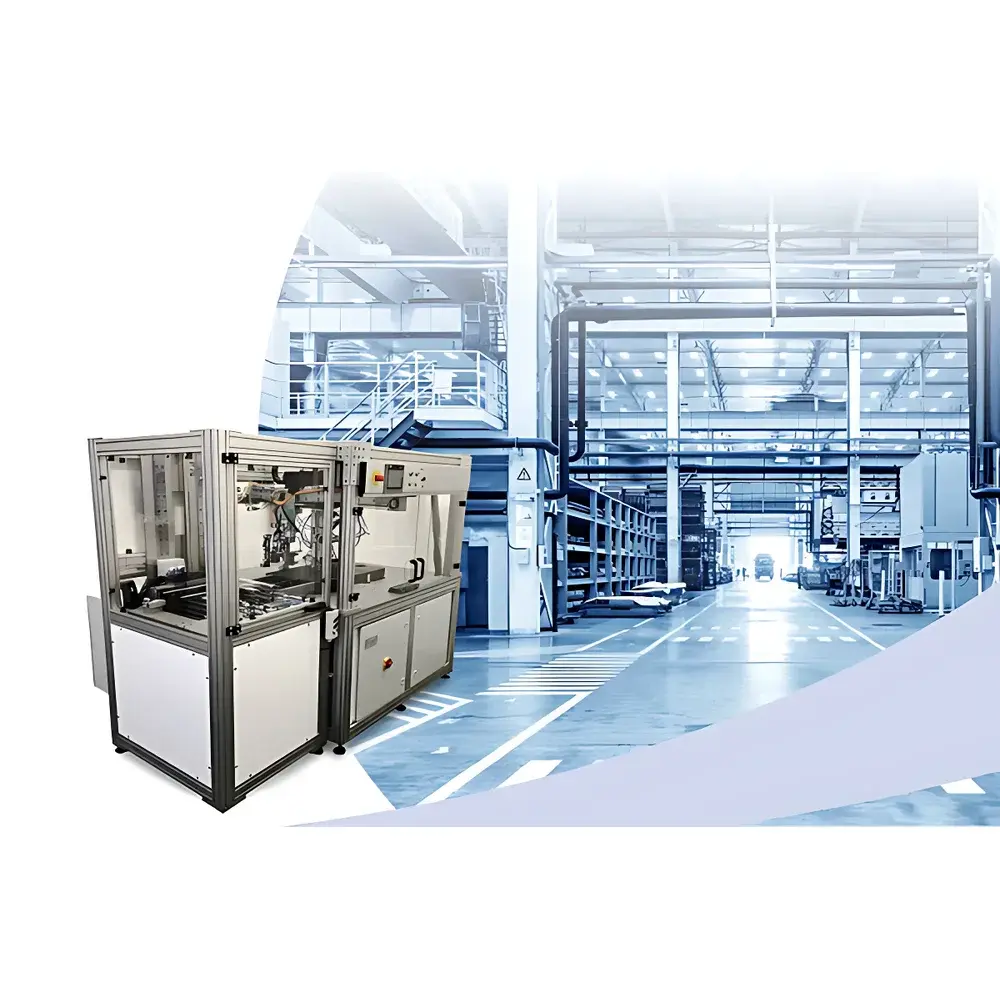
ORONTEC Surface Scanner Automatic Coating Inspection Workstation
| Brand | ORONTEC |
|---|---|
| Origin | Germany |
| Model | Surface Scanner Automatic |
| Type | Modular Automated Coating Characterization System |
| Compliance | ISO 28199 Parts 1–3 |
| Max. Sample Size (Basic) | 600 × 300 mm |
| Max. Integrated Instruments | 4 |
| Power Supply | 230 VAC (Basic), 400 VAC (Large/Flexi) |
| Air Supply | 6 bar, oil-free and filtered |
| Weight | 400–700 kg |
| Software | PLC-controlled measurement orchestration with Excel-based reporting |
| Data Architecture | Local or intranet-deployable database |
Overview
The ORONTEC Surface Scanner Automatic Coating Inspection Workstation is an industrial-grade, modular automation platform engineered for high-reproducibility surface characterization of painted and coated test panels. Unlike conventional manual inspection workflows—prone to operator variability and throughput bottlenecks—this system implements a programmable X/Y motion stage coupled with a precision-positioned handheld sensor array to execute standardized, repeatable measurements across defined grid points or linear profiles. Its core operational principle integrates coordinated motion control, barcode/QR-code panel identification, and synchronized multi-instrument data acquisition—all governed by a deterministic PLC architecture and validated against the metrological framework of ISO 28199 Parts 1–3, which defines methodology for assessing process stability in new coating systems. Designed specifically for R&D laboratories and production QA environments, the workstation bridges the gap between discrete handheld instrumentation and fully integrated inline metrology—enabling traceable, audit-ready surface analysis without requiring line redesign or custom integration engineering.
Key Features
- Modular hardware architecture supporting up to four concurrently operated, vendor-agnostic surface measurement instruments—including spectrophotometers (e.g., BYK-mac), gloss meters, magnetic induction thickness gauges, and surface topography scanners.
- Automated panel handling via input magazine, robotic transport to measurement station, optical ID recognition (barcode/QR), and output magazine staging—eliminating manual positioning errors and enabling unattended batch processing.
- Three configurable system variants: Basic (600 × 300 mm max panel size), Large (extended Z-axis clearance and larger footprint), and Flexi (90° rotational capability, integrated I/O in compact 2560 mm length).
- PLC-driven real-time motion synchronization ensures sub-millimeter positional repeatability; all movement parameters (speed, acceleration, dwell time) are programmable per measurement task.
- No hardware modification required for third-party instruments—plug-and-play integration via standardized digital I/O and RS-232/USB communication protocols.
- Comprehensive environmental control compatibility: optional integration with light chambers (D65, CIE illuminants) and regulated compressed air supply (6 bar, oil-free, filtered) for consistent sensor performance.
Sample Compatibility & Compliance
The Surface Scanner Automatic accommodates rigid flat panels used in automotive OEM, architectural coatings, and industrial finishing applications—including standard ISO 28199 reference boards, production control panels, and development color chips. It supports measurement of critical quality attributes: film thickness (µm), color coordinates (CIELAB ΔE00), specular gloss (GU at 20°/60°/85°), surface texture (Ra, Rz), and haze/micro-roughness. All measurement sequences adhere to ISO 28199 Parts 1–3 requirements for statistical sampling density, spatial coverage, and inter-instrument correlation validation. The system’s data acquisition and reporting infrastructure is structured to support GLP-compliant documentation practices, including electronic audit trails, user access controls, and versioned measurement templates—facilitating alignment with FDA 21 CFR Part 11 readiness when deployed on intranet-hosted databases.
Software & Data Management
The proprietary ORONTEC Control Suite provides a role-based interface for defining measurement tasks, assigning instrument configurations, and scheduling panel batches. Each panel is uniquely identified via printed barcode or QR code affixed to its reverse side; scanning triggers automatic loading of associated calibration files, measurement protocols, and pass/fail criteria. Raw sensor data is timestamped, georeferenced (X/Y coordinate embedded), and stored in a relational database schema optimized for cross-parameter correlation analysis—for example, linking localized gloss drop-off to underlying film thickness variation or color shift. Reports export natively to Microsoft Excel (.xlsx) with embedded metadata, statistical summaries (mean, SD, CPK), and customizable visualization layers (heatmaps, profile plots, scatter matrices). Database deployment options include standalone Windows workstations or centralized intranet servers—ensuring scalability from single-lab use to enterprise-wide deployment.
Applications
- Coating formulation development: Quantifying interdependencies among pigment dispersion, binder rheology, and final surface appearance under controlled illumination.
- Process window definition: Mapping film thickness uniformity vs. spray gun parameters (pressure, distance, traverse speed) to establish robust operating ranges.
- Batch release testing: Automated verification of color match (ΔE00 < 0.5), gloss consistency (±0.3 GU), and thickness compliance (±2 µm) per ASTM D7642 and ISO 2808.
- Digital twin calibration: Generating high-fidelity reference datasets for machine learning models predicting coating performance from spectral + topographic signatures.
- Supplier qualification: Standardized assessment of incoming coated substrates against master reference panels using identical measurement geometry and instrument settings.
FAQ
Does the Surface Scanner Automatic require dedicated IT infrastructure?
No—it operates as a standalone system with local database storage; however, intranet deployment is supported for centralized data governance and multi-user access.
Can existing handheld instruments be retrofitted into the system?
Yes—provided they offer digital output (RS-232, USB-HID, or Modbus RTU) and stable mechanical mounting interfaces, no firmware or hardware modification is needed.
Is the software compliant with 21 CFR Part 11 for regulated industries?
The software architecture supports electronic signatures, audit trail logging, and role-based permissions—enabling Part 11 compliance when configured on validated network servers with appropriate SOPs.
What maintenance intervals are recommended for the motion system?
Linear guides and stepper motor drivers are rated for >10,000 hours of operation; preventive maintenance includes quarterly lubrication of X/Y rails and annual calibration verification using NIST-traceable reference panels.
How does the system handle non-flat or curved substrates?
The current configuration is optimized for rigid planar panels; optional height-sensing probes and adaptive Z-axis compensation modules are available under engineering consultation for low-curvature geometries (R > 500 mm).



