Panlab Self-Administration Box for Drug Addiction Research (Harvard Apparatus LE1002 / LE1005)
| Brand | Harvard Apparatus |
|---|---|
| Origin | USA |
| Model | LE1002 / LE1005 |
| Chamber Base Dimensions | 400 × 360 × 35 mm |
| Mouse Operant Chamber | 200 × 200 × 250 mm |
| Rat Operant Chamber | 250 × 250 × 250 mm |
| Construction Materials | Stainless Steel, Aluminum Alloy, Acrylic (Methyl Methacrylate) |
| Scalability | 1–8 chambers standard |
| Control Interface | USB-connected PC software |
| Modular Configurability | Interchangeable rat/mouse hardware kits via tool-free component removal |
| Integrated Components | Programmable syringe pump interface, lever actuator, photobeam sensors, LED/auditory stimulus outputs, TTL-compatible I/O ports |
Overview
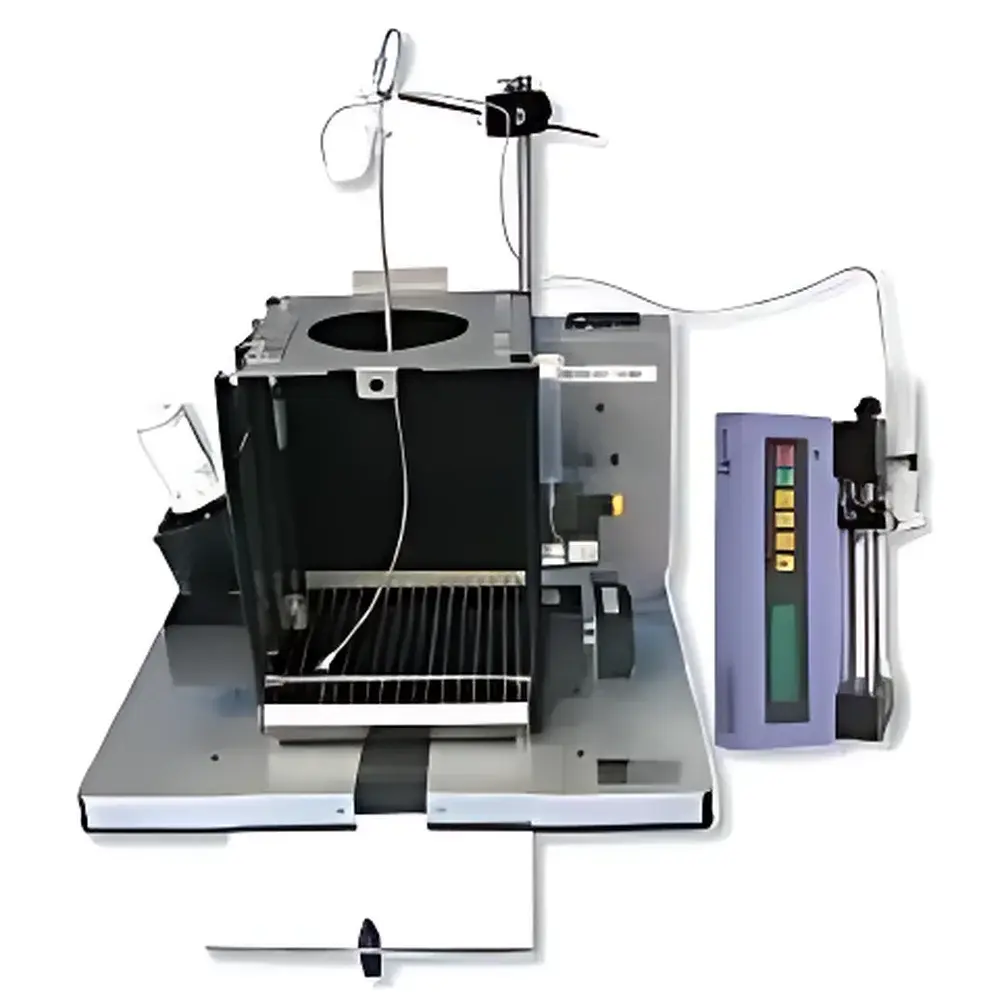
The Panlab Self-Administration Box (LE1002/LE1005), distributed by Harvard Apparatus, is a rigorously engineered operant conditioning platform designed for preclinical investigation of intravenous drug self-administration (IVSA), reinforcement learning, and addiction-related behavioral phenotypes in rodents. Built upon the foundational architecture of the Skinner box, this system extends classical operant paradigms with integrated pharmacological delivery infrastructure—enabling precise temporal coupling between discrete behavioral responses (e.g., lever press or nose-poke) and contingent intravenous infusion of psychoactive compounds. The system operates under closed-loop control logic: each validated operant response triggers a programmable bolus dose via an externally synchronized syringe pump, while concurrent sensory feedback (light cue, tone, or white noise) reinforces stimulus–response associations. This architecture supports acquisition, maintenance, extinction, reinstatement, and progressive-ratio protocols aligned with NIH-defined behavioral neuroscience standards for substance use disorder modeling.
Key Features
- Modular chamber design with rapid reconfiguration between mouse and rat configurations using standardized, tool-free hardware kits—eliminating cross-species contamination risk and reducing setup time between cohorts.
- Robust mechanical construction: 316 stainless steel floor grid, anodized aluminum sidewalls, and optically transparent acrylic (methyl methacrylate) front/rear panels ensure durability, chemical resistance, and unobstructed video tracking compatibility.
- Dual-channel TTL I/O interface supporting synchronization with external equipment including electrophysiology rigs, fMRI-compatible stimulus generators, and high-speed behavioral cameras (e.g., DeepLabCut or EthoVision XT integration).
- Embedded real-time event logging at 1-ms resolution: all lever presses, photobeam breaks, pump triggers, and stimulus onsets are timestamped and stored locally prior to USB transfer, ensuring data integrity during network latency or host PC interruptions.
- Scalable multi-chamber operation: up to 16 independently programmable units controlled from a single Windows-based workstation using Panlab’s proprietary SMART v3.x software suite—validated for GLP-compliant longitudinal studies.
Sample Compatibility & Compliance
The LE1002/LE1005 accommodates C57BL/6, Sprague-Dawley, Long-Evans, and Wistar rats (200–500 g) and BALB/c, CD-1, or DBA/2 mice (18–35 g) without modification to core firmware. All chamber surfaces comply with ISO 10993-5 cytotoxicity requirements for chronic implantation-grade materials. System validation documentation includes IQ/OQ protocols aligned with FDA 21 CFR Part 11 Annex 11 expectations for audit-trail generation, electronic signature enforcement, and data immutability. Behavioral paradigms implemented on this platform meet criteria specified in NIDA’s Preclinical Guidelines for Substance Use Disorders and are referenced in peer-reviewed methodology sections of journals including Neuropsychopharmacology, Psychopharmacology, and Addiction Biology.
Software & Data Management
SMART v3.5 software provides graphical protocol builder, real-time session monitoring, and hierarchical data export (CSV, HDF5, MATLAB .mat). Each chamber generates structured JSON metadata files containing subject ID, session start/end timestamps, dose history, response latency distributions, and inter-response time (IRT) histograms. Audit trails record user login/logout events, parameter edits, and data export actions with SHA-256 hashing. Exported datasets conform to BIDS-Animal extension specifications for reproducible computational neuroscience workflows. Software licensing supports concurrent multi-user access with role-based permissions (admin, technician, analyst) compliant with institutional IT security policies.
Applications
- Quantification of reinforcing efficacy using fixed-ratio (FR1–FR10) and progressive-ratio (PR) breakpoint analysis for opioids, psychostimulants, cannabinoids, and novel therapeutics.
- Relapse modeling through cue-induced, drug-primed, or stress-induced reinstatement protocols following extinction training.
- Pharmacological interrogation of neural circuitry via combined IVSA and optogenetic/chemogenetic manipulation (lever-press-triggered light delivery or DREADD activation).
- Developmental neurobehavioral studies assessing adolescent vs. adult vulnerability to nicotine or ethanol self-administration.
- Translational biomarker discovery integrating operant behavior with simultaneous microdialysis sampling or wireless EEG telemetry.
FAQ
What regulatory standards does the LE1002/LE1005 support for GLP-compliant studies?
The system meets FDA 21 CFR Part 11 requirements for electronic records and signatures, including full audit trail logging, user authentication, and data immutability controls. IQ/OQ documentation packages are available upon request.
Can the system interface with third-party pumps not supplied by Harvard Apparatus?
Yes—via TTL trigger output and RS-232/USB-serial emulation mode, provided the external pump accepts 5 V logic-level start/stop commands and reports infusion completion status.
Is video tracking integration supported out-of-the-box?
SMART v3.5 exports synchronized behavioral event timestamps compatible with EthoVision XT 15+, ANY-maze 7+, and custom Python-based pose estimation pipelines using OpenCV or DeepLabCut.
What is the maximum cable length between chamber and host PC?
Standard USB 2.0 cables support up to 5 m; active USB extenders (up to 25 m) maintain full timing fidelity and are validated for multi-chamber deployments.
How is chamber cleaning and disinfection performed between subjects?
All non-electronic components withstand 70% ethanol, 2% Virkon S, or hydrogen peroxide vapor sterilization; stainless steel grids are autoclavable at 121°C for 20 min.