
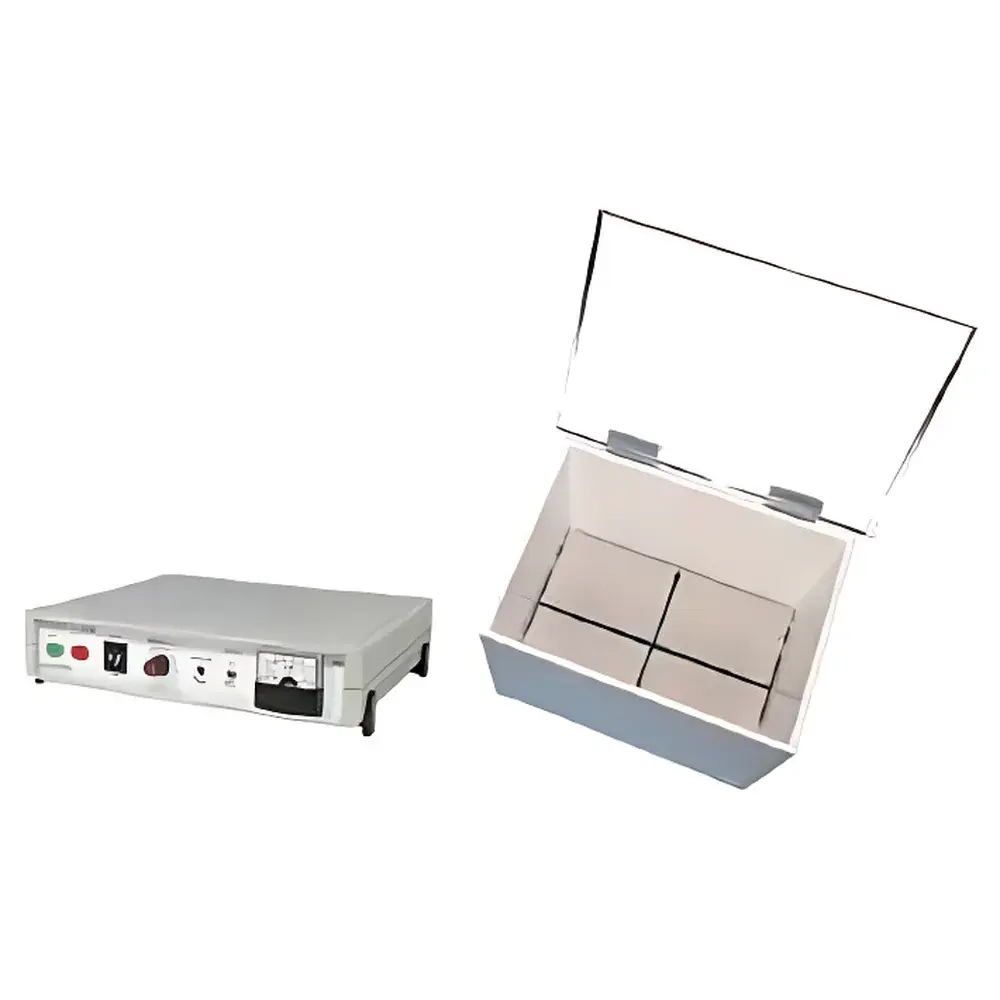
Panlab LE830 Four-Plate Aversive Stimulus Chamber
| Brand | Harvard Apparatus |
|---|---|
| Origin | USA |
| Model | LE830 |
| Chamber Dimensions | 16 × 25 × 450 px (W × D × H) |
| Floor Configuration | Four identical stainless steel plates (8 × 275 px each), 4 mm inter-plate gap |
| Stimulus Type | Square-wave current |
| Current Range | 0–3 mA |
| Pulse Duration | 1–10 s |
| Stimulus Trigger | Footswitch-activated |
| Output Metric | Number of plate crossings (i.e., shocks delivered per 60 s) |
| Construction | White opaque plastic walls, transparent acrylic lid, stainless steel floor plates |
| Intended Species | Mus musculus (adult mice) |
| Application Domain | Preclinical anxiety phenotyping and anxiolytic drug screening |
Overview
The Panlab LE830 Four-Plate Aversive Stimulus Chamber is a standardized, stimulus-controlled behavioral apparatus engineered for the quantitative assessment of anxiety-related behavior in laboratory mice. It operates on the principle of conflict-based aversion: animals are intrinsically motivated to explore novel environments (approach drive), yet deterred by the predictable, mild electric shock delivered upon crossing between conductive floor plates. This creates a measurable behavioral conflict—spontaneous locomotor exploration versus avoidance of noxious stimulation—making it a validated paradigm for evaluating state anxiety and pharmacological modulation thereof. Unlike open-field or elevated plus maze tests, the LE830 chamber eliminates confounding variables such as visual height cues, thigmotaxis bias, or uncontrolled ambient light gradients. Its design conforms to established ethological principles in rodent behavioral neuroscience and supports reproducible, high-throughput screening under controlled environmental conditions.
Key Features
- Four-plate stainless steel floor configuration with precise 4 mm inter-plate spacing—ensures consistent foot contact area and uniform current path across subjects.
- Adjustable square-wave current output (0–3 mA, 1–10 s duration) enables titration of stimulus intensity to match strain-specific sensitivity and experimental protocol requirements.
- Footswitch-activated stimulus delivery provides experimenter-controlled timing and eliminates automated latency artifacts, supporting manual behavioral scoring integration.
- Modular construction with white opaque sidewalls and a transparent acrylic lid facilitates simultaneous video tracking and direct observation while minimizing external visual distraction.
- Compact footprint (16 × 25 × 450 px) optimizes bench space utilization in core facilities and multi-rig behavioral suites without compromising ergonomic access.
- Non-corrosive, autoclavable floor plates and chemical-resistant housing support rigorous sanitation protocols required under GLP-compliant preclinical studies.
Sample Compatibility & Compliance
The LE830 chamber is validated exclusively for adult Mus musculus (C57BL/6, BALB/c, CD-1, and other common inbred/outbred strains). Weight range: 18–30 g. It is not suitable for rats, gerbils, or juvenile mice due to scale-dependent locomotor patterns and foot-span mismatch with plate geometry. The system complies with NIH Guide for the Care and Use of Laboratory Animals standards for aversive stimulus application. Electrical safety adheres to IEC 61000-4-5 (surge immunity) and UL 61010-1 (laboratory equipment safety). All stimulus parameters fall within the recommended limits defined in OECD Test Guideline 425 (Acute Oral Toxicity) Annex 3 and USP Analytical Instrument Qualification for behavioral endpoints.
Software & Data Management
The LE830 operates as a hardware-integrated stimulus controller; data acquisition is performed externally via synchronized video tracking systems (e.g., EthoVision XT, Noldus; ANY-maze, Stoelting) or manual stopwatch/tally logging. No proprietary software is bundled. However, raw shock-event timestamps (via TTL pulse output) can be imported into LabChart (ADInstruments), Spike2 (CED), or Python-based analysis pipelines (e.g., using PyBehavior or Bonsai) for temporal alignment with motion metrics. Audit trails, user authentication, and electronic signature functionality must be implemented at the host acquisition platform level to satisfy FDA 21 CFR Part 11 requirements for regulated neuropharmacology studies.
Applications
- Primary screening of novel anxiolytic compounds in dose–response paradigms.
- Validation of genetically modified mouse lines exhibiting altered anxiety-like phenotypes (e.g., CRF receptor knockouts, GABAA subunit mutants).
- Assessment of chronic stress models (e.g., chronic mild stress, social defeat) on baseline avoidance thresholds.
- Pharmacokinetic–pharmacodynamic correlation studies where plasma drug concentration is paired with real-time behavioral suppression indices.
- Method validation for ISO/IEC 17025-accredited contract research organizations conducting regulatory submission–ready behavioral toxicology packages.
FAQ
Is the LE830 compatible with automated video tracking systems?
Yes—TTL output synchronization allows frame-accurate alignment of shock events with XY coordinate trajectories generated by third-party tracking software.
Can stimulus parameters be programmed in advance?
No—the LE830 requires manual footswitch activation; this preserves experimental control over timing and avoids unintended shocks during habituation or repositioning.
What maintenance is required for long-term reliability?
Monthly inspection of plate surface integrity, cleaning with 70% ethanol (avoiding abrasive agents), and verification of ground continuity using a multimeter are recommended.
Does the system meet GLP audit requirements?
The hardware itself is GLP-ready when operated within a documented SOP framework; full compliance depends on institutional QA documentation, calibration records, and traceable operator training logs.
Is there a version available for rats?
No—Panlab does not manufacture a rat-scale variant of the four-plate chamber; alternative paradigms (e.g., Vogel conflict test or conditioned suppression) are recommended for larger rodents.




