
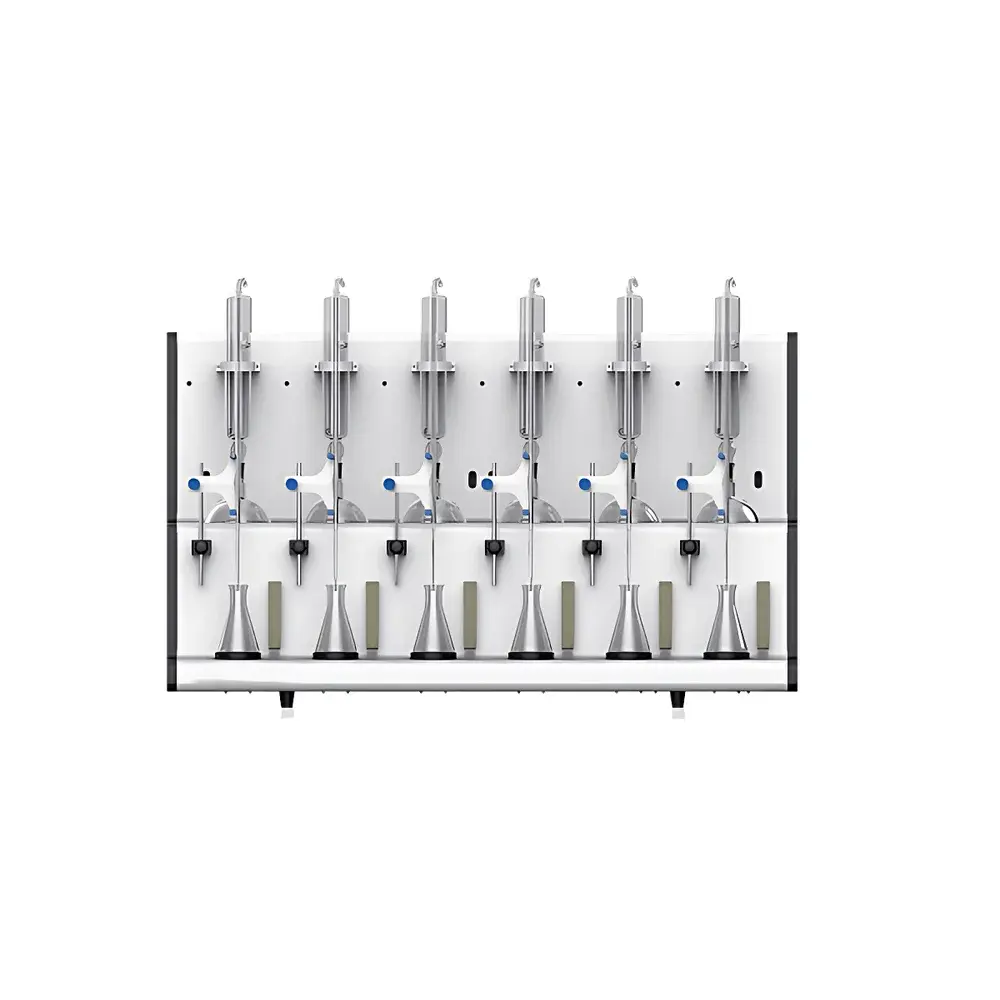
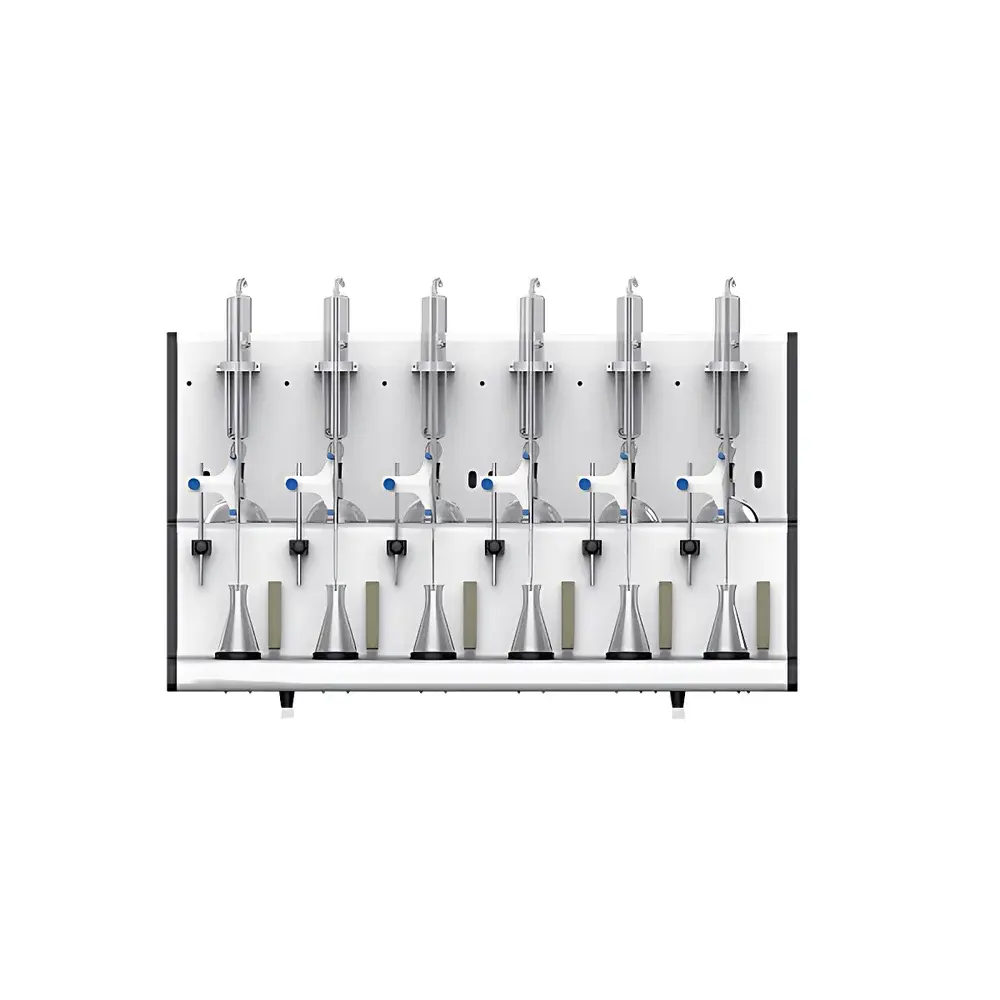
Peiou SKD-3106 Automated Sulfur Dioxide Distillation System for Pharmaceutical and Food Compliance Testing
| Brand | Peiou |
|---|---|
| Origin | Shanghai, China |
| Model | SKD-3106 |
| Type | Intelligent Automated Distillation System |
| Heating Method | Far-infrared Ceramic Radiant Heating |
| Temperature Range | Ambient to 450 °C |
| Time Control | 1–600 min |
| Distillation Channels | 4 or 6 independent channels |
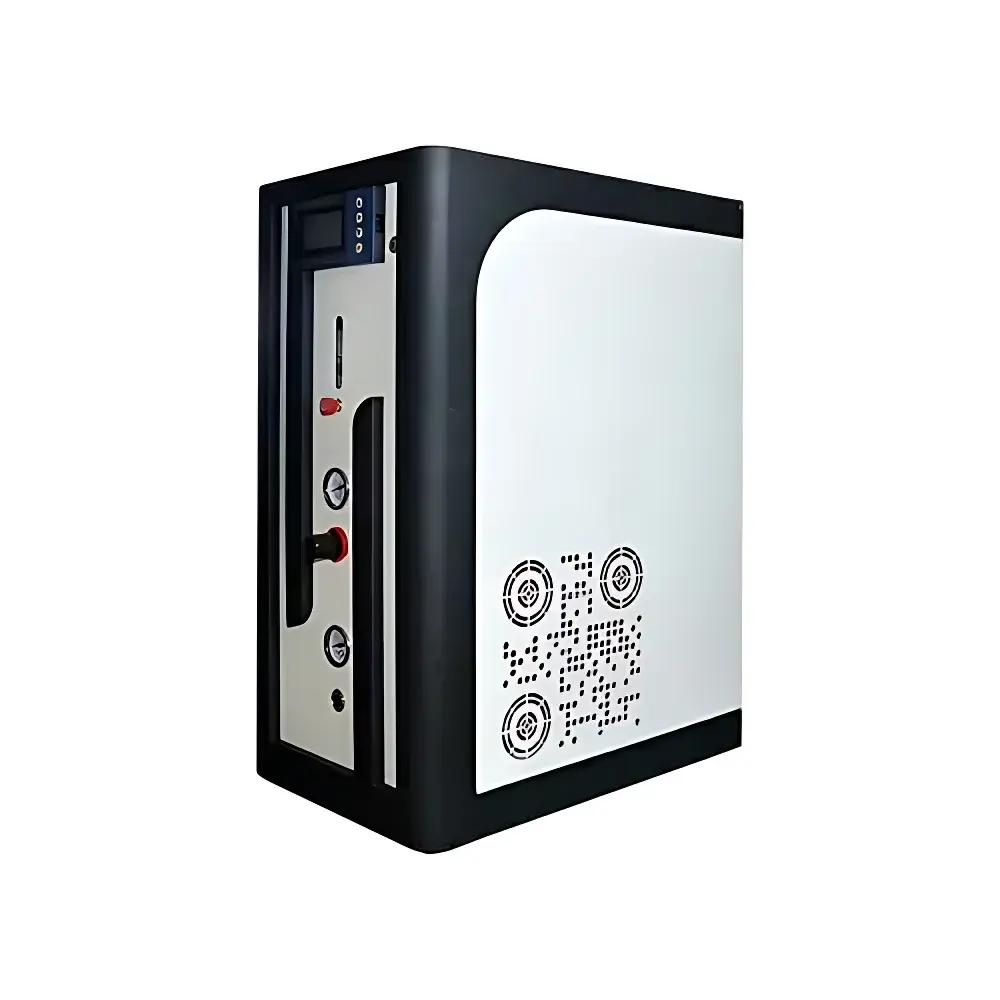
| Cooling System | External Compact Compressor-based Closed-loop Chiller |
| Display | 7-inch HD Touchscreen LCD |
| Control Core | Microcontroller-based Embedded System |
| Anti-siphon Protection | Integrated One-way Flow Valve |
| Nitrogen Flow Control | Built-in Regulated Pneumatic Module |
| Method Storage | Preloaded & User-Editable SOPs |
| Automation Level | Fully Unattended Operation (Heating, Cooling, Stirring, Distillation, N₂ Triggering, Endpoint Termination) |
Overview
The Peiou SKD-3106 is an intelligent, fully automated sulfur dioxide (SO₂) distillation system engineered for regulatory-compliant analysis in pharmaceutical quality control laboratories and food safety testing facilities. It implements the principle of acid distillation under controlled nitrogen purge—per ASTM D5504 and aligned with the core methodology specified in both GB 5009.34–2022 (National Food Safety Standard for Determination of Sulfur Dioxide in Foods) and Chinese Pharmacopoeia (ChP) Volume IV General Chapter 2331 (Determination of Residual Sulfur Dioxide). The instrument delivers precise, reproducible SO₂ liberation from complex matrices—including herbal powders, dried fruits, wine additives, injectable excipients, and traditional Chinese medicine decoctions—via programmable thermal decomposition in acidic medium, followed by selective trapping and subsequent titrimetric or spectrophotometric quantification. Its architecture integrates thermally stable far-infrared ceramic heating elements, closed-loop refrigerated condensation, and pneumatically regulated inert gas delivery to ensure stoichiometric recovery and minimize analyte loss or oxidation.
Key Features
- Fully unattended operation: Integrated sequence control manages heating ramp, temperature hold, nitrogen purging, condensate circulation, magnetic stirring, and endpoint termination without manual intervention.
- Far-infrared ceramic heating modules: Flameless, corrosion-resistant, uniform thermal distribution across all channels; individual channel power and temperature control eliminates cross-talk and enables method flexibility.
- External compact compressor chiller: Self-contained, low-footprint refrigeration unit maintains consistent condenser inlet temperature (typically 0–5 °C), ensuring high-efficiency vapor condensation and minimal carryover.
- Patented anti-siphon flow path: Integrated one-way valve mechanism prevents backflow of absorbent solution into distillation flasks upon cooling or pressure fluctuation—critical for analytical integrity and operator safety.
- Programmable time-based distillation: Independent timer per channel (1–600 min resolution ±1 s); supports staggered start, parallel processing, and adaptive method development.
- Embedded method library: Preconfigured protocols compliant with GB 5009.34–2022 and ChP 2331; users may duplicate, modify, and archive custom methods with full version tracking and timestamping.
- Automated nitrogen management: On-demand N₂ initiation synchronized with heating onset; integrated mass-flow regulator ensures stable purge rate (adjustable 0–5 L/min) to optimize SO₂ transfer efficiency and prevent foaming.
Sample Compatibility & Compliance
The SKD-3106 accommodates standard 500 mL round-bottom distillation flasks and compatible absorption traps (e.g., formaldehyde absorption solution or hydrogen peroxide trap). It supports solid, semi-solid, and liquid samples per pharmacopeial requirements—including raw herbs, processed botanicals, syrups, tablets, and parenteral formulations. All operational parameters—including temperature setpoints, timing sequences, gas flow rates, and method metadata—are logged in non-volatile memory with audit trail capability, supporting GLP/GMP documentation needs. While not inherently 21 CFR Part 11 compliant out-of-the-box, the system’s deterministic behavior, method traceability, and electronic record retention align with FDA expectations for computerized systems used in regulated environments when deployed with appropriate procedural controls.
Software & Data Management
Operation is managed via a 7-inch capacitive touchscreen interface running a real-time embedded OS. No external PC is required for routine use. Each method stores full configuration data (heating profile, timing logic, N₂ schedule, channel enablement), along with execution logs (start/stop timestamps, actual temperature curves, measured condensate volume if paired with optional level sensor). Export options include CSV-formatted reports via USB port for integration into LIMS or QA review workflows. Firmware updates are delivered via secure offline package, preserving validation state during maintenance.
Applications
- Quantitative SO₂ residue testing in herbal medicinal materials per ChP 2331.
- Validation of sulfiting agents in fruit-based dietary supplements and functional foods.
- Batch release testing of excipients such as sodium metabisulfite in sterile injectables.
- Stability-indicating analysis of SO₂ degradation products in oxidatively sensitive APIs.
- Method transfer support between QC labs conducting harmonized testing per ISO/IEC 17025-accredited procedures.
FAQ
Does the SKD-3106 meet USP or EP requirements for SO₂ testing?
While the SKD-3106 implements distillation principles referenced in USP <231> and EP 2.2.30, formal monograph compliance depends on full method validation per ICH Q2(R2) against your specific matrix and detection endpoint (e.g., iodometric titration or UV-Vis). The instrument provides the controlled distillation step only.
Can the system be integrated with an automatic titrator?
Yes—distillate collection vessels are standardized (e.g., 100 mL volumetric flasks or titration cups), enabling direct interface with compatible autotitrators via lab automation bus or manual transfer.
Is calibration traceable to national standards?
Temperature sensors are factory-calibrated against NIST-traceable references; users perform periodic verification using certified thermocouple calibrators per internal SOPs.
What maintenance intervals are recommended?
Ceramic heaters require no scheduled replacement; compressor oil and refrigerant service is advised every 24 months under continuous operation; tubing and valves should be inspected quarterly for integrity.
How is data integrity ensured during power interruption?
All active method parameters and runtime logs are written to flash memory at 5-second intervals; system resumes from last known state upon reboot, with clear indication of interrupted runs in the event log.





