
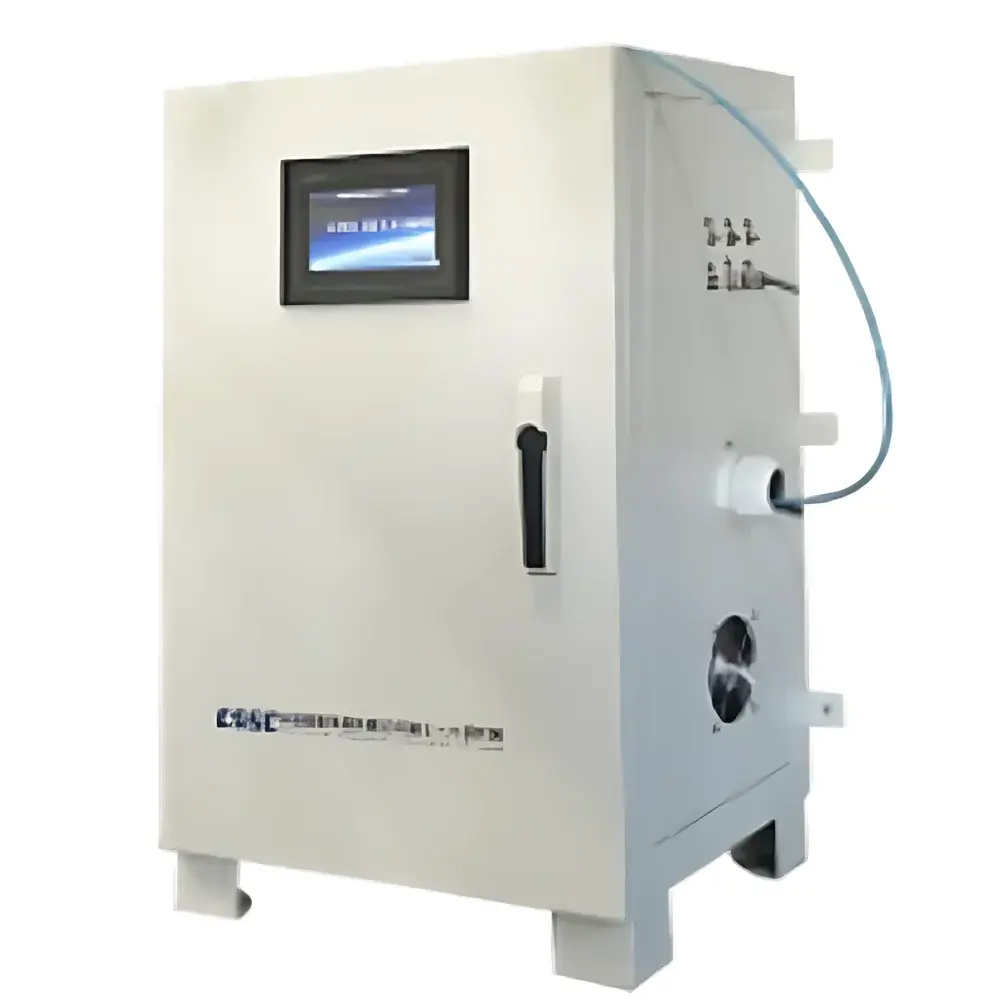
PERIC PR-CH4-1000 LNG Dual-Fuel Engine Exhaust Continuous Emission Monitoring System (CEMS)
| Brand | PERIC |
|---|---|
| Origin | Hebei, China |
| Manufacturer Type | OEM Producer |
| Country of Origin | China |
| Model | PR-CH4-1000 |
| Measurement Range | 0–1000 ppm CH₄ (customizable) |
| Repeatability | ≤ ±1% FS |
| Flow Rate | 1 L/min ±10% |
| Accuracy | ≤ ±1% FS |
| Stability | ≤ ±1% FS/week |
| Operating Temperature | 0–50 °C |
| Relative Humidity | ≤90% RH (non-condensing) |
Overview
The PERIC PR-CH4-1000 is a purpose-built Continuous Emission Monitoring System (CEMS) engineered for real-time, in-situ quantification of methane (CH₄) concentration in exhaust streams from marine LNG dual-fuel engines. Designed to meet the stringent requirements of IMO Tier III and EU MRV compliance frameworks, the system implements a source-level extractive sampling architecture with integrated cold-dry conditioning—ensuring representative gas acquisition under high-humidity, low-temperature flue conditions typical of marine exhaust ducts. At its analytical core, the instrument employs Gas Filter Correlation (GFC) infrared spectroscopy with a rotating correlation wheel, enabling selective, interference-resistant detection of CH₄ at sub-ppm resolution. Unlike broadband NDIR systems, GFC leverages spectral masking via precisely timed optical filtering to isolate the fundamental C–H stretching band near 3.3 µm, delivering high specificity against overlapping hydrocarbons (e.g., ethane, propane) and water vapor—a critical advantage in post-abatement methane slip monitoring where non-methane hydrocarbon (NMHC) backgrounds may vary dynamically.
Key Features
- Extractive cold-dry sampling train with heated probe, particulate filtration (≤0.5 µm), and thermoelectric chiller (dew point ≤5 °C), optimized for marine exhaust with >80% RH and transient temperature gradients
- GFC-based infrared analyzer featuring dual-beam path geometry with active reference channel compensation—minimizing drift induced by optical aging or ambient vibration
- Modular hardware architecture supporting hot-swappable sensor modules and field-upgradable firmware compliant with IEC 61508 SIL 2 functional safety principles
- Integrated data logger with 16 GB internal storage, capable of recording second-level CH₄ concentration, sample flow rate, filter pressure drop, and chiller status with UTC timestamping
- RS-485 (Modbus RTU) and Ethernet (TCP/IP) communication interfaces; supports OPC UA server configuration for integration into vessel-wide SCADA or Class-approved PMS platforms
- IP65-rated enclosure with marine-grade stainless-steel housing and conformal-coated PCBs, certified to ISO 8501-1 Sa 2½ surface prep standard for corrosion resistance
Sample Compatibility & Compliance
The PR-CH4-1000 is validated for continuous operation in exhaust streams containing up to 15% CO₂, <500 ppm H₂O (after drying), and particulate loadings ≤10 mg/m³. It complies with EN 15267-3 (QAL1 certification framework for automated measuring systems), and its measurement uncertainty profile satisfies the performance criteria outlined in ISO 14064-3 Annex B for GHG quantification. The system’s calibration protocol adheres to EPA Method 21 and ASTM D6420-18 for hydrocarbon leak detection verification, while data integrity controls—including write-once audit logs and electronic signature support—align with GLP principles and facilitate FDA 21 CFR Part 11 readiness when deployed in class-certified onboard laboratories.
Software & Data Management
PERIC CEMS Manager v3.2 firmware provides embedded configuration, diagnostics, and remote supervision via secure HTTPS web interface or CLI over SSH. All measurement data are stored in IEEE 754-compliant binary format with CRC-32 checksum validation. The system generates automated daily reports in PDF and CSV formats, including calibration verification records, zero/span drift logs, and maintenance event timestamps. Optional cloud gateway module enables encrypted MQTT transmission to shore-based emission dashboards compliant with DNV SeaTrust or ClassNK e-Navigation data models. Audit trails retain full operator action history (login/logout, parameter changes, calibration events) for minimum 18 months per IMO MARPOL Annex VI Regulation 19 record retention guidelines.
Applications
- Post-oxidation catalyst methane slip monitoring on slow-speed two-stroke LNG engines (e.g., WinGD X-DF, MAN ME-GI)
- Real-time compliance verification during EEDI/EEXI trials and SEEMP Phase II implementation
- Onboard R&D for combustion optimization studies correlating CH₄ emissions with pilot fuel ratio, scavenging efficiency, and load profiles
- Third-party verification of abatement system performance under varying sea states and ambient temperatures (−10 to +45 °C operational envelope)
- Integration with digital twin platforms for predictive maintenance of oxidation catalysts based on cumulative CH₄ exposure metrics
FAQ
What sampling method does the PR-CH4-1000 use, and why is it suitable for marine exhaust?
It uses source-level extractive sampling with cold-dry pretreatment—proven effective for high-moisture, low-temperature flue gas encountered downstream of marine engine turbochargers and aftertreatment units.
Does the system require periodic span gas calibration?
Yes; recommended every 7 days using certified CH₄/N₂ standard gas (±1% uncertainty), with automated zero checks performed hourly using synthetic air.
Can the measurement range be extended beyond 1000 ppm?
Yes; custom configurations support ranges up to 10,000 ppm CH₄ with recalibrated GFC wheel modulation and adjusted optical path length.
Is the system compatible with Class-approved vessel automation networks?
Yes; it supports IEC 61131-3 compliant Modbus TCP mapping and delivers data in IEC 61850-7-420-compliant logical node structure for seamless integration with Kongsberg K-Max or Wärtsilä Nacos platforms.
How is data integrity ensured during power interruptions or network outages?
All measurements are buffered in non-volatile FRAM memory; upon recovery, the system resumes logging without gap and auto-synchronizes timestamps via NTP or GPS PPS input.







