
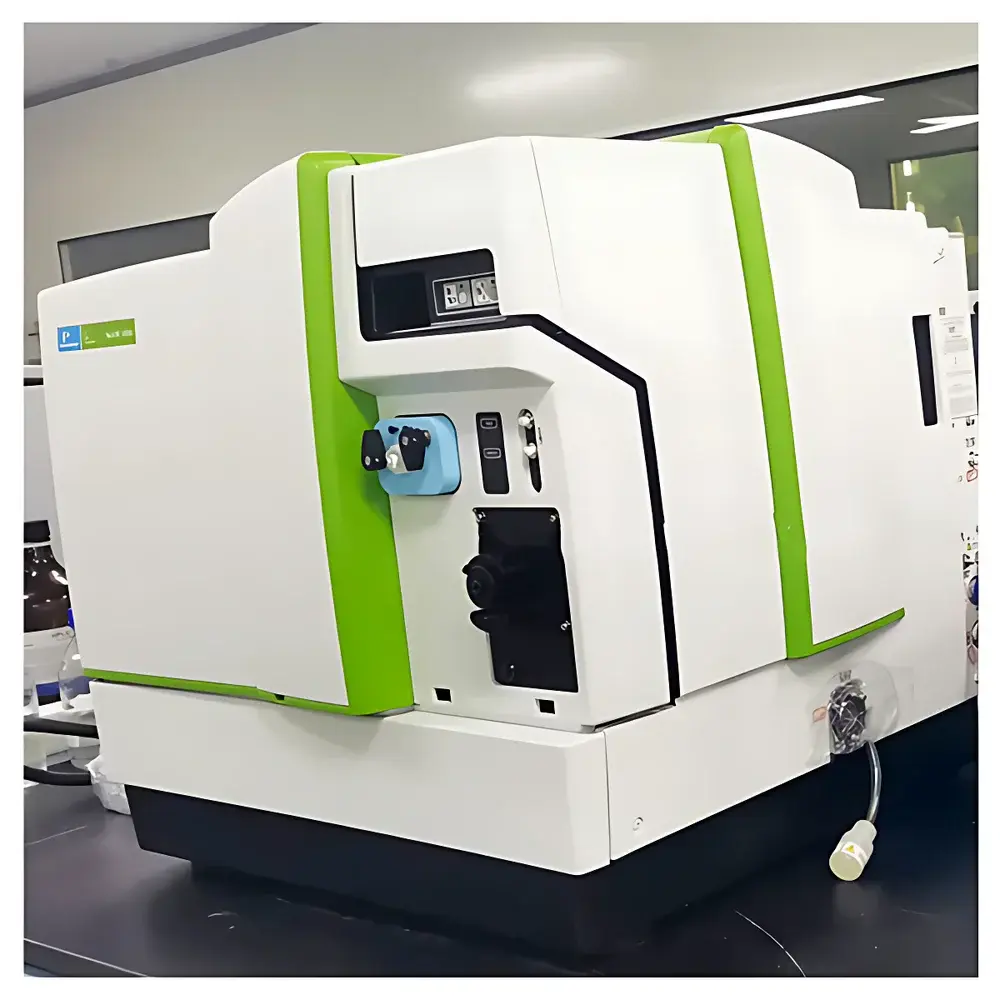
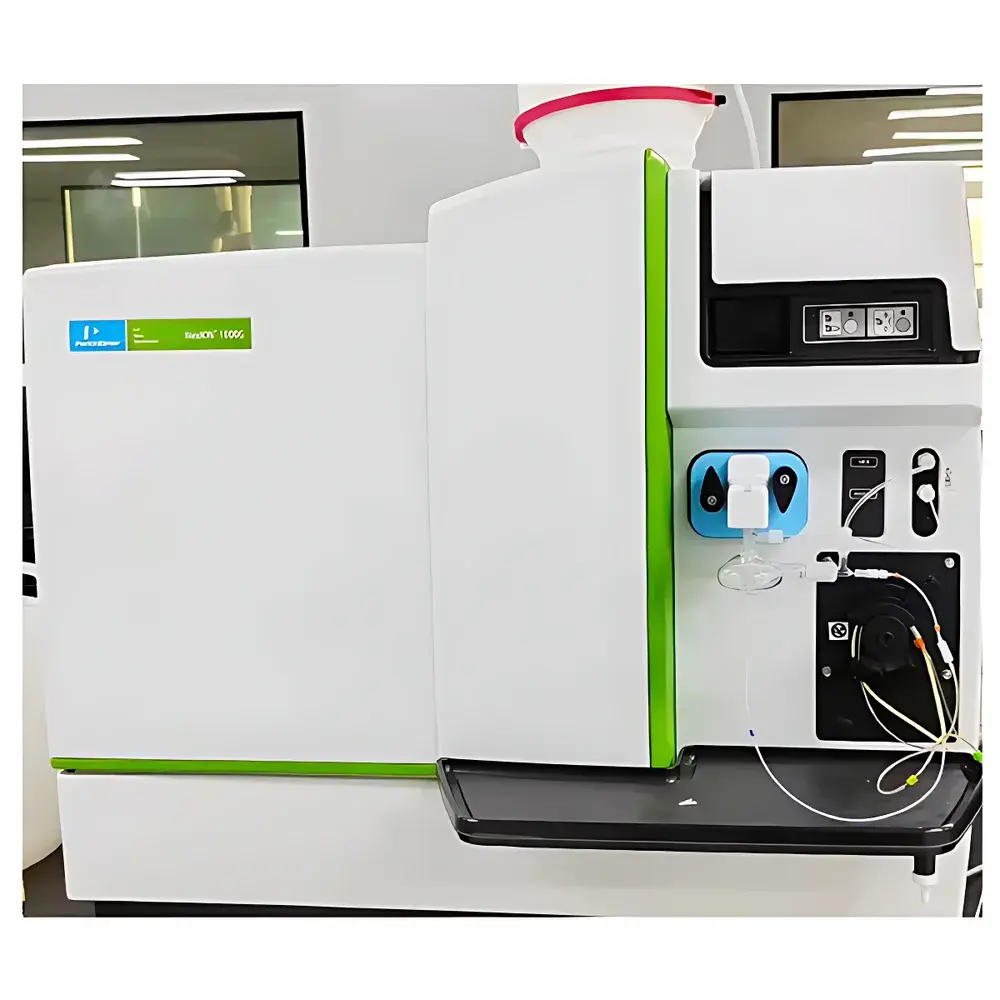
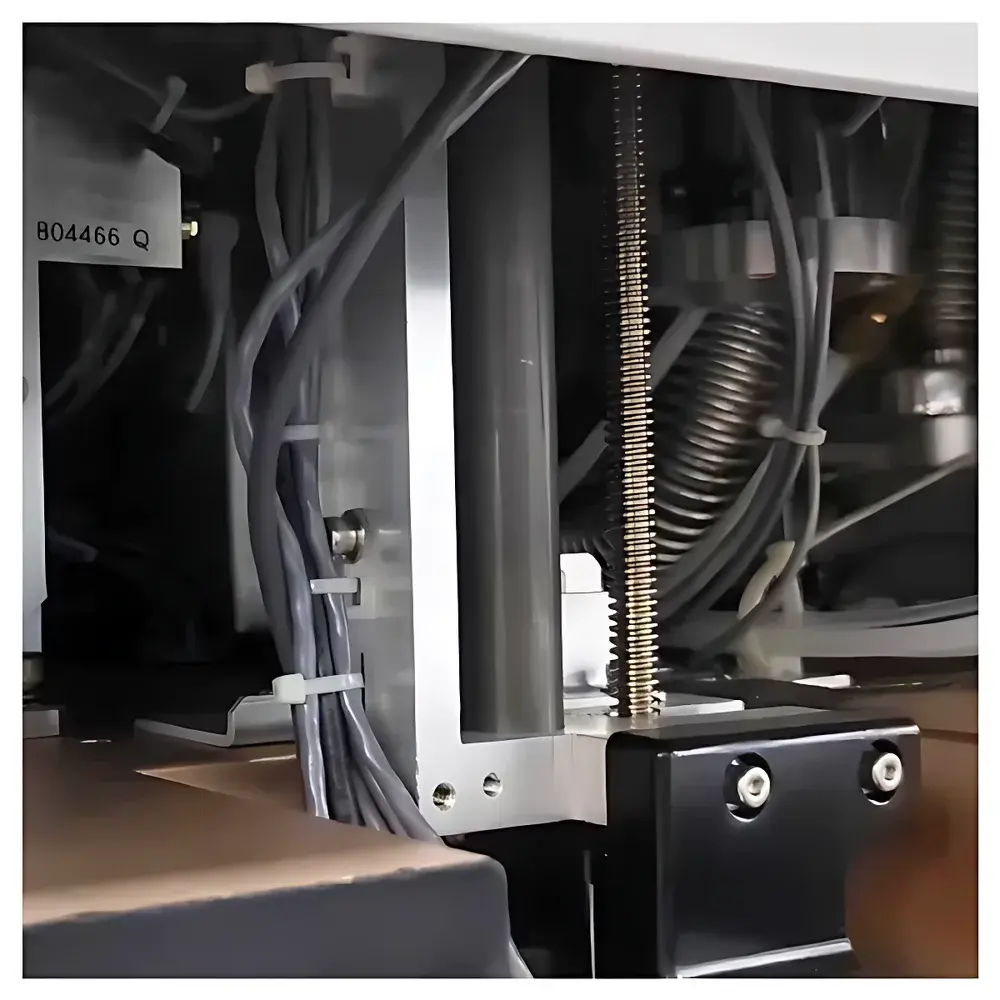
PerkinElmer NexION 1000G Inductively Coupled Plasma Mass Spectrometer
| Brand | PerkinElmer |
|---|---|
| Origin | Malaysia |
| Manufacturer Type | Authorized Distributor |
| Origin Category | Imported |
| Model | 1000G |
| Mass Range (amu) | 20 |
| Unit Mass Resolution (amu) | 0.5 |
| Detection Limit (ng·L⁻¹) | 10 |
| Sensitivity (Mcps / mg·L⁻¹) | 10 |
| Short-Term Stability (RSD %) | 3 |
| Long-Term Stability (RSD %) | 5 |
| Mass Analyzer Type | Quadrupole |
| Application Environment | Laboratory |
Overview
The PerkinElmer NexION® 1000G is a high-performance, triple-quadrupole inductively coupled plasma mass spectrometer (ICP-MS) engineered for precision elemental and isotopic analysis across demanding regulatory and research environments. It operates on the fundamental principle of ionization via high-temperature argon plasma (≥7,000 K), followed by mass separation using three sequential quadrupole mass filters: a quadrupole ion deflector, a universal collision/reaction cell (CRC) quadrupole, and a final mass-resolving quadrupole analyzer. This triple-quadrupole architecture enables simultaneous interference removal—both polyatomic (e.g., 40Ar16O+ on 56Fe+) and isobaric (e.g., 204Tl+ on 204Pb+)—without compromising signal transmission efficiency or operational simplicity. Designed for robustness in routine laboratory workflows, the system integrates a self-excited, balanced-drive solid-state RF generator with LumiCoilTM technology, delivering rapid impedance matching (<100 ms) and exceptional plasma stability across wide-ranging sample matrices—from 0.1% to 25% total dissolved solids (TDS), acidic to alkaline pH, and aqueous to organic solvent-based digests.
Key Features
- Triple-quadrupole mass filtering architecture for selective interference removal and high-fidelity isotope ratio measurement
- LumiCoilTM RF coil and balanced-drive solid-state generator ensuring plasma stability under variable matrix load and flow conditions
- Three-cone interface with oversized skimmer and proprietary UltraConicTM design, minimizing cone clogging and ion deposition while enhancing ion beam focus and vacuum integrity
- Universal collision/reaction cell (CRC) supporting both kinetic energy discrimination (KED) and reactive gas chemistry (e.g., O2, CH4, NH3) for targeted interference suppression
- Electronic dilution capability enabling accurate quantification from sub-ppt to percent-level concentrations within a single run
- Integrated autosampler compatibility with standardized ASTM D5673, ISO 17294-2, and USP workflows
Sample Compatibility & Compliance
The NexION 1000G accommodates a broad spectrum of sample types without pre-dilution or matrix separation: environmental waters (groundwater, seawater, wastewater), geological digests (HF/HNO3/HCl mixtures), biological tissues (microwave-assisted acid digestion), pharmaceutical excipients, food extracts (Se, As, Cd, Pb speciation), and high-TDS industrial process streams (e.g., catalyst slurries, battery electrolytes). Its hardware and software architecture comply with GLP and GMP requirements, including full 21 CFR Part 11–compliant audit trails, electronic signatures, and data integrity controls. Method validation documentation supports adherence to EPA Methods 200.8 and 6020B, ISO/IEC 17025:2017 clause 7.7, and EU Regulation (EC) No 333/2007 for trace element testing in foodstuffs.
Software & Data Management
SyngistixTM for ICP-MS provides an intuitive, workflow-driven interface for method development, real-time spectral monitoring, and automated interference correction. The platform includes built-in libraries for reaction gas optimization, isotope dilution calibration (ID-CAL), and certified reference material (CRM) verification protocols. All raw and processed data are stored in a secure, timestamped SQLite database with immutable records. Export options include CSV, PDF analytical reports, and XML-formatted outputs compatible with LIMS integration (via ASTM E1468 or HL7 standards). Software updates follow a controlled release cycle validated per ICH Q9 principles, with version history and change logs retained for regulatory inspection readiness.
Applications
- Environmental Monitoring: Quantitative analysis of ultra-trace metals (e.g., U, Th, Pu isotopes) and non-metals (As, Se, I) in drinking water per WHO Guidelines and EU Directive 2020/2184
- Geochemical Research: High-precision isotope ratio measurements (e.g., 87Sr/86Sr, 143Nd/144Nd) in silicate rock digests using desolvating nebulization and matrix-matched calibration
- Food Safety & Nutrition: Speciation analysis of arsenic (As(III), As(V), MMA, DMA, AsB, AsC) and selenium (selenomethionine, selenocysteine) in cereals and supplements using online HPLC-ICP-MS coupling
- Pharmaceutical Quality Control: Residual catalyst metal screening (Pd, Pt, Rh, Ir) in active pharmaceutical ingredients (APIs) at sub-ppq levels per ICH Q2(R2)
- Materials Science: Bulk and surface contamination profiling of semiconductor-grade silicon wafers and lithium-ion battery cathode materials (Ni, Co, Mn, Al) with ppt-level detection
FAQ
What mass range and resolution does the NexION 1000G support?
The instrument delivers a mass range up to 255 amu with unit mass resolution (0.5 amu at 10% valley definition), optimized for isotopic analysis of elements from Li to U.
How is long-term signal stability maintained during extended analyses?
Stability is achieved through active thermal management of the interface region, real-time plasma impedance feedback control, and continuous background subtraction algorithms—validated by RSD ≤5% over 12-hour runs using internal standardization (e.g., 115In or 203Tl).
Does the system support hyphenated techniques such as HPLC-ICP-MS or LA-ICP-MS?
Yes—the NexION 1000G features standardized analog/digital I/O ports and configurable dwell times compatible with commercial HPLC autosamplers and laser ablation systems (e.g., CETAC LSX-213, New Wave UP213) for transient signal acquisition and time-resolved quantification.
Is remote operation and cybersecurity compliant with modern IT policies?
The system supports TLS 1.2+ encrypted network communication, role-based access control (RBAC), and integration with enterprise Active Directory. All firmware and software components undergo annual penetration testing per NIST SP 800-115 guidelines.





