
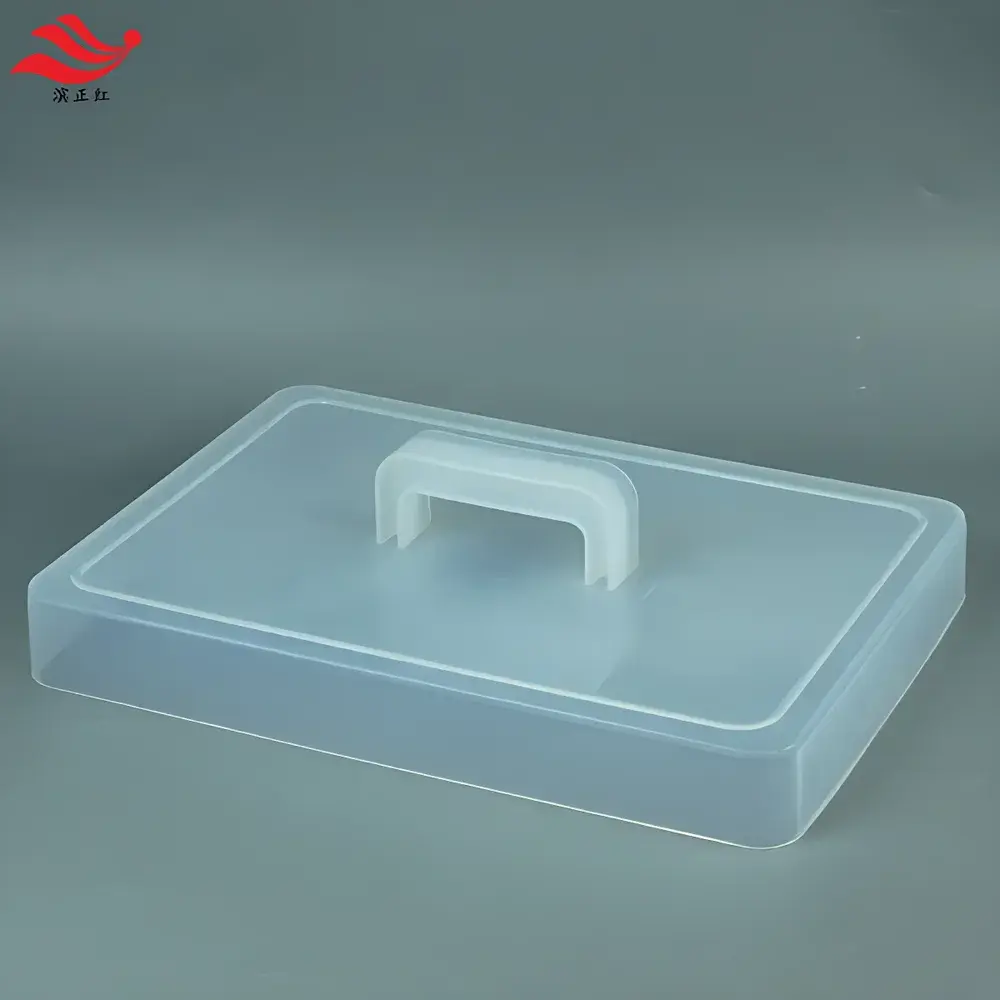
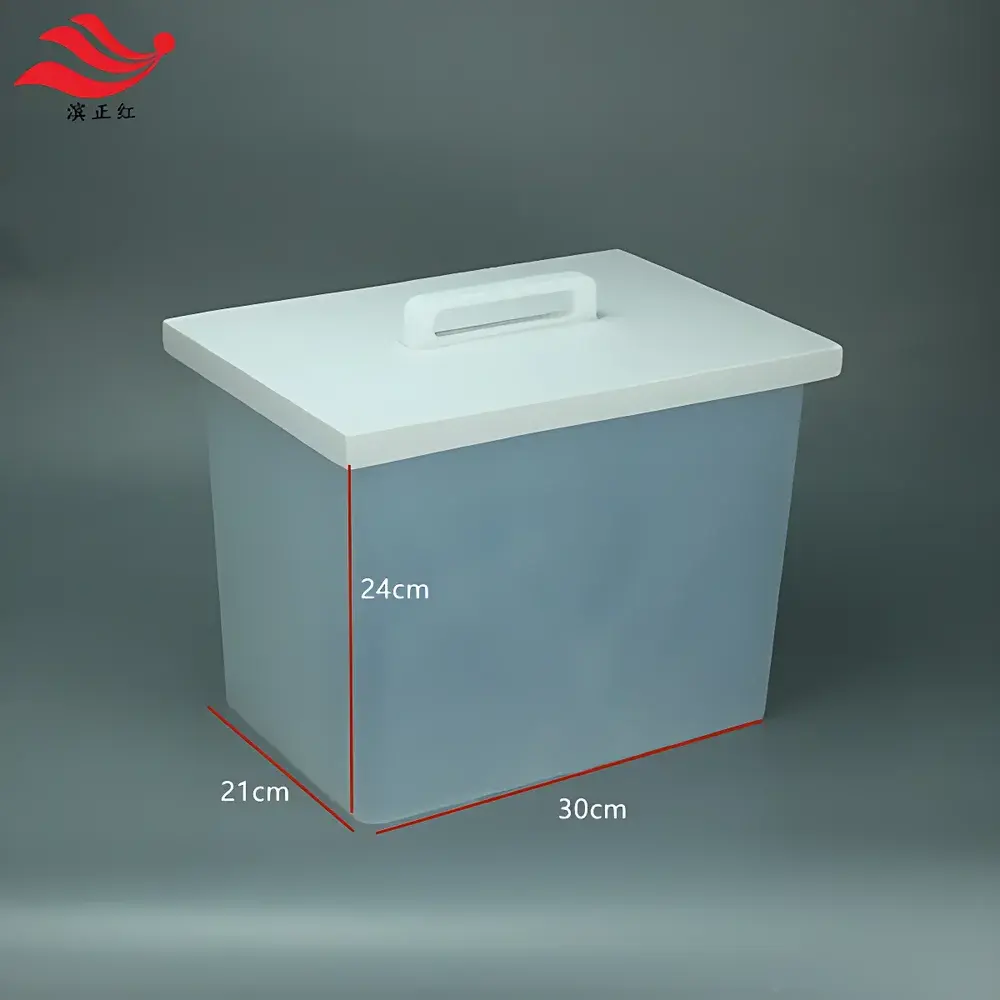
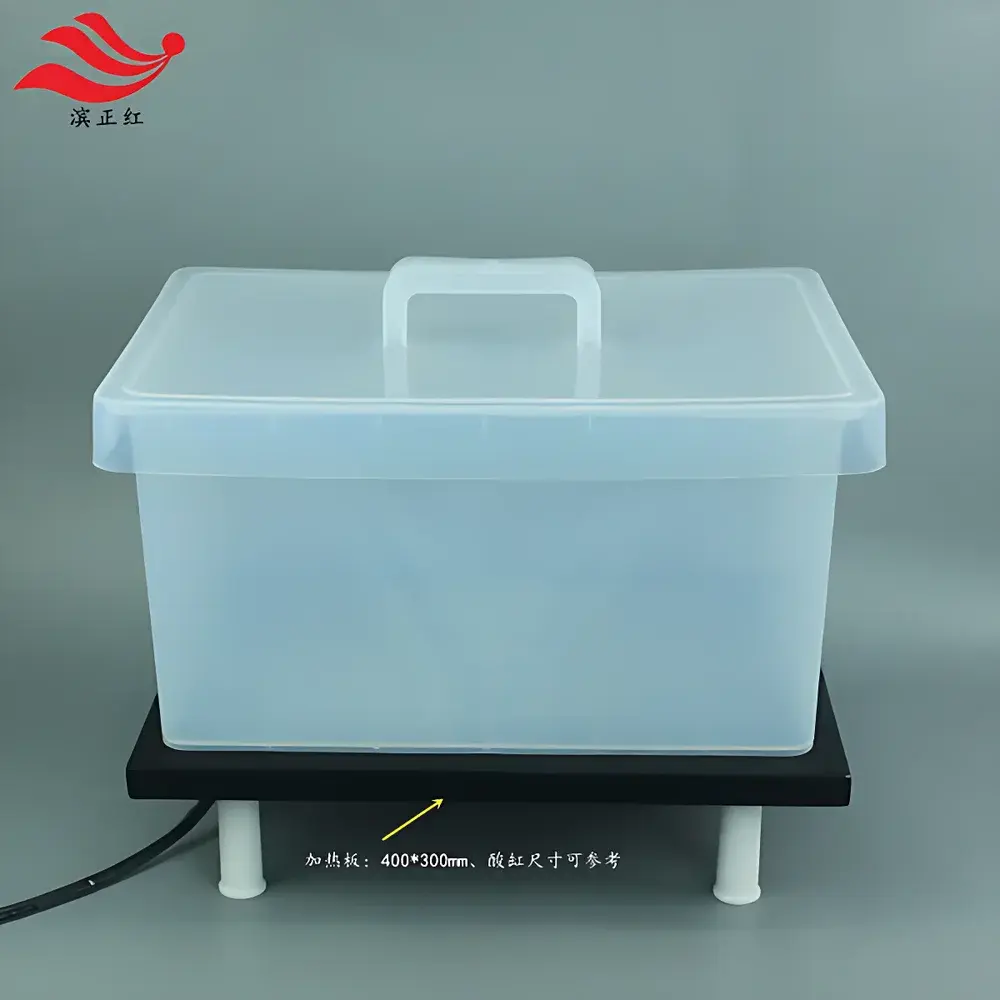
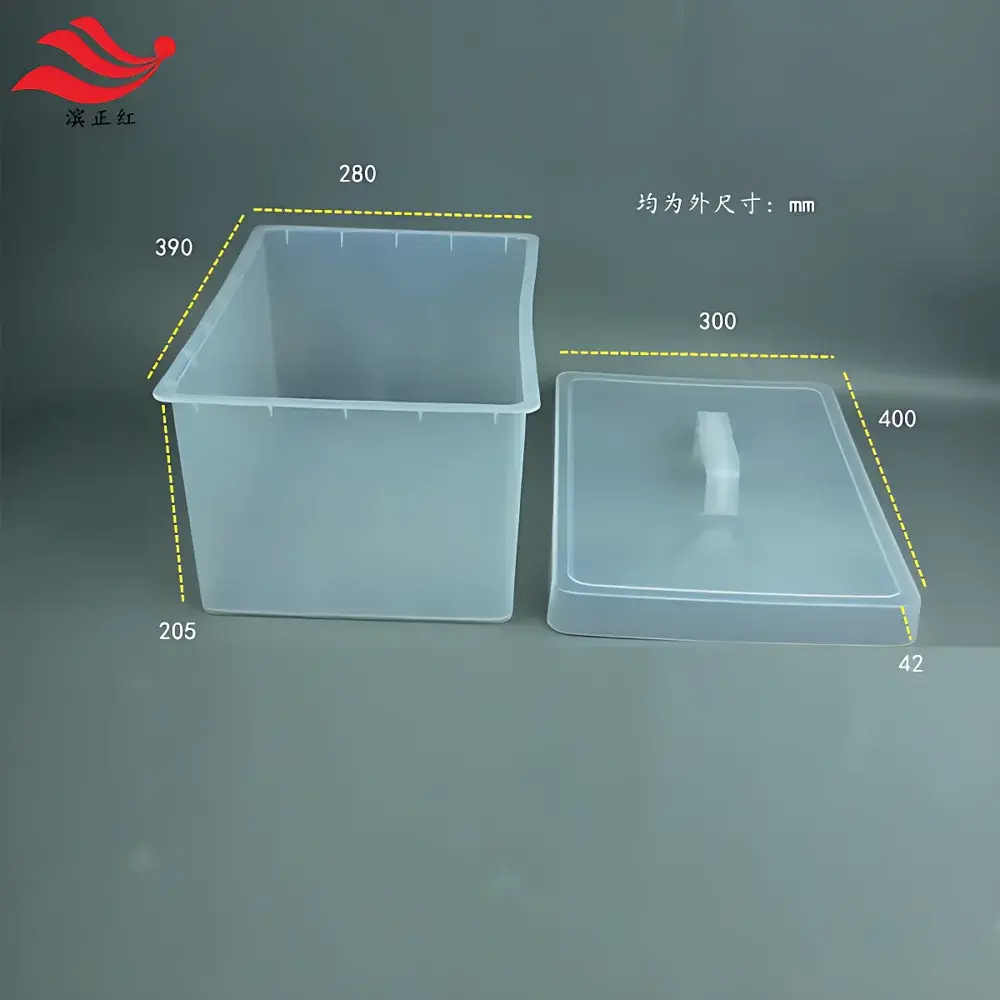
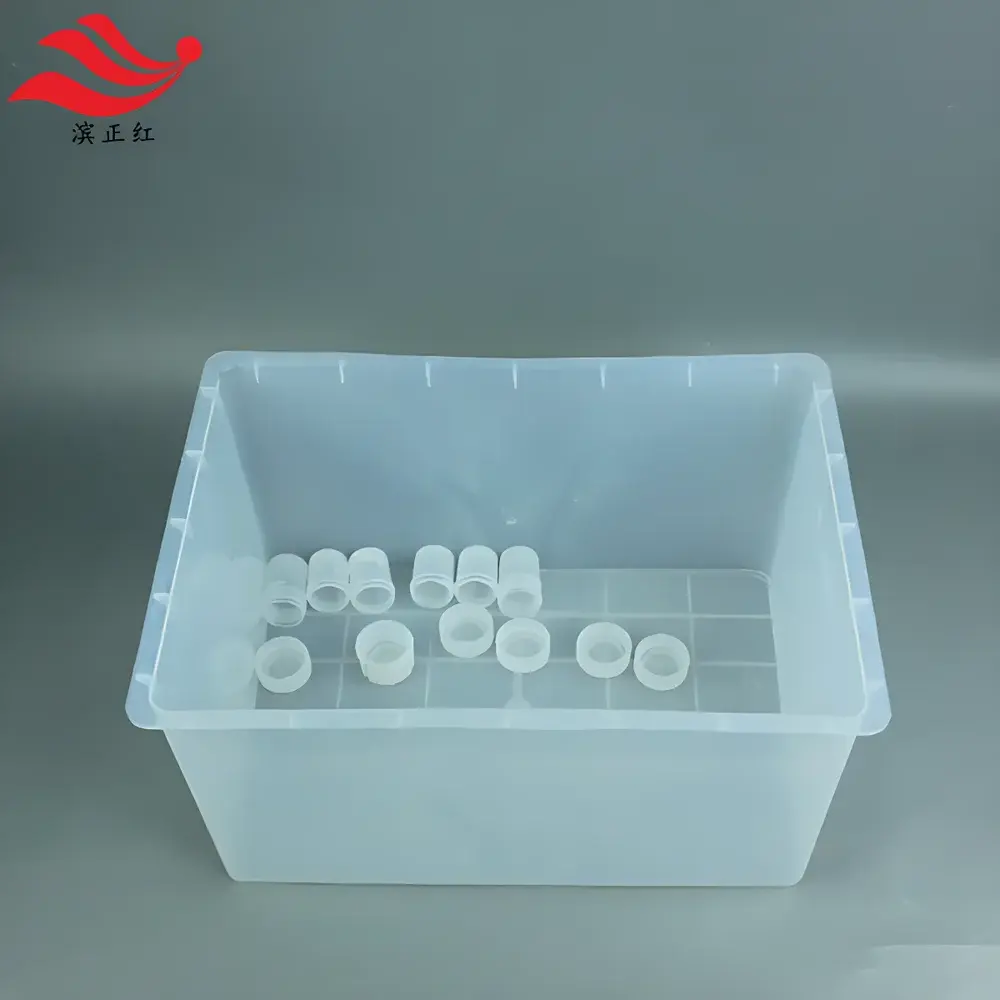
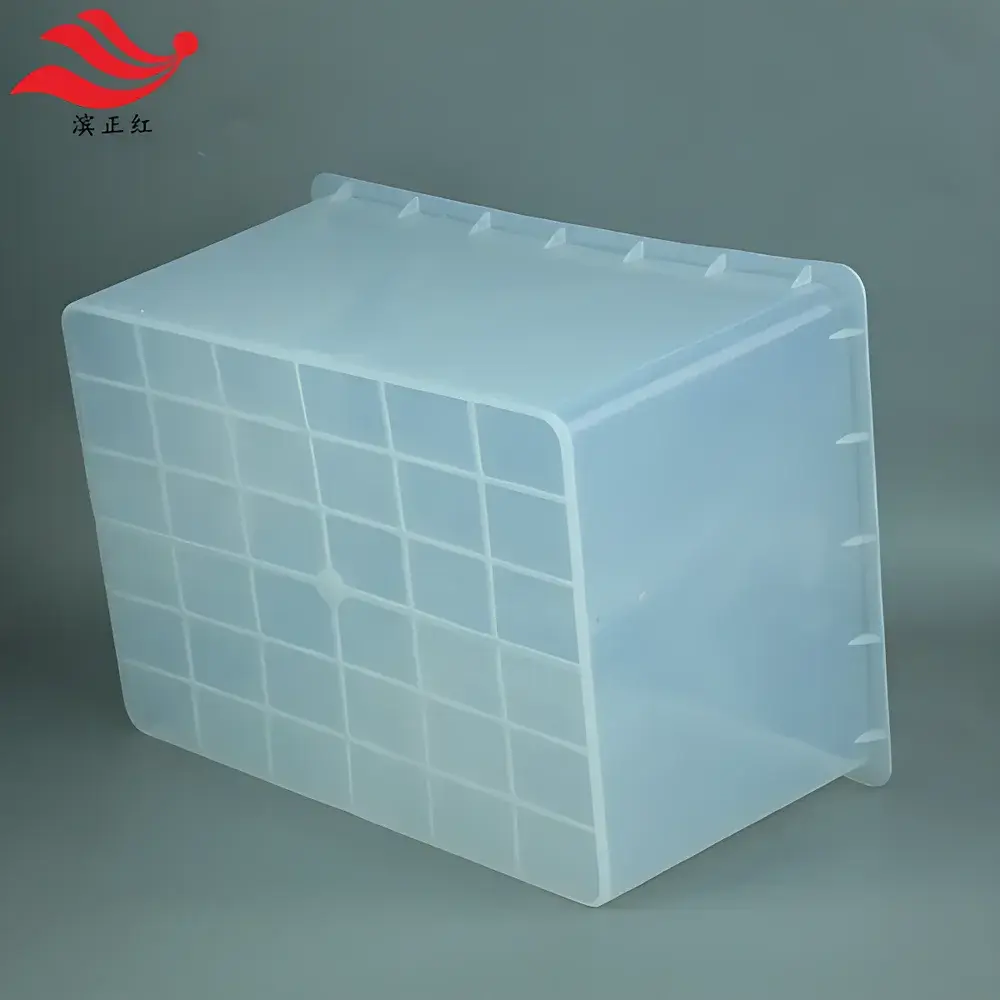
PFA Monolithic Acid Digestion Vessel / Cleaning Trough / High-Purity Reagent Storage Container
| Brand | Binzhenghong |
|---|---|
| Origin | Jiangsu, China |
| Manufacturer Type | Direct Producer |
| Model Options | 15 L and 20 L |
| Unit Price Range | USD 840 – 1,080 (FOB Jiangsu) |
| Material | Perfluoroalkoxy Alkane (PFA), ASTM D3307 Grade |
| Construction | Seamless, Molded-in-One (Monolithic) |
| Shape | Rectangular |
| Compliance | Meets ASTM D3307 for fluoropolymer purity |
Overview
The Binzhenghong PFA Monolithic Acid Digestion Vessel is a high-integrity, chemically inert containment system engineered for ultra-trace analytical workflows in semiconductor metrology, environmental testing laboratories, and high-purity pharmaceutical R&D. Constructed entirely from ASTM D3307–compliant perfluoroalkoxy alkane (PFA), this monolithic vessel eliminates weld seams, gaskets, or threaded joints—critical failure points for leachable metal contamination in sub-part-per-trillion (ppt) elemental analysis. Its seamless, injection-molded architecture ensures uniform wall thickness (±0.15 mm tolerance across full volume), thermal stability from −200 °C to +260 °C, and resistance to aggressive reagents including boiling aqua regia, HF–HNO₃ mixtures, and hot concentrated H₂SO₄. Available in two standardized volumetric configurations—15 L and 20 L—the rectangular geometry optimizes footprint efficiency in fume hoods and cleanroom pass-through cabinets while enabling full immersion of large-format quartz crucibles, ICP-MS sample racks, and multi-well digestion blocks.
Key Features
- Monolithic PFA construction with zero weld lines or adhesive interfaces—eliminates particle shedding and extractable organic residues
- Rectangular cross-section with reinforced corner radii (R ≥ 8 mm) to prevent stress cracking during thermal cycling
- Integrated lifting handles molded directly into sidewalls—no metallic inserts or secondary fasteners
- Optical clarity (transmittance >90% at 400–2500 nm) enables real-time visual monitoring of digestion progress without opening containment
- Surface roughness Ra ≤ 0.2 µm (as measured per ISO 4287), minimizing analyte adsorption and facilitating complete rinse recovery
- Autoclavable up to 121 °C at 15 psi for GLP-compliant sterilization prior to trace-metal-free applications
Sample Compatibility & Compliance
This vessel supports batch processing of diverse sample matrices requiring Class A acid-cleaned containment: silicon wafers, geological digests, biological tissue homogenates, and polymer dissolution samples. It complies with ASTM D3307 for fluoropolymer resin purity and meets the material requirements of USP for pharmaceutical contact surfaces. When operated within validated cleaning protocols—including triple-rinse with 18.2 MΩ·cm deionized water followed by nitrogen purge—the system achieves ≤0.1 ng/cm² residual Na⁺/K⁺/Fe³⁺ per ICP-MS verification (per ISO/IEC 17025:2017 Annex A.3). Documentation packages include Certificate of Conformance, extractables test report (per USP ), and lot-specific FTIR spectral validation.
Software & Data Management
As a passive containment platform, the vessel does not incorporate embedded electronics or firmware. However, it integrates natively into digital lab infrastructure via compatibility with LIMS barcode tracking (standard 1D/2D label zones on rear wall) and electronic batch record systems compliant with FDA 21 CFR Part 11. Each unit ships with a unique serialized QR code linking to its manufacturing certificate, raw material traceability log (including PFA resin lot number and extrusion date), and third-party heavy-metal screening data. Audit trails for usage cycles and cleaning validations may be recorded in ELN modules supporting ISO/IEC 17025 Clause 7.11.
Applications
- Acid digestion of environmental soil/sediment samples prior to ICP-MS quantification (EPA Method 6020B)
- Storage of high-purity standards (e.g., NIST SRM 3100 series) under inert atmosphere gloveboxes
- Soaking and passivation of quartz, borosilicate, and fused-silica labware in HF-based etchants
- Long-term stabilization of hygroscopic reference materials (e.g., LiBO₂ fluxes) in low-humidity controlled environments
- Intermediate holding of purified solvents (e.g., Optima™ grade acetonitrile) during LC-MS method development
FAQ
Can this vessel be used for hydrofluoric acid (HF) storage at elevated temperatures?
Yes—PFA exhibits no measurable weight loss or dimensional change after 72 hours exposure to 49% HF at 90 °C, per ASTM D543 testing protocol.
Is the 20 L model suitable for automated robotic arm handling in modular cleanrooms?
Yes—the standardized base footprint (480 × 320 mm) and integrated handle geometry align with ISO/TC 201 robotics interface specifications for Class 100 environments.
Does monolithic molding affect thermal shock resistance compared to fabricated PFA tanks?
No—monolithic construction improves thermal shock performance by eliminating interfacial delamination risks inherent in welded assemblies; validated per ASTM C1525 at ΔT = 200 °C.
What documentation accompanies each shipment for GMP-regulated labs?
Certificate of Conformance, USP extractables report, FTIR identity verification, and raw material traceability dossier (including fluoropolymer resin supplier COA).



