
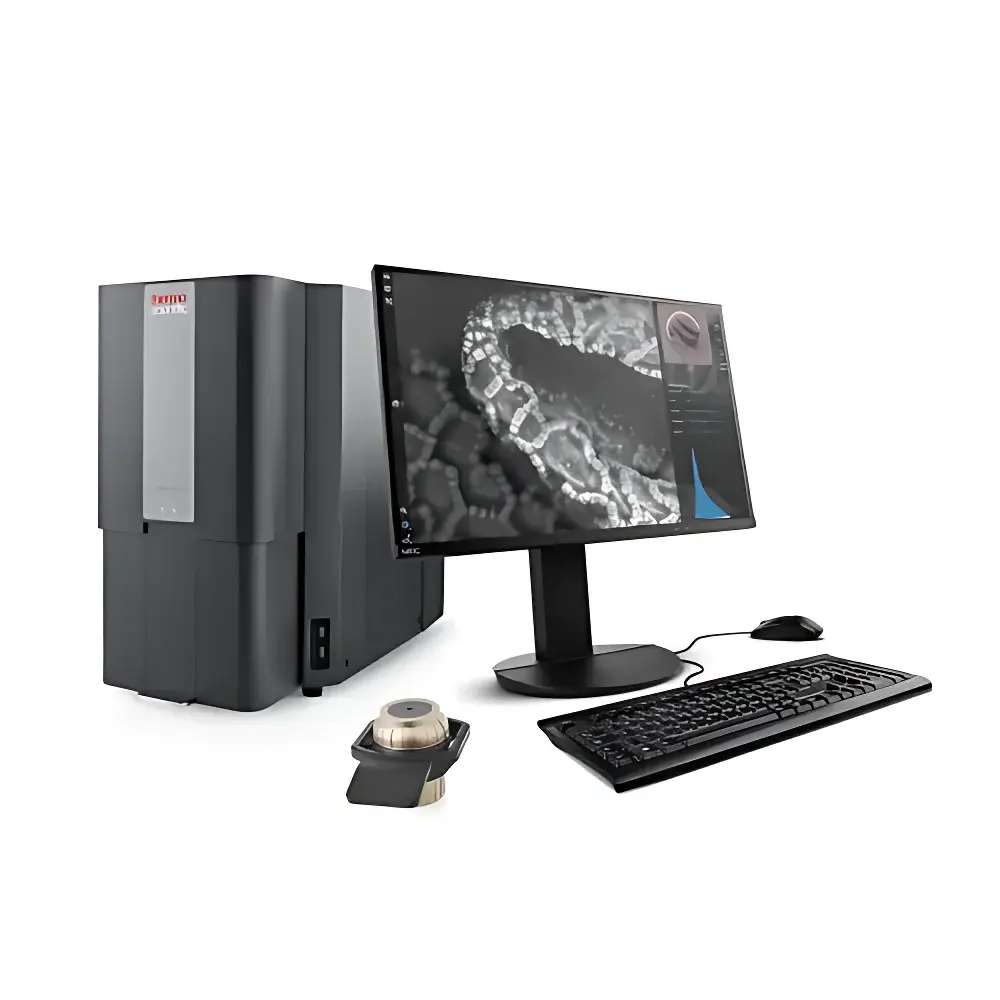
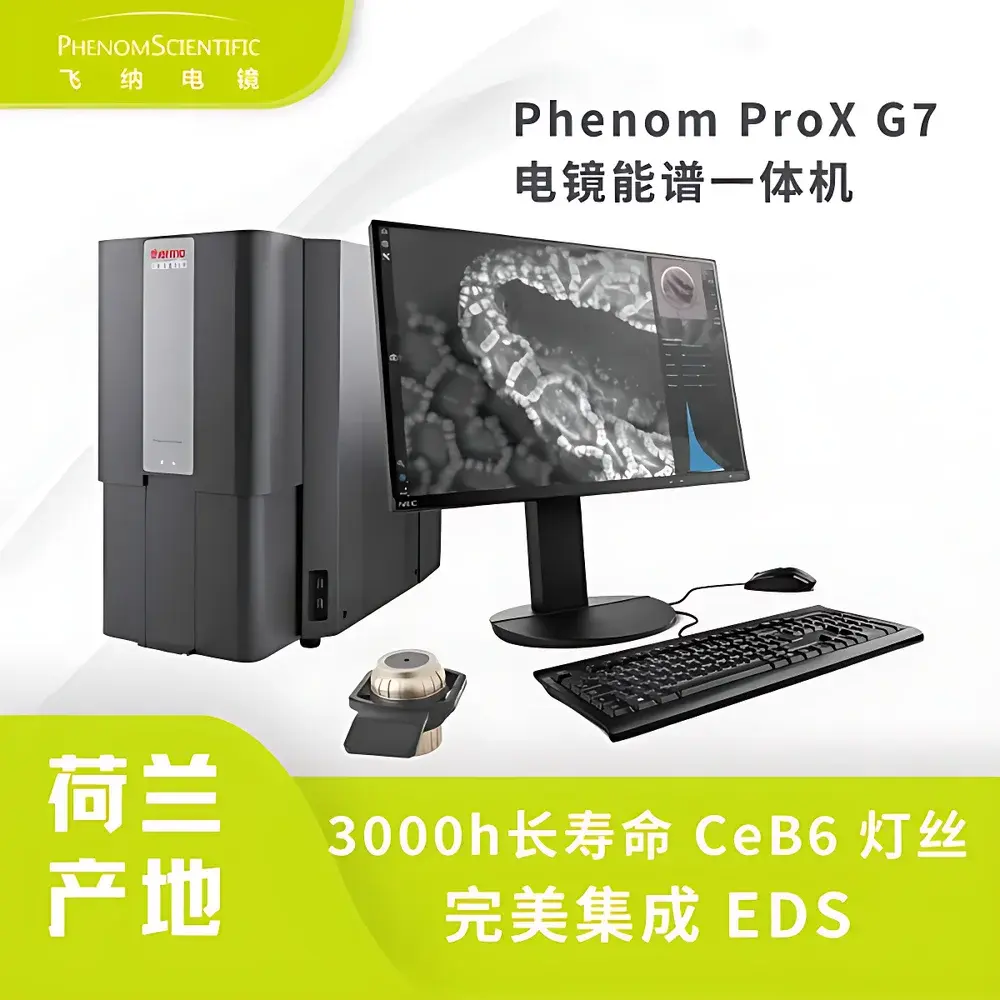
Phenom ProX Desktop Scanning Electron Microscope with Integrated EDS
| Brand | Phenom |
|---|---|
| Origin | Netherlands |
| Model | Phenom ProX |
| Instrument Type | Desktop SEM |
| Electron Source | CeB6 (Cerium Hexaboride) |
| Secondary Electron Resolution | 6 nm |
| Maximum Magnification | 350,000× |
| Accelerating Voltage | Basic Modes: 2 / 5 / 10 / 15 / 20 kV |
| Advanced Mode | Continuously Adjustable from 4.8–20.5 kV (for simultaneous imaging & EDS analysis) |
| Backscattered Electron Resolution | 6 nm |
| Vacuum Pump-down Time | <15 s |
| Elemental Analysis Range | B (Z=5) to Am (Z=95) |
| Detector | Silicon Drift Detector (SDD) |
| Cooling | Peltier (cryogen-free) |
| Optional Modules | Automated Particle Analysis, Inclusion Analysis, Fiber Morphology Statistics, 3D Roughness Reconstruction, High-Magnification Stitching |
Overview
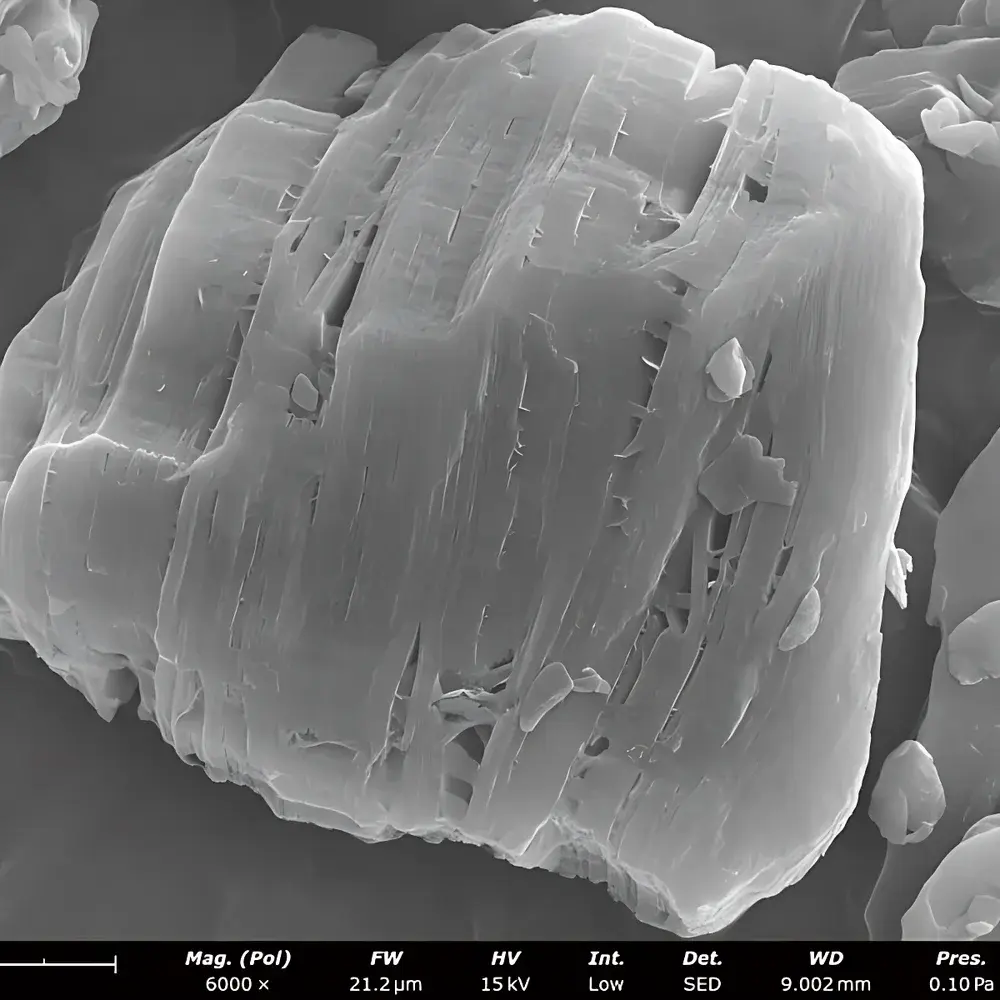
The Phenom ProX Desktop Scanning Electron Microscope (SEM) with integrated Energy-Dispersive X-ray Spectroscopy (EDS) is an engineered solution for high-throughput, lab-based microstructural and compositional characterization. Based on scanning electron microscopy principles—where a focused beam of high-energy electrons interacts with a solid sample to generate secondary electrons (SE), backscattered electrons (BSE), and characteristic X-rays—the Phenom ProX delivers nanoscale surface topography imaging and quantitative elemental analysis within a single, compact platform. Its CeB6 thermionic electron source provides superior brightness and stability over conventional tungsten filaments, enabling consistent 6 nm resolution at 10 kV while supporting low-voltage imaging (<5 kV) for beam-sensitive or non-conductive samples without metal coating. The system operates under high vacuum conditions achieved in under 15 seconds, eliminating the need for dedicated vibration-isolated rooms or liquid nitrogen infrastructure. Designed for integration into shared research facilities, QC labs, and industrial R&D environments, the Phenom ProX meets core requirements for reproducibility, ease of use, and regulatory traceability.
Key Features
- CeB6 electron source with >3,000 hours lifetime and 10× higher brightness than tungsten filaments
- Integrated silicon drift detector (SDD) EDS system with cryogen-free Peltier cooling and full spectral acquisition from boron (Z=5) to americium (Z=95)
- Dual-mode accelerating voltage control: discrete settings (2/5/10/15/20 kV) for routine operation and continuously adjustable range (4.8–20.5 kV) optimized for combined SE/BSE imaging and EDS quantification
- High-sensitivity quad-segmented BSE detector enabling atomic number contrast imaging and phase discrimination
- Automated vacuum system achieving operational pressure in <15 seconds—no external pumping infrastructure required
- Robust mechanical design enabling stable operation on standard laboratory benches without anti-vibration tables
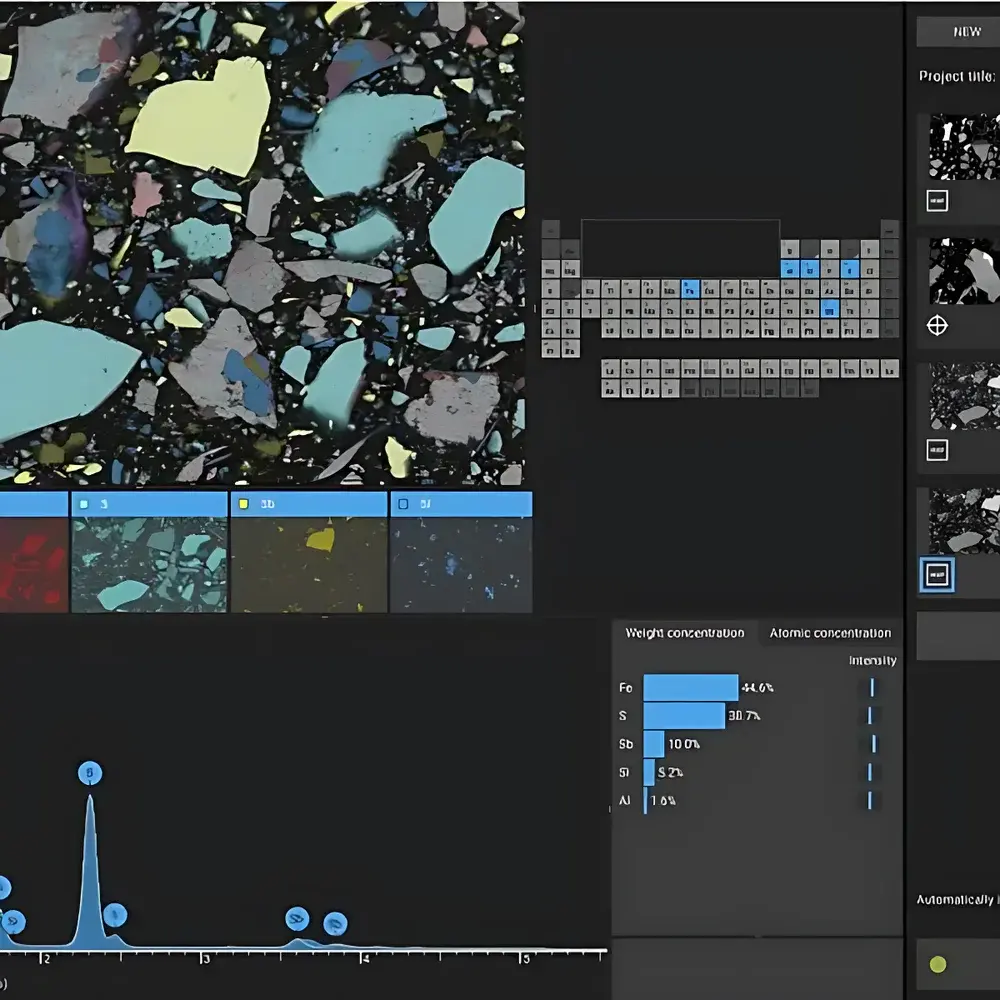
- Intuitive, single-software interface (Phenom Desktop Software) for seamless transition between imaging, mapping, point analysis, line scans, and area quantification
Sample Compatibility & Compliance
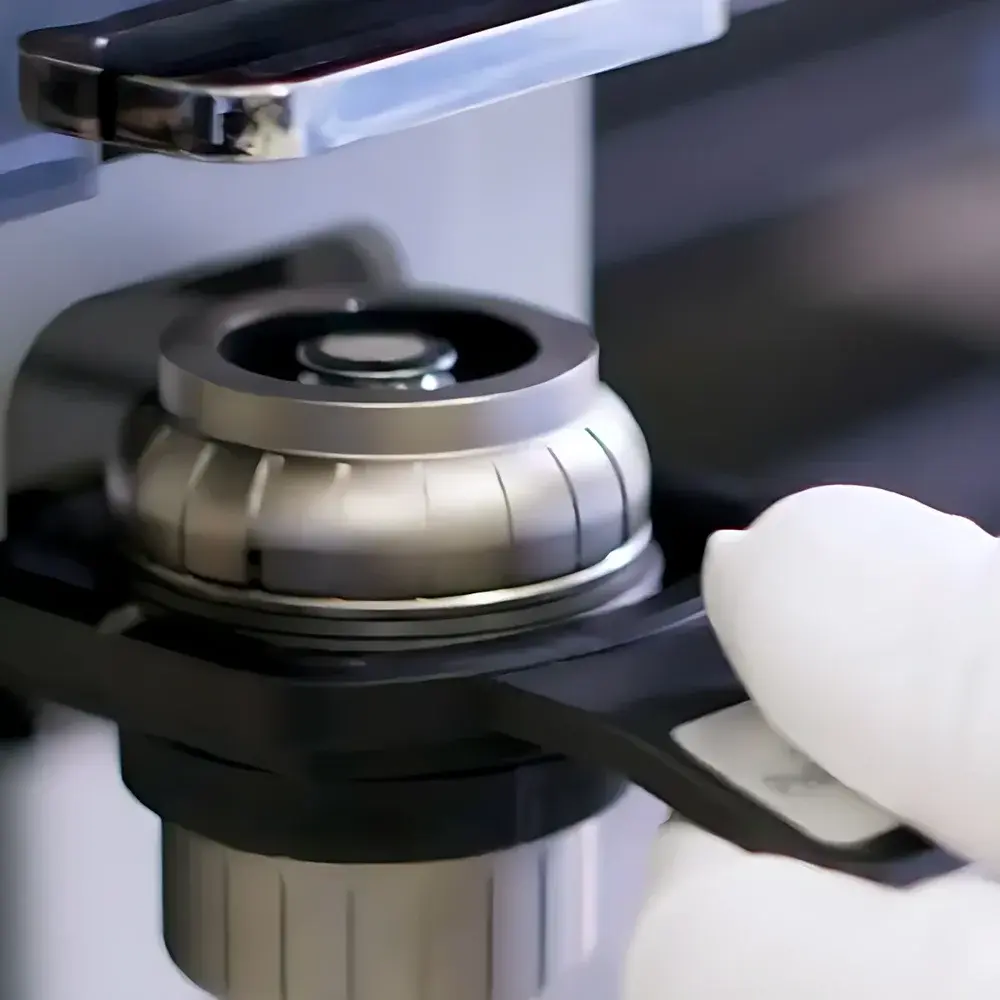
The Phenom ProX accommodates a broad range of solid, dry specimens—including insulators, ceramics, polymers, metals, powders, battery electrodes, geological thin sections, and semiconductor wafers—without mandatory conductive coating. Its low-kV imaging capability (down to 2 kV) minimizes charging artifacts and preserves surface detail in delicate materials. All EDS acquisitions comply with ASTM E1508 and ISO 16700 standards for qualitative and semi-quantitative elemental analysis. The software architecture supports audit trails, user access controls, and electronic signatures aligned with GLP and GMP documentation requirements. Data export formats include .tiff, .csv, and .eds for integration into LIMS and enterprise QA systems. The instrument conforms to IEC 61000-6-3 (EMC) and IEC 61010-1 (safety) standards, and its CE marking certifies compliance with EU Machinery and Electromagnetic Compatibility directives.
Software & Data Management
Phenom Desktop Software v6.x provides a unified workflow environment for acquisition, processing, and reporting. It includes embedded calibration routines, automatic focus/stigmation, real-time drift correction, and batch processing for multi-sample workflows. EDS functionality covers spectrum acquisition, peak deconvolution using fundamental parameter (FP) algorithms, standardless quantification, and spatially resolved elemental mapping (point, line, area). All analytical sessions are timestamped and logged with operator ID, instrument parameters, and detector conditions. Raw data files retain full metadata required for 21 CFR Part 11 compliance when configured with optional audit trail and electronic signature modules. Export options support interoperability with third-party platforms such as Thermo Fisher Avizo, Oxford Instruments AZtec, and MATLAB-based custom analysis pipelines.
Applications
- Materials science: grain boundary analysis, phase identification in alloys and composites, fracture surface characterization
- Battery R&D: cathode/anode particle morphology, SEI layer inspection, cross-sectional electrode analysis
- Semiconductor failure analysis: defect localization, contamination identification, interconnect integrity assessment
- Powder metallurgy: particle size distribution, shape factor analysis, agglomeration evaluation
- Geosciences: mineral phase mapping, porosity quantification, fluid inclusion characterization
- Quality control: incoming raw material verification, coating thickness estimation, contaminant source tracing
FAQ
Does the Phenom ProX require liquid nitrogen for EDS detector cooling?
No. It uses a Peltier-cooled SDD detector, eliminating dependency on cryogens and enabling true plug-and-play operation.
Can non-conductive samples be imaged without sputter coating?
Yes. Low-kV imaging (2–5 kV) combined with charge compensation modes allows direct observation of ceramics, polymers, and biological specimens.
What is the typical maintenance interval for the CeB6 filament?
Under normal operating conditions, the CeB6 source lasts over 3,000 hours—approximately five years for most academic and industrial users.
Is remote diagnostics and software updates supported?
Yes. Secure remote access is available via encrypted connection for troubleshooting, calibration assistance, and version-controlled firmware/software upgrades.
How does the system ensure measurement traceability in regulated environments?
Through configurable audit logs, user authentication, parameter locking, and exportable reports that meet ISO/IEC 17025 and FDA 21 CFR Part 11 documentation requirements.




