
Photek MCP/ICCD Image Intensifier Camera System
| Brand | Photek |
|---|---|
| Origin | United Kingdom |
| Model | MCP/ICCD |
| Detector Type | Gen II/III Gated Image Intensifier Coupled to CCD Sensor |
| MCP Stages | 1-MCP, 2-MCP, or 3-MCP Configurable |
| Aperture Options | 18 mm, 25 mm, 40 mm, 75 mm, 150 mm |
| Minimum Gate Width | 2 ns |
| Spectral Response Range | X-ray to NIR (1–1200 nm), including Solar-Blind UV (CsI, SB), Visible (S20, S25, BI, LNS20), and NIR (GaAs) |
| Input Window Materials | F (Fiber Optic Faceplate), Q (Fused Silica), M (MgF₂), S (Sapphire) |
| Phosphor Screens | P20, P43, P46, P47, FS |
| Output Coupling | IFO (Fiber Optic), GL (Glass), ITA (Fiber Taper) |
| Vacuum Particle Imaging Detector (VID) Variant Available | Yes |
| VID Rise Time | 70 ps – 500 ps (diameter-dependent) |
| VID FWHM | 150 ps – 1000 ps |
| VID 3-dB Bandwidth | 250 MHz – 1600 MHz |
| VID Transit Time Jitter | ~15 ps – ~100 ps |
| MCP Pore Size Options | 6 µm (≤25 mm), 10 µm (high-resolution), 25 µm (standard) |
| Magnetic Field Tolerance | Up to 100 mT (with mu-metal shielding option) |
| Compliance | CE, RoHS, ISO 9001-certified manufacturing |
Overview
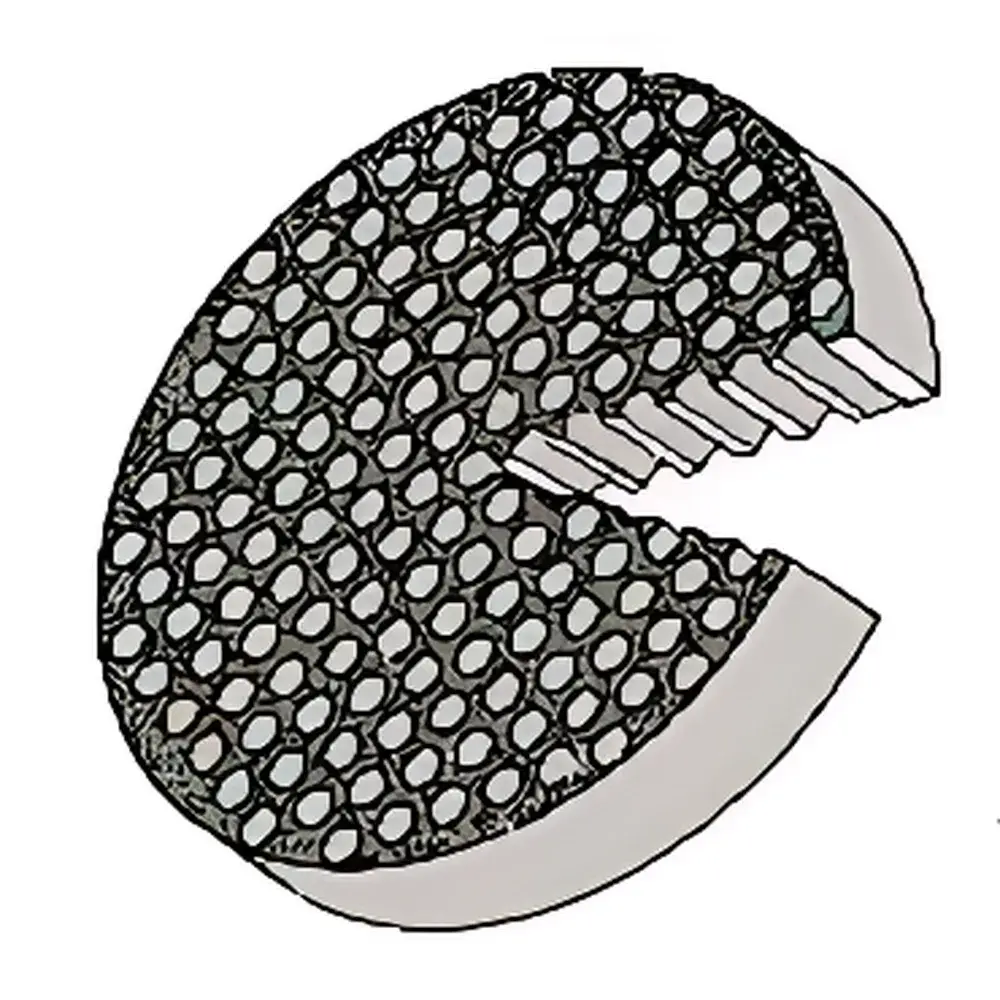
The Photek MCP/ICCD Image Intensifier Camera System is a high-performance, time-gated optical imaging platform engineered for ultra-low-light detection and sub-nanosecond temporal resolution. Built upon a robust microchannel plate (MCP) intensifier architecture, the system integrates a photocathode, one to three cascaded MCP stages, and a phosphor screen—optically coupled to a scientific-grade CCD sensor. Its operational principle relies on photoelectron emission from the photocathode under incident photons, subsequent electron multiplication within the MCP pore structure via secondary emission, and final conversion of the amplified electron flux into visible light at the phosphor screen. This cascade enables single-photon sensitivity with gain up to 10⁶–10⁷ and temporal gating down to 2 ns—making it suitable for applications requiring precise photon arrival timing, such as time-resolved fluorescence lifetime imaging (FLIM), laser-induced breakdown spectroscopy (LIBS), plasma diagnostics, and ultrafast pump-probe experiments.
Key Features
- Gated operation with programmable gate widths from 2 ns to continuous mode, enabling time-sliced acquisition in dynamic optical environments.
- Modular MCP configuration: selectable 1-MCP, 2-MCP, or 3-MCP stacks to balance gain, resolution, and dynamic range per application requirement.
- Large-format intensifiers available up to 150 mm active diameter—the largest commercially available gated image intensifier—supporting wide-field imaging without tiling artifacts.
- Customizable photocathodes including CsI (X-ray/UV), Solar-Blind (SB), bialkali (BI), multialkali (S20/S25), and GaAs (NIR), each with documented quantum efficiency curves traceable to NIST standards.
- Input window options (F, Q, M, S) and output coupling media (IFO, GL, ITA) ensure optimal spectral transmission across UV-VIS-NIR bands while maintaining mechanical stability under vacuum or atmospheric conditions.
- High magnetic field resilience: standard units operate reliably in fields ≤5 mT; optional mu-metal shielding extends tolerance to ≥100 mT for integration near particle accelerators or fusion diagnostics.
- Low-distortion near-focus optics enable direct fiber-optic coupling with minimal geometric aberration—critical for quantitative intensity mapping and spatial calibration.
Sample Compatibility & Compliance
The Photek MCP/ICCD system supports both ambient and ultra-high vacuum (UHV) interfacing. For vacuum applications, the optional Vacuum Imaging Detector (VID) variant omits the photocathode and couples charged particles, UV photons, or neutrons directly to the MCP input surface—enabling detection of electrons, ions, and fast neutrons without scintillator intermediaries. All VID configurations feature hermetic stainless-steel flanges (CF, KF, or custom CAD-defined) and are rated for UHV compatibility (<1×10⁻⁹ mbar). The system complies with CE marking directives (EMC 2014/30/EU, LVD 2014/35/EU), RoHS 2011/65/EU, and is manufactured under ISO 9001:2015 quality management protocols. Traceable calibration certificates—including spectral responsivity, gate timing jitter, and spatial distortion maps—are provided per unit. Optional FDA 21 CFR Part 11–compliant audit trail logging is available via Photek’s VISION software suite for regulated environments (e.g., pharmaceutical analytical development).
Software & Data Management
Control and acquisition are managed through Photek’s VISION software—a cross-platform (Windows/Linux) application supporting full hardware parameterization: gate delay (0–100 µs), width (2 ns–10 ms), MCP voltage (0–1200 V), CCD exposure, binning, and region-of-interest (ROI) readout. VISION implements IEEE 1394b (FireWire) and USB 3.0 interfaces with real-time frame buffering and lossless TIFF/PNG export. Raw data includes embedded metadata (timestamp, gate settings, sensor temperature, MCP bias) compliant with HDF5 and MIAME standards. For automated workflows, VISION provides a documented C++/Python SDK and SCPI-compatible command set compatible with LabVIEW, MATLAB, and EPICS control systems. All acquired datasets support GLP/GMP-compliant archiving with SHA-256 hash verification and electronic signature capability.
Applications
- Ultrafast spectroscopy: time-resolved Raman, transient absorption, and femtosecond fluorescence decay analysis.
- Fusion research: neutron imaging, soft X-ray pinhole camera diagnostics, and tokamak edge plasma monitoring.
- Mass spectrometry: orthogonal acceleration TOF-MS detector arrays with multi-anode readout options.
- Biophotonics: single-molecule localization microscopy (SMLM), confocal FLIM, and bioluminescence tomography.
- Defense & aerospace: laser warning receivers, night vision validation, and LIDAR return signal amplification.
- Industrial inspection: non-destructive testing (NDT) of composite materials using pulsed thermography and acoustic emission imaging.
FAQ
What is the minimum detectable signal level for the MCP/ICCD system?
The system achieves single-photon detection capability with a typical dark count rate <0.1 events/pixel/sec at −20°C sensor temperature and 2-MCP configuration.
Can the intensifier be integrated into an existing vacuum chamber?
Yes—custom flange designs (CF-35 to CF-150, KF-40 to KF-100) and UHV-compatible feedthroughs are available; VID variants include direct-bakeable mounting options.
Is spectral calibration traceable to national standards?
Yes—each unit ships with NIST-traceable spectral responsivity data measured at 10 nm intervals from 115 nm to 1100 nm using calibrated deuterium and tungsten-halogen sources.
How is timing jitter characterized and minimized?
Transit time jitter is measured using streak camera cross-correlation and is specified per aperture size (e.g., ~15 ps for 10 mm, ~100 ps for 75 mm); low-jitter HV pulsers and matched impedance cabling are included as standard.
Are custom photocathodes supported beyond the listed types?
Yes—Photek maintains in-house cathode deposition facilities and accepts customer-supplied spectral response targets for bespoke cathode development, subject to feasibility review and lead-time agreement.





