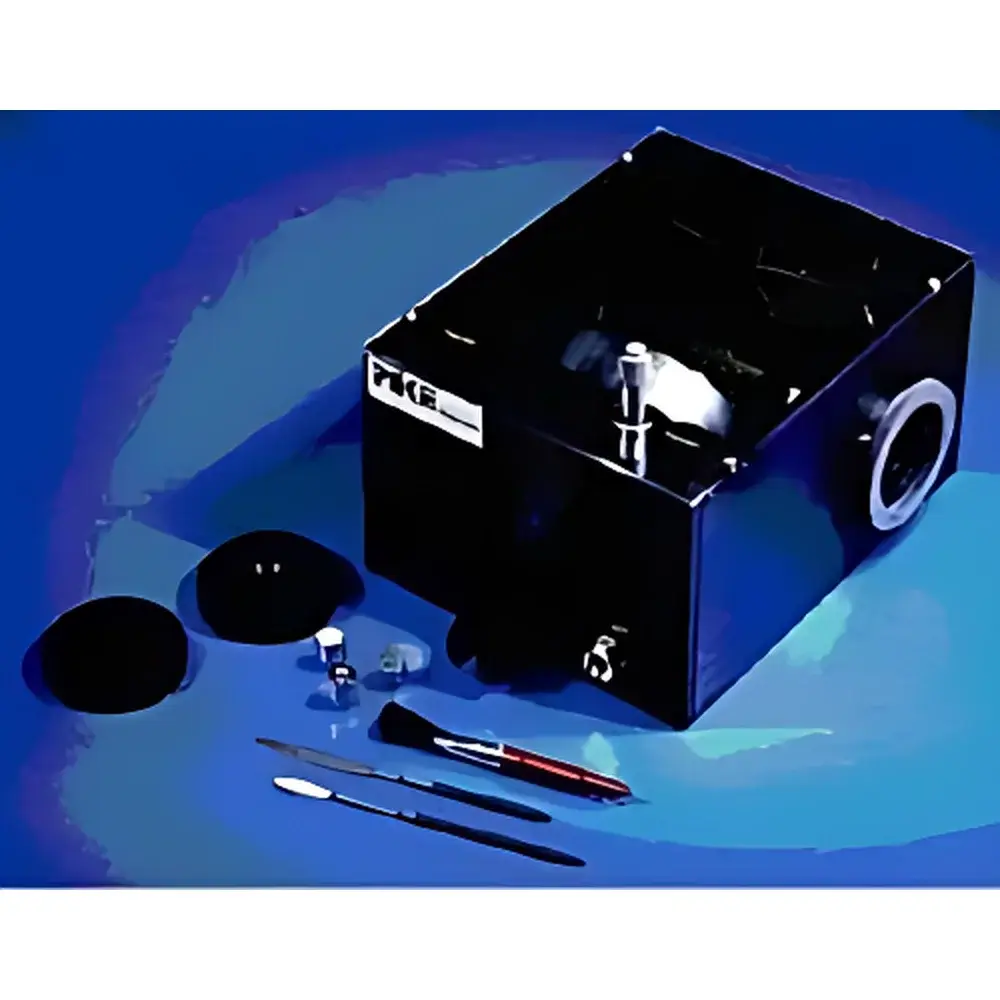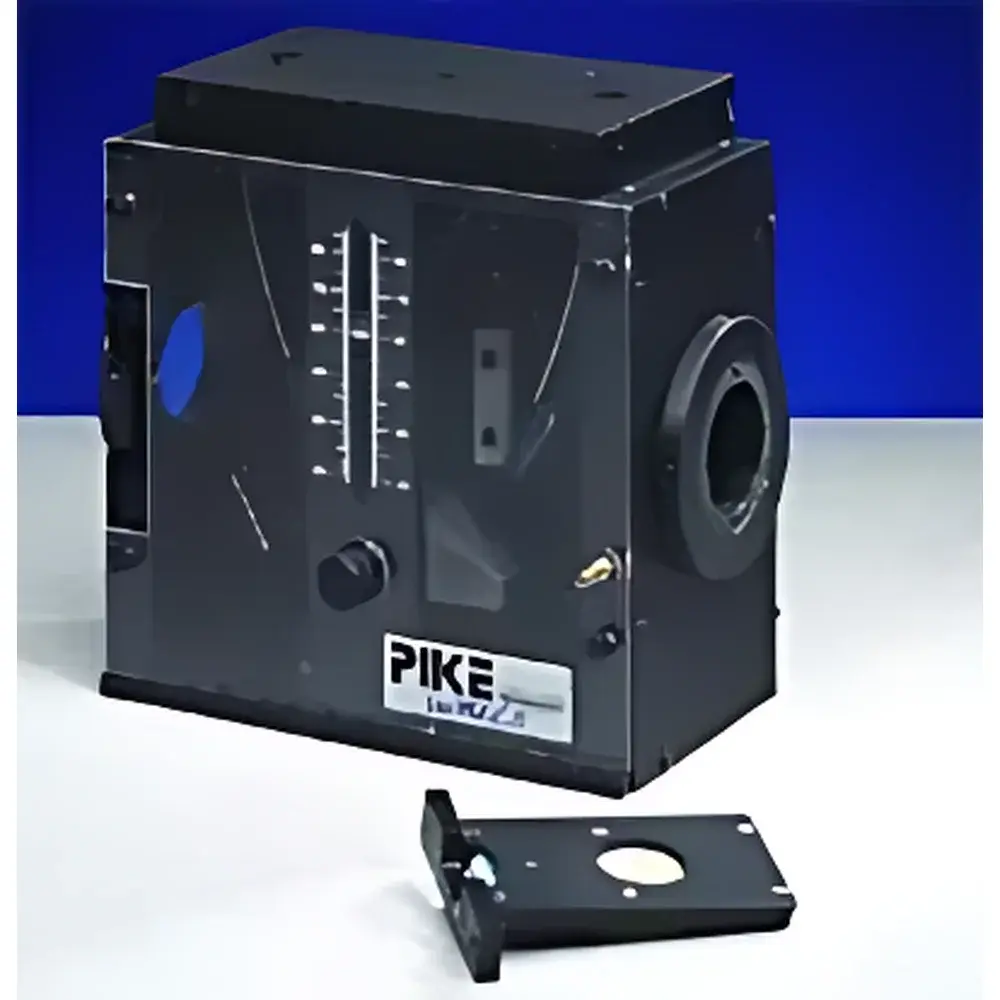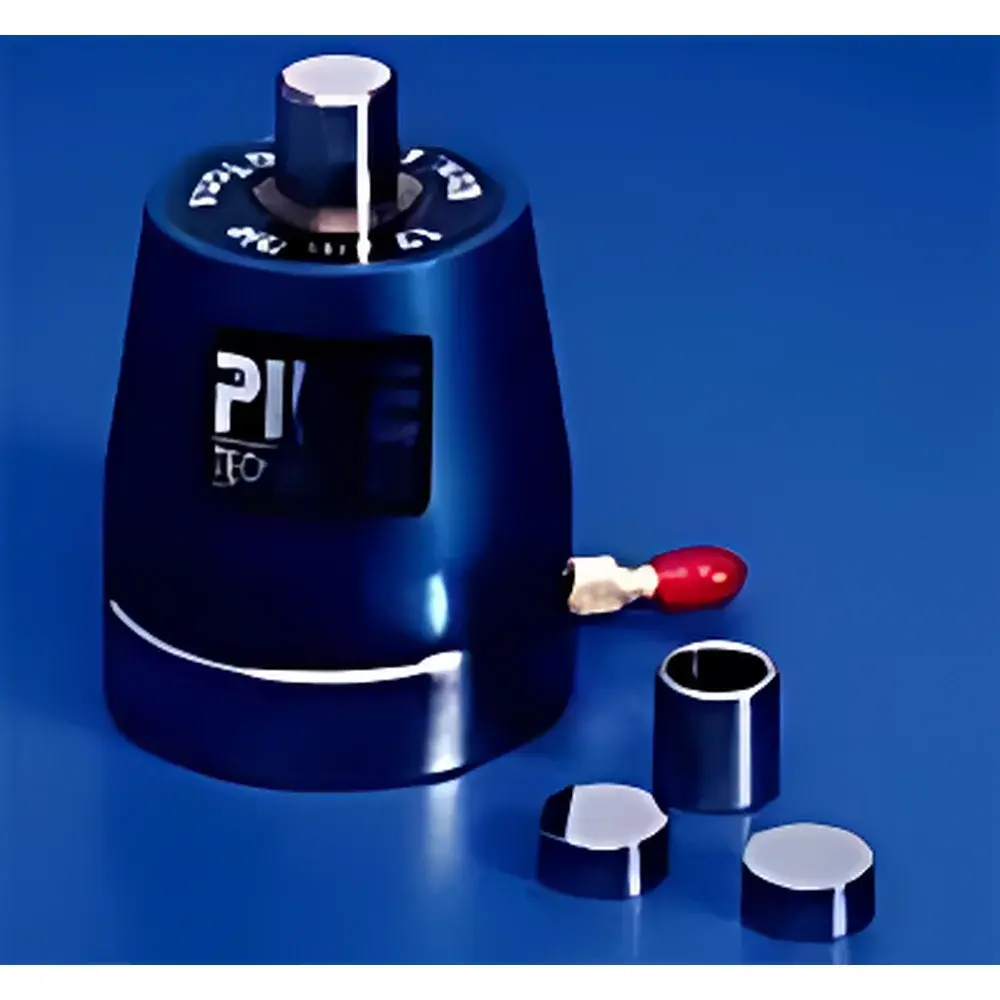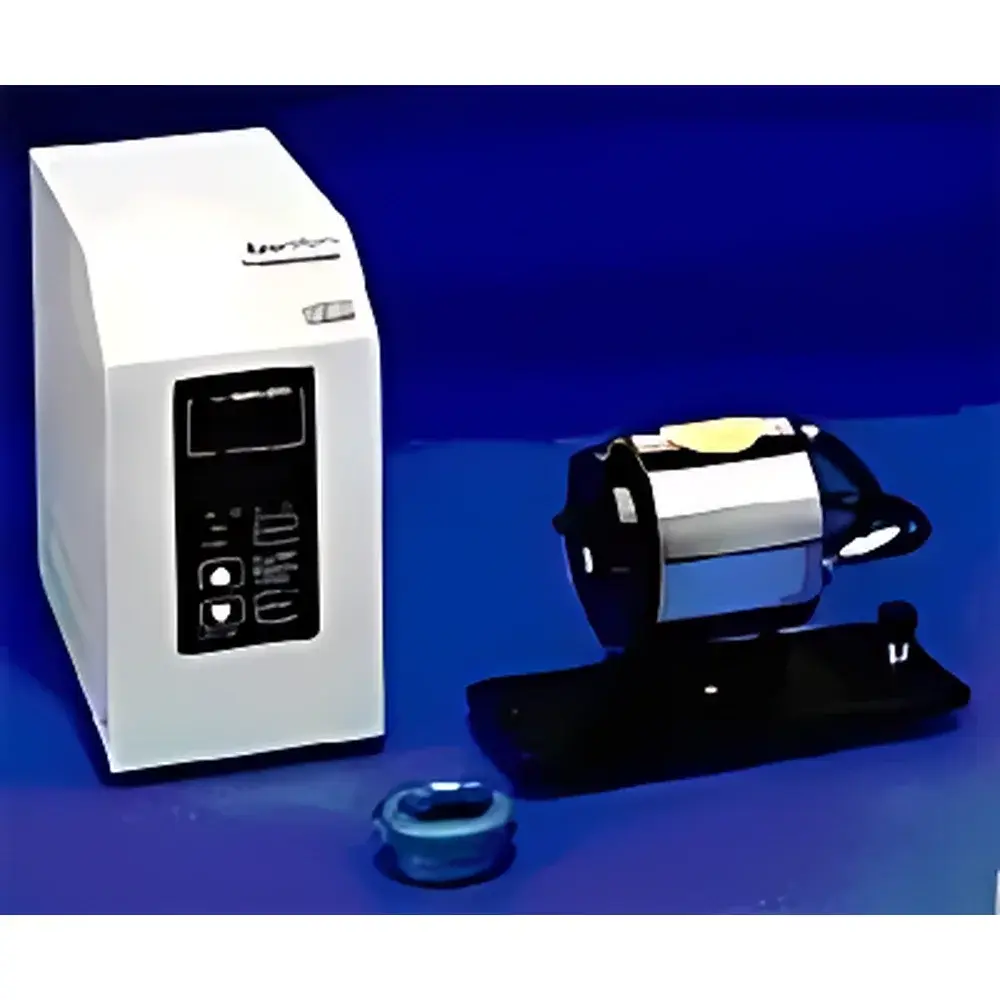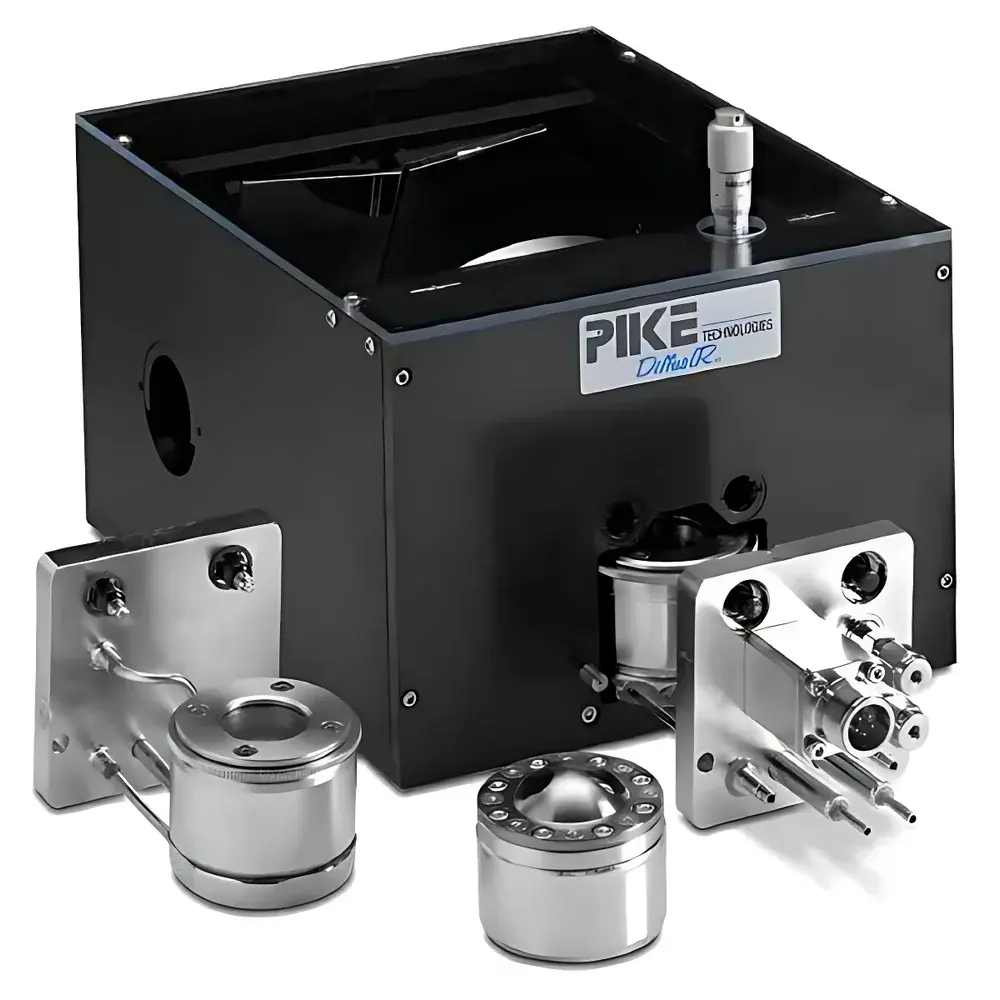
PIKE Diffus High-Temperature Vacuum/High-Pressure Diffuse Reflectance Accessory for FTIR Spectrometers

| Brand | PIKE |
|---|---|
| Origin | USA |
| Model | Diffus |
| Temperature Range | Ambient to 1000 °C |
| Temperature Accuracy | ±0.5% of setpoint |
| Heating Rate | 120 °C/min |
| Vacuum Capability | 1.3×10⁻⁴ Pa (with vacuum cell) |
| Pressure Rating | 1500 psi (with high-pressure cell) |
| Compatible FTIR Platforms | Thermo Scientific, Bruker, Shimadzu, JASCO, Agilent |
Ask about pricing, availability and specifications.
Overview
The PIKE Diffus is a purpose-engineered diffuse reflectance accessory designed for high-temperature, high-vacuum, and high-pressure Fourier-transform infrared (FTIR) spectroscopy applications. Based on the principles of Kubelka–Munk theory, it enables quantitative analysis of powdered, granular, or heterogeneous solid samples without the need for KBr pellet preparation—preserving native sample morphology and minimizing spectral artifacts from scattering or phase mixing. Its modular cell architecture supports interchangeable configurations: a high-vacuum chamber for in situ dehydration, catalytic decomposition, or surface adsorption studies; and a high-pressure cell for real-time monitoring of gas–solid reactions (e.g., CO₂ hydrogenation, NH₃ synthesis, or Fischer–Tropsch processes) under industrially relevant conditions. The accessory integrates seamlessly with major commercial FTIR spectrometers via standardized optical mounts and beam-height alignment mechanisms, maintaining optimal throughput and signal-to-noise ratio across the mid-IR range (4000–400 cm⁻¹).
Key Features
- Wide operational temperature range from ambient to 1000 °C, enabling thermal stability assessment, phase transition detection, and in situ calcination studies.
- Precision temperature control with ±0.5% accuracy over full range and rapid heating capability up to 120 °C/min—critical for kinetic profiling and transient intermediate capture.
- Ultra-high vacuum compatibility down to 1.3×10⁻⁴ Pa, supported by all-metal sealing and integrated vacuum gauge port; suitable for surface science experiments requiring contaminant-free environments.
- Robust high-pressure cell rated to 1500 psi (103 bar), constructed from corrosion-resistant Inconel® and fitted with sapphire IR windows for broad spectral transmission and mechanical integrity.
- Optimized optical geometry ensures uniform illumination and collection efficiency across the diffusing sample bed, minimizing angular dependence and enhancing reproducibility between replicate measurements.
- Modular design allows tool-free swapping between vacuum, high-pressure, and ambient cells—reducing experimental downtime and cross-contamination risk.
Sample Compatibility & Compliance
The PIKE Diffus accommodates a broad spectrum of solid-phase materials including metal oxides, zeolites, supported catalysts, pharmaceutical excipients, polymers, soils, and geological powders. Its non-destructive measurement mode preserves sample integrity for subsequent elemental or structural analysis (e.g., XRD, XPS). The accessory conforms to ISO 17025 requirements for measurement traceability when used with calibrated temperature sensors and certified reference materials. All vacuum and pressure components comply with ASME BPVC Section VIII Division 1 standards for pressure boundary integrity. When operated with validated instrument control software and electronic audit trails, the system supports GLP and GMP workflows aligned with FDA 21 CFR Part 11 expectations for regulated laboratories.
Software & Data Management
The Diffus operates under vendor-neutral control via PIKE’s proprietary RHEO-IR software suite or third-party platforms (e.g., Thermo OMNIC, Bruker OPUS, or Agilent MicroLab) through standard RS-232 or USB virtual COM interfaces. Real-time temperature and pressure telemetry are logged synchronously with spectral acquisition, enabling time-resolved chemometric analysis (e.g., PCA, MCR-ALS). Raw interferograms and processed spectra are stored in universal JCAMP-DX format, ensuring long-term archival compatibility and interoperability with cheminformatics pipelines. Audit trail functionality records operator ID, parameter changes, calibration events, and environmental metadata—essential for regulatory submissions and method validation documentation.
Applications
- In situ characterization of catalyst deactivation mechanisms during hydrothermal aging or coke formation.
- Monitoring surface adsorption/desorption kinetics of probe molecules (e.g., CO, NO, NH₃) on transition metal catalysts under controlled p–T conditions.
- Thermal decomposition pathways of battery cathode materials (e.g., NMC, LFP) and solid electrolytes.
- Polymorph screening and hydrate/dehydrate transitions in active pharmaceutical ingredients (APIs).
- Quantitative analysis of mineral composition in mining and environmental samples using partial least squares (PLS) regression models.
- Corrosion product identification on alloy surfaces exposed to aggressive gaseous environments (e.g., H₂S, SO₂, Cl₂).
FAQ
Is the PIKE Diffus compatible with my existing FTIR spectrometer?
Yes—the accessory features universal beam-height alignment (125 mm ± 2 mm) and includes adapter kits for Thermo Scientific (Nicolet), Bruker (Tensor, Vertex), Shimadzu (IRTracer), JASCO (FT/IR), and Agilent (Cary 630/670) platforms.
Can I perform simultaneous TGA-FTIR coupling with this accessory?
While the Diffus itself is not a thermogravimetric module, its temperature-programmed operation and real-time spectral acquisition enable synchronized data collection with external TGA systems via TTL trigger synchronization and shared time-stamping protocols.
What maintenance is required for the vacuum and high-pressure cells?
Vacuum cells require periodic inspection of metal gaskets and cleaning of optical windows with spectroscopic-grade solvents; high-pressure cells mandate annual hydrostatic certification and O-ring replacement per ASME guidelines.
Does the system support automated sequential measurements?
Yes—RHEO-IR software supports script-driven multi-step protocols, including ramp-hold-cool cycles, pressure stepping, and spectral averaging at defined intervals, fully programmable without manual intervention.
Are NIST-traceable calibration standards available for reflectance quantification?
PIKE offers certified diffuse reflectance standards (e.g., Spectralon® SRM 2035) and provides application notes for Kubelka–Munk transformation validation against reference materials per ASTM E1421.