
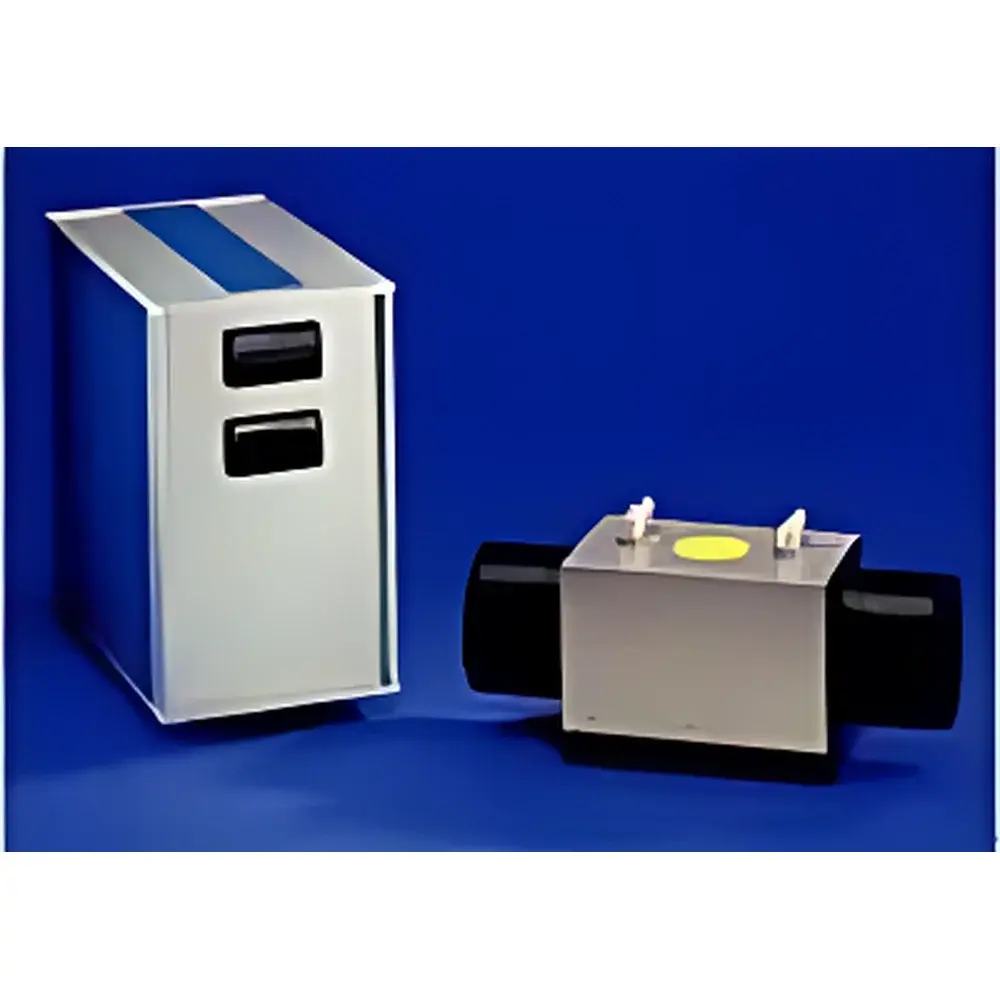
Pike Technologies TGA-FTIR Coupling Interface Model 16x-xxx
| Brand | Pike Technologies |
|---|---|
| Origin | USA |
| Manufacturer Type | Authorized Distributor |
| Import Status | Imported |
| Model | 16x-xxx |
| Pricing | Available Upon Request |
Overview
The Pike Technologies TGA-FTIR Coupling Interface (Model 16x-xxx) is an engineered gas-transfer solution designed to enable real-time, hyphenated thermal analysis and infrared spectroscopic detection. It functions as a dedicated interface between a thermogravimetric analyzer (TGA) and a Fourier-transform infrared (FTIR) spectrometer, facilitating the direct transfer and spectral characterization of evolved gases generated during controlled thermal decomposition or desorption processes. The system operates on the principle of coupling thermally induced mass loss—measured gravimetrically by the TGA—with molecular identification via mid-infrared absorption spectroscopy. Gaseous species evolved from the TGA sample pan are transported through a temperature-controlled, heated stainless-steel capillary line (typically maintained above the dew point of condensable volatiles) into a dedicated FTIR gas cell housed within the spectrometer’s sample compartment. This ensures minimal condensation, reduced residence time, and preservation of transient species integrity for high-fidelity spectral acquisition.
Key Features
- Heated, inert-capillary transfer line (up to 300 °C operational temperature) to prevent condensation of semi-volatile compounds and ensure quantitative gas delivery
- Compact, modular design compatible with standard FTIR sample compartments—no optical realignment required
- Integrated flow control with mass flow metering capability (optional) for precise gas dilution and residence time optimization
- Gas cell options include single-pass or multi-reflection configurations (e.g., 1–10 m pathlength), optimized for sensitivity across broad spectral ranges (4000–400 cm⁻¹)
- Compatible with both purged and sealed FTIR environments; supports continuous N₂ or dry air purge to minimize atmospheric CO₂/H₂O interference
- Robust mechanical interface with standardized flange connections (e.g., Swagelok® or VCR®) for leak-tight integration with major TGA platforms (TA Instruments, Mettler Toledo, PerkinElmer, Netzsch)
Sample Compatibility & Compliance
The interface supports a wide range of solid and powdered samples undergoing thermal degradation, polymer decomposition, catalyst deactivation, pharmaceutical excipient stability testing, or moisture/volatiles quantification. It accommodates sample masses typical of conventional TGA (0.5–50 mg), with evolved gas flow rates aligned to FTIR detector dynamic range and signal-to-noise requirements. The system meets essential engineering safety standards for heated gas handling (UL/CSA Class 1 Div 2 compliance for electrical components) and is fully compatible with GLP- and GMP-aligned workflows when integrated with audit-trail-enabled FTIR software (e.g., Thermo OMNIC, Bruker OPUS). While not a standalone regulated device, its configuration supports adherence to ASTM E1131, ISO 11358, and USP residual solvents methodologies when used in validated analytical sequences.
Software & Data Management
Spectral acquisition is synchronized with TGA weight-loss profiles using external TTL triggering or analog voltage output from the TGA controller. Time-resolved FTIR spectra are collected at user-defined intervals (e.g., 1–60 s per spectrum) and timestamped against corresponding mass loss, temperature, and derivative (DTG) data. Data fusion is performed post-acquisition using vendor-neutral formats (e.g., JCAMP-DX, CSV) or proprietary software modules supporting peak tracking, library searching (Hummel, SDBS, NIST), and multivariate analysis (PCA, MCR-ALS). Full audit trail functionality—including operator ID, parameter changes, and raw data versioning—is retained when operated within 21 CFR Part 11-compliant FTIR software environments.
Applications
- Identification of decomposition intermediates in polymers and composites
- Quantification of residual solvents and plasticizers in pharmaceutical dosage forms
- Analysis of carbonate, hydroxide, and hydrate decomposition steps in inorganic materials
- Monitoring catalytic reaction pathways under programmed temperature conditions
- Distinguishing overlapping thermal events via spectral fingerprinting (e.g., distinguishing CO₂ from organic carbonyls)
- Studying pyrolysis mechanisms in biomass and carbonaceous materials
FAQ
What FTIR spectrometers is the Pike 16x-xxx interface compatible with?
It integrates with most benchtop and research-grade FTIR systems featuring standard sample compartment dimensions and accessible optical paths—including models from Thermo Fisher Scientific, Bruker, PerkinElmer, and Shimadzu.
Can the interface be used with differential scanning calorimetry (DSC) instead of TGA?
No—the design is optimized for continuous gas evolution from gravimetrically monitored samples; DSC typically produces negligible or non-continuous gas flow unsuitable for FTIR coupling without additional trapping/concentration stages.
Is vacuum compatibility supported?
The base configuration is rated for ambient-pressure gas transfer; optional vacuum-rated versions with reinforced seals and low-outgassing materials are available upon request for specialized applications.
Does the interface include the FTIR gas cell?
Yes—the standard package includes a thermostatted, single-pass gas cell (2.5 m pathlength); multi-reflection cells and heated cell variants are offered as configurable options.
How is calibration performed for quantitative gas analysis?
Quantitative interpretation relies on established Beer–Lambert relationships using reference spectra of pure analytes measured under identical pathlength, temperature, and pressure conditions; calibration curves are generated empirically for target compounds using certified gas standards or spiking experiments.





