
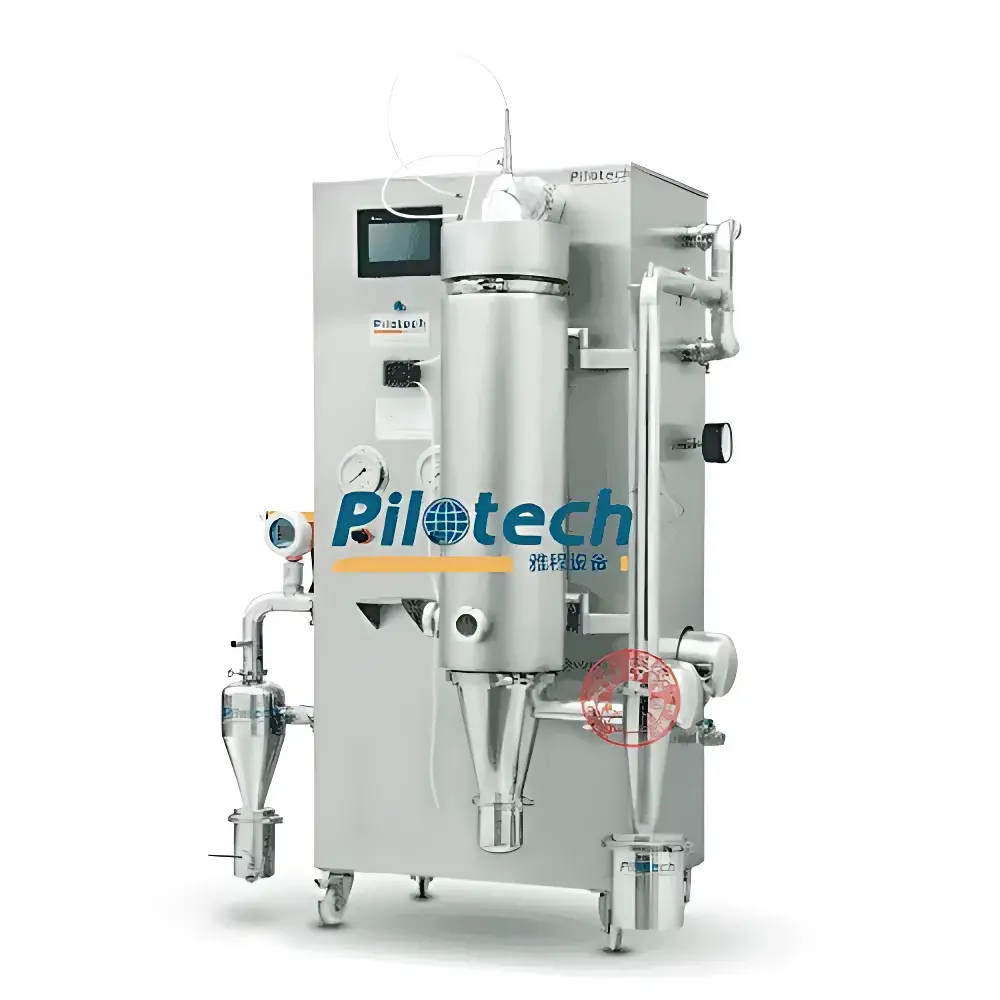
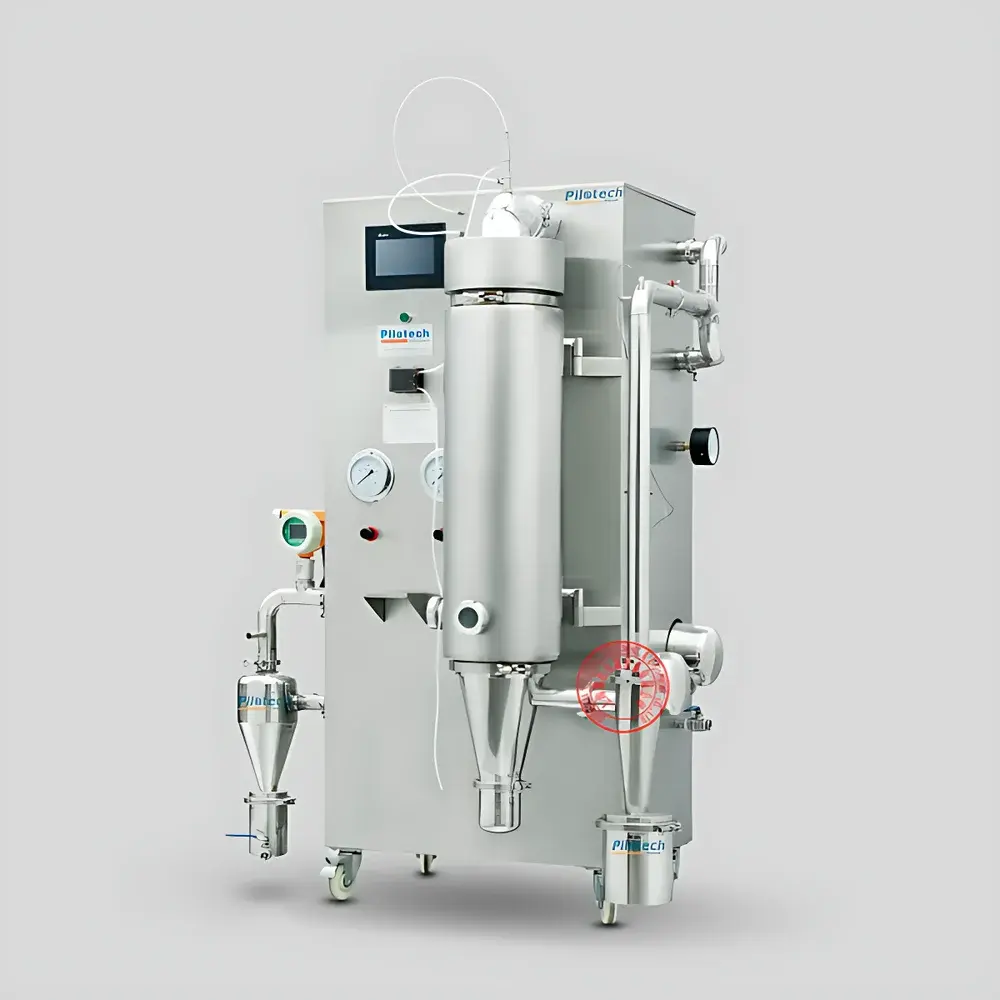
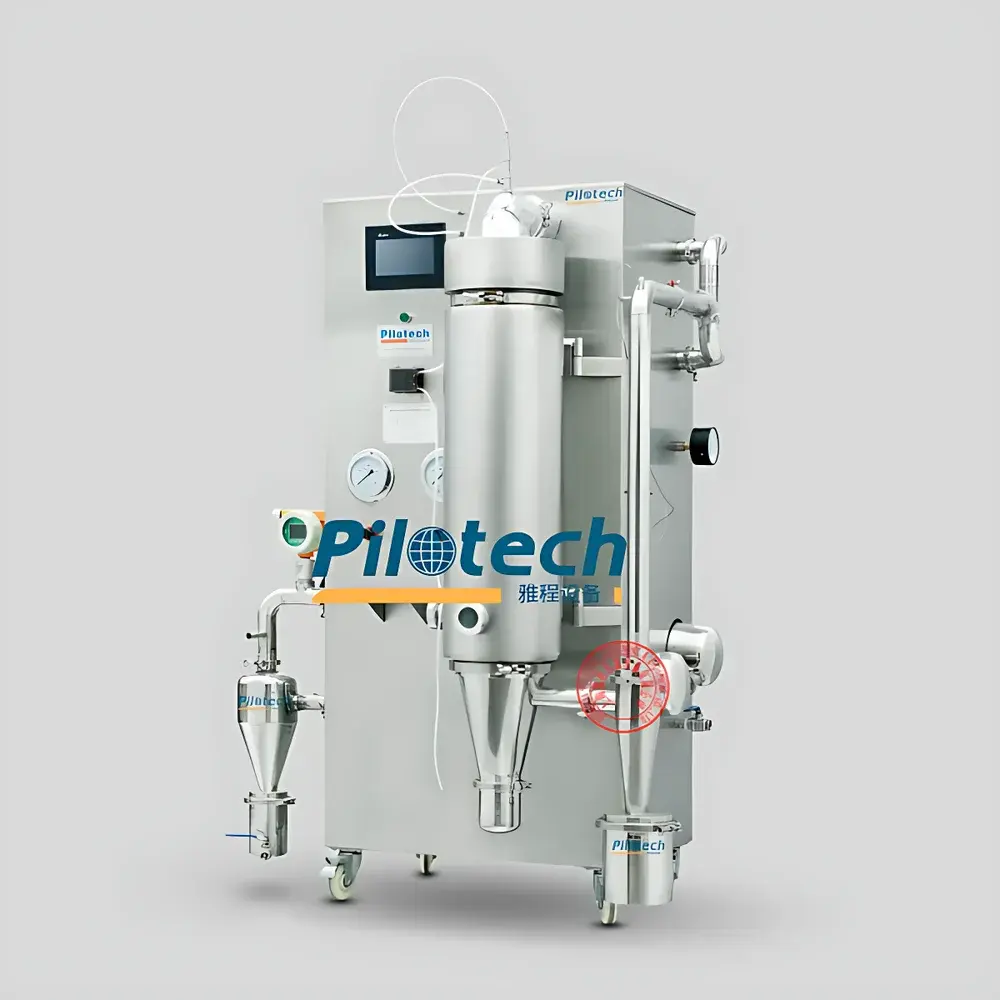
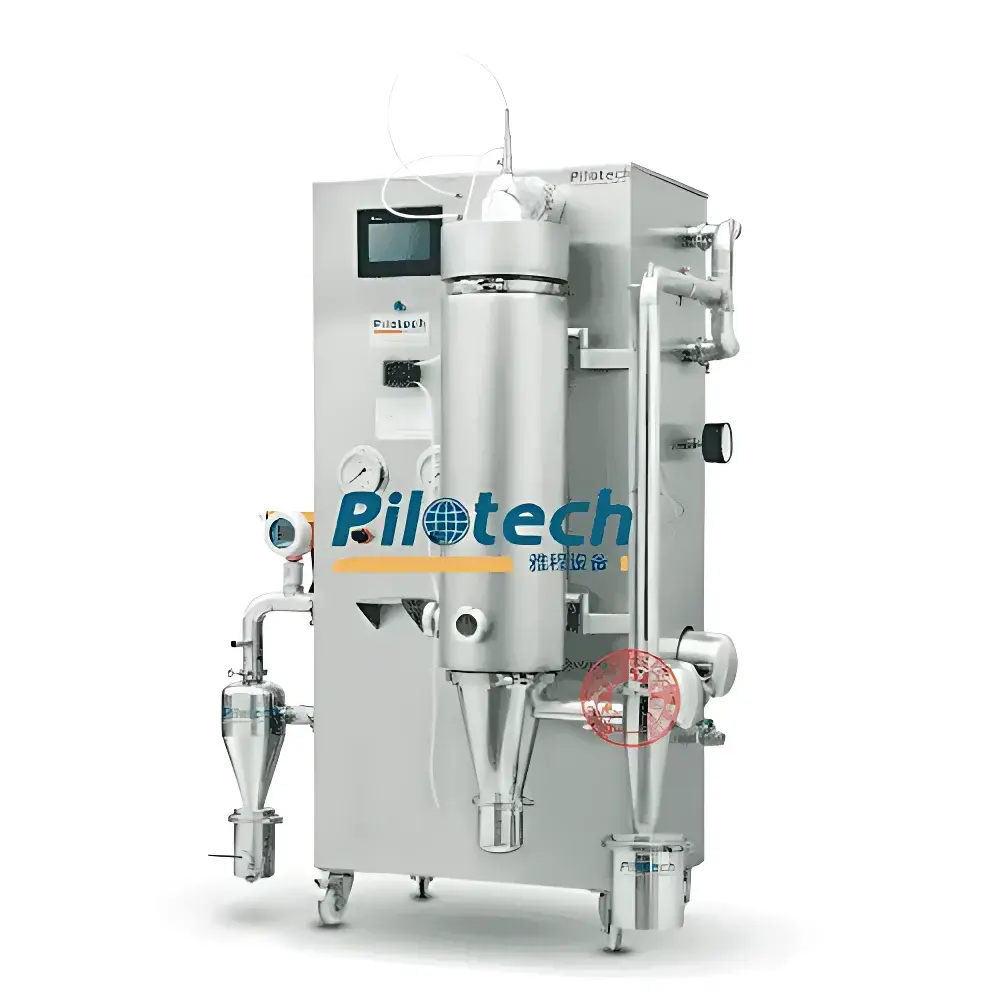
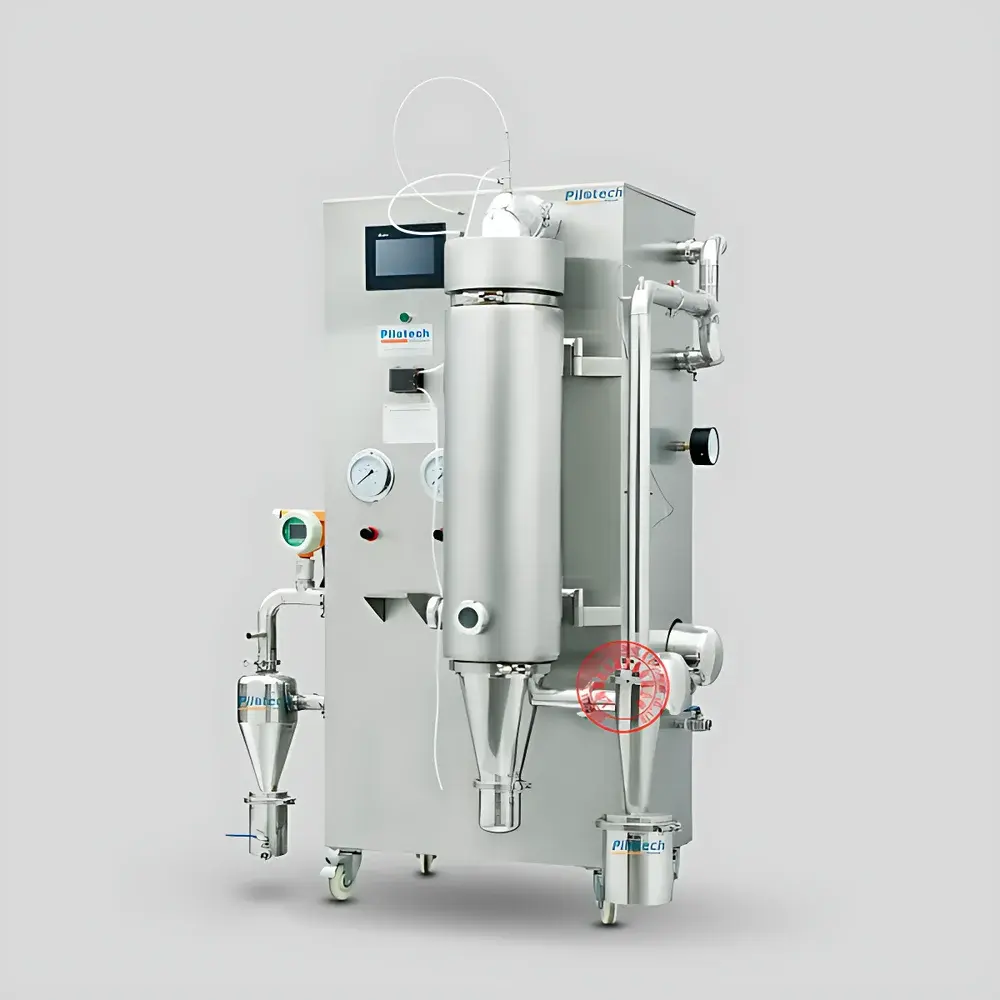
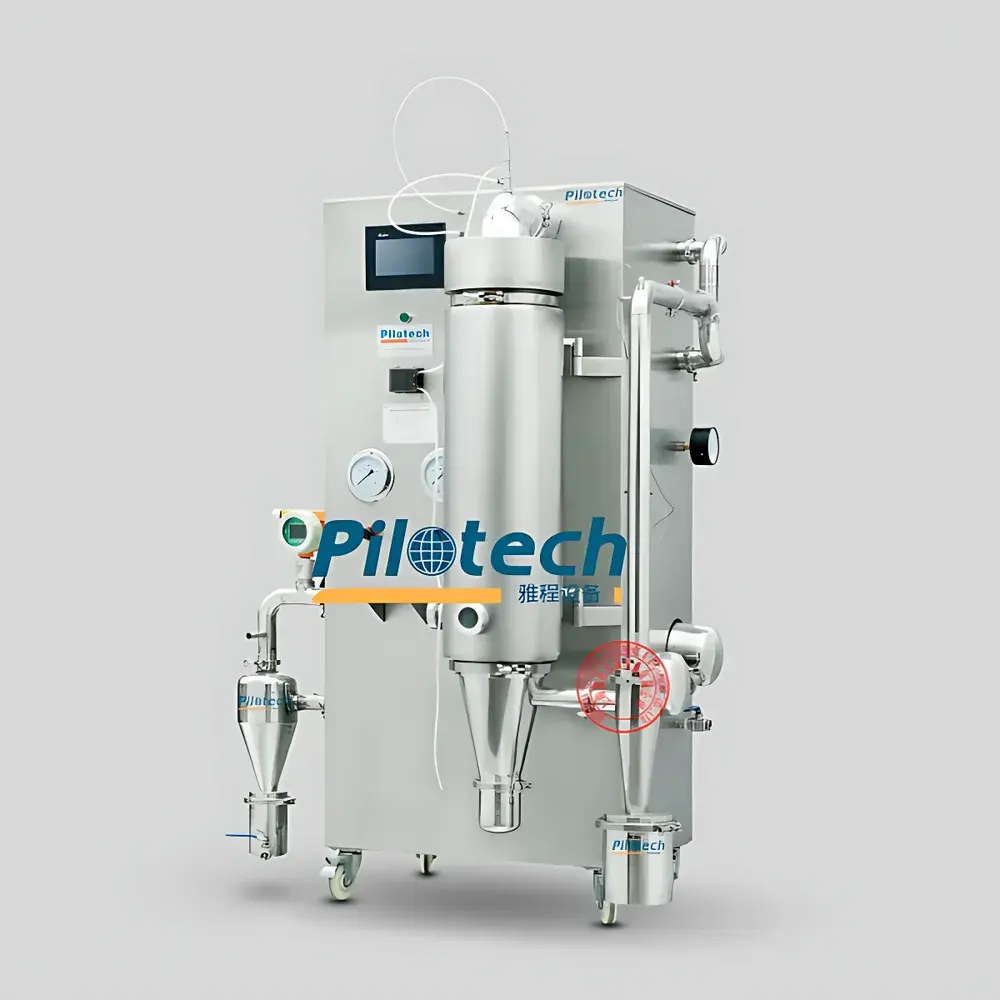
Pilotech YC-019A Closed-Loop Organic Solvent Spray Dryer for Laboratory-Scale Processing
| Brand | Pilotech |
|---|---|
| Origin | Shanghai, China |
| Manufacturer Type | Direct Manufacturer |
| Product Origin | Domestic (China) |
| Model | YC-019A |
| Sample Compatibility | Aqueous, organic, and mixed-phase solutions |
| Maximum Feed Rate | 5000 mL/h |
| Inlet Air Temperature Range | Up to 280 °C |
| Particle Size Output | 3–100 µm |
Overview
The Pilotech YC-019A is a fully enclosed, nitrogen-circulating spray dryer engineered for safe, reproducible, and scalable drying of heat-sensitive, oxidation-prone, or hazardous materials dissolved in organic solvents. Unlike conventional open-loop spray dryers, the YC-019A operates on a closed inert-gas cycle—primarily nitrogen—to eliminate oxygen exposure, suppress flammability risks, and prevent degradation of labile compounds such as proteins, enzymes, pharmaceutical intermediates, and agrochemical actives. Its core principle relies on atomization via a concentric two-fluid nozzle, followed by rapid solvent evaporation in a controlled thermal environment, with concurrent condensation-based solvent recovery and real-time oxygen monitoring. Designed for benchtop-to-pilot transition, it bridges the gap between exploratory formulation development and process validation under GMP-aligned conditions.
Key Features
- Integrated closed-loop nitrogen circulation system with automatic O2 concentration monitoring (alarm and emergency shutdown triggered at ≥2.5% v/v)
- 7-inch color touchscreen HMI with intuitive Chinese/English interface, PLC-based control architecture, and real-time display of inlet temperature, peristaltic pump speed, needle cleaning frequency, and O2 level
- Concentric dual-channel nozzle (standard 2.0 mm; optional 0.5/0.8/1.0/1.5 mm) enabling axial symmetry, minimal wall impaction, and adjustable vertical positioning for optimized droplet trajectory
- PID-controlled heating system with ±2 °C thermal stability across the full operating range (ambient to 280 °C inlet)
- Integrated solvent recovery train comprising air-cooled heat exchanger and cryogenic condenser (optional low-temperature chiller support for low-boiling solvents like acetone, dichloromethane, or ethyl acetate)
- Post-drying safety protocol: automatic post-run fan cooling sequence ensures internal chamber temperature drops to ≤40 °C before shutdown—preventing thermal damage and operator risk
- Corrosion-resistant blower assembly positioned upstream of the drying chamber; no contact between organic vapor and moving components, ensuring long-term mechanical integrity
- Minimal sample requirement: functional operation validated from 100 mL feed volume, supporting early-stage screening without material waste
Sample Compatibility & Compliance
The YC-019A accommodates aqueous, polar aprotic (e.g., DMF, DMSO), chlorinated (e.g., chloroform), and aliphatic/aromatic (e.g., toluene, hexane) solvent systems—subject to compatibility verification with wetted materials (316L stainless steel, PTFE seals, borosilicate glass). Its sealed architecture aligns with fundamental requirements of ISO 14001 (environmental management) and OSHA 1910.106 (flammable liquid handling). While not certified to ATEX or IECEx standards out-of-the-box, its design basis supports third-party certification pathways for Class I, Division 1 environments. For regulated R&D, the system’s programmable logic controller (PLC) enables audit-ready parameter logging, supporting GLP documentation and FDA 21 CFR Part 11-compliant data integrity when paired with validated software extensions.
Software & Data Management
All operational parameters—including temperature ramps, pump flow profiles, O2 traces, and alarm timestamps—are logged internally with UTC-stamped CSV export capability. The embedded controller supports user-defined drying protocols, multi-step temperature programming, and password-protected parameter locking to ensure method consistency across operators. Optional Ethernet/Wi-Fi connectivity allows remote monitoring and integration into centralized laboratory information management systems (LIMS). Raw data files retain metadata (operator ID, batch ID, ambient humidity/pressure if external sensors are connected), facilitating traceability in preclinical formulation studies and tech transfer documentation.
Applications
- Stabilization of biologics (peptides, monoclonal antibody fragments) via spray drying into inhalable or lyophilization-compatible powders
- Encapsulation of lipophilic APIs in polymer matrices (e.g., PLGA, HPMCAS) using solvent-based co-precipitation
- Rapid prototyping of catalyst nanoparticles (e.g., Pd/C, Ni-B) from organometallic precursors in THF or ethanol
- Production of microencapsulated flavors, fragrances, or probiotics for food-grade applications requiring residual solvent limits <50 ppm
- Processing of pyrophoric organolithium reagents or air-sensitive metal-organic frameworks (MOFs) under inert atmosphere
FAQ
Can the YC-019A handle chlorinated solvents such as dichloromethane or chloroform?
Yes—provided the condenser temperature is maintained below the solvent’s dew point and all elastomers (O-rings, tubing) are verified for chemical resistance. Consult the Materials Compatibility Matrix before initial use.
Is nitrogen consumption rate specified, and can the system be integrated with an on-site nitrogen generator?
Nitrogen purge volume is dynamically adjusted based on O2 sensor feedback; typical steady-state consumption is 0.8–1.2 m³/h. Integration with PSA or membrane nitrogen generators is supported via standard 1/2″ NPT inlet and pressure regulation.
What validation documentation is provided for IQ/OQ protocols?
Pilotech supplies a Factory Acceptance Test (FAT) report, electrical schematics, component traceability sheets, and a basic User Requirement Specification (URS) template. Full GMP qualification support is available through authorized service partners.
Does the system meet explosion-proof requirements for Class I, Division 1 areas?
The base configuration is not certified for hazardous locations. However, structural modifications—including intrinsically safe instrumentation, purged enclosures, and ATEX-rated motors—can be implemented during custom build-out.
How is residual solvent quantified in the final powder?
The YC-019A does not include inline GC or FTIR. Residual solvent analysis requires off-line testing per USP or ICH Q3C guidelines using headspace-GC methods on collected samples.



