
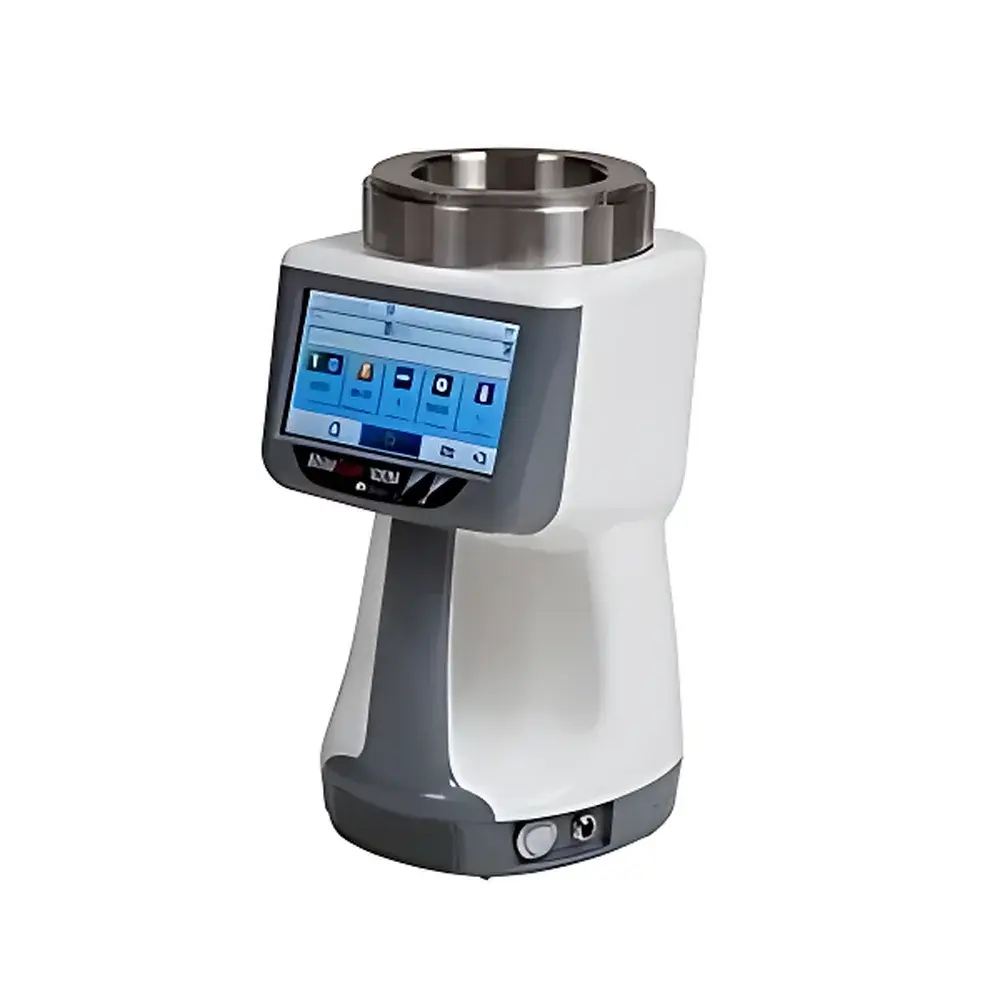
PMS MiniCapt Portable Air Microbial Sampler (100 L/min)
| Brand | PMS |
|---|---|
| Origin | USA |
| Manufacturer Type | Authorized Distributor |
| Import Status | Imported |
| Model | PMS MiniCapt |
| Flow Rate | 100 L/min |
| Flow Measurement Accuracy | ±1% of reading |
| Sampling Duration Range | 0–10 minutes |
| Operating Temperature Range | up to 45 °C |
| Operating Relative Humidity | up to 95% RH |
| Sampling Principle | Slit-to-Agar Impaction (ISO 14698-1 compliant) |
| Sterilization | Autoclavable BioCapt Impactor Head |
| Exhaust Filtration | Integrated HEPA (≥99.99% @ 0.3 µm) |
| Optional Accessories | Compressed Gas Kit, Isolator Sampling Kit |
| Compliance | Designed for ISO 14698-1, ISO 14644-1/2, EU GMP Annex 1, USP <1116>, FDA Aseptic Processing Guidance |
Overview
The PMS MiniCapt Portable Air Microbial Sampler (100 L/min) is an engineered solution for quantitative viable airborne microorganism monitoring in controlled environments. It operates on the principle of slit-to-agar impaction—a validated physical collection method defined in ISO 14698-1—where aerosolized particles are drawn at a calibrated flow rate across precisely machined laser-cut slits and directed onto the surface of solidified microbiological growth media (e.g., TSA, SDA). This geometry ensures laminar, non-turbulent airflow across the agar surface, minimizing particle bounce and re-aerosolization while maximizing deposition efficiency for microorganisms ≥0.8 µm aerodynamic diameter. With a nominal flow rate of 100 L/min, the MiniCapt achieves 1 m³ air sampling in just 10 minutes—enabling rapid, repeatable environmental monitoring during critical operations such as aseptic filling, isolator qualification, or cleanroom certification.
Key Features
- Calibrated volumetric flow control with real-time feedback and ±1% accuracy over the full 0–100 L/min range
- Autoclavable BioCapt impactor head featuring 20 individually aligned precision slits—manufactured via laser micromachining for consistent jet velocity profile and uniform impaction distribution
- Integrated HEPA exhaust filter (≥99.99% @ 0.3 µm) to prevent cross-contamination of classified environments during operation
- Programmable sampling duration (0–10 min in 1-second increments), supporting both single-point and time-series monitoring protocols
- Rugged, lightweight portable chassis (under 4.5 kg) with ergonomic handle and integrated battery option for extended field use
- Modular accessory compatibility: Compressed Gas Kit (for sampling from pressurized lines) and Isolator Sampling Kit (with glove-port adapter and static-dissipative tubing)
Sample Compatibility & Compliance
The MiniCapt is validated for use with standard microbiological culture media—including Tryptic Soy Agar (TSA), Sabouraud Dextrose Agar (SDA), and selective formulations—mounted in standard 90 mm Petri dishes. Its impaction kinetics meet the physical collection efficiency requirements specified in ISO 14698-1 Annex B for particles ≥0.8 µm, and its biological recovery performance aligns with ISO 14698-2 validation protocols when paired with appropriate incubation and enumeration methods. The system supports compliance with EU GMP Annex 1 (2022), USP Environmental Monitoring, FDA Guidance for Industry: Sterile Drug Products Produced by Aseptic Processing (2004), and ISO 14644-2:2015 for cleanroom performance testing. All firmware and configuration logs retain audit trails compatible with 21 CFR Part 11-compliant data management systems.
Software & Data Management
The MiniCapt operates via embedded microcontroller firmware with no external PC dependency. All sampling parameters—including start time, duration, flow rate, and operator ID—are stored internally with timestamping and non-volatile memory retention. Optional Bluetooth-enabled data export (via PMS Connect mobile app or desktop utility) provides CSV-formatted records traceable to individual sampling events. Raw flow calibration data, impactor head serial number, and sterilization cycle history (if logged manually) can be archived alongside environmental metadata to support GLP/GMP documentation workflows. Firmware updates are delivered via secure signed packages and require administrative authentication.
Applications
- Routine environmental monitoring (EM) in Grade A/B pharmaceutical cleanrooms and isolators
- Media fill environmental challenge studies per EU GMP Annex 1 §8.72
- Qualification and requalification of laminar airflow workstations and RABS systems
- Investigation of microbial excursions using time-resolved spatial sampling
- Validation of HVAC filtration integrity and room recovery testing
- Monitoring of compressed gases (with optional Compressed Gas Kit) per ISO 8573-7 and PDA TR27
FAQ
Is the MiniCapt suitable for ISO Class 5 (Grade A) environments?
Yes—the device’s HEPA-filtered exhaust, autoclavable impactor, and laminar slit geometry ensure it meets the contamination control requirements for Grade A applications when operated per manufacturer instructions and qualified per ISO 14644-3.
Can the BioCapt impactor head be sterilized multiple times without degradation?
Yes—each BioCapt head is constructed from medical-grade stainless steel and rated for ≥50 autoclave cycles (121 °C, 15 psi, 20 min) without dimensional or surface finish compromise.
Does the MiniCapt provide real-time particle count data?
No—it is a viable (culture-based) sampler only; non-viable particle counting requires complementary instrumentation such as optical particle counters (OPCs) per ISO 21501-4.
What is the recommended calibration interval?
Annual flow calibration is recommended, traceable to NIST-certified primary standards; field verification using a calibrated wet test meter or bubble flowmeter should be performed prior to each critical sampling campaign.
How is false-positive differentiation supported?
The 20-slit array creates a reproducible, spatially resolved impact pattern on the agar surface—allowing trained microbiologists to distinguish true environmental isolates (distributed across the impact zone) from handling artifacts (e.g., clustered colonies near Petri dish edges or lid contact zones).
Related Products







