
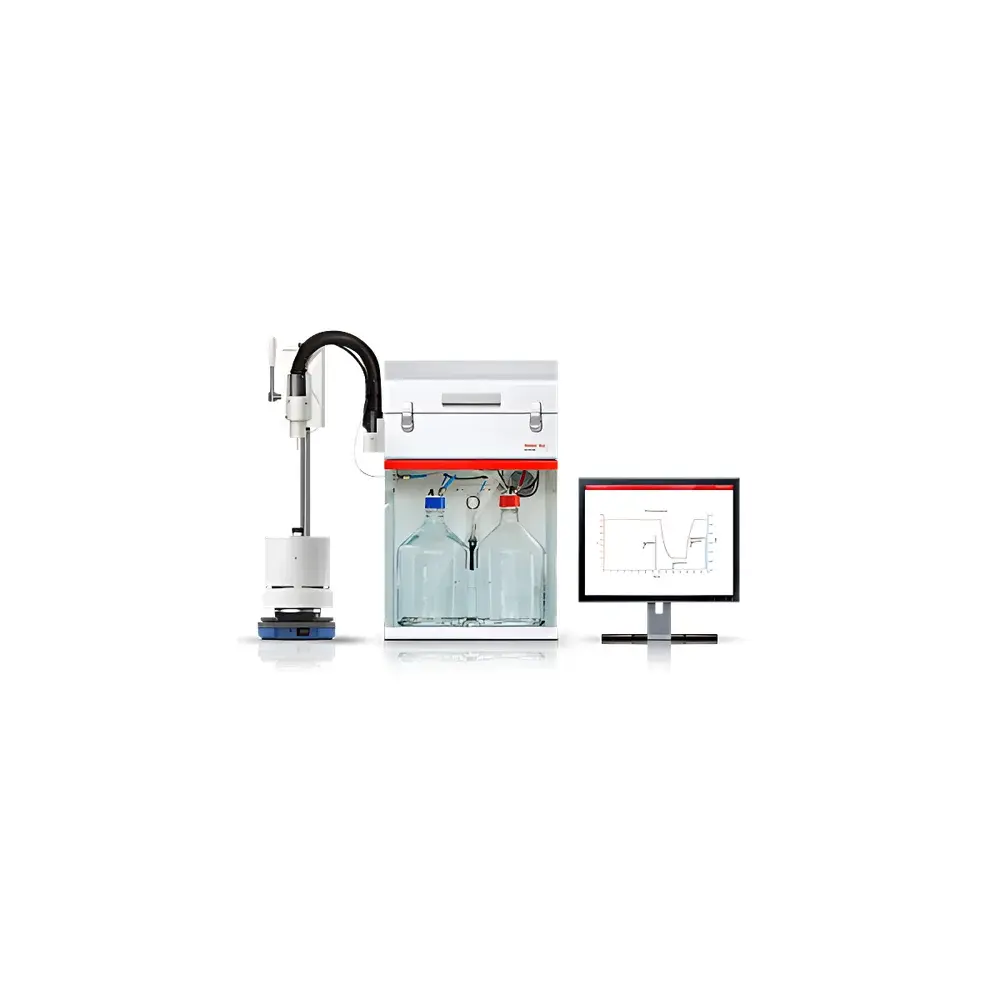
Polymer Char CRYSTEX QC Automated Xylene Solubles Analyzer for Polyolefins (QC Edition)
| Brand | Polymer Char |
|---|---|
| Origin | Spain |
| Model | CRYSTEX QC |
| Sample Vessel Capacity | 240 mL |
| Maximum Sample Mass | 4 g |
| Analysis Time per Sample | 150 min |
| Detector Configuration | Dual-channel concentration detector + composition detector |
| Operational Mode | Unattended 7×24 h |
| Solvent Handling | Fully enclosed, operator-free solvent exposure |
| Compliance | Designed for ISO 16152, ASTM D5492, and internal QC/GLP workflows |
| Software | CRYSTEX Control & Evaluation Suite with audit trail and user access levels |
Overview
The Polymer Char CRYSTEX QC Automated Xylene Solubles Analyzer is a dedicated benchtop instrument engineered for precise, reproducible quantification of xylene solubles (XS) in polyolefin materials—primarily polypropylene (PP) and ethylene-propylene copolymers. It implements standardized thermal fractionation via temperature-programmed precipitation (TPP) in boiling xylene, followed by automated hot filtration, solvent recovery, and gravimetric determination of soluble and insoluble fractions. Unlike manual or semi-automated methods, the CRYSTEX QC executes the full ASTM D5492 and ISO 16152-compliant workflow—including dissolution, hot filtration, washing, drying, and weighing—without operator intervention. Its design targets high-throughput quality control environments where robustness, walk-away operation, and analytical traceability are mandatory. The system integrates dual optical detection (concentration and composition) to simultaneously derive compositional parameters—including ethylene content in total sample, soluble fraction, and insoluble fraction—alongside intrinsic viscosity (IV) of each fraction using calibrated viscometric flow cells.
Key Features
- Fully automated thermal fractionation: Dissolution at 135 °C in refluxing xylene, controlled cooling ramp (0.5–1.0 °C/min), hot vacuum filtration at 100 °C, and solvent recovery via integrated distillation
- Large-capacity sample handling: 240 mL reaction vessel accommodates up to 4 g of heterogeneous polyolefin powder or granules—minimizing sampling bias and enabling representative analysis of production-grade material
- Unattended 7×24 operation: Scheduled batch runs, automatic error recovery, and remote diagnostics support continuous laboratory throughput without manual oversight
- HSE-optimized solvent management: Closed-loop xylene circulation with <15 mL net consumption per analysis; no open solvent transfers or operator contact with hot xylene vapors
- Dual-detector architecture: UV-Vis concentration detector and near-infrared (NIR) composition detector provide real-time monitoring of dissolution kinetics and copolymer composition gradients across fractions
- Integrated viscometry: Capillary-based intrinsic viscosity measurement for total sample, XS, and XI fractions—calibrated against standard polystyrene or polypropylene reference materials
- Modular hardware design: Tool-free access to filtration modules, solvent traps, and detector cells enables rapid maintenance and validation in regulated environments
Sample Compatibility & Compliance
The CRYSTEX QC accepts raw polyolefin powders, pellets, and flake samples—regardless of crystallinity distribution or particle size heterogeneity. Its large-volume dissolution chamber mitigates segregation effects common in bimodal or reactor-grade PP. The instrument conforms to method requirements of ISO 16152 (Plastics — Polyolefins — Determination of xylene solubles), ASTM D5492 (Standard Test Method for Xylene Solubles in Polypropylene), and aligns with analytical validation expectations under ICH Q2(R2) and FDA 21 CFR Part 11 when configured with electronic signatures and audit-trail-enabled software. All critical process parameters—including dissolution temperature stability (±0.3 °C), filtration vacuum setpoint (≤−85 kPa), and drying profile (110 °C, N₂ purge, 60 min)—are logged with timestamps and operator IDs for GLP/GMP documentation.
Software & Data Management
CRYSTEX Control & Evaluation Suite provides role-based access (operator, supervisor, administrator), configurable method templates, and full electronic lab notebook (ELN) integration. Each analysis generates a timestamped report containing raw detector traces, fraction mass values, composition profiles, IV calculations, and statistical summaries (mean, std, RSD). Audit trails record all parameter modifications, user logins, calibration events, and result approvals. Data export supports CSV, PDF/A-2, and XML formats compatible with LIMS platforms (e.g., LabWare, Thermo Fisher SampleManager). Optional 21 CFR Part 11 compliance package includes digital signatures, biometric authentication, and immutable archive storage.
Applications
- Production QC of PP homopolymers and impact copolymers: Monitoring XS content as a proxy for amorphous phase content and impact modifier dispersion
- R&D of new catalyst systems: Correlating XS, ethylene incorporation, and IV distributions to polymerization kinetics and microstructure
- Batch release testing: Validating consistency across production lots per internal specifications or customer technical agreements
- Troubleshooting melt flow instability: Identifying shifts in soluble fraction molecular weight distribution via IV trends
- Regulatory submission support: Generating auditable, standards-aligned data packages for ISO/IEC 17025-accredited laboratories
FAQ
What standards does the CRYSTEX QC comply with?
It implements ASTM D5492 and ISO 16152 as primary test methods and supports validation under ISO/IEC 17025, ICH Q2(R2), and FDA 21 CFR Part 11 when fully configured.
Can the instrument analyze ethylene-propylene rubber (EPR) or thermoplastic polyolefin (TPO) blends?
Yes—it handles heterogeneous polyolefin systems including TPOs, reactor blends, and impact copolymers, provided the matrix remains soluble in hot xylene.
Is operator training required for routine operation?
Minimal training is needed: Operators require <2 hours for basic run initiation and report review; advanced method development and maintenance are supported by Polymer Char’s certified service engineers.
How is system performance verified between calibrations?
Daily system suitability checks include reference standard analysis (certified PP XS standard), blank solvent runs, and pressure/vacuum integrity tests—all documented automatically in the audit trail.
What maintenance intervals are recommended?
Filter cartridges: replaced after every 20 analyses; solvent traps: cleaned weekly; NIR detector calibration: verified monthly using certified reference standards.






