
Polymer Char TGIC Analysis Service for Comonomer Content and Distribution in Polyolefin Copolymers
| Brand | Polymer Char |
|---|---|
| Origin | Spain |
| Manufacturer Type | Authorized Distributor |
| Origin Category | Imported |
| Model | TGIC Analysis Service |
| Pricing | Available Upon Request |
Overview
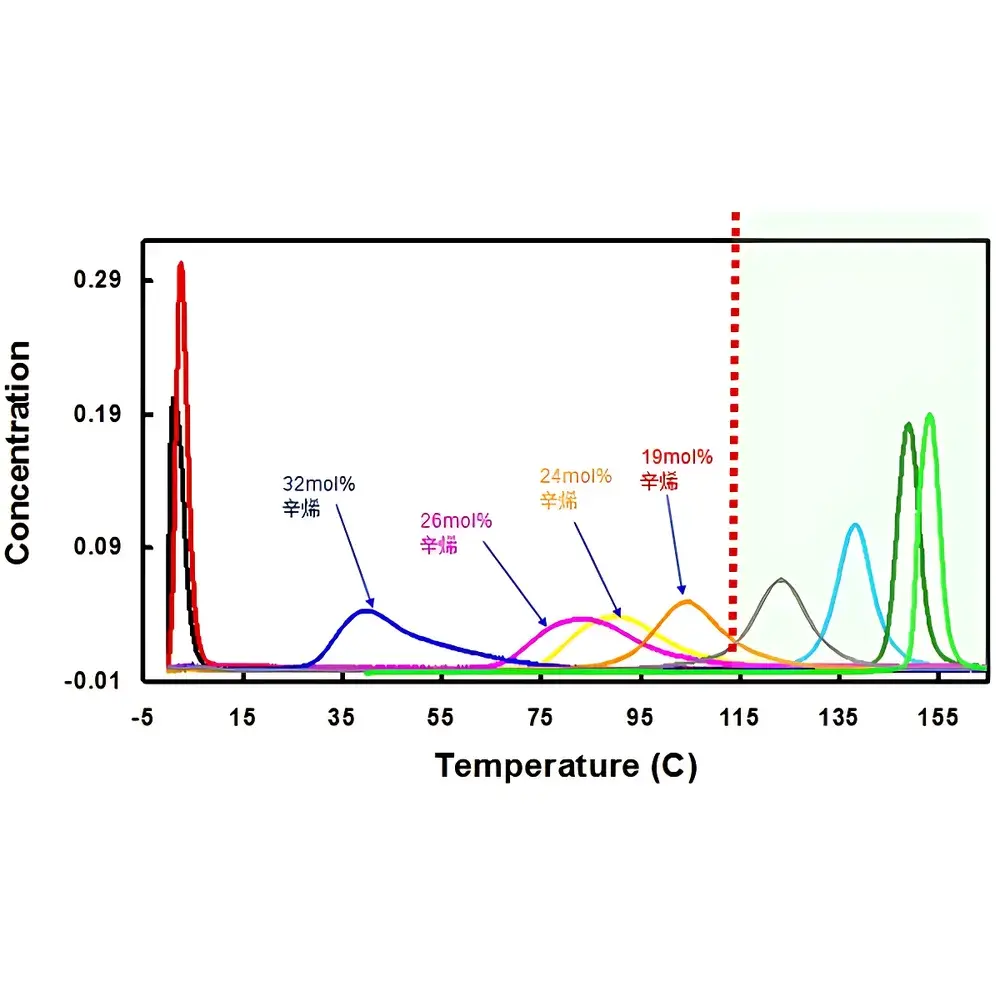
The Polymer Char TGIC (Temperature Gradient Interaction Chromatography) Analysis Service is a specialized characterization solution designed for the quantitative determination of comonomer content and its compositional distribution across the molecular architecture of polyolefin copolymers—particularly ethylene–α-olefin systems such as ethylene–octene, ethylene–butene, and ethylene–hexene. Unlike conventional Crystallization Analysis Fractionation (CRYSTAF) or Crystallization Elution Fractionation (CEF), TGIC leverages a dual-separation mechanism rooted in both thermodynamic crystallizability and surface interaction affinity. In this technique, polyolefin chains are fractionated on a graphite-based stationary phase under a precisely controlled temperature gradient (typically spanning 30–155 °C). Separation arises from differential adsorption–desorption equilibria between polymer segments and the graphite surface: higher ethylene content increases backbone linearity and enhances π–π interactions with graphite, resulting in stronger adsorption and requiring elevated temperatures for elution. This enables high-resolution separation of fractions differing in short-chain branching (SCB) density—even within amorphous or elastomeric domains where traditional crystallization-based methods fail to resolve composition heterogeneity.
Key Features
- Engineered for compositional heterogeneity analysis in low-crystallinity and elastomeric polyolefin fractions, including ethylene–octene rubber phases
- Graphite-packed chromatographic columns minimize co-crystallization artifacts common in CEF/CRYSTAF, preserving true compositional distribution profiles
- Operates at elevated final elution temperatures up to 155 °C, extending resolution window into highly branched, low-melting domains
- Compatible with standardized solvent systems (e.g., 1,2,4-trichlorobenzene) and fully integrated with Polymer Char’s high-temperature GPC/SEC platforms
- Delivered as a certified analytical service—including raw chromatograms, calibrated comonomer distribution curves (CCD), and quantitative SCB content per fraction (mol%)
Sample Compatibility & Compliance
This service accepts solid or pelletized polyolefin copolymer samples (minimum 50 mg recommended; ≥99.5% purity preferred). It is validated for metallocene-catalyzed, Ziegler–Natta, and post-metallocene systems exhibiting broad or bimodal comonomer distributions. All analyses adhere to internal quality control protocols aligned with ISO 1133 (melt flow index reference), ASTM D6474 (polyolefin compositional analysis), and GLP-compliant documentation standards. Full audit trails—including instrument calibration logs, column lot traceability, and temperature gradient verification reports—are provided upon request for regulatory submissions or internal QA/QC review.
Software & Data Management
Data acquisition and processing utilize Polymer Char’s proprietary IRIS software suite, which supports baseline correction, peak deconvolution, and conversion of retention temperature to comonomer content via pre-calibrated reference standards (e.g., ethylene–octene copolymer standards with known SCB distributions). The software generates ASTM-compliant reports containing: (i) normalized CCD curves, (ii) cumulative weight-fraction vs. comonomer content plots, (iii) summary statistics (mean comonomer content, standard deviation, skewness), and (iv) optional integration with GPC-MALS data for simultaneous molar mass–composition correlation. All datasets are exportable in CSV, PDF, and XML formats, and support 21 CFR Part 11–compliant electronic signatures when deployed in regulated environments.
Applications
- Correlating comonomer distribution breadth with mechanical properties (e.g., tensile set, impact strength, seal initiation temperature)
- Validating catalyst performance in multi-reactor processes (e.g., gas-phase cascade reactors producing bimodal LLDPE)
- Root-cause analysis of processing inconsistencies linked to compositional heterogeneity in film-grade resins
- Supporting patent documentation and regulatory filings requiring compositional microstructure evidence
- Quality benchmarking against competitor materials during new product development
FAQ
What sample quantity is required for reliable TGIC analysis?
A minimum of 50 mg of dry, homogenized polymer is recommended; lower masses may be accepted with prior consultation and adjusted detection sensitivity.
Can TGIC distinguish between different α-olefin comonomers (e.g., butene vs. hexene) in a ternary system?
TGIC primarily resolves based on overall short-chain branching density—not individual comonomer identity. For α-olefin speciation, coupling with FTIR or NMR validation is advised.
Is method transfer available for in-house implementation?
Yes—Polymer Char offers full TGIC system packages including graphite columns, temperature-gradient ovens, IR detection modules, and method transfer support under commercial licensing agreements.
How does TGIC compare to TREF (Temperature Rising Elution Fractionation)?
TREF relies exclusively on crystallinity-driven elution and exhibits limited resolution in rubbery fractions; TGIC adds adsorption selectivity, enabling separation of otherwise co-eluting low-crystallinity species.
Are certified reference materials provided with the report?
Each analysis includes traceable calibration using Polymer Char’s NIST-traceable ethylene–octene reference standards, with certificate-of-analysis documentation supplied electronically.




