
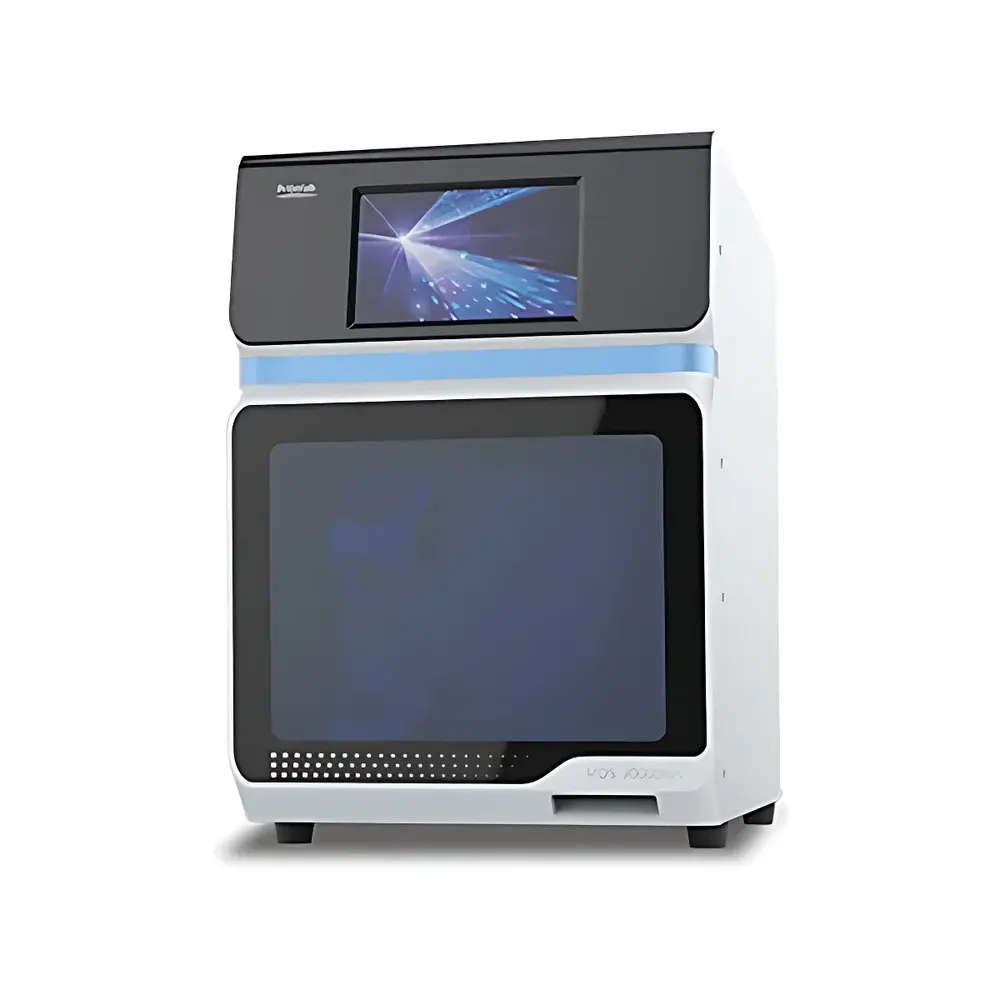
Pribolab MDS-3000-D Multi-Functional Photochemical and Chemical Post-Column Derivatization System
| Brand | Pribolab |
|---|---|
| Origin | Shandong, China |
| Manufacturer Type | Authorized Distributor |
| Product Origin | Domestic (China) |
| Model | MDS-3000-D |
| Temperature Range | Ambient + 5 °C to 150 °C |
| Derivatization Reagent Flow Rate | 0.01–9.999 mL/min |
| Reaction Coil Volume | 1 mL |
Overview
The Pribolab MDS-3000-D is a modular, dual-mode post-column derivatization system engineered for high-reproducibility integration with high-performance liquid chromatography (HPLC) platforms. It uniquely combines chemical derivatization—via precisely metered reagent delivery—and photochemical derivatization—using controlled UV irradiation—in a single instrument architecture. The system operates on the principle of on-line, post-separation reaction: analytes eluting from the HPLC column are mixed with derivatizing reagents or exposed to UV light in a temperature-regulated reaction coil, converting non-chromophoric or non-fluorescent compounds (e.g., primary/secondary amines, carbonyls, mycotoxins) into detectable derivatives with enhanced UV absorbance or native fluorescence. This enables quantitative detection of otherwise invisible species using standard UV-Vis or fluorescence detectors—extending method sensitivity by up to three orders of magnitude in validated applications such as aflatoxin analysis per AOAC Official Method 2005.08 and amino acid quantification per USP .
Key Features
- Dual-pathway flow architecture: Independent, software-selectable switching between chemical and photochemical derivatization modes without hardware reconfiguration—enabling rapid method transition and minimizing downtime.
- Temperature-controlled reaction coil: Precisely regulated heating (ambient + 5 °C to 150 °C) ensures kinetic consistency across diverse derivatization reactions—including OPA, ninhydrin, iodine, and UV-mediated oxidation pathways.
- High-fidelity fluidic delivery: Dual syringe pumps (optional configuration) constructed entirely from PEEK and stainless steel; flow accuracy ≤ 0.5% RSD and repeatability ≤ 0.1% RSD at 1 mL/min, verified per ISO 5725-2.
- Integrated backflow prevention: In-line check valves prevent reagent ingress into the analytical column during HPLC pressure fluctuations—preserving column integrity and retention time stability.
- Modular, service-oriented design: All critical components—including pump heads, reaction coils, and UV lamps—are field-replaceable without calibration recalibration; front-panel touchscreen and PC-based control (via USB/RS-232) support both standalone and LIMS-integrated operation.
- Compliance-ready engineering: Optional inert-gas pressurized reagent reservoirs (Saran™ tubing), integrated online degasser, and thermal cut-off protection at 150 °C meet baseline requirements for GLP-compliant laboratories under OECD Principles of Good Laboratory Practice.
Sample Compatibility & Compliance
The MDS-3000-D supports derivatization of structurally diverse analytes across regulated and research-driven workflows. Validated compatibility includes primary amines (e.g., amino acids, taurine, β-alanine), carbonyl-containing toxins (aflatoxins B₁/B₂/G₁/G₂), hydrazide-reactive compounds (formaldehyde in cosmetics), and heterocyclic pesticides (carbamates, glyphosate). It conforms to key regulatory frameworks: methods employing this system align with AOAC 2005.08 (aflatoxins), ISO 15284:1999 (amino acids), and EU Commission Regulation (EC) No 401/2006 (mycotoxin monitoring in foodstuffs). Its sealed, oxygen-barrier fluid path and optional degasser ensure reagent stability for protocols requiring air-sensitive reagents (e.g., o-phthalaldehyde in alkaline medium).
Software & Data Management
The embedded firmware supports time-synchronized event triggering: derivatization parameters (temperature, flow rate, lamp on/off) are programmable per injection via gradient-compatible method tables. Audit trails record all parameter changes, user logins, and system alarms—fully compliant with FDA 21 CFR Part 11 requirements when deployed with validated electronic signature modules. Raw data export is available in CSV and .dx format for direct import into Chromatography Data Systems (CDS) including Thermo Chromeleon, Waters Empower, and Agilent OpenLab CDS. Firmware updates are delivered via secure HTTPS endpoint with SHA-256 signature verification.
Applications
- Food & Feed Safety: Quantitative determination of aflatoxins (via photochemical activation), ochratoxin A, and deoxynivalenol using HPLC-FLD; residue analysis of carbamate pesticides (e.g., carbaryl) and glyphosate via OPA/ninhydrin derivatization.
- Clinical & Pharmaceutical: High-precision amino acid profiling in plasma/urine (USP ); detection of taurine in infant formula; assay of vitamin B₁ (thiamine) and B₆ (pyridoxine) in fortified products.
- Environmental Monitoring: Trace-level analysis of formaldehyde in cosmetic matrices (ISO 17127:2014); detection of polar herbicides (e.g., glufosinate) and neurotoxic shellfish toxins (e.g., domoic acid) in water and sediment extracts.
- Regulatory Testing: Supports methods referenced in Chinese GB 5009.22–2016 (aflatoxins), EU 2023/1375 (mycotoxin limits), and USDA FSIS Directive 10010.1 (veterinary drug residues).
FAQ
Can the MDS-3000-D be used with UHPLC systems operating above 1000 bar?
Yes—the fluidic path uses 1/16″ PEEK tubing rated to 10,000 psi; backpressure management is maintained via calibrated restrictor capillaries compatible with sub-2 µm columns.
Is UV lamp intensity monitored in real time?
No—lamp output is stabilized via constant-current driver and thermally regulated housing; intensity verification is performed during annual preventive maintenance using NIST-traceable radiometer calibration.
Does the system support gradient-compatible derivatization programming?
Yes—time-based event scheduling allows dynamic adjustment of reaction temperature and reagent flow rate synchronized with HPLC gradient profiles.
What reagent compatibility documentation is provided?
Pribolab supplies a validated reagent compatibility matrix covering >40 common derivatization chemistries—including OPA, FMOC-Cl, ortho-phthalaldehyde, iodine, and UV-activated bromination—with recommended concentrations, pH ranges, and stability data.
Is remote diagnostics supported?
Yes—via optional Ethernet module enabling secure SSH access for firmware troubleshooting and log retrieval under ITAR-compliant network policies.




