
ProOpto EUV High-Power Laser Material Testing System
| Brand | ProOpto |
|---|---|
| Origin | Germany |
| Manufacturer Type | Authorized Distributor |
| Origin Category | Imported |
| Model | EUV |
| Pricing | Upon Request |
| Standards Compliance | ISO 11551, ISO 11254, ISO 13696, ISO 11146, ISO 13694, ISO 11670, ISO 15367 |
| Radiation Sources Supported | Excimer lasers (351 nm, 308 nm, 248 nm, 193 nm, 157 nm) |
| Measurement Capabilities | Absorptance (thermal lensing in fused silica @193 nm), LIDT, wavefront distortion (thermal lensing & mechanical stress), transmission, reflection, bidirectional scatter distribution (@248 nm), color center formation, fluorescence/luminescence emission |
| Imaging Support | 2D scatter mapping, LIDT site micrography, compatibility with ~20 camera types |
Overview
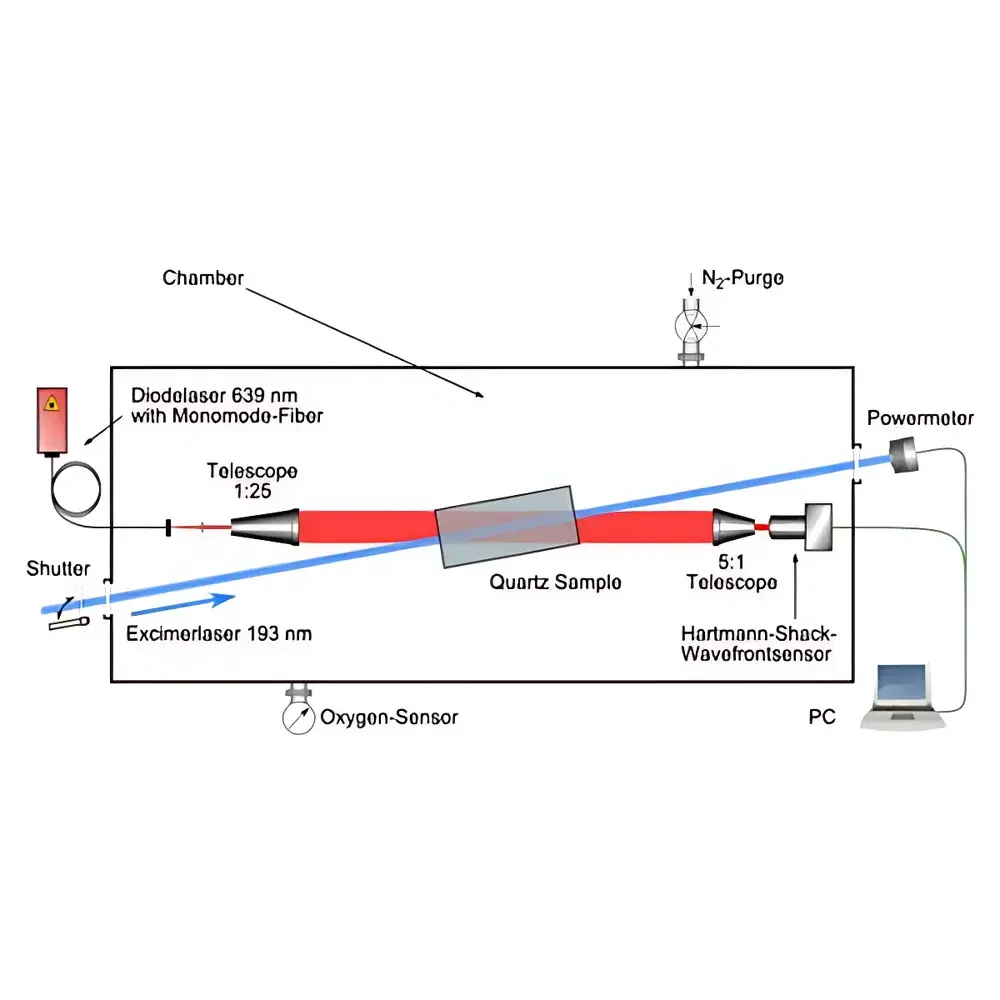
The ProOpto EUV High-Power Laser Material Testing System is a metrology platform engineered for quantitative, standards-based characterization of optical components under high-fluence irradiation conditions. It implements photothermal and photoacoustic detection principles—primarily based on the thermal lensing effect—to quantify sub-ppm-level optical absorptance in transmissive and reflective coatings, substrates, and bulk materials. Designed for R&D laboratories, national metrology institutes, and high-energy laser system integrators, the system supports rigorous evaluation of material behavior under exposure to nanosecond, picosecond, and continuous-wave radiation across deep UV (157 nm), VUV, EUV (13 nm), and near-IR (1070 nm) spectral bands. Its architecture enables traceable, repeatable measurements aligned with international photonic material testing standards—including ISO 11551 (laser-induced absorptance), ISO 11254 (laser-induced damage threshold, LIDT), and ISO 13696 (optical scatter)—ensuring data integrity for qualification in aerospace, lithography, inertial confinement fusion, and ultrafast laser systems.
Key Features
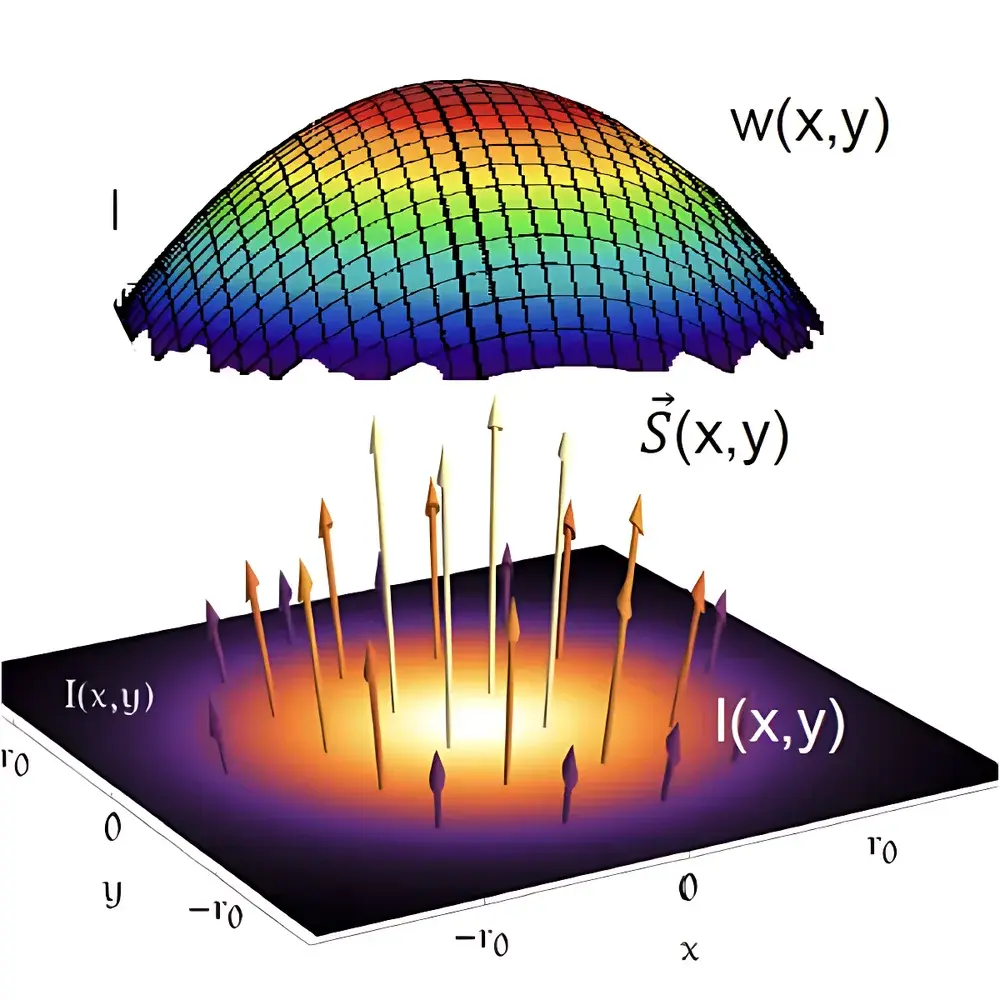
- Multi-standard compliance: Fully integrated workflows for ISO 11551 (absorptance), ISO 11254 (LIDT), ISO 13696 (scatter), ISO 11146 (beam propagation parameters), ISO 13694 (beam profile), ISO 11670 (pointing stability), and ISO 15367 (wavefront phase distribution)
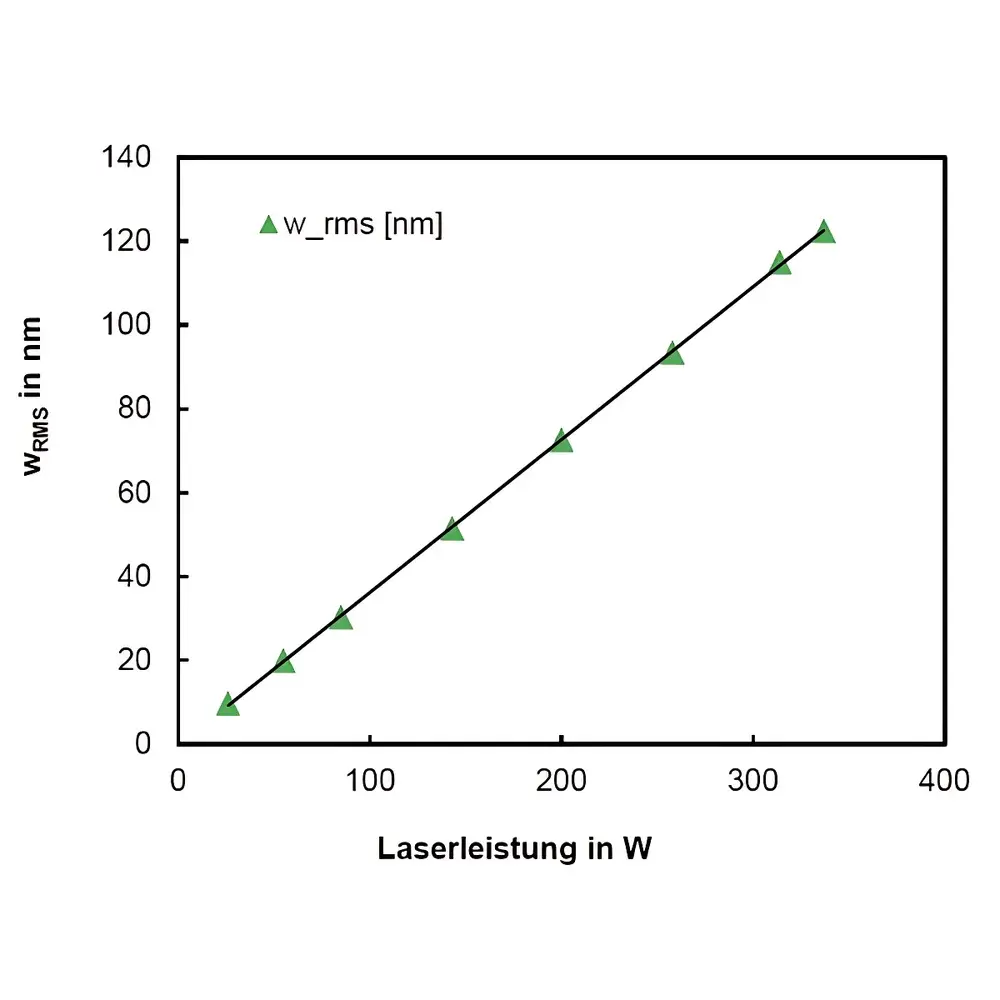
- Thermal lensing-based absorptance measurement: Quantifies weak absorption (down to 10−6 cm−1) via time-resolved probe beam deflection in fused silica and other optical substrates at 193 nm and other critical wavelengths
- Multi-wavelength radiation source compatibility: Native support for excimer lasers (157–351 nm), solid-state ns/ps lasers (266–1064 nm), high-power CW fiber lasers (1070 nm, ≤500 W), tunable OPOs (680–980 nm + IR idler), and EUV/XUV plasma sources (4–13 nm)
- Comprehensive optical response mapping: Simultaneous acquisition of transmission, reflection, bidirectional scatter distribution (2D scatter maps @248 nm), fluorescence spectra, and transient thermal wavefront distortion
- Automated LIDT site analysis: High-resolution micrography of laser-induced damage morphologies with automated threshold identification, morphology classification, and statistical reporting per ISO 21254 guidelines
- Modular detector interface: Supports integration of >20 commercially available scientific cameras (CCD, sCMOS, EMCCD) and calibrated photodiodes for spectral responsivity-matched detection
Sample Compatibility & Compliance
The system accommodates plano and curved optical elements (up to Ø200 mm, thickness ≤50 mm), including fused silica, CaF2, MgF2, SiC, multilayer dielectric coatings, and EUV Mo/Si mirrors. Sample mounting is vibration-isolated and thermally stabilized to minimize drift during long-duration thermal lensing or LIDT ramp tests. All measurement protocols are structured to meet GLP-aligned documentation requirements and support audit-ready reporting for ISO/IEC 17025-accredited laboratories. Data provenance—including instrument calibration history, environmental sensor logs (temperature, humidity), and raw interferometric wavefront frames—is embedded in each exported dataset to satisfy FDA 21 CFR Part 11 electronic record integrity criteria.
Software & Data Management
The ProOpto EUV Control Suite is a Windows-based application built on a modular, API-accessible architecture. It provides real-time visualization of thermal lens decay curves, scatter angular distributions, and LIDT probability curves (S-on-1 and R-on-1). Raw data are stored in HDF5 format with embedded metadata compliant with the Photonics Metadata Standard (PMS-1.2). Export options include CSV, MAT, and standardized XML reports conforming to ISO/TR 14657 for optical test data exchange. Audit trail functionality records all user actions, parameter changes, and calibration events with timestamps and operator IDs. Software validation documentation (IQ/OQ/PQ protocols) is provided for GMP-regulated environments.
Applications
- Qualification of high-LIDT anti-reflective and high-reflector coatings for EUV lithography scanners
- Quantification of color center formation kinetics in fused silica optics exposed to 193 nm ArF excimer radiation
- Thermal wavefront distortion modeling of laser amplifier slabs under multi-kW CW pumping
- Scatter-limited transmission loss analysis of off-axis parabolic mirrors used in attosecond beamlines
- Comparative absorptance screening of novel low-absorption thin-film materials (e.g., Ta2O5/SiO2 variants, AlN-based stacks)
- Correlation of fluorescence yield with subsurface defect density in synthetic diamond windows for high-energy laser applications
FAQ
Does the system support automated LIDT mapping according to ISO 21254-2?
Yes—the platform executes raster-scanned S-on-1 and R-on-1 protocols with integrated damage recognition algorithms and statistical confidence interval reporting.
Can absorptance be measured at 13.5 nm EUV wavelength?
Yes, using calibrated EUV photodiodes and grazing-incidence probe beam geometry; absolute absorptance uncertainty is ±15% (k=2) for Mo/Si multilayers.
Is software validation documentation available for regulated industries?
Yes—full IQ/OQ/PQ packages, including test scripts and acceptance criteria, are supplied with each system.
What environmental controls are required for stable thermal lensing measurements?
Ambient temperature stability of ±0.1 °C over measurement duration and acoustic isolation ≥40 dB(A) are recommended; optional active temperature stabilization modules are available.
How is traceability to SI units maintained for absorptance values?
Through NIST-traceable calibration of probe beam power meters and reference absorbers certified per ISO/IEC 17025, with annual recalibration services offered by ProOpto’s German metrology partner.



