
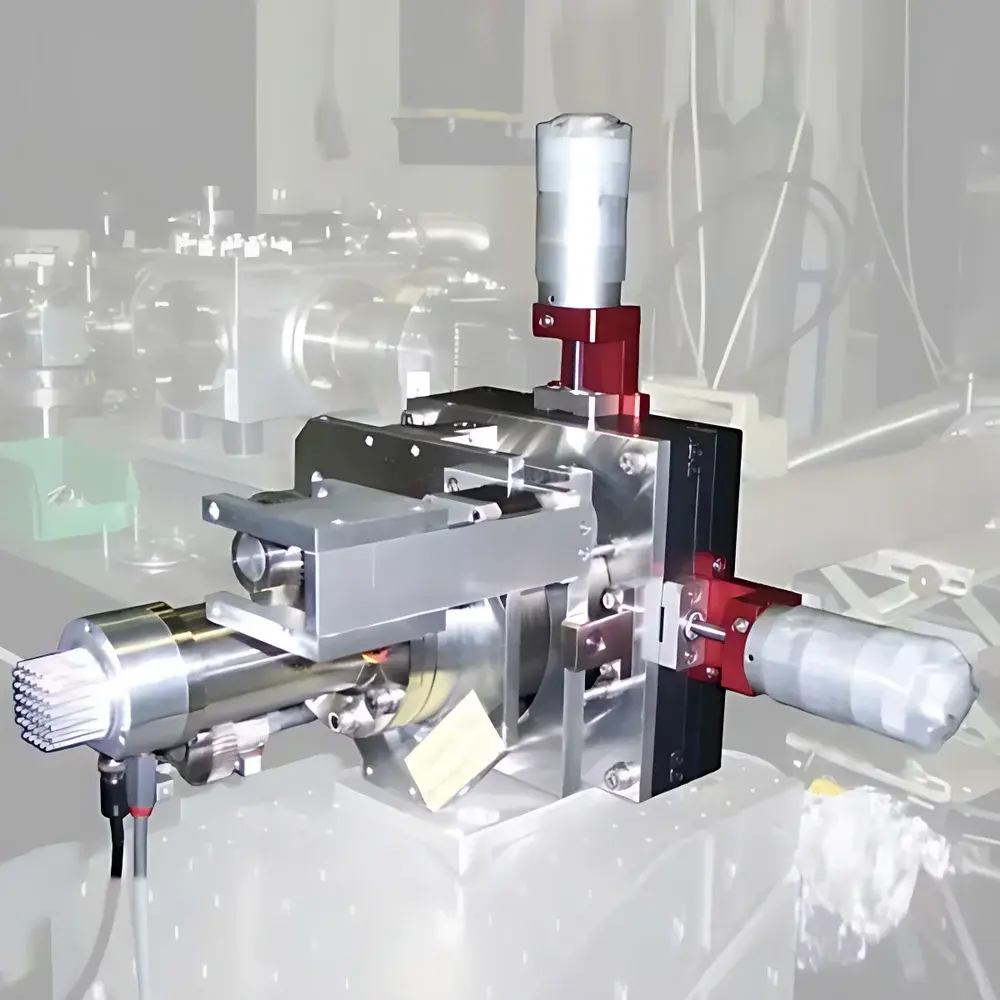
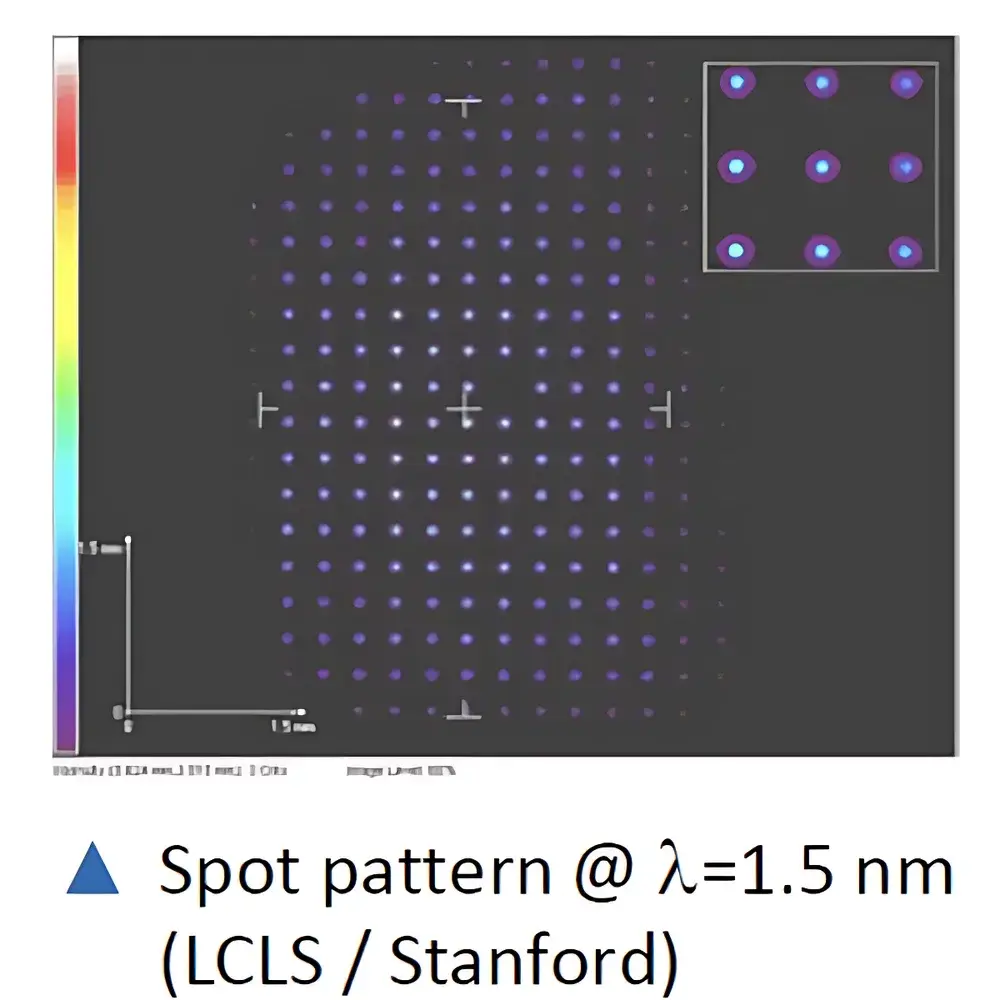
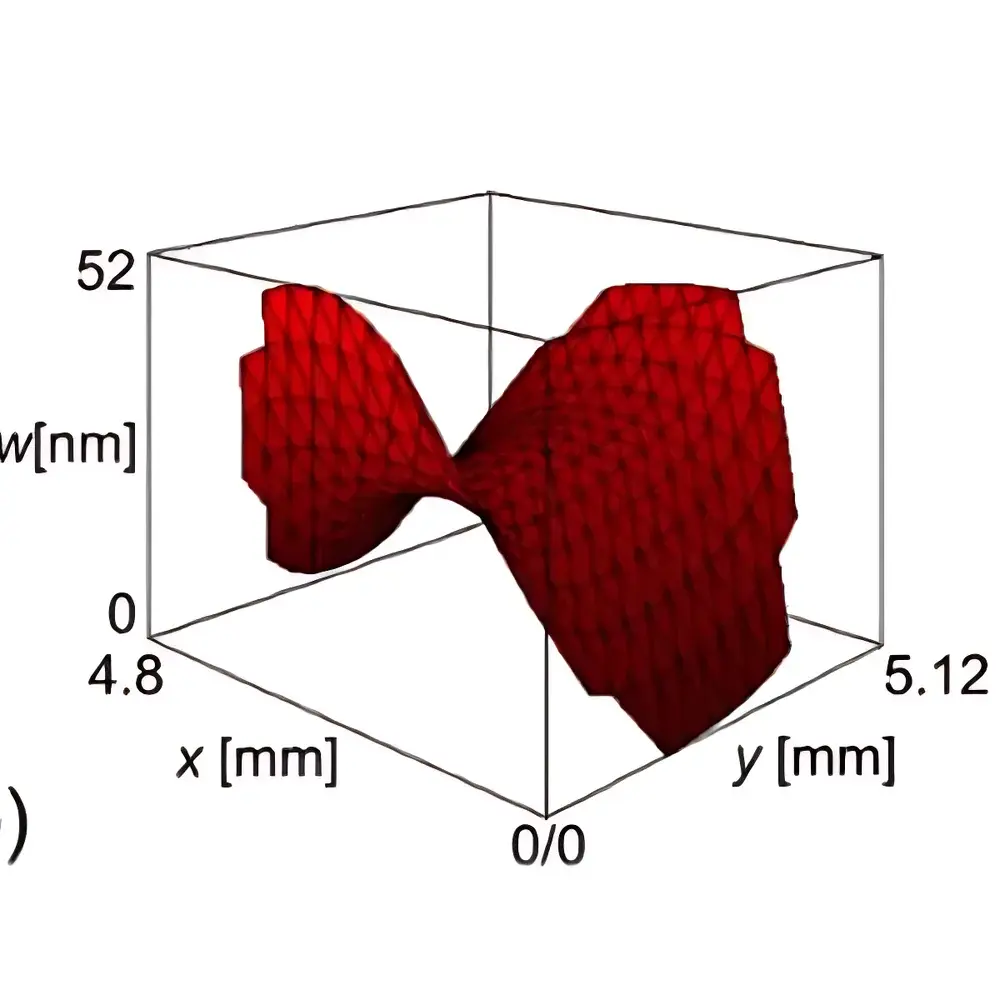
ProOpto EUV/XUV Hartmann Wavefront Sensor
| Brand | ProOpto |
|---|---|
| Origin | Germany |
| Type | Imported Instrument |
| Model | EUV/XUV |
| Core Light Source Compatibility | Free-Electron Laser (FEL) |
| Wavelength Range | 1–60 nm |
| Field of View | 9 mm × 6.7 mm (optional larger FOV) |
| Dynamic Range | 14-bit |
| Hartmann Plate | Precision pinholes Ø75 µm, pitch 250 µm |
| Tilt Range | ±10° |
| XY Translation Range | ±10 mm |
| UHV-Compatible Flange | CF63 |
| Single-Pulse Wavefront Repeatability | λ/116 wrms @ 13.5 nm |
| Compliance | ISO 11146, ISO 13694, ISO 11670, ISO 15367 |
| Camera Interface | Supports ~20 commercial scientific camera models |
Overview
The ProOpto EUV/XUV Hartmann Wavefront Sensor is a high-precision optical metrology instrument engineered for quantitative wavefront characterization in the extreme ultraviolet (EUV) and soft X-ray (XUV) spectral regions (1–60 nm). Based on the Hartmann–Shack principle adapted for incoherent and partially coherent short-wavelength radiation, it enables direct, single-shot measurement of phase front distortion, beam divergence, pointing stability, M²-like focusability metrics, and intensity distribution—without reliance on interferometric coherence. Its design integrates quantum-efficiency-optimized micro-pinhole arrays with vacuum-compatible mechanics and real-time feedback interfaces, making it uniquely suited for demanding environments such as free-electron laser (FEL) beamlines (e.g., FLASH at DESY), EUV lithography plasma sources, and high-harmonic generation (HHG) laboratories. The sensor operates under ultra-high vacuum (UHV) conditions via a standard CF63 flange and delivers sub-λ/100 rms wavefront repeatability per pulse at 13.5 nm—critical for adaptive optics alignment and long-term beamline performance validation.
Key Features
- Hartmann-based wavefront sensing architecture validated for both coherent (FEL, HHG) and incoherent (laser-produced plasma) EUV/XUV sources
- Quantum conversion coating enabling broadband sensitivity from 1 nm to 60 nm
- Precision-machined Hartmann plate with Ø75 µm pinholes on 250 µm pitch for high spatial sampling density
- Integrated ±10° tip/tilt adjustment and ±10 mm XY translation stage for in situ optical alignment
- 14-bit dynamic range acquisition supporting high-fidelity centroid detection across varying pulse energies
- UHV-rated mechanical housing with CF63 flange interface compatible with standard synchrotron and FEL vacuum systems
- Single-pulse wavefront reproducibility of λ/116 wrms at 13.5 nm—demonstrated on FLASH FEL beamline (NIM A 635, S108–S112, 2011)
Sample Compatibility & Compliance
The sensor is routinely deployed across three primary EUV/XUV source classes: laser-produced plasma (LPP) sources used in EUVL development, seeded and self-amplified spontaneous emission (SASE) free-electron lasers (e.g., FLASH, LCLS, FERMI), and tabletop high-harmonic generation systems. It meets traceable metrology requirements defined in ISO 11146 (laser beam widths, divergence, and M²), ISO 13694 (beam profile uniformity), ISO 11670 (pointing stability over time), and ISO 15367 (wavefront error and phase distribution quantification). All measurements are performed under clean-room or UHV conditions, ensuring no contamination-induced signal drift. Calibration protocols follow NIST-traceable reference standards for pinhole array geometry and detector linearity, supporting GLP-compliant reporting in industrial R&D settings.
Software & Data Management
The system ships with vendor-agnostic software architecture supporting integration with >20 commercially available scientific cameras (including PCO, Andor, Hamamatsu, and sCMOS platforms). Real-time analysis includes centroid calculation, Zernike polynomial decomposition (up to 36 terms), RMS/PV wavefront error mapping, beam parameter extraction (diameter, divergence, position), and temporal trending across pulse trains. Data export formats include HDF5, TIFF, and CSV, with metadata tags compliant with FAIR principles. Software supports FDA 21 CFR Part 11–ready audit trails when deployed in regulated environments, including electronic signatures, user access logs, and immutable raw-data archiving. Optional MATLAB and Python APIs enable custom algorithm integration for advanced beam diagnostics or machine-learning–based optics optimization.
Applications
- Real-time alignment and stabilization of FEL beam transport optics, including mirrors, gratings, and monochromators
- Characterization of EUV plasma source homogeneity and long-term drift for lithography tool qualification
- Wavefront correction loop validation in adaptive optic systems using deformable mirrors in EUV nanofocusing setups
- HHG beam quality assessment for attosecond science experiments requiring precise spatiotemporal coupling
- ISO-compliant beam certification for EUV metrology labs supplying calibration services to semiconductor equipment manufacturers
- Long-duration beam stability monitoring (>24 h) in synchrotron bending magnet or undulator beamlines
FAQ
What vacuum level is required for optimal operation?
The sensor is rated for continuous operation under UHV conditions down to 1×10⁻⁹ mbar; standard bake-out compatibility up to 150 °C ensures minimal outgassing in long-term installations.
Can the Hartmann plate be customized for specific wavelength bands?
Yes—custom pinhole diameters (e.g., Ø50 µm for <5 nm) and pitch configurations are available upon request to optimize sampling Nyquist criteria for target applications.
Is remote operation supported over Ethernet or fiber?
Full TCP/IP control is implemented, including motorized stage positioning, exposure triggering, and live centroid streaming at up to 10 Hz frame rate over Gigabit Ethernet.
How is calibration traceability maintained?
Each unit is supplied with a factory calibration certificate referencing NIST-traceable dimensional metrology of the pinhole array and quantum efficiency mapping across the operational band.
Does the software support batch processing of multi-pulse datasets?
Yes—the analysis suite includes scripting mode for automated processing of thousands of frames, with statistical aggregation (mean, std, min/max) per beam parameter across user-defined time windows.



