
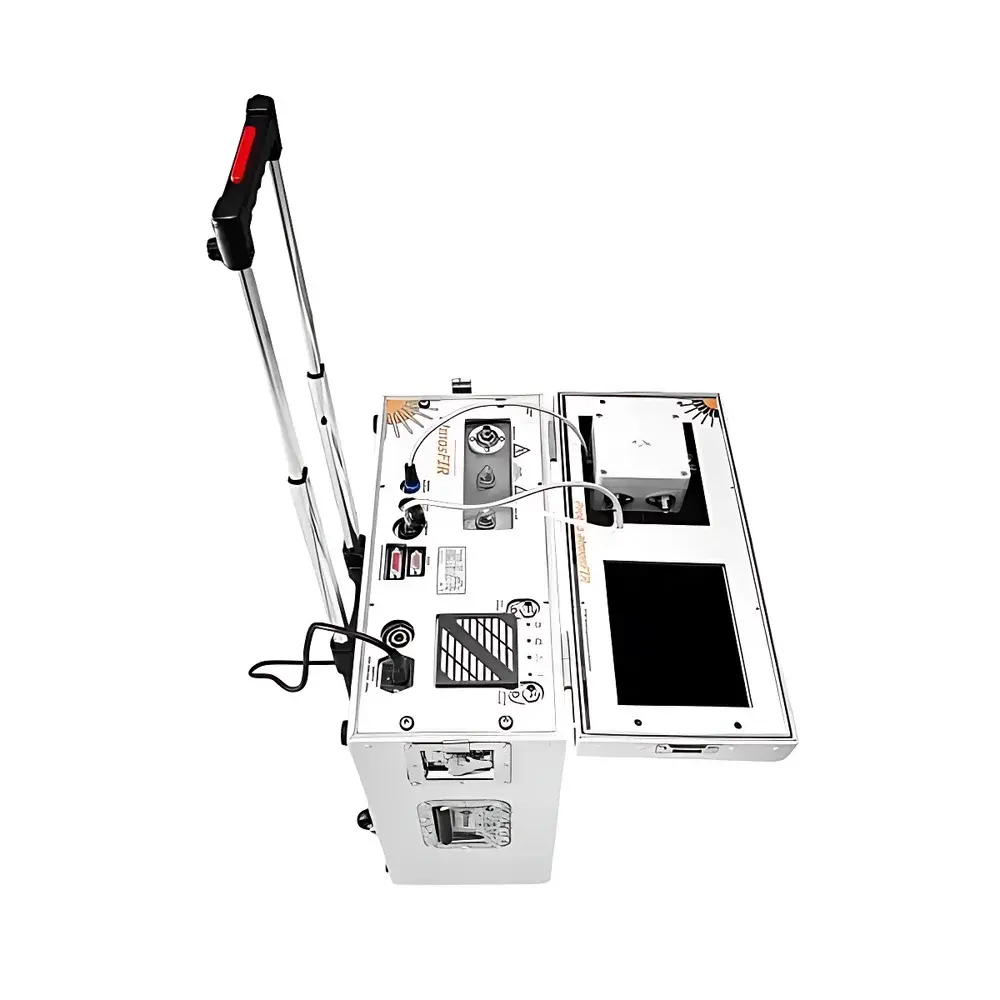
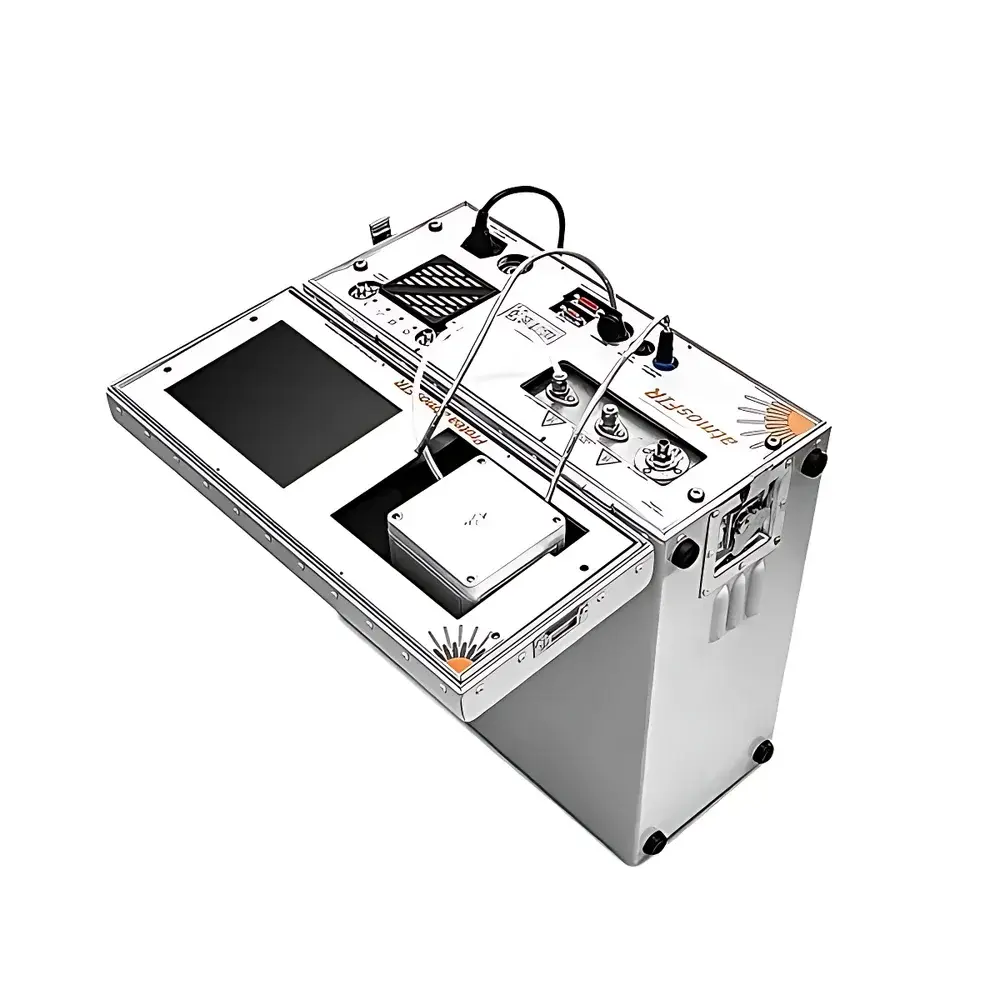
Protea AtmosFIRair Portable Fourier Transform Infrared (FTIR) Gas Analyzer
| Brand | Protea |
|---|---|
| Origin | United Kingdom |
| Model | AtmosFIRair |
| Instrument Type | Portable FTIR Spectrometer |
| Wavenumber Range | 485–8500 cm⁻¹ |
| Resolution Options | 1, 2, 4, or 8 cm⁻¹ |
| Scan Speed | Up to 1 spectrum per second (resolution-dependent) |
| Signal-to-Noise Ratio | >20,000:1 (peak-to-peak, 1-min acquisition), >120,000:1 (RMS, 1-min acquisition) |
| Wavenumber Accuracy | ±0.01 cm⁻¹ |
Overview
The Protea AtmosFIRair is a field-deployable, high-performance Fourier Transform Infrared (FTIR) gas analyzer engineered for real-time, in-situ identification and quantification of multi-component gaseous mixtures in ambient air and headspace environments. Based on Michelson interferometry with dynamically aligned optics, the system delivers laboratory-grade spectral fidelity without requiring sample extraction or pre-concentration. Its compact, ruggedized architecture enables continuous unattended operation in demanding environmental, industrial hygiene, emergency response, and process safety applications. Unlike dispersive or electrochemical sensors—whose selectivity is limited by cross-sensitivity and narrow dynamic range—the AtmosFIRair leverages full-spectrum acquisition across 485–8500 cm⁻¹ to resolve overlapping absorption features of inorganic species (e.g., CO, NO, SO₂, NH₃, HCl, HF) and volatile organic compounds (VOCs) including aldehydes, ketones, aromatics, chlorinated hydrocarbons, and sulfur-containing organics. The instrument operates at a stable internal temperature of 40 °C, eliminating lengthy thermal equilibration and supporting rapid deployment within minutes of power-on.
Key Features
- Dynamic alignment interferometer with permanent optical path stability—no manual recalibration required during field use
- Integrated dust-filtered sampling inlet and optional N₂ purge valve for rapid cell cleaning and moisture mitigation
- Modular sensor expansion: compatible with embedded O₂ or H₂S electrochemical cells for auxiliary parameter correlation
- Optional aqueous-phase VOC module enabling direct headspace analysis of water samples via gas-phase extraction
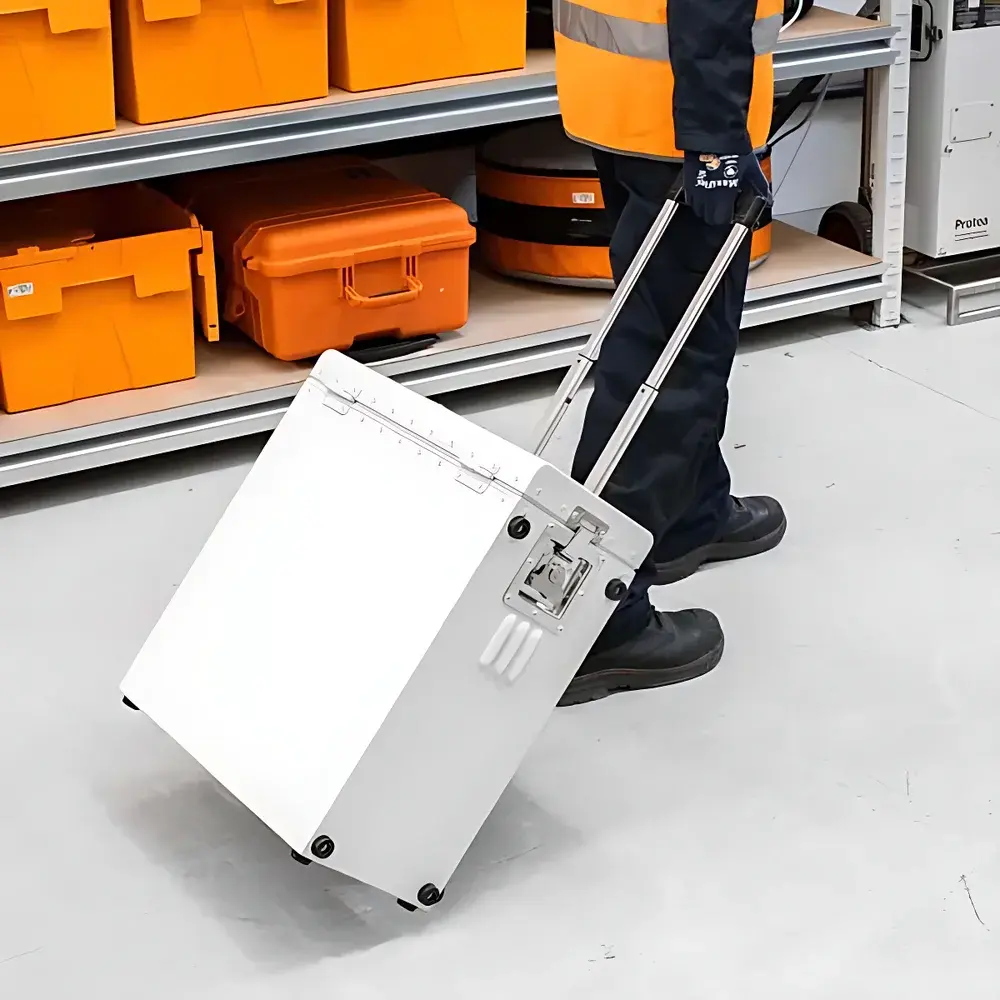
- Ruggedized transit case rated to IP65, with integrated battery pack supporting >4 hours of continuous operation
- Real-time spectral processing using proprietary chemometric algorithms—including non-negative least squares (NNLS) fitting and spectral library matching against >1,200 reference compounds
- Onboard data logging with timestamped spectra, concentration time-series, and diagnostic metadata (e.g., cell pressure, temperature, flow rate)
Sample Compatibility & Compliance
The AtmosFIRair is validated for direct analysis of undiluted ambient air, stack emissions, landfill/biogas headspace, indoor air, and industrial workplace atmospheres. It complies with core regulatory measurement principles referenced in EPA Method 320, ISO 12039, and EN 15267-3 for multi-gas monitoring. Its quantitative accuracy meets GLP-aligned traceability requirements when operated with certified calibration standards traceable to NIST SRMs. The system supports audit-ready data integrity through configurable user access levels, electronic signatures, and full 21 CFR Part 11–compliant audit trails when paired with Protea’s optional SecureLink software suite. All firmware and spectral libraries undergo version-controlled release management per IEC 62304 Class B software lifecycle standards.
Software & Data Management
Control, visualization, and reporting are managed via Protea’s QASys™ software platform—a Windows-based application supporting both local operation and remote supervision over Ethernet or LTE. QASys provides live spectral overlay, real-time concentration trending, customizable alarm thresholds, and automated report generation in PDF/CSV formats compliant with ISO/IEC 17025 documentation requirements. Raw interferograms and processed absorbance spectra are stored in HDF5 format for third-party reprocessing. The system supports integration into SCADA and DCS environments via Modbus TCP and OPC UA protocols. Firmware updates and library revisions are delivered via secure HTTPS with SHA-256 signature verification.
Applications
- Emergency response: Rapid identification of unknown airborne hazards during chemical spills, fire investigations, or clandestine lab detection
- Environmental monitoring: Continuous fence-line and community air quality surveillance for regulated pollutants and emerging contaminants
- Industrial hygiene: Workplace exposure assessment for VOCs and toxic inorganics under OSHA PEL and ACGIH TLV guidelines
- Process safety: Leak detection and composition verification in petrochemical, pharmaceutical, and semiconductor manufacturing
- Research & development: Reaction monitoring, catalyst deactivation studies, and atmospheric chemistry simulation experiments
- Regulatory compliance: Stack testing support for CEMS validation, fugitive emission quantification, and LDAR program verification
FAQ
What gases can the AtmosFIRair detect and quantify?
The system is capable of simultaneous qualitative and quantitative analysis of over 1,000 gases—including CO, CO₂, NO, NO₂, SO₂, NH₃, HCl, HF, CH₄, N₂O, O₃, formaldehyde, benzene, toluene, xylene, acetone, methanol, and many halogenated and oxygenated VOCs—provided they exhibit IR-active vibrational modes within the 485–8500 cm⁻¹ range.
Is calibration required before each use?
No routine recalibration is needed. The instrument maintains wavenumber accuracy (±0.01 cm⁻¹) and photometric linearity via internal HeNe laser referencing and temperature-stabilized optics. A single-point zero check with nitrogen or synthetic air is recommended before extended campaigns; span calibration is performed annually or after major maintenance using certified gas standards.
Can it operate in high-humidity or dusty environments?
Yes. The integrated particulate filter, heated sampling line option, and optional N₂ purge valve mitigate condensation and particulate fouling. For sustained operation in >90% RH conditions, the water vapor measurement module includes active desiccant conditioning and spectral water subtraction algorithms.
How is data security and regulatory compliance ensured?
All operational logs, spectra, and concentration outputs include immutable timestamps and user authentication tags. When configured with SecureLink, the system enforces role-based access control, electronic signatures, and full audit trails meeting FDA 21 CFR Part 11, EU Annex 11, and ISO/IEC 17025 digital record requirements.






