
PSI FluorPen FP110 Handheld Chlorophyll Fluorometer
| Brand | PSI (Photosynthesis Systems Instruments, Czech Republic) |
|---|---|
| Origin | Czech Republic |
| Model | FluorPen FP110 |
| Measurement Principle | Pulse-Amplitude-Modulated (PAM) chlorophyll fluorescence kinetics |
| Light Source | 470 nm blue LED (wavelength-selectable option available) |
| Detection | PIN photodiode with 667–750 nm bandpass filter |
| Time Resolution | 10 µs (100,000 measurements/s) |
| Fluorescence Parameters | >50 including F₀, Fₘ, Fᵥ/Fₘ, ΦPSII, NPQ, qP, Rfd, PI_ABS, ABS/RC, TR₀/RC, ETo/RC, DI₀/RC, Mo, Area, Sm, OJIP-derived 26 parameters |
| Excitation Intensities | Measuring light (0.09–0.9 µmol photons·m⁻²·s⁻¹), Actinic light (10–1000 µmol photons·m⁻²·s⁻¹), Saturating pulse (up to 3000 µmol photons·m⁻²·s⁻¹) |
| PAR Sensor (optional) | 400–700 nm, cosine-corrected, ±5% accuracy, output in µmol photons·m⁻²·s⁻¹ |
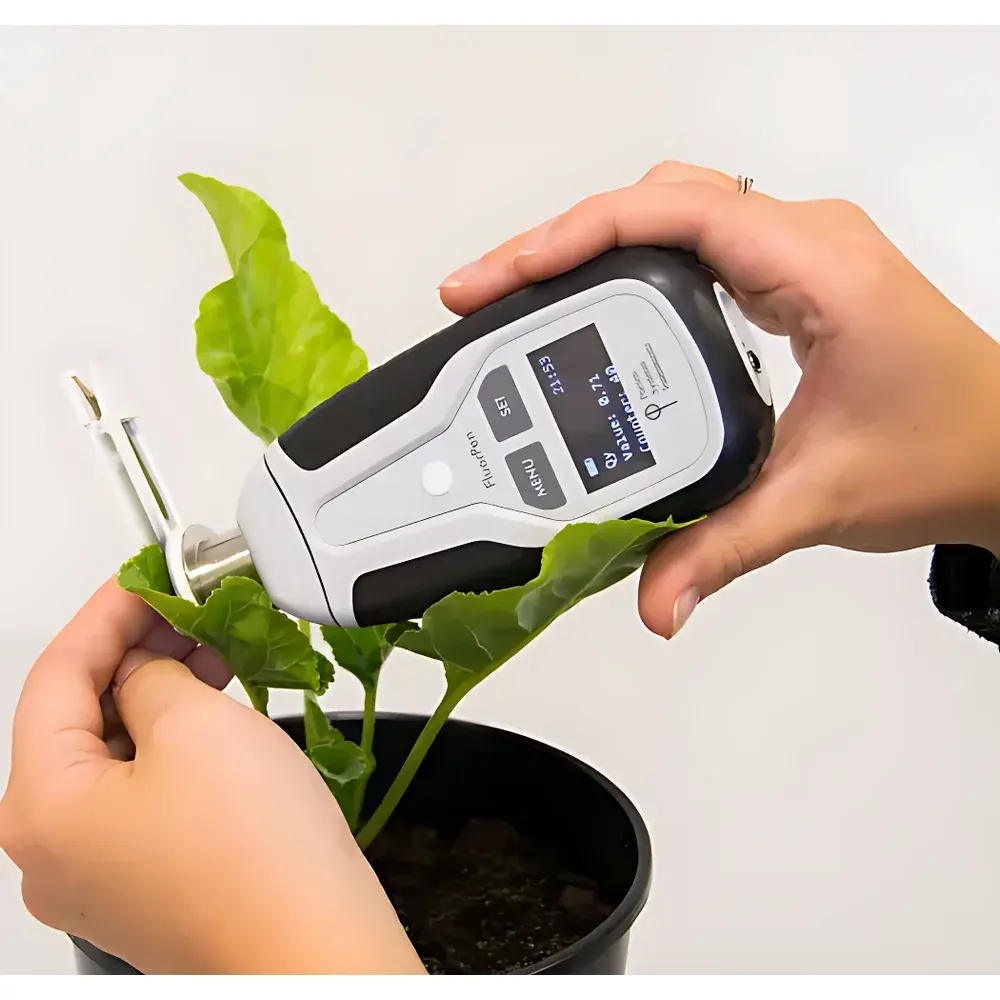
| Sample Interface | Interchangeable leaf clips (FP110/S fixed, FP110/D split, FP110/P fiber-optic probe, FP110/X custom) |
| Data Storage | 16 MB flash memory (~149,000 data points) |
| Display | Graphical LCD, dual-button interface |
| Power | Rechargeable Li-ion battery, 48 h continuous operation, USB charging |
| Environmental Rating | 0–55 °C, 0–95% RH (non-condensing) |
| Connectivity | Integrated Bluetooth 4.0 + USB 2.0 + GPS module |
| Software | FluorPen 1.1 (Windows 7+), supports data download, kinetic curve visualization, Excel export, remote instrument control, and GLP-compliant audit trail generation |
Overview
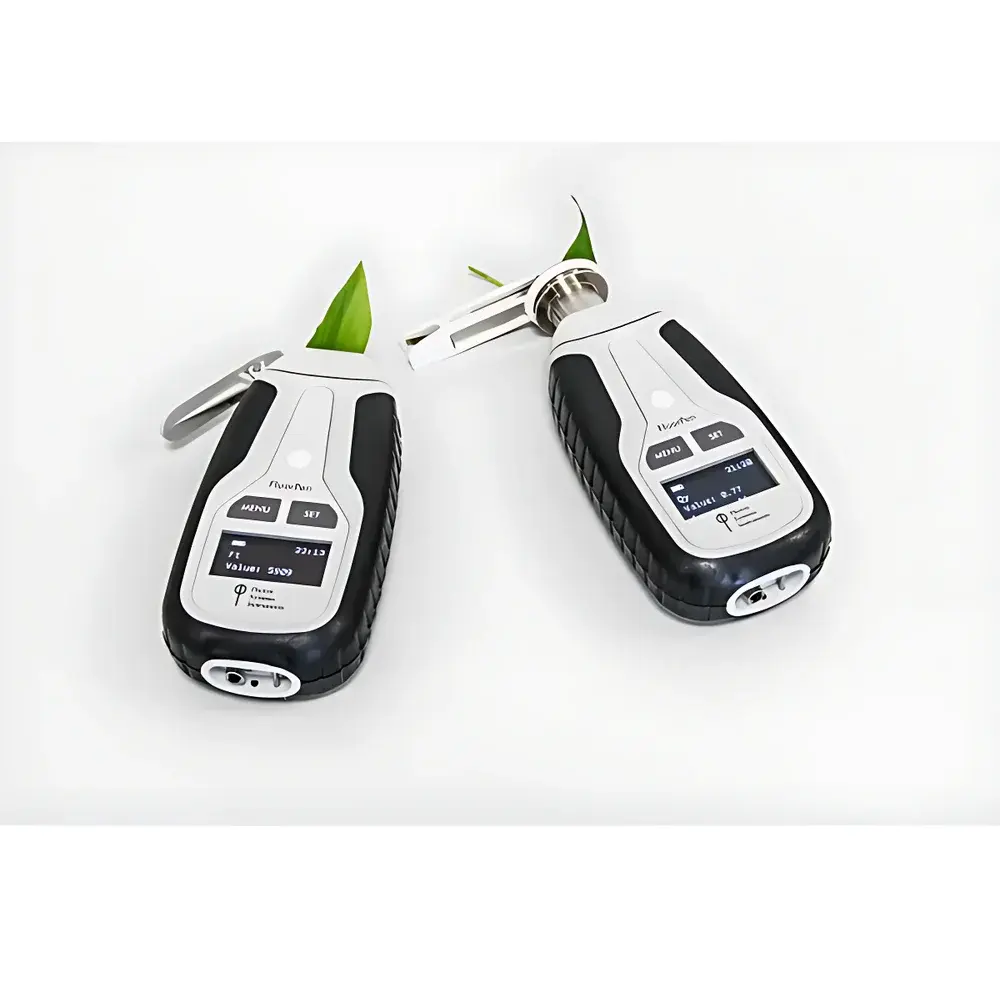
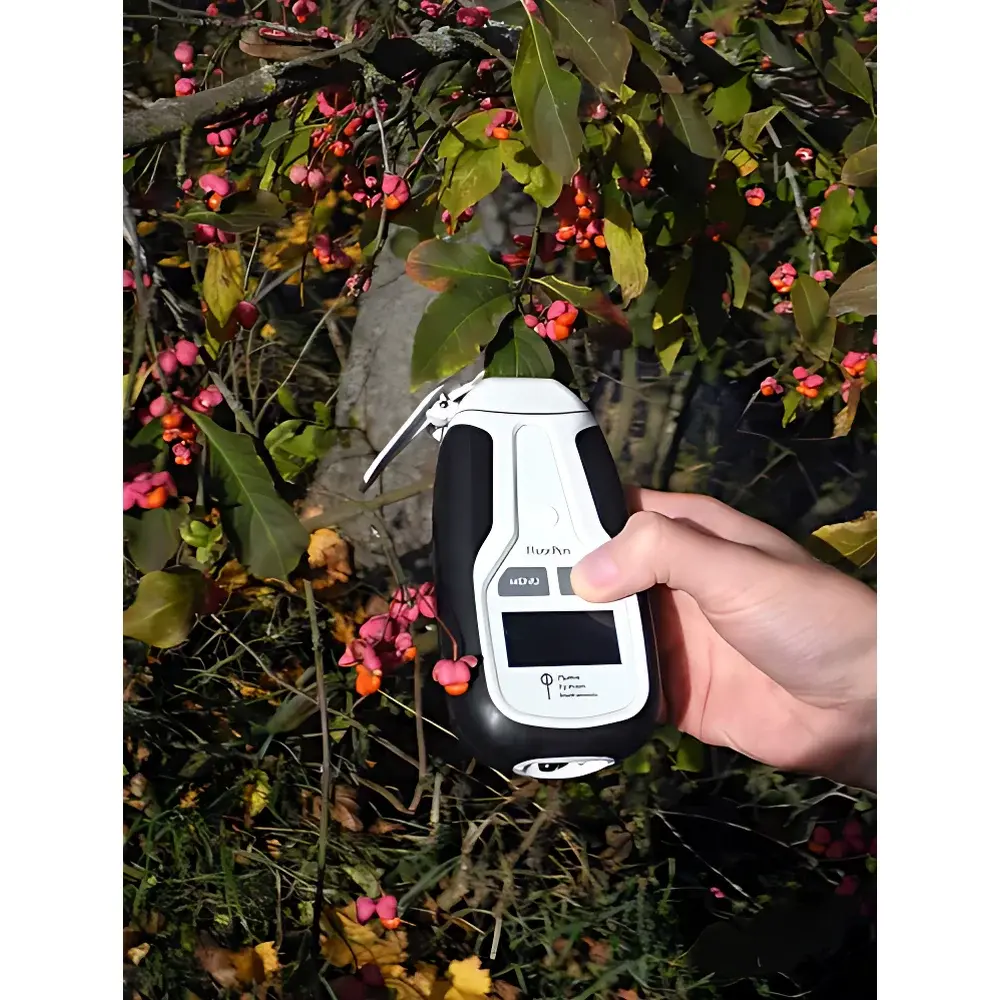
The PSI FluorPen FP110 Handheld Chlorophyll Fluorometer is a field-deployable, high-resolution instrument engineered for quantitative analysis of photosynthetic performance in vivo via pulse-amplitude-modulated (PAM) chlorophyll a fluorescence kinetics. Based on the biophysical principles of photosystem II (PSII) photochemistry, the FP110 measures transient fluorescence induction and relaxation dynamics—specifically the OJIP transient, fluorescence quenching (NPQ), quantum yield (ΦPSII), and photochemical efficiency (Fv/Fm)—to assess functional integrity of the photosynthetic apparatus under controlled or natural conditions. Its compact architecture integrates optical excitation, signal detection, real-time processing, and georeferenced logging into a single unit weighing only 188 g (134 × 65 × 33 mm), enabling rapid, non-invasive screening across diverse plant species and environmental contexts—from laboratory phenotyping to spaceflight experiments aboard the International Space Station (NASA Advanced Plant Habitat, 2017).
Key Features
- Ultra-high temporal resolution: 10 µs sampling interval (100,000 Hz) for precise capture of the OJIP transient, yielding 26 rigorously defined biophysical parameters derived from standardized JIP-test formalism.
- Full-suite fluorescence protocols preloaded: Three NPQ analysis routines (NPQ1–NPQ3), three light-response curves (LC1–LC3), OJIP transient acquisition, rapid yield (QY), and multi-parameter dark-adapted measurement (Ft, F0, Fm, Fm′).
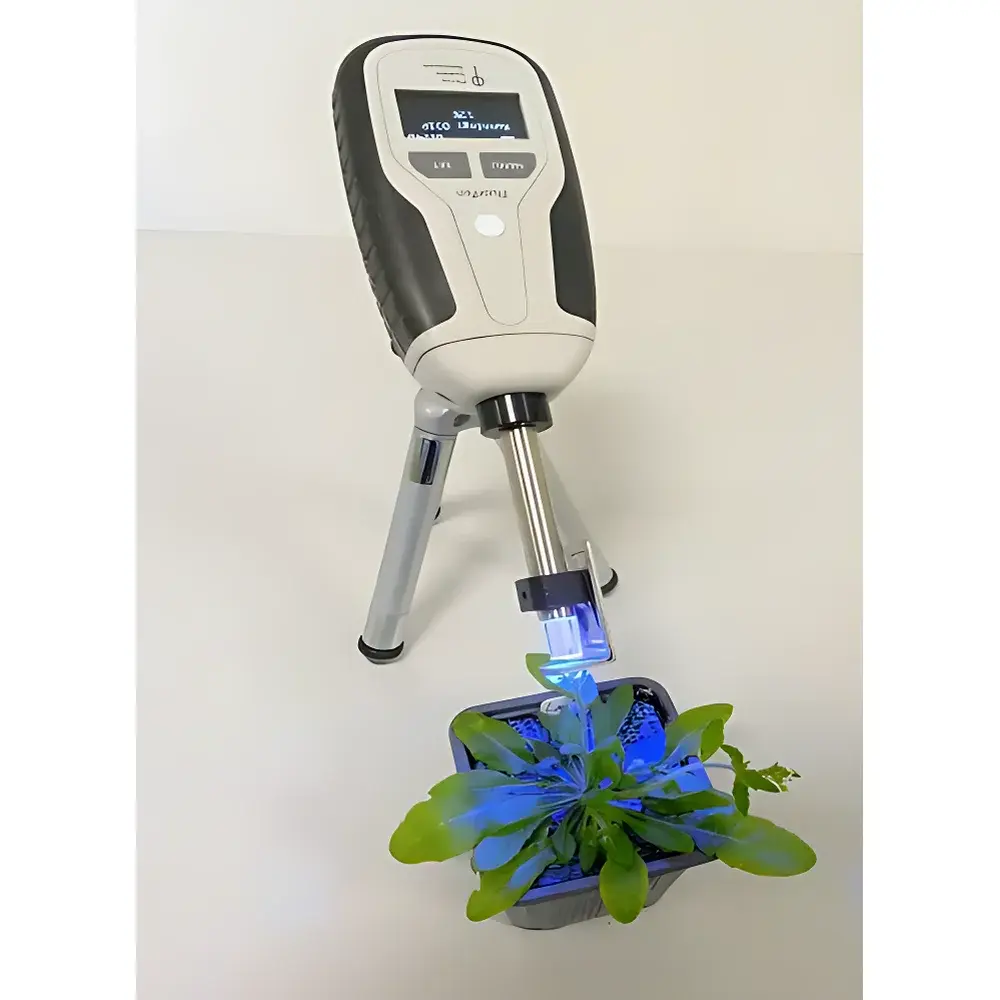
- Modular sample interface system: Interchangeable leaf clips—FP110/S (fixed clamp for lab-based dark adaptation), FP110/D (split clamp for field dark adaptation), FP110/P (fiber-optic probe for non-contact, light-adapted monitoring), and FP110/X (customizable mounting).
- Integrated environmental sensing: Optional PAR sensor (400–700 nm, cosine-corrected, calibrated to µmol photons·m⁻²·s⁻¹) enables concurrent irradiance quantification during fluorescence assays.
- Robust data governance: Onboard GPS tagging, time-stamped logging, 16 MB internal memory (supporting ~149,000 discrete parameter sets), and dual-mode communication (Bluetooth 4.0 + USB 2.0) ensure traceable, reproducible field data collection.
- Battery-powered autonomy: Rechargeable Li-ion cell provides up to 48 hours of continuous operation with low-battery warning and auto-sleep after 8 minutes of inactivity.
Sample Compatibility & Compliance
The FP110 is validated for use with intact leaves of angiosperms, gymnosperms, ferns, mosses, lichens, and macroalgae. Its non-destructive, contact-or-probe-based measurement approach preserves sample viability for longitudinal studies. The instrument complies with ISO 10265:2021 (optical measurement of photosynthetic efficiency) and supports adherence to Good Laboratory Practice (GLP) and Good Agricultural Practice (GAP) frameworks through its software’s audit-trail functionality, user-access controls, and electronic signature readiness. While not FDA 21 CFR Part 11–certified out-of-the-box, FluorPen 1.1 software can be configured to meet institutional requirements for regulated ecotoxicology or crop science trials—including those referenced in OECD Test Guidelines 202 (Daphnia immobilization) and 221 (Lemna growth inhibition), where chlorophyll fluorescence serves as an early biomarker of phytotoxic stress.
Software & Data Management
FluorPen 1.1 software (Windows 7–11 compatible) provides full bidirectional control of the FP110, enabling remote protocol initiation, real-time parameter visualization, and synchronized GPS/time metadata embedding. It supports batch import of multi-site datasets, overlay of OJIP transients for comparative analysis, automated calculation of JIP-test indices (e.g., PIAbs, ABS/RC, TR0/RC), and export of raw time-series data in CSV/Excel format. All graphs include axis labels compliant with IUPAC nomenclature (e.g., “Fluorescence intensity (a.u.) vs. time (ms)”), and report templates follow FAO-agronomic documentation standards for field trial submissions. Data files retain embedded timestamps, geographic coordinates, instrument firmware version, and operator ID—facilitating ISO/IEC 17025–aligned laboratory accreditation workflows.
Applications
The FP110 serves as a primary tool in plant physiological ecology, stress physiology, and translational crop science. Peer-reviewed applications include: (1) Quantifying drought-, heat-, salinity-, and heavy metal–induced PSII damage via Fv/Fm decline and OJIP curve distortion; (2) Screening photosynthetic mutants in forward/reverse genetics pipelines (e.g., sorghum chilling tolerance loci, Arabidopsis oxylipin-mediated waterlogging responses); (3) Assessing herbicide mode-of-action and resistance development through rapid ΦPSII suppression kinetics; (4) Validating biochar or microbial inoculant efficacy on photosynthetic capacity in phosphorus-limited soils; (5) Monitoring spaceflight-induced photophysiological acclimation in closed-loop life-support systems; and (6) Developing plant-based biosensors for soil/water contamination using interspecific fluorescence sensitivity gradients.
FAQ
What is the minimum leaf thickness the FP110 can reliably measure?
The FP110/S fixed clip accommodates leaves ≥0.1 mm thick; the FP110/P fiber-optic probe enables measurements on thin or delicate tissues (e.g., epidermal peels, young seedlings) without physical compression.
Can the FP110 operate in full sunlight without saturating the detector?
Yes—the integrated 667–750 nm bandpass filter and automatic gain control suppress ambient spectral noise; saturation pulses are delivered at user-defined intensities up to 3000 µmol photons·m⁻²·s⁻¹, ensuring robust signal-to-noise ratio even under high PAR.
Is calibration required before each measurement session?
No routine optical calibration is needed; however, dark-adaptation of samples for ≥20 minutes is mandatory for Fv/Fm and OJIP protocols, per ASTM E2912-13 guidelines for chlorophyll fluorescence standardization.
Does the GPS module record altitude and speed?
The onboard GPS logs latitude, longitude, and timestamp only; altitude is derived from WGS84 ellipsoid model but not barometrically corrected. Speed data is not recorded.
How does the FP110 handle data synchronization across multiple instruments in a networked field study?
While the FP110 lacks mesh networking capability, FluorPen 1.1 supports time-synchronized batch import from multiple devices using NTP-aligned PC clocks, enabling spatiotemporal alignment of datasets for landscape-scale analysis.
Related Products




