
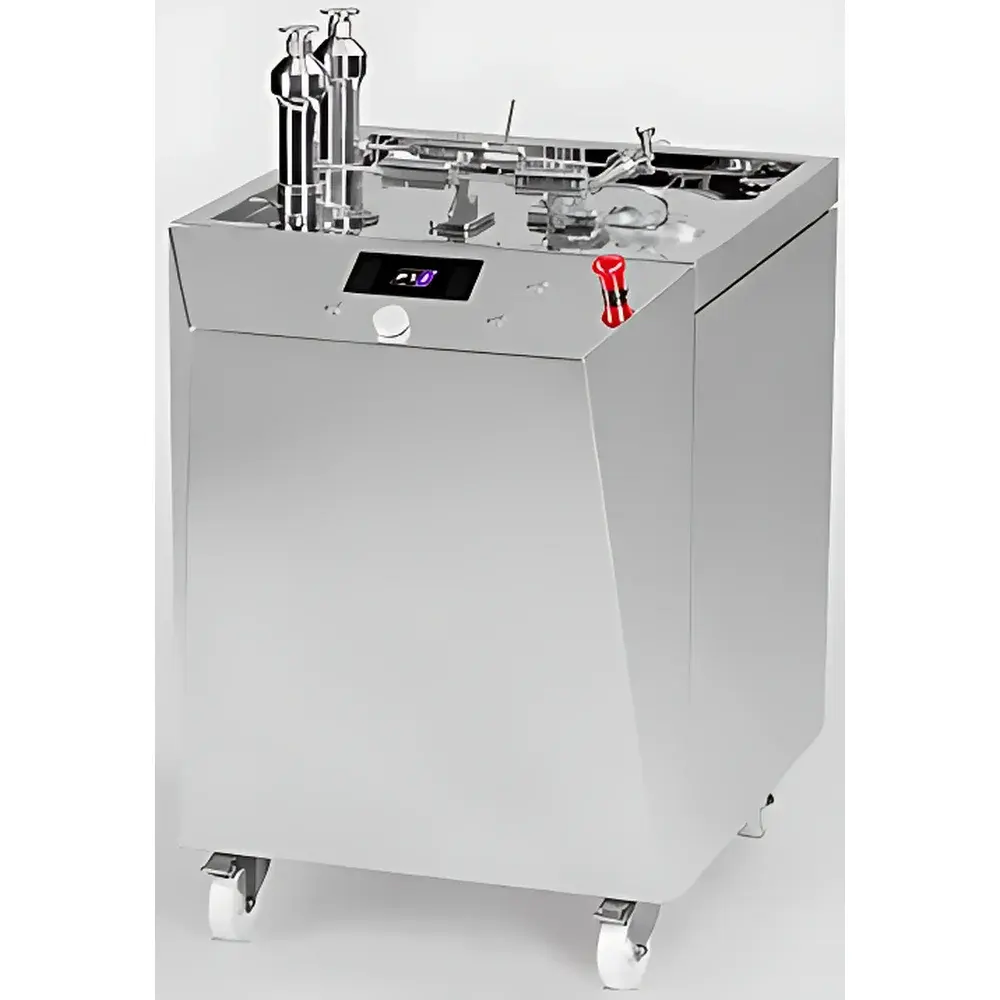
PSI Instruments PSI-40 High-Pressure Microfluidizer Homogenizer
| Brand | PSI / Particle Solutions srl |
|---|---|
| Country of Origin | Italy |
| Manufacturer Type | Authorized Distributor |
| Origin Category | Imported |
| Model | PSI-40 |
| Instrument Type | Microfluidic Homogenizer |
| Dimensions (W×D×H) | 650 × 900 × 1126 mm |
| Processing Volume Range | ≥150 mL |
| Maximum Operating Pressure | 2000 bar |
| Minimum Hold-up Volume | 15 mL |
| Noise Level | <70 dB(A) |
| Continuous Operation Duration | >8 h |
| Hydraulic Oil Cooling | Integrated Automatic Thermal Management |
| Material Compliance | ASTM A276/A479 316L SS (Electropolished & Passivated), USP Class VI & FDA-compliant Seals |
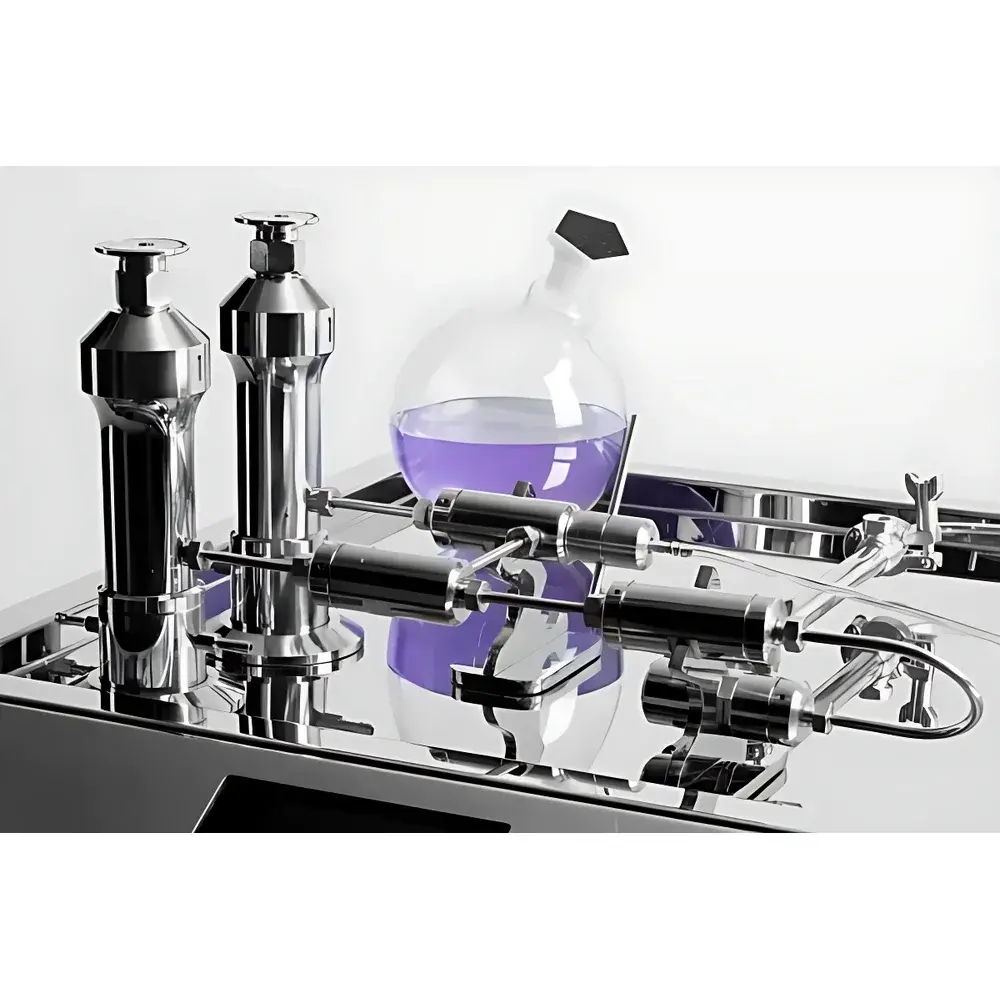
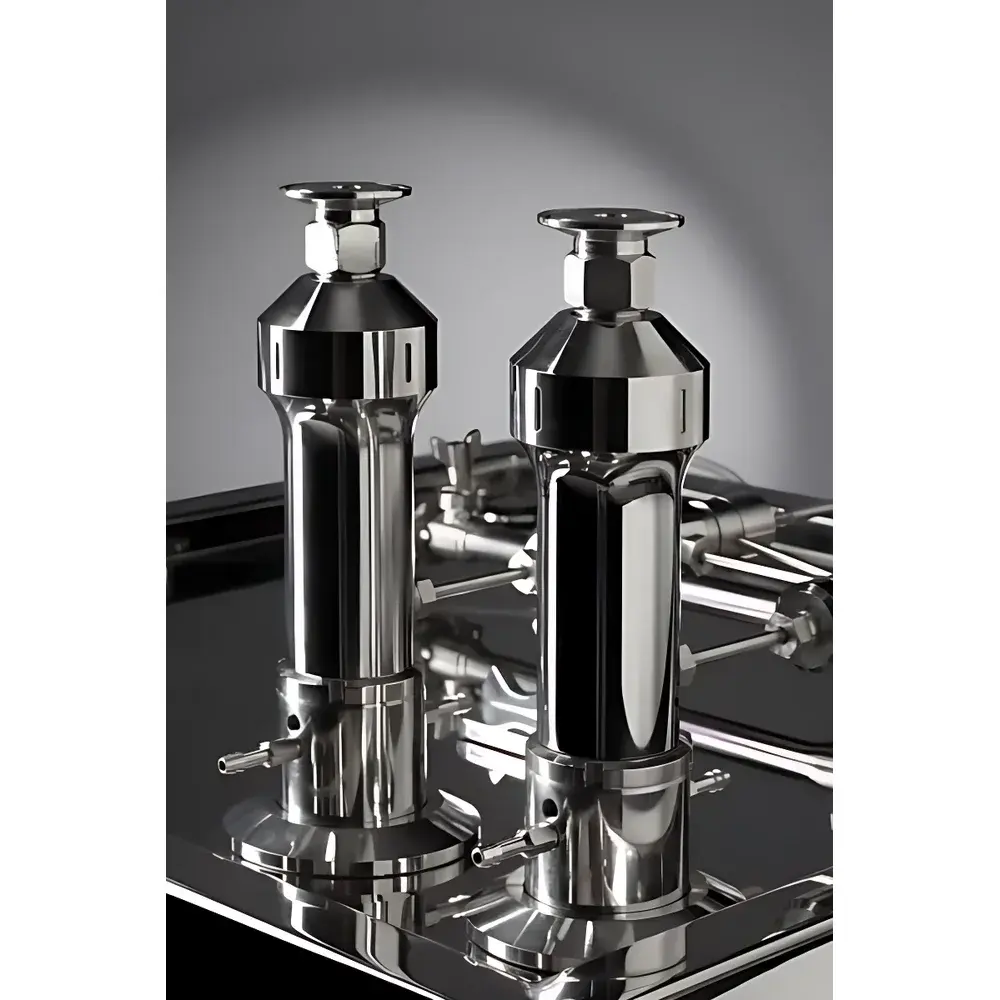
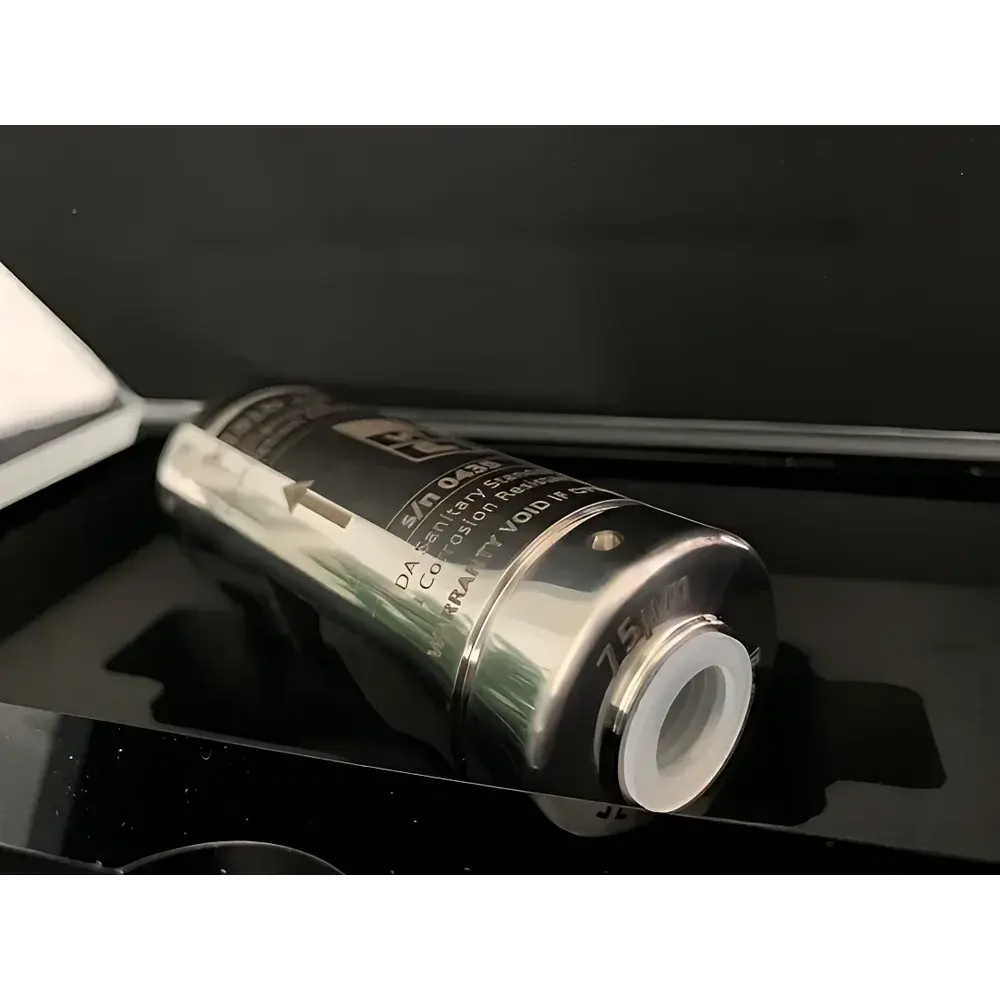
| Chamber Options | Y-type (75 µm single-slot E101D), Z-type (87–200 µm single/dual-slot diamond interaction chambers) |
| Power Supply | 3×220V/460V 60Hz or 3×380V/400V 50Hz |
| Weight | ~170 kg |
Overview
The PSI Instruments PSI-40 High-Pressure Microfluidizer Homogenizer is an engineered solution for scalable, reproducible nanoscale particle size reduction and dispersion in regulated biopharmaceutical, advanced materials, and high-value formulation development. It operates on the principle of microfluidic homogenization: sample fluid is pressurized via a precision electro-hydraulic intensifier and accelerated through fixed-geometry microchannels (typically 75–200 µm) within diamond or sapphire interaction chambers. Within these channels, the fluid undergoes simultaneous exposure to ultra-high shear rates (>10⁶ s⁻¹), controlled turbulent collision (between opposing jets in Y-type chambers or against chamber walls in Z-type chambers), and transient cavitation—physical mechanisms that collectively disrupt aggregates, lyse cells, emulsify immiscible phases, and narrow particle size distributions (PSD). Unlike piston-driven valve homogenizers, the PSI-40 employs a dual-plunger positive displacement pump with zero dead-volume check valves, ensuring pressure stability ±1.5% across full flow range and eliminating pulsation-induced variability. Its architecture supports linear scale-up from lab to pilot and GMP production—validated by consistent Dv50 reduction across PSI-20 (lab), PSI-40 (pilot), and PSI Infinity (industrial) platforms under identical chamber geometry and pressure profiles.
Key Features
- Electro-hydraulic intensifier delivering stable, digitally regulated pressure up to 2000 bar with real-time feedback control
- Dual-plunger pump design enabling continuous operation >8 hours without thermal drift; integrated hydraulic oil cooling maintains system temperature within ±2°C
- Modular diamond interaction chambers: Y-type (E101D, 75 µm) optimized for emulsification and lipid nanoparticle formation; Z-type (D102D/D202D, 87–200 µm) engineered for deagglomeration, cell disruption, and PSD narrowing
- GMP-compliant construction: AISI 316L stainless steel housing electropolished to Ra ≤0.4 µm and fingerprint-resistant micro-blasted finish; all wetted surfaces passivated per ASTM A967
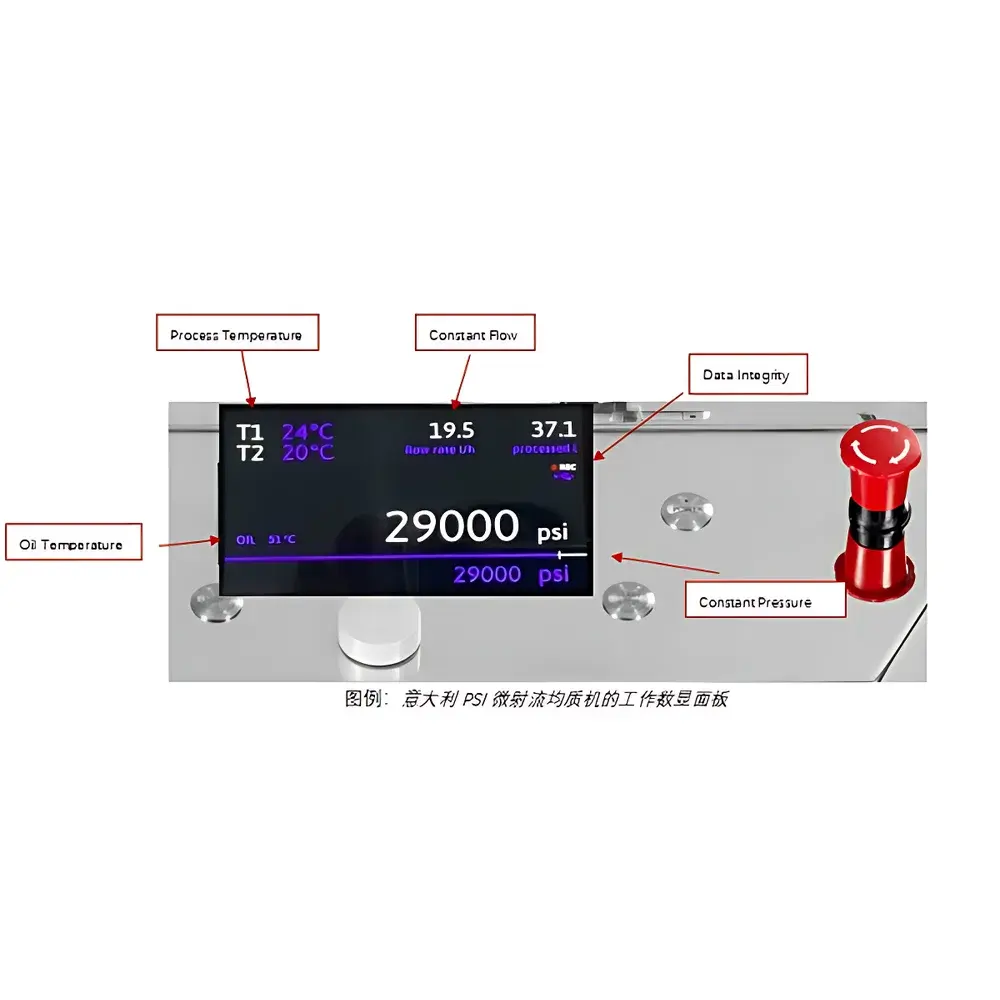
- Full traceability: HMI touchscreen logs pressure, temperature (up to 4 K/T-type thermocouple inputs), flow (calculated via motion sensors; optional Coriolis flowmeter available), time, and cycle count with CSV export
- CIP/SIP readiness: Sanitary tri-clamp connections (DIN 11851), drainable fluid paths, and steam-compatible chamber mounts support automated cleaning and sterilization validation per ASME BPE-2022
- Low-noise operation (<70 dB[A] at 1 m) achieved via acoustic damping enclosures, vibration-isolated pump mounts, and laminar hydraulic circuit design
- Remote integration capability via Modbus TCP/IP or OPC UA for supervisory control in MES/SCADA environments
Sample Compatibility & Compliance
The PSI-40 accommodates aqueous, organic, and biphasic formulations—including liposomes, mRNA-LNPs, protein suspensions, catalyst slurries, graphene dispersions, and sterile injectables—with no material compatibility limitations below 75°C inlet temperature. All fluid-contact components meet USP / cytotoxicity and extractables testing requirements. Sealing elements are available in FKM-PTFE, silicone, or UHMWPE variants compliant with FDA 21 CFR 177.2600 and EU 10/2011. The system conforms to CE Machinery Directive 2006/42/EC, EMC Directive 2014/30/EU, and carries PED 2014/68/EU certification for pressure equipment. For regulated environments, audit trails, electronic signatures, and data integrity features align with FDA 21 CFR Part 11 and EU Annex 11 expectations when paired with PSI’s validated software package.
Software & Data Management
The embedded HMI runs PSI ControlSuite v3.2 firmware, supporting role-based access control (operator, supervisor, administrator), configurable alarm thresholds, and automatic generation of IQ/OQ-ready calibration logs. Process parameters are stored with timestamped metadata (user ID, chamber ID, batch tag) and encrypted at rest. Data export adheres to ASTM E2500-21 standards for raw data preservation. Optional PSI DataVault add-on enables secure cloud backup, version-controlled method storage, and statistical process monitoring (SPC) charts (X̄/R, Cpk) for critical quality attributes such as post-homogenization Dv50 and PFAT5. Full 21 CFR Part 11 compliance—including electronic signatures, audit trail review tools, and system validation documentation—is available upon request.
Applications
The PSI-40 serves as a platform technology across multiple regulated and industrial domains. In biopharmaceutical manufacturing, it enables robust production of lipid nanoparticles (LNPs) for mRNA delivery (Dv50 <80 nm, PDI <0.12), sterile fat emulsions (PFAT5 <0.05%), and viral vector purification intermediates. In advanced materials synthesis, it disperses Pt/C catalysts for PEM fuel cells (achieving <3 nm Pt crystallite uniformity), exfoliates graphene oxide without oxidative damage, and stabilizes quantum dot inks for display applications. Applications extend to cosmetic nanoemulsions (e.g., retinol encapsulation with 92% payload retention), food-grade nanostructured fats, and nanocellulose hydrogels. Published case studies demonstrate repeatable sub-100 nm particle generation from E. coli lysates (1500 bar, 1 pass), plasmid DNA-loaded liposomes (1200 bar, 2 passes), and collagen hydrolysates (1200 bar, 3 passes)—all with inter-batch RSD <3.2% for Dv50.
FAQ
What distinguishes microfluidic homogenization from conventional valve-based homogenization?
Microfluidic systems utilize fixed-geometry interaction chambers that eliminate wear-related pressure decay and ensure invariant shear history per pass—critical for process consistency and regulatory filing.
Can the PSI-40 be integrated into an existing cleanroom utility infrastructure?
Yes: standard configurations include 316L sanitary fittings, CIP/SIP interface ports, and compatibility with purified water (PW), water-for-injection (WFI), and steam supply lines per ISPE Baseline Guide Vol. 4.
Is chamber replacement possible without recalibration?
All PSI diamond chambers are serialized and factory-calibrated; swapping chambers requires only loading the corresponding digital calibration profile from the HMI library—no field recalibration needed.
What validation support is provided for GMP implementation?
PSI supplies IQ/OQ protocols aligned with ASTM E2500, FAT/SAT documentation, material certifications (EN 10204 3.1), and chamber lifetime validation reports based on >5000 operational cycles.
How is flow rate accuracy ensured without inline flow measurement?
Volumetric displacement is calculated from plunger position sensors with ±0.8% linearity; optional Coriolis flowmeters provide NIST-traceable mass flow verification at ±0.2% of reading.
Related Products



