
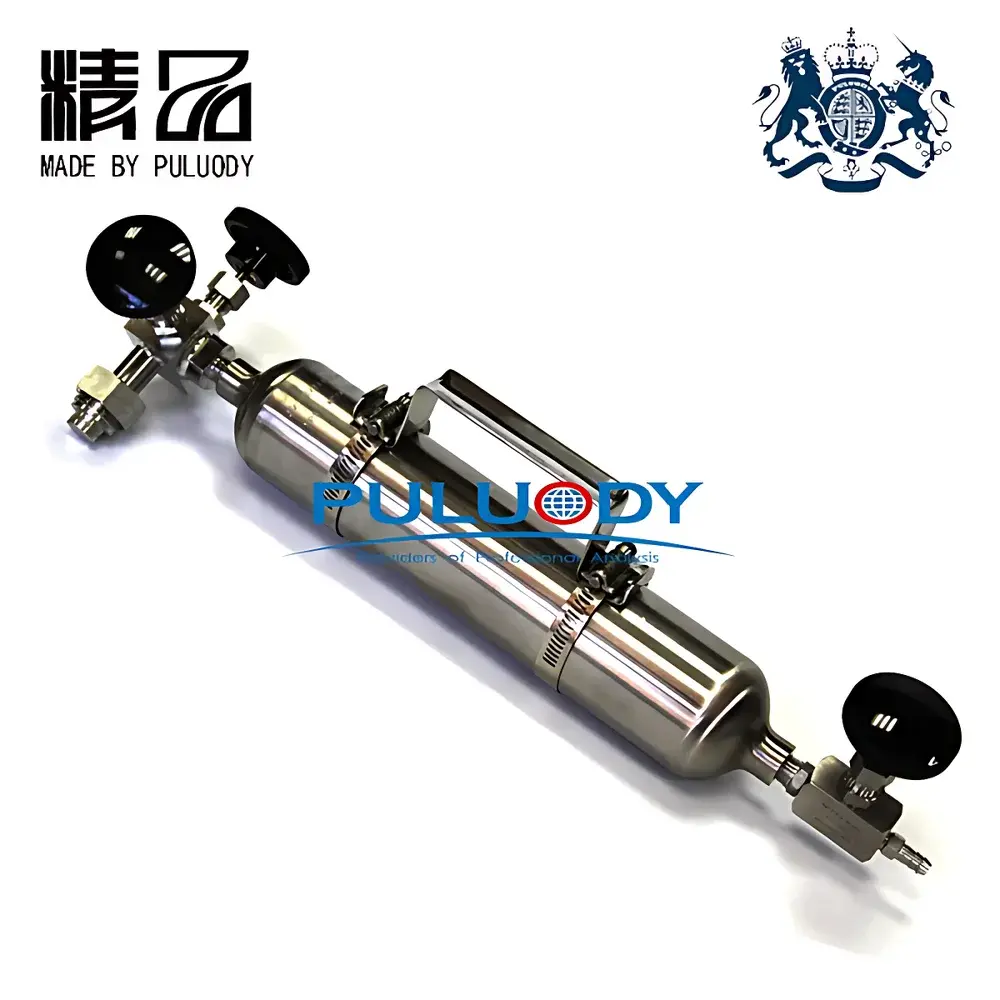
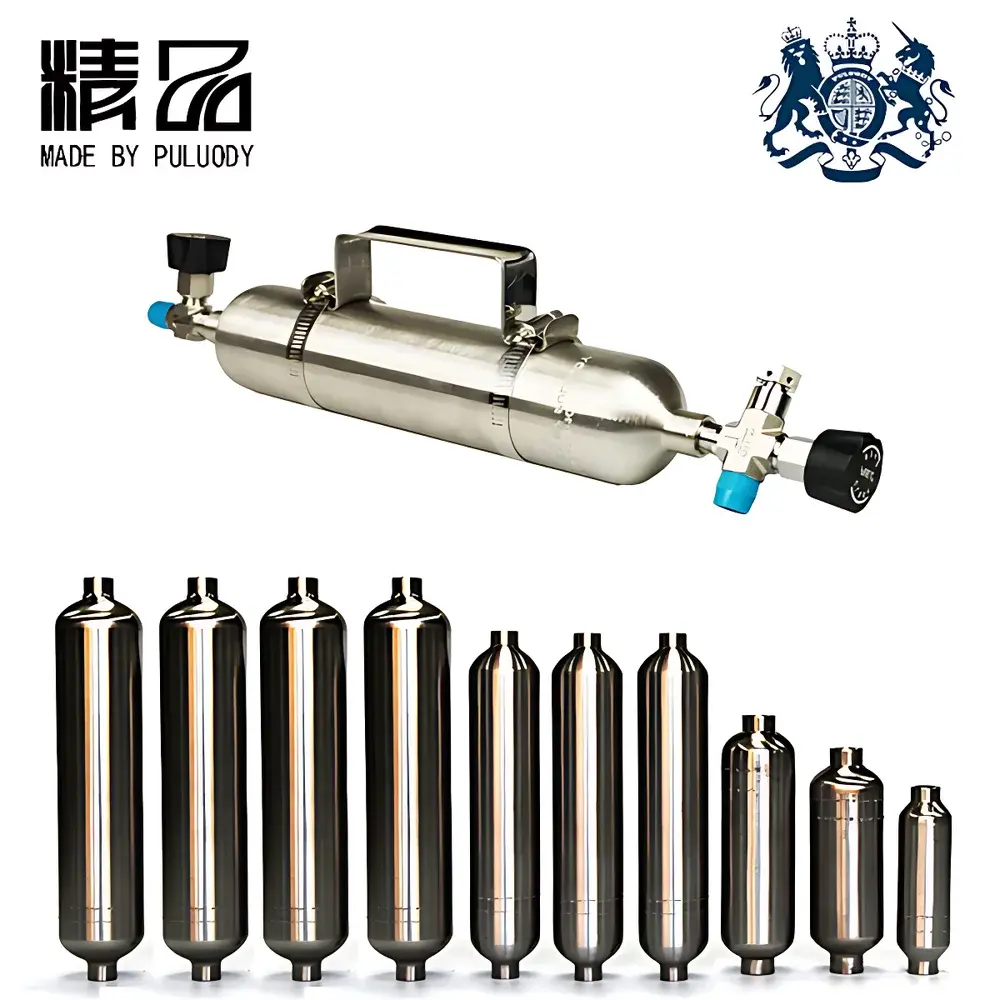
PULL 500 mL Cryogenic Sampling Cylinder with 316L Stainless Steel Construction
| Brand | PULL |
|---|---|
| Origin | Shaanxi, China |
| Manufacturer Type | Authorized Distributor |
| Country of Origin | China |
| Capacity | 500 mL |
| Working Pressure | 4 MPa or 20 MPa |
| Operating Temperature Range | −190 °C to +80 °C |
| Material | ASTM A312 TP316L Seamless Stainless Steel |
| Compliance | SH/T 0233–92, GB/T 13289–2014, GB/T 13290–2014, ASTM D1265, IP 197 |
| Optional Accessories | Bourdon-type pressure gauge, rupture disc, corrosion-resistant internal coating (e.g., SilcoNert® or Sulfinert®), push-to-connect quick couplings, PTFE/FEP-lined hoses |
Overview
The PULL 500 mL Cryogenic Sampling Cylinder is an engineered solution for the safe, representative, and contamination-controlled collection, storage, and transport of volatile and cryogenic fluid samples. Designed in strict accordance with international sampling standards—including ASTM D1265 (Standard Practice for Sampling Liquefied Petroleum Gases), IP 197 (Sampling of Liquefied Petroleum Gases), and Chinese national standards SH/T 0233–92, GB/T 13289–2014, and GB/T 13290–2014—the cylinder employs a seamless, cold-formed 316L stainless steel body (ASTM A312 TP316L) to ensure structural integrity under extreme thermal and pressure differentials. Its operational envelope spans from liquid nitrogen temperatures (−196 °C) up to +80 °C, supporting both liquid-phase and vapor-phase sampling of low-boiling hydrocarbons and industrial gases without phase segregation or adsorptive loss. The cylinder’s geometry and valve configuration are optimized to minimize dead volume, suppress turbulence during filling, and enable quantitative transfer—critical for compositional analysis in refinery QC, petrochemical R&D, and custody transfer verification.
Key Features
- Seamless one-piece 316L stainless steel construction, fabricated via cold extrusion to eliminate weld seams and enhance fatigue resistance at cryogenic temperatures
- Dual-valve system: one high-purity straight-through needle valve for controlled sample ingress/egress; one optional safety-rated rupture disc assembly compliant with PED 2014/68/EU
- Ergonomic, molded stainless steel handle designed for gloved operation and mechanical stability during pressurization and handling
- Optional internal passivation or inert coating (e.g., SilcoNert® or Sulfinert®) to mitigate surface adsorption of trace sulfur compounds, mercaptans, or reactive olefins
- Configurable with calibrated Bourdon-tube pressure gauge (0–25 MPa range, Class 1.6 accuracy) and pre-calibrated volumetric expansion tube for precise mass-based sampling
- Compatible with standardized ISO 10156-compliant quick-connect fittings and chemically resistant flexible hoses (PTFE, FEP, or PFA-lined)
Sample Compatibility & Compliance
This sampling cylinder is validated for use with liquefied gases and cryogens including but not limited to: liquid oxygen (LOX), liquid nitrogen (LIN), liquid argon (LAR), ethylene, propylene, butadiene, ethane, butane, liquefied petroleum gas (LPG), natural gas liquids (NGLs), and synthetic methane streams. It is unsuitable for samples containing free water, hydrogen sulfide above 50 ppm (without specialized lining), or halogenated refrigerants that may induce stress corrosion cracking in 316L. All units undergo hydrostatic testing at 1.5× rated working pressure (per ASME B31.4 and GB/T 150.1–2011) and helium leak testing (<1×10⁻⁹ mbar·L/s). Documentation includes material test reports (MTRs), pressure test certificates, and conformity declarations aligned with ISO/IEC 17025-accredited calibration practices.
Software & Data Management
While the cylinder itself is a passive mechanical device, its integration into digital laboratory workflows is supported through companion documentation templates compatible with LIMS (Laboratory Information Management Systems) and electronic batch records. Each unit is assigned a unique serial number traceable to manufacturing lot, heat treatment logs, and non-destructive examination (NDE) records. Optional RFID tagging enables automated asset tracking across sample chain-of-custody protocols. For regulated environments (e.g., ISO 17025, GLP, or FDA 21 CFR Part 11), the accompanying Certificate of Conformance includes audit-ready metadata fields: date of last hydrotest, valve calibration due date, coating application batch ID, and technician sign-off.
Applications
- Refinery process stream monitoring: on-line sampling of FCC overheads, alkylation feedstocks, and hydrotreater effluents
- Petrochemical plant QA/QC: compositional verification of ethylene purity per ASTM D2504 prior to polymerization
- Cryogenic infrastructure maintenance: sampling LNG boil-off gas for Wobbe index and heating value validation
- Environmental emissions testing: grab sampling of VOC-laden vent streams per EPA Method TO-15 protocols
- Research laboratories: controlled-phase equilibrium studies of binary and ternary hydrocarbon mixtures at sub-ambient conditions
FAQ
What is the maximum allowable fill level for safe cryogenic operation?
Per SH/T 0233–92 and ASTM D1265, the recommended fill limit is 75–80% of internal volume to accommodate thermal expansion. Overfilling risks overpressure during warming and valve freezing.
Can this cylinder be used for hydrogen sampling?
Yes—provided operating pressure remains ≤20 MPa and temperature stays within −190 °C to +80 °C. However, hydrogen embrittlement risk increases above 100 °C; extended exposure above 60 °C requires post-use inspection per NACE MR0175/ISO 15156.
Is internal electropolishing included as standard?
Electropolishing is available as an optional surface finish (Ra ≤ 0.4 µm) to reduce particle retention and improve cleanability. Standard finish meets ASTM A967 Grade 1B.
How often must the cylinder undergo recertification?
Hydrostatic retesting is required every 5 years per GB/T 150.1–2011 and ASME BPVC Section VIII Division 1. Visual inspection and leak testing should occur before each use.
Does the rupture disc meet PED 2014/68/EU requirements?
Yes—when specified, the rupture disc assembly carries CE marking, is certified by a Notified Body (NB 0036), and complies with Annex I, Essential Safety Requirements 2.10 and 2.11 for pressure equipment.






