
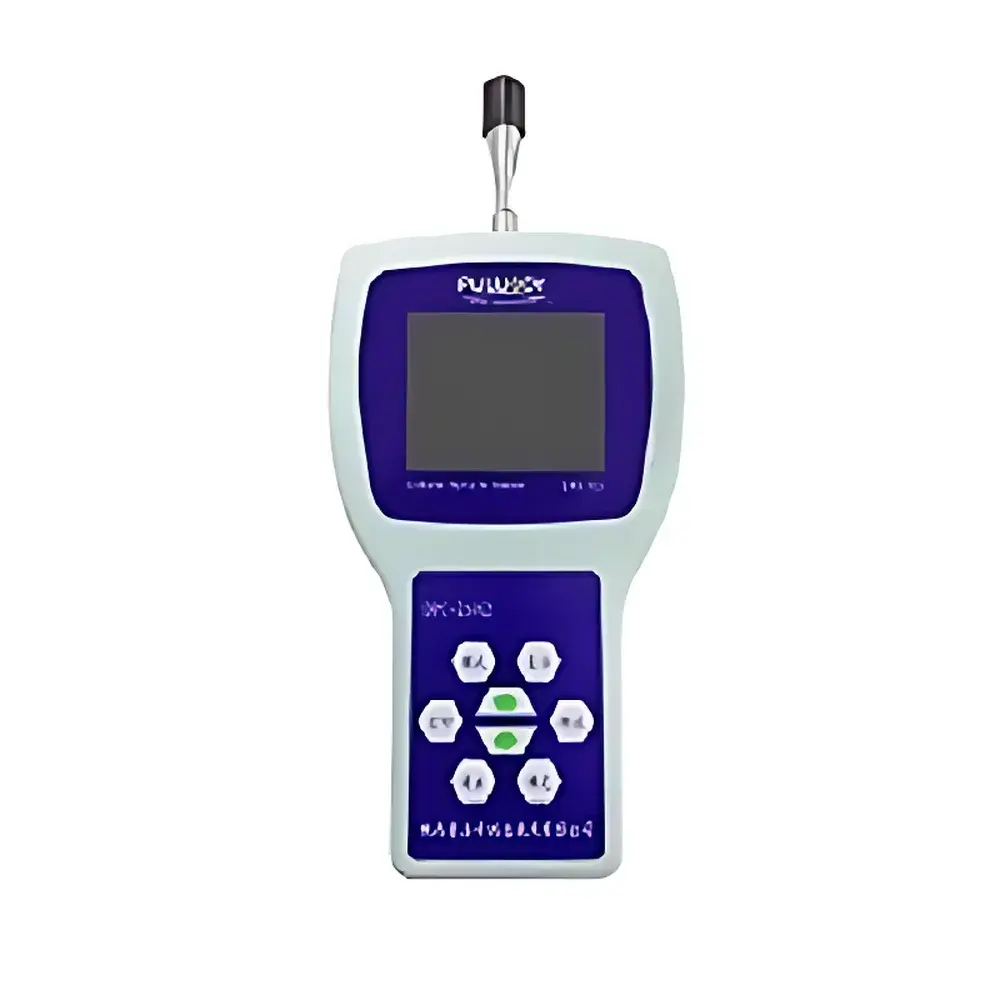
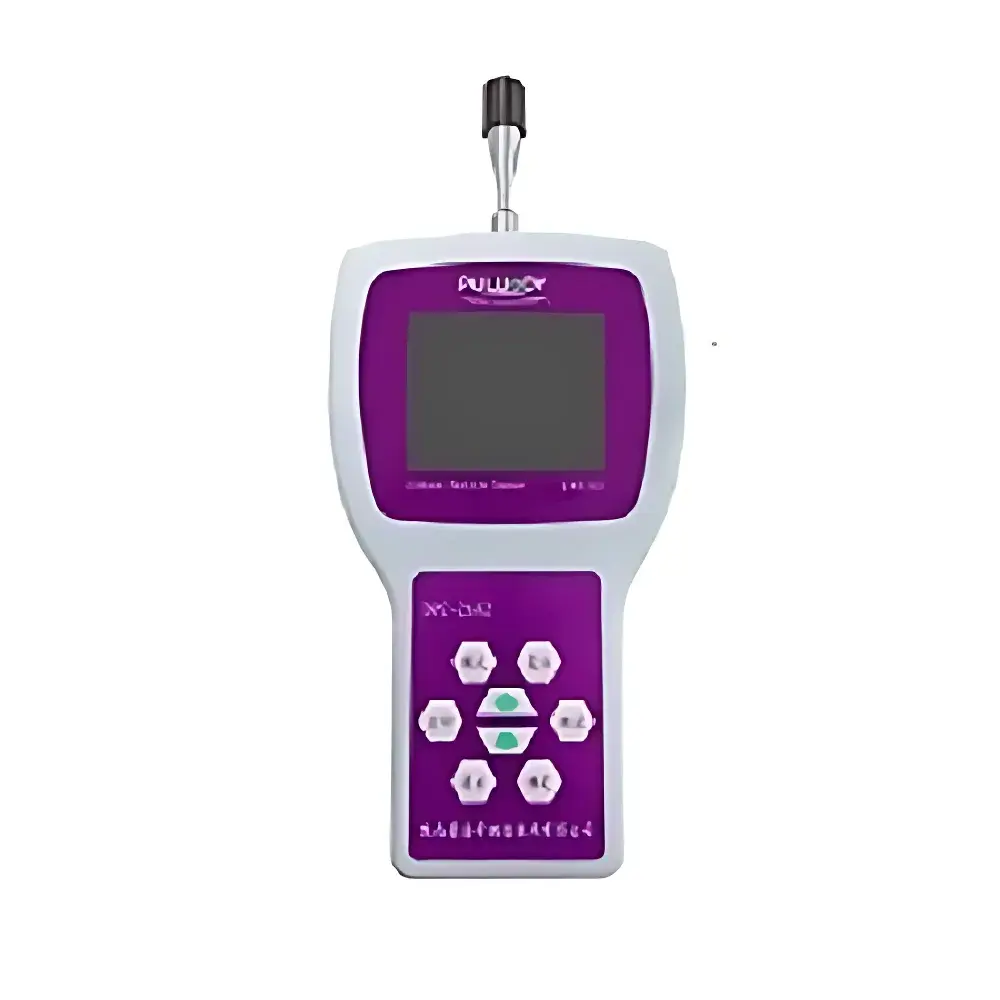
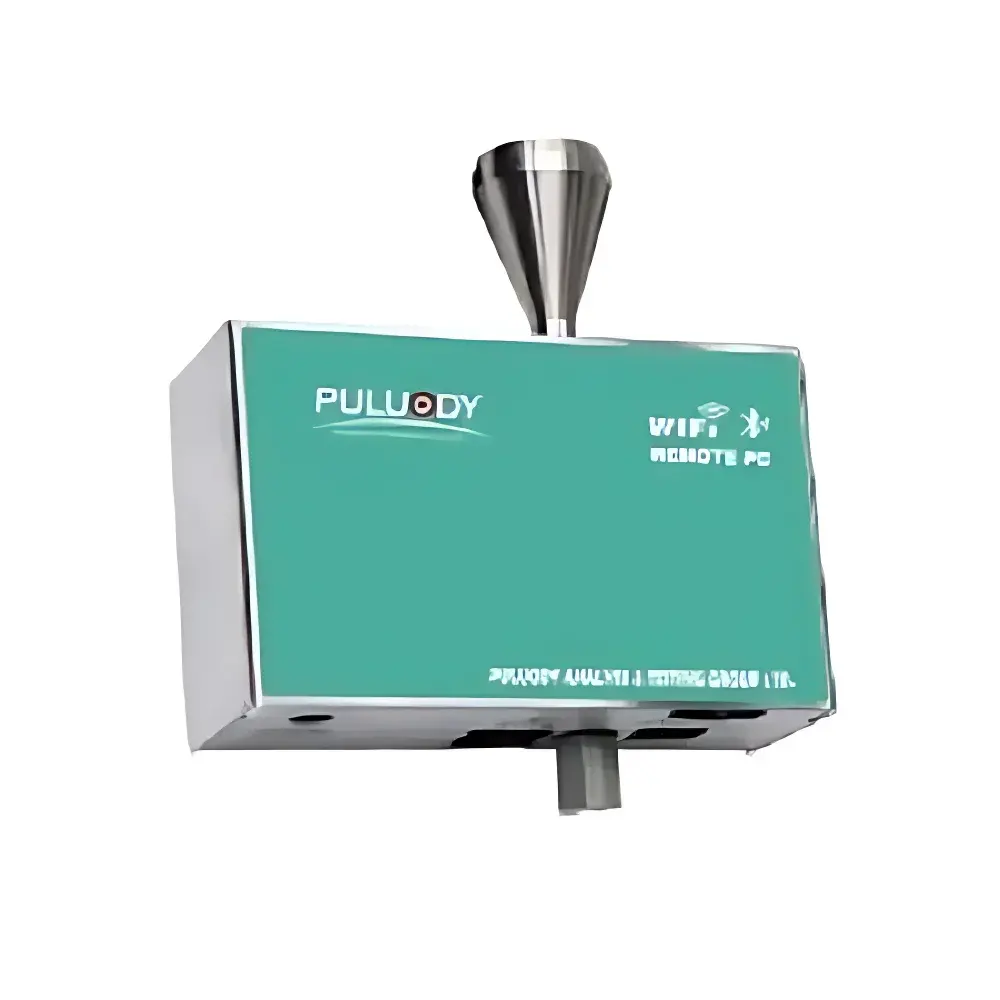
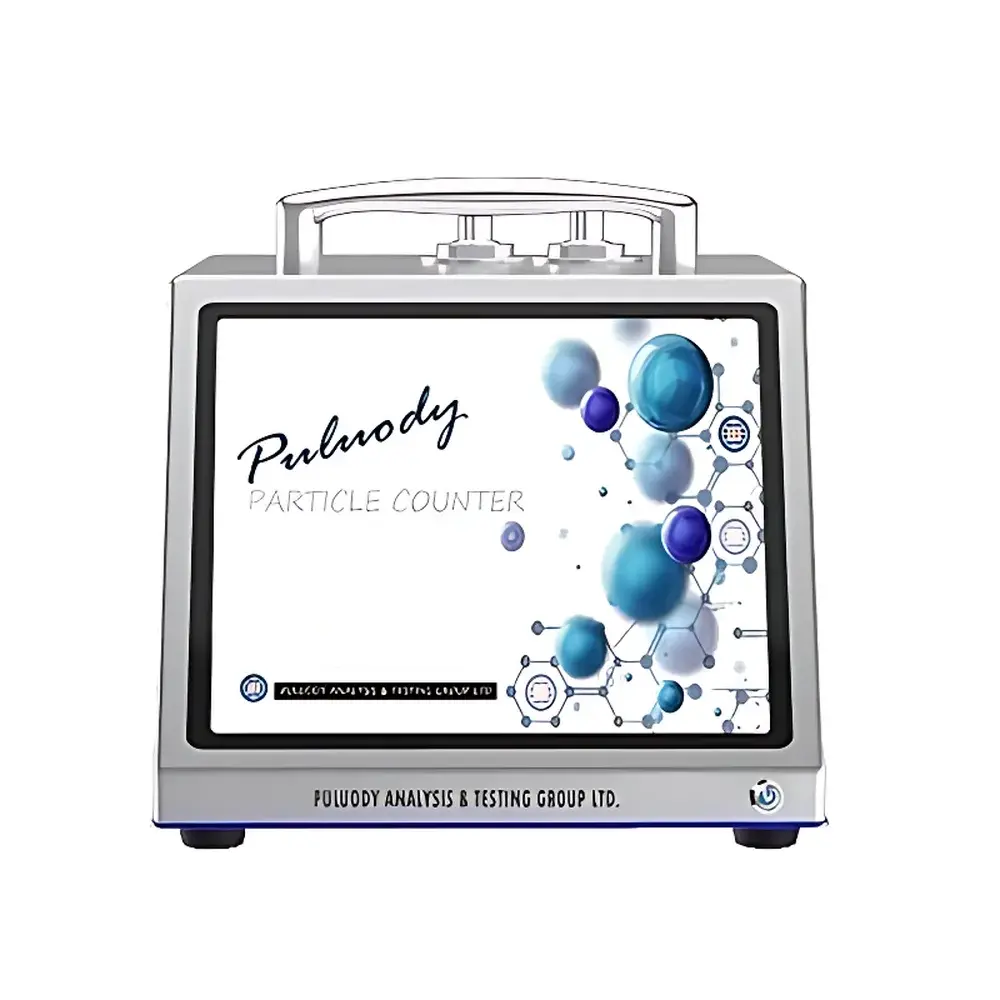
PULUODY DPC-2602 Handheld Optical Airborne Particle Counter
| Brand | PULUODY |
|---|---|
| Origin | Shaanxi, China |
| Model | DPC-2602 |
| Instrument Type | Optical Particle Counter |
| Laser Sensor Generation | 7th-generation dual-laser narrow-beam detector |
| Particle Size Channels | 0.3, 0.5, 1.0, 2.5, 5.0, and 10.0 µm (configurable channel sets A–D) |
| Counting Efficiency | ≥50% at 0.3 µm |
| Coincidence Error | <5% at 2,000,000 particles/ft³ |
| Flow Rate | 2.83 L/min (0.1 cfm) |
| Sampling Mode | Timed (60 s default) or cyclic |
| Data Storage | 10,000 measurement records |
| Display | 3.45″ industrial-grade full-view color LCD |
| Power | Rechargeable 4100 mAh polymer lithium battery |
| Operating Temp. | 5–45 °C |
| Operating Humidity | ≤90% RH, non-condensing |
| Compliance | ISO 14644-1:2015, GB/T 16292–1996, EU GMP Annex 1 (2022), USP <788> |
| Optional Sensors | Temperature & relative humidity (–40 to 120 °C / 0–100% RH), CO, HCHO |
Overview
The PULUODY DPC-2602 Handheld Optical Airborne Particle Counter is a rigorously engineered instrument designed for real-time, quantitative monitoring of airborne particulate contamination in controlled environments. It operates on the principle of light scattering—specifically, 7th-generation dual-laser narrow-beam detection—where particles suspended in sampled air pass through two spatially offset laser beams, enabling high-fidelity pulse discrimination, reduced coincidence error, and improved sizing resolution across multiple discrete channels. Unlike single-laser or wide-beam architectures, this dual-beam configuration enhances signal-to-noise ratio and mitigates false counts caused by transient optical noise or particle agglomeration. The device meets the stringent requirements of ISO 14644-1:2015 Class 1–9 cleanroom classification, EU GMP Annex 1 (2022), and USP for non-viable particle assessment in pharmaceutical manufacturing, biotechnology facilities, and microelectronics fabrication. Its compact, ergonomic form factor supports both fixed-point validation and mobile mapping of HVAC ducts, laminar flow hoods, isolators, and transfer ports.
Key Features
- Configurable multi-channel particle sizing: Select from four standardized channel sets (A–D), covering critical thresholds including 0.3 µm, 0.5 µm, 1.0 µm, 2.5 µm, 5.0 µm, and 10.0 µm—fully compliant with ISO 14644-1, GB/T 16292, and FDA guidance for environmental monitoring.
- Dual-laser narrow-beam optical detection architecture ensures counting efficiency ≥50% at 0.3 µm and ≥98% at ≥0.5 µm, with coincidence error <5% at 2×10⁶ particles/ft³—enabling reliable enumeration in high-concentration scenarios such as filter integrity testing or post-decontamination verification.
- Integrated environmental sensing: Optional temperature/humidity probe delivers simultaneous measurement of ambient conditions (–40 to 120 °C; 0–100% RH), while up to three electrochemical gas sensors (e.g., CO, HCHO) may be field-installed for comprehensive indoor air quality (IAQ) assessment.
- Robust data management: Stores up to 10,000 timestamped records locally, each containing full-size distribution histograms, sampling metadata (flow rate, duration, location tag), and environmental parameters. All entries are immutable and time-stamped with hardware-level RTC synchronization.
- Field-serviceable calibration support: Designed for traceable recalibration using NIST-traceable polystyrene latex (PSL) standards; compatible with third-party metrology labs accredited to ISO/IEC 17025 for ongoing compliance with GLP/GMP audit requirements.
- Industrial-grade power and interface architecture: 4100 mAh rechargeable polymer lithium battery provides >8 hours continuous operation; RS232-to-USB bridge enables direct integration with LIMS or electronic batch record (EBR) systems under 21 CFR Part 11-compliant software environments.
Sample Compatibility & Compliance
The DPC-2602 is validated for use with ambient air, compressed gases (oil-free, desiccated), and HEPA-filtered supply streams in ISO Class 3–8 environments. It does not require dilution for standard cleanroom applications and maintains accuracy across variable pressure (80–106 kPa) and humidity (<90% RH, non-condensing) conditions. All firmware and reporting logic adhere to ISO 14644-1:2015 statistical sampling plans—including minimum sample volume calculations, spatial distribution protocols, and confidence interval reporting for classification verification. Device firmware includes built-in audit trail logging for all user actions (e.g., parameter changes, calibration events, data exports), satisfying ALCOA+ principles for data integrity in regulated industries.
Software & Data Management
The DPC-2602 interfaces with PULUODY’s PC-based CleanRoom Manager v4.2 software suite, which supports automated report generation per ISO 14644-2:2015 Annex B, dynamic map overlays for spatial particle density visualization, and export to CSV, PDF, or XML formats compatible with enterprise QMS platforms. All stored measurements include embedded digital signatures and tamper-evident hashing (SHA-256). Software modules support 21 CFR Part 11-compliant user role assignment (administrator/operator/auditor), electronic signatures, and configurable retention policies aligned with ICH E6(R3) and EU Annex 11 requirements.
Applications
- ISO 14644-1 cleanroom certification and routine monitoring (Grade A–D environments)
- GMP-compliant environmental monitoring programs in sterile drug manufacturing, cell therapy suites, and API synthesis areas
- HEPA/ULPA filter leak testing via upstream challenge and downstream scanning (scan rate ≤5 cm/s)
- HVAC system commissioning, balancing, and performance qualification (PQ)
- Biological safety cabinet (BSC) and laminar flow workbench validation per NSF/ANSI 49
- Aerosol challenge studies for respirator filtration efficiency (e.g., EN 149, NIOSH 42 CFR 84)
- Microelectronics clean manufacturing lines (wafer fab, photolithography tool enclosures)
- Food and beverage packaging line environmental control (e.g., aseptic filling rooms)
FAQ
Does the DPC-2602 meet ISO 21501-4 requirements for light-scattering airborne particle counters?
Yes—the optical design, size calibration protocol, and counting efficiency curve have been independently verified against ISO 21501-4:2018 Annex A reference methods using monodisperse PSL standards.
Can the instrument be used for compressed air monitoring per ISO 8573-1?
With optional isokinetic sampling probe and pressure-regulated inlet, it supports Class 1–5 particulate testing when paired with ISO 8573-1-compliant sampling methodology.
Is firmware upgrade supported in the field?
Yes—upgrades are delivered via signed USB firmware packages with SHA-256 hash verification and automatic rollback on checksum failure.
What is the recommended calibration interval?
Annual calibration is advised per ISO/IEC 17025-accredited laboratories; however, user-performed zero-check and flow verification are recommended before each daily use session.
Does the device support GLP-compliant audit trails?
Yes—all configuration changes, calibration events, and data exports are logged with UTC timestamps, operator ID, and cryptographic hash—retained for ≥36 months per internal storage policy.



