
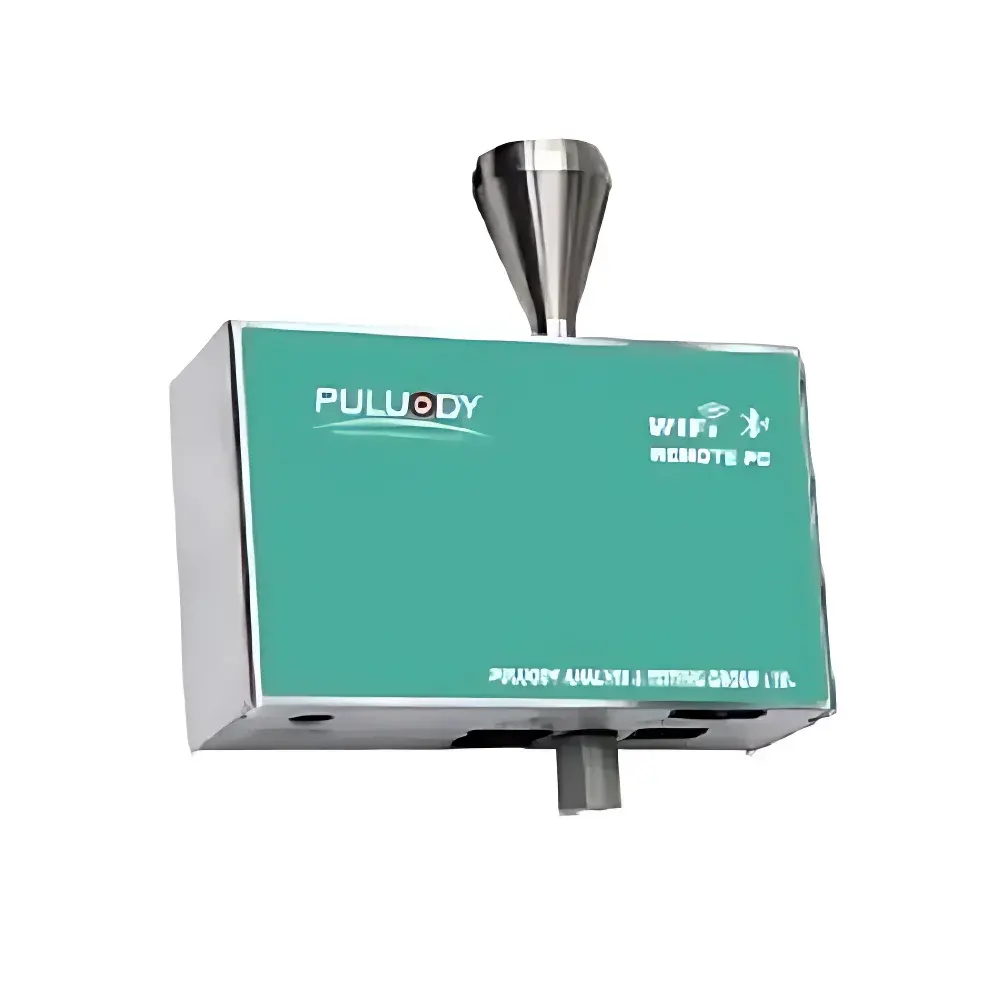
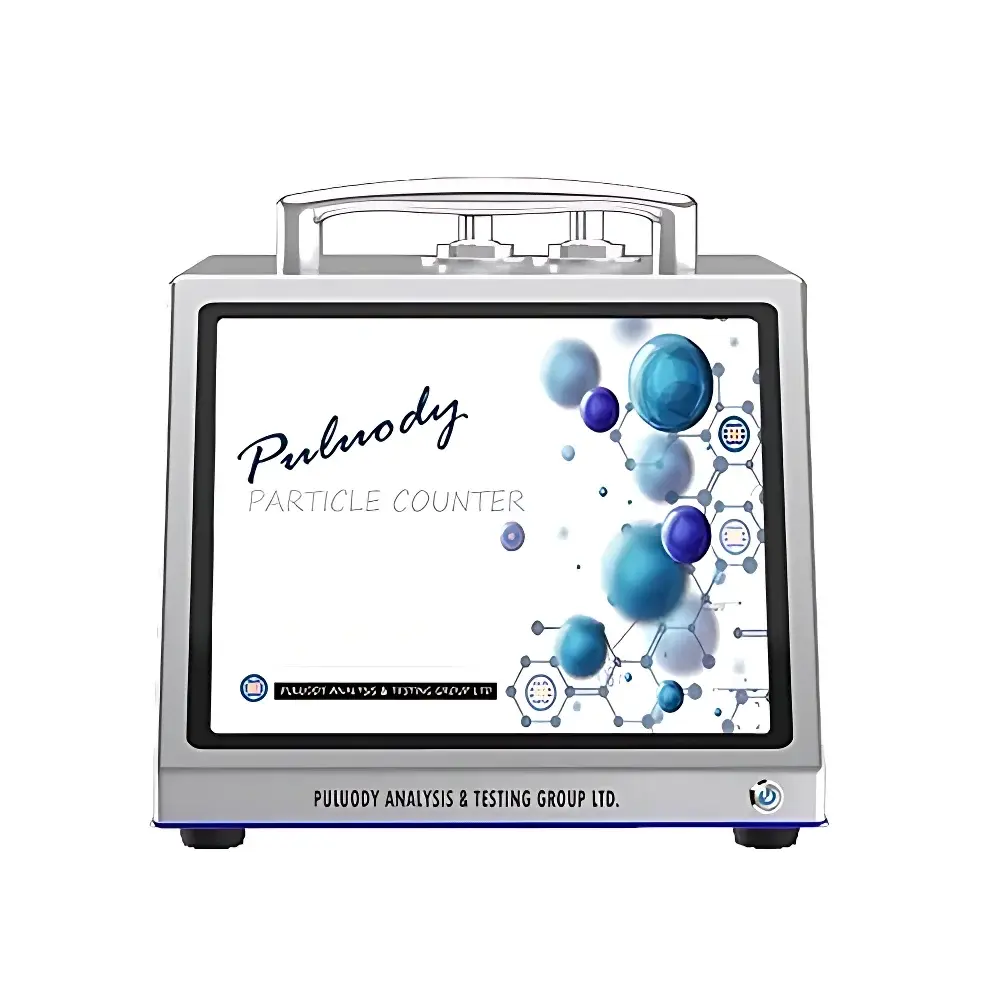
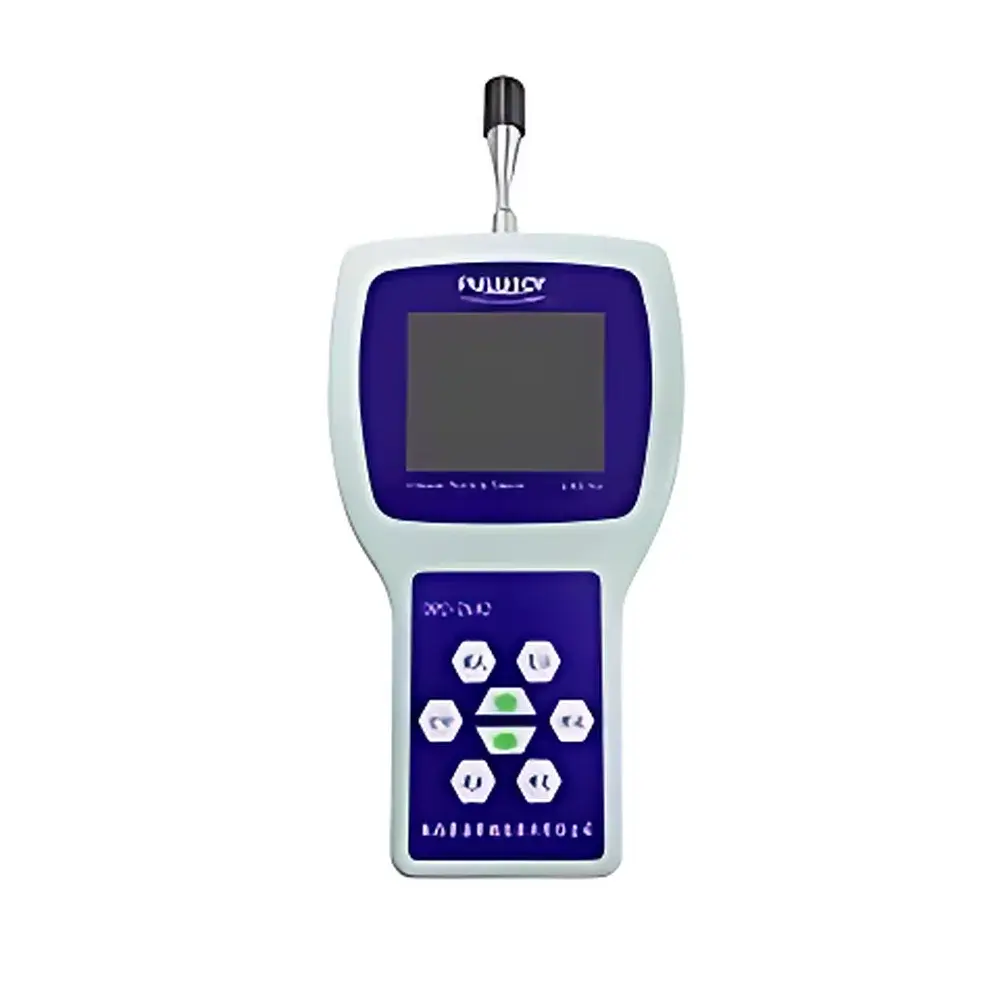
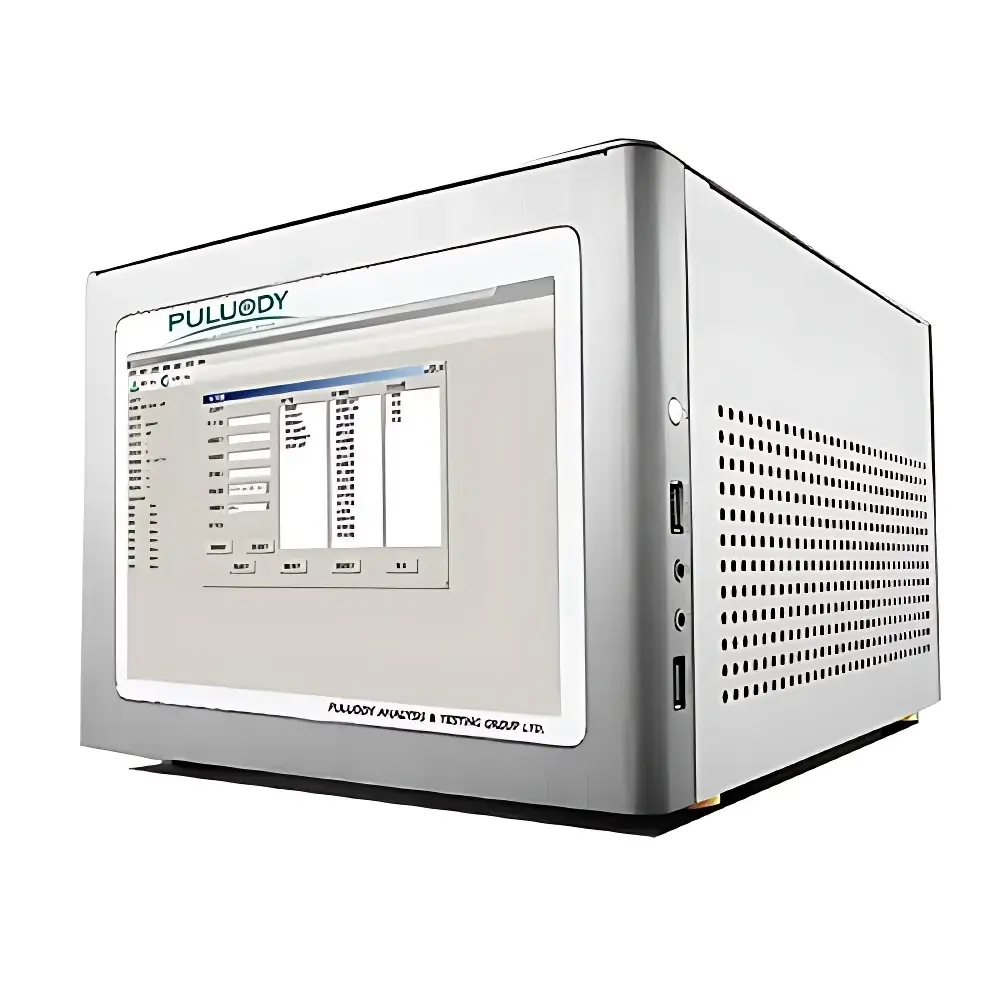
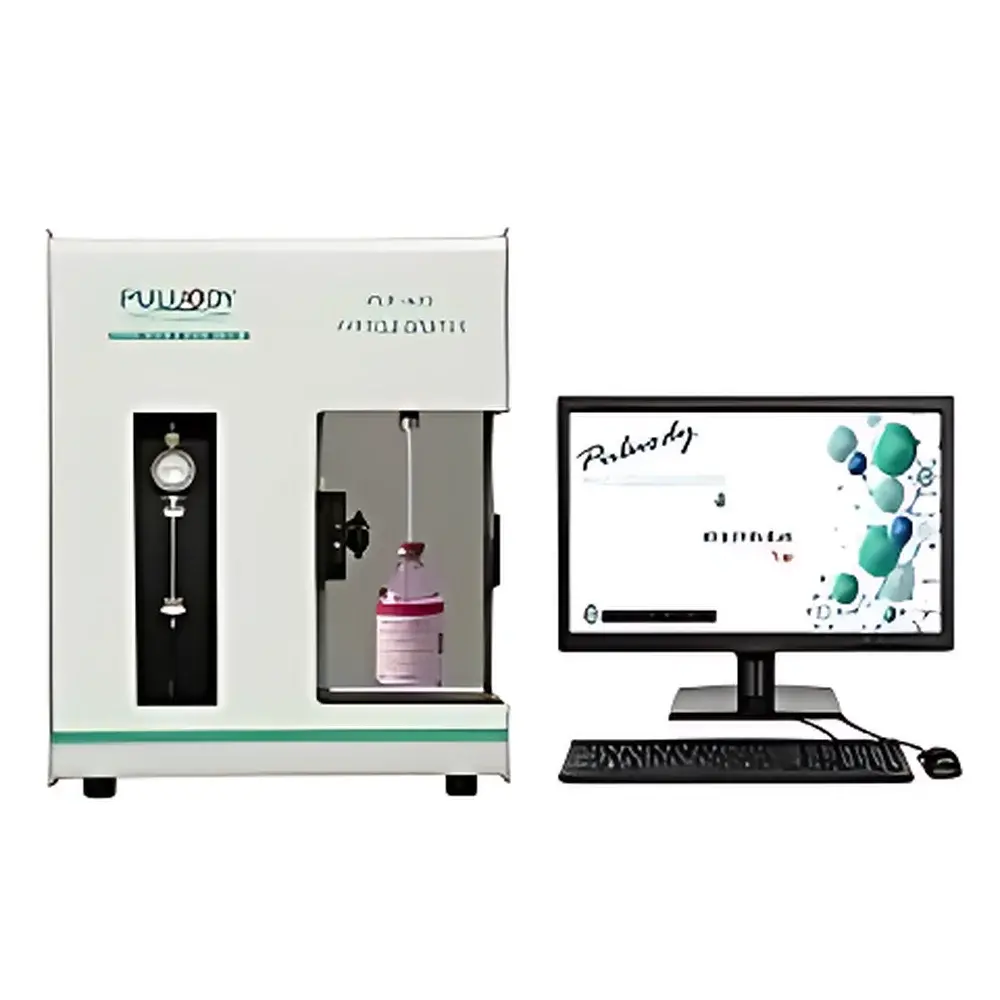
PULUODY DPC-2623 / DPC-2611 / DPC-2602 Desktop & In-line Laser Particle Counter
| Key | Brand: PULUODY |
|---|---|
| Origin | Shaanxi, China |
| Model | DPC-2623, DPC-2611, DPC-2602 |
| Instrument Type | Optical Particle Counter |
| Flow Rate Options | 2.83 L/min, 28.3 L/min, 50 L/min, 100 L/min |
| Particle Size Channels | Configurable from 0.10 µm to 25.0 µm (6-channel selectable calibration sets) |
| Counting Accuracy | ≤ ±30% for particle size distribution |
| Repeatability | ≤ ±10% FS |
| Coincidence Error | <5% at 2×10⁶ particles/ft³ |
| Compliance | ISO 21501-4, ISO 14644-1, GB/T 16292, GB/T 6167, JJF 1190, JIS B9921, CE |
| Data Storage | ≥10,000 test records with timestamp, location tag, and operator ID |
| Communication | RS232, RS485, LAN, USB |
| Regulatory Features | Audit trail, user access control, electronic signatures per 21 CFR Part 11 |
| Operating Environment | 5–45 °C, ≤90% RH (non-condensing) |
| Power Supply | AC 100–240 V, 50/60 Hz |
Overview
The PULUODY DPC-2623, DPC-2611, and DPC-2602 series represent a family of high-fidelity optical particle counters engineered for rigorous environmental monitoring in regulated and research-intensive settings. These instruments operate on the principle of single-particle light scattering—utilizing dual-laser, narrow-beam detection technology (7th-generation design) to resolve airborne particulates across a wide dynamic range. Unlike conventional fixed-channel counters, the DPC platform supports six distinct multi-channel calibration configurations—from ultrafine 0.10 µm detection up to coarse 25.0 µm particles—enabling application-specific optimization without hardware modification. Designed in strict alignment with ISO 14644-1 cleanroom classification requirements and GMP Annex 1 guidance, each unit delivers traceable, repeatable measurements suitable for qualification, routine monitoring, and validation protocols in pharmaceutical, biotechnology, microelectronics, and aerospace manufacturing environments.
Key Features
- Dual-laser narrow-beam optical sensor with >200,000-cycle operational lifetime, minimizing drift and maximizing signal-to-noise ratio for low-concentration environments.
- Configurable particle sizing matrices: six pre-calibrated channel sets—including options for 0.10/0.20/0.25/0.50/0.70/1.0 µm resolution—supporting both ISO 21501-4 and USP compliant reporting.
- Integrated environmental sensing: built-in temperature (-40 to 120 °C), relative humidity, and dew point measurement; optional gas sensor slots for CO, HCHO, or other target analytes (up to three simultaneous channels).
- Triple-mode measurement architecture: particle number concentration (particles/L), mass concentration (µg/m³), and filtration efficiency (%)—all calculated in real time using standardized Mie scattering algorithms and density assumptions per material class.
- 10.0-inch industrial-grade TFT-LCD display with full-view angle, multilingual UI (English/Chinese), and intuitive touchscreen navigation for field operation without external PC dependency.
- Comprehensive hardware-level protection: overvoltage, overcurrent, short-circuit, ESD-hardened circuitry, and magnetic field shielding to ensure stability in HVAC ducts, cleanroom utilities, and industrial control rooms.
Sample Compatibility & Compliance
The DPC series is validated for continuous sampling of compressed air, ambient room air, HEPA-filtered supply streams, and recirculated HVAC exhaust. It meets the physical and metrological requirements of ISO 21501-4 (calibration and verification of light-scattering airborne particle counters), ISO 14644-1 (cleanroom classification), and GB/T 16292 (pharmaceutical clean area testing). All units undergo factory calibration traceable to NIM (National Institute of Metrology, China) reference aerosols and include documentation supporting annual recalibration under GLP/GMP frameworks. The instrument’s firmware implements role-based access control, immutable audit trails, and electronic signature capability—fully satisfying FDA 21 CFR Part 11 data integrity mandates for regulated laboratories and production facilities.
Software & Data Management
Data acquisition, analysis, and reporting are managed through embedded firmware and optional PULUODY ParticleView™ desktop software (Windows-compatible). Each measurement record includes timestamp, GPS/geotag (when enabled), operator ID, sampling flow rate, environmental conditions, and raw scatter pulse histograms. Storage supports real-time logging to internal flash memory (≥10,000 entries) or external USB drives with no practical capacity limit. Export formats include CSV, PDF reports (customizable templates), and XML for LIMS integration. Optional RS485 or Ethernet connectivity enables centralized monitoring via SCADA or MES platforms—critical for continuous compliance in Class A/B cleanrooms and ISO 5–8 controlled environments.
Applications
- Pharmaceutical manufacturing: environmental monitoring in aseptic processing suites, isolators, and lyophilization chambers per EU GMP Annex 1 and USP .
- Microelectronics fabrication: wafer fab cleanroom certification, tool exhaust verification, and filter leak testing (DOP/PAO scanning support).
- Medical device packaging: validation of Class 7/8 cleanrooms per ISO 13485 and FDA QSR 21 CFR Part 820.
- HVAC system commissioning: airflow uniformity mapping, filter integrity assessment, and pressure differential correlation studies.
- Research laboratories: aerosol generation characterization, nanoparticle dispersion kinetics, and inhalation toxicology exposure chamber monitoring.
- Food & beverage production: ambient air quality assurance in filling lines, dry blending areas, and cold storage zones subject to BRCGS or SQF requirements.
FAQ
What calibration standards does the DPC series follow?
The instrument complies with ISO 21501-4 for optical calibration, GB/T 6167 for performance verification, and JJF 1190 for national metrological verification in China. Factory calibration uses NIST-traceable polystyrene latex (PSL) spheres and is documented in the Certificate of Conformance supplied with each unit.
Can the DPC series be used for compressed gas monitoring?
Yes—when equipped with appropriate pressure regulators and flow controllers, the DPC-2611 and DPC-2623 models support sampling of compressed air, nitrogen, and inert gases per ISO 8573-1 purity classes, provided dew point and oil content remain within specified limits.
Is remote data retrieval supported?
All models feature RS485 Modbus RTU and Ethernet TCP/IP interfaces. Third-party SCADA systems can poll real-time particle counts, alarms, and environmental parameters using standard protocol libraries without proprietary middleware.
How is regulatory compliance enforced in the firmware?
The embedded OS enforces 21 CFR Part 11 requirements via mandatory user authentication, session-based audit logs, electronic signatures for report approval, and write-protected historical records—no manual deletion or editing permitted after data capture.
What maintenance intervals are recommended?
Annual recalibration is advised per ISO 14644-3 and GMP Annex 1. Optical path cleaning and flow verification should occur quarterly; laser diode output and photodetector gain are automatically monitored during startup and logged for trend analysis.



