
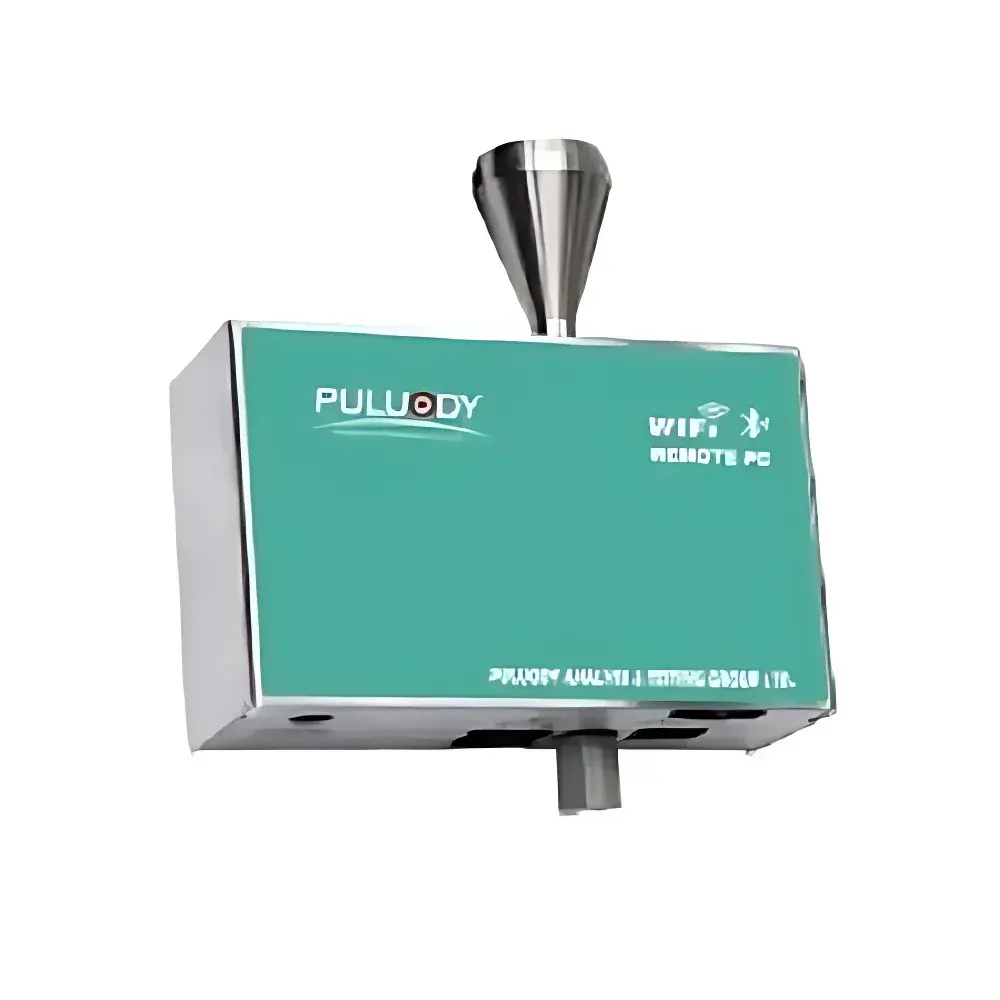
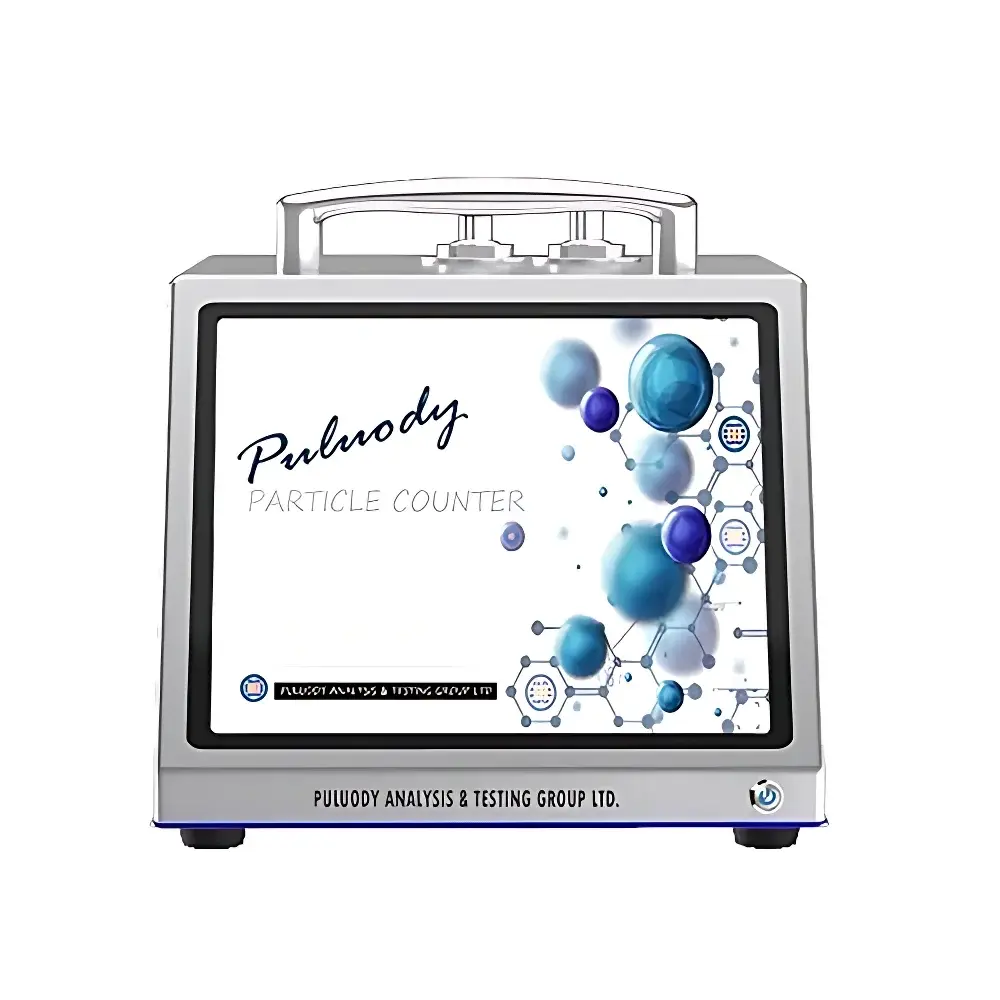
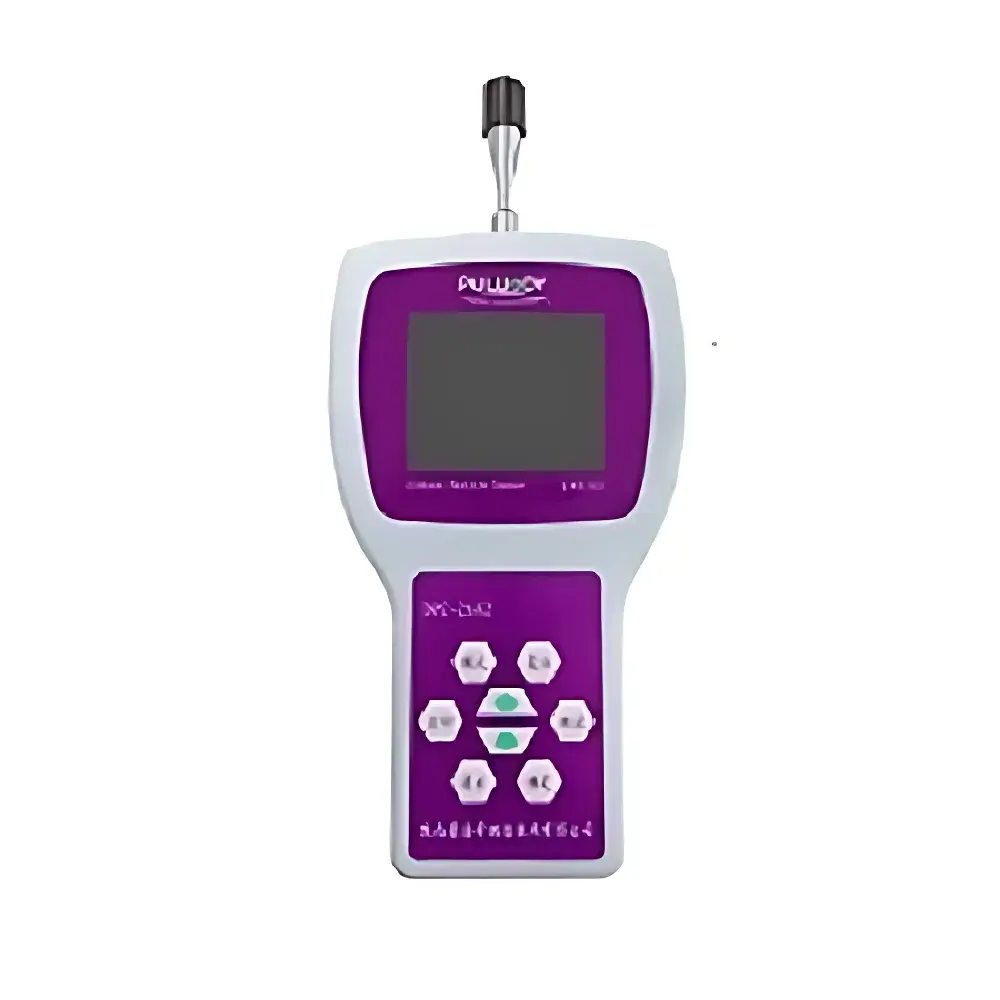
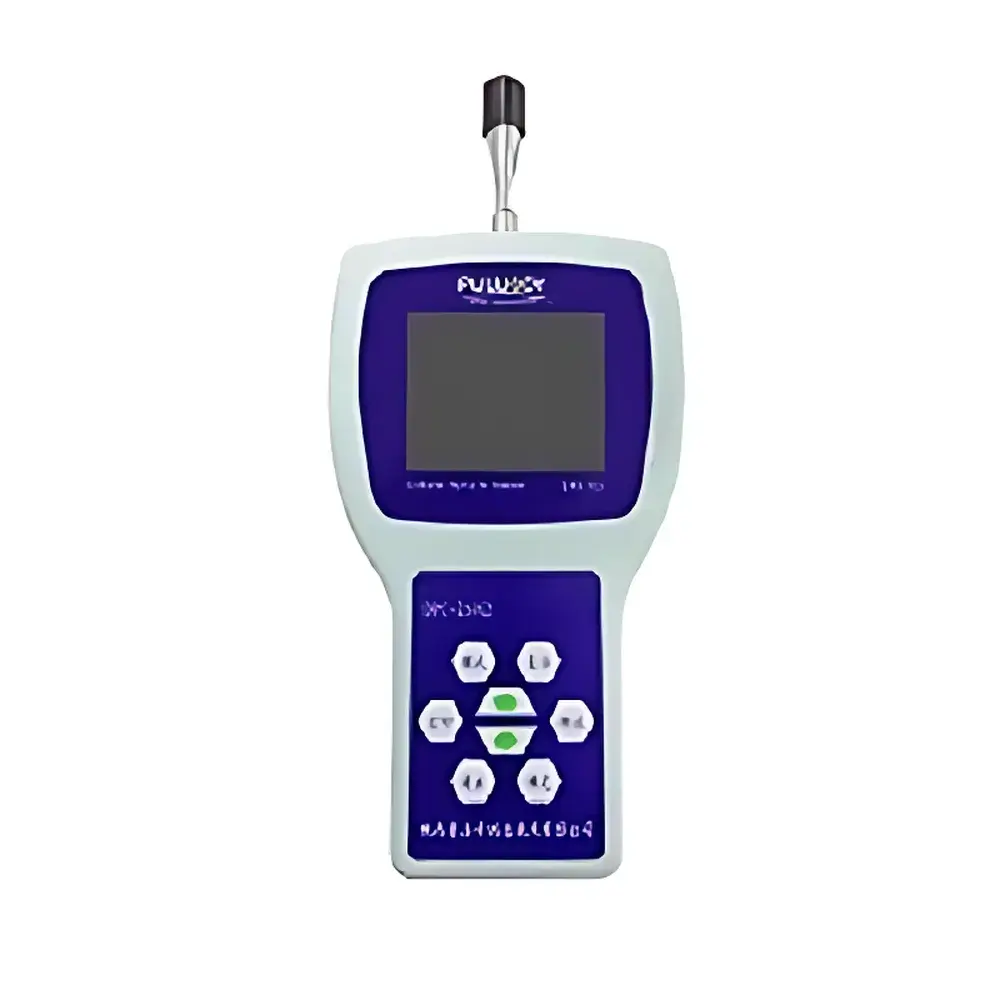
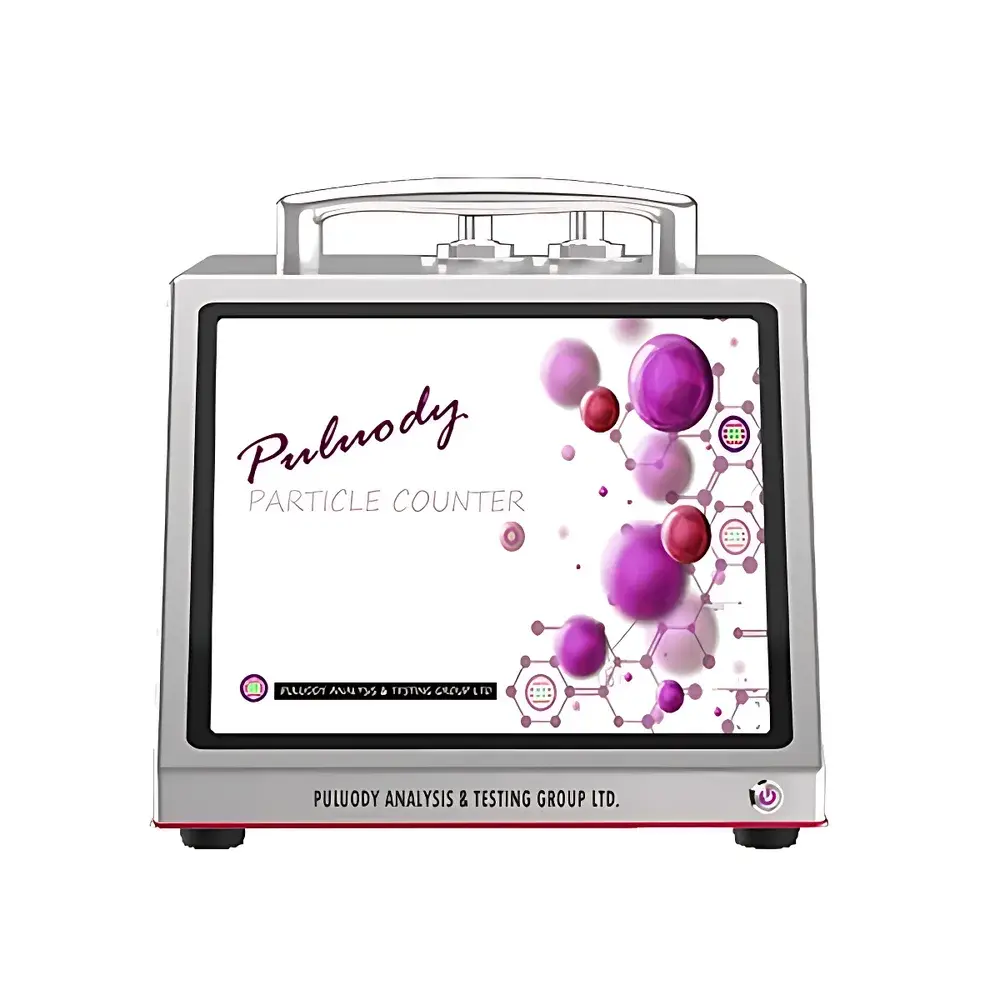
PULUODY DPC-2623 Remote Optical Airborne Particle Counter
| Brand | PULUODY |
|---|---|
| Origin | Shaanxi, China |
| Model | DPC-2623 |
| Instrument Type | Optical Particle Counter |
| Laser Sensor | Dual-beam narrow-laser detection (7th-generation) |
| Particle Size Channels | 20 configurable channels (0.10–25.0 µm) |
| Size Resolution Options | Configurable sets A–F per ISO 21501-4 |
| Counting Accuracy | ≤±30% (per ISO 21501-4 & JJF 1190) |
| Repeatability | ≤±10% FS |
| Coincidence Loss | <5% at 2×10⁶ particles/ft³ |
| Flow Rate | 2.83 L/min (0.1 cfm) |
| Sampling Time | Adjustable (default 60 s) |
| Detection Modes | Particle number (particles/L), mass concentration (µg/m³), filtration efficiency (%) |
| Environmental Sensors | Integrated temperature/humidity (–40–120 °C, 0–100% RH), optional differential pressure & toxic gas (CO, HCHO) modules |
| Display | 3.45″ industrial-grade full-view color LCD |
| Data Storage | Onboard 10,000+ records + remote cloud/archive via USB/RS232 |
| Power | 4100 mAh polymer rechargeable battery (optional) |
| Protection | IP66, ExdII CT4 (intrinsically safe) |
| Compliance | ISO 14644-1:2015, ISO 21501-4:2018, GMP Annex 1 (2022), USP <788>, FDA 21 CFR Part 11 (audit trail ready), JJF 1190–2019 |
Overview
The PULUODY DPC-2623 Remote Optical Airborne Particle Counter is a CE-marked, ISO-compliant continuous monitoring instrument engineered for real-time quantification of airborne particulate contamination in critical environments. It operates on the principle of light scattering photometry using a proprietary dual-beam narrow-laser detection system (7th-generation), enabling high-sensitivity discrimination of particles from 0.10 µm to 25.0 µm in diameter. Unlike conventional single-wavelength counters, its dual-beam architecture suppresses noise from background illumination and particle transit-time variability, improving signal-to-noise ratio and measurement stability—particularly essential for low-concentration Class 5 (ISO 5) or Grade A environments. Designed to meet the stringent requirements of pharmaceutical cleanrooms (GMP Annex 1), microelectronics fabrication, aseptic processing suites, and HVAC validation protocols, the DPC-2623 supports both fixed-installation and portable deployment modes with integrated environmental sensing and multi-parameter correlation capability.
Key Features
- 20-user-configurable particle size channels across six standardized binning schemes (A–F), compliant with ISO 21501-4:2018 and JJF 1190–2019 calibration frameworks
- Simultaneous measurement of particle number concentration (particles/L), mass concentration (µg/m³), and filtration efficiency (%)—switchable via intuitive menu navigation
- Integrated high-accuracy temperature and humidity sensors (–40 °C to 120 °C; 0–100% RH), with optional differential pressure and electrochemical gas sensors (CO, HCHO) for comprehensive air quality profiling
- Industrial 3.45″ full-view color LCD with anti-glare coating and wide viewing angles, supporting bilingual (English/Chinese) UI and real-time parameter visualization
- Robust embedded data management: local storage of ≥10,000 test records with timestamp, location tag, and operator ID; USB/RS232 interface for secure export and GLP/GMP-compliant audit trail generation
- Intrinsically safe design certified to ExdII CT4 and IP66 ingress protection, validated for operation in humid, dusty, or mildly corrosive industrial settings
- Configurable alarm logic with user-defined thresholds for particle count, mass load, or gas concentration—mapped to ISO 14644-1 class limits (ISO Class 5–9) or FS209E equivalents (Class 100–300,000)
Sample Compatibility & Compliance
The DPC-2623 is optimized for gaseous sampling media only—primarily ambient air, compressed air, nitrogen purge streams, and HVAC supply/return ducts. It is not intended for liquid-phase or aerosolized droplet analysis. Its optical detection system is validated per ISO 21501-4 for monodisperse PSL calibration traceability and exhibits ≤±30% counting error against NIST-traceable reference standards. All factory calibrations are documented per ISO/IEC 17025 requirements and include certificate of conformance referencing ISO 14644-1:2015 Annex B and EU GMP Annex 1 §4.37–4.42. The instrument supports annual recalibration verification workflows aligned with metrological best practices, including interval-based drift assessment and sensor response linearity checks. Regulatory alignment extends to FDA 21 CFR Part 11 (electronic records/signatures), EU Annex 11 (computerized systems), and USP particulate matter testing guidance.
Software & Data Management
Data acquisition and reporting are managed through an embedded real-time operating system with deterministic sampling scheduling (60 s default, adjustable from 1–3600 s). Each stored record includes: particle count per channel, calculated mass loading, relative humidity, dry-bulb/wet-bulb temperatures, dew point, and optional gas concentrations. Export formats include CSV (for Excel/Statistica integration) and XML (for LIMS ingestion). Remote firmware updates and configuration synchronization are supported via encrypted USB mass storage or RS232 serial link. Audit trail functionality logs all user actions—including mode changes, alarm threshold edits, and calibration initiations—with immutable timestamps and operator identifiers, satisfying GLP/GMP data integrity requirements under ALCOA+ principles.
Applications
- Pharmaceutical manufacturing: Continuous monitoring of Grade A/B cleanrooms, isolators, and RABS during aseptic filling operations
- Medical device packaging: Validation of Class 7–8 environments per ISO 13485 and FDA QSR 21 CFR Part 820
- Microelectronics: Cleanroom certification and wafer fab tool exhaust monitoring per SEMI F21
- HVAC commissioning: Filter leak testing (DOP/PAO scanning support), airflow uniformity mapping, and pressure cascade verification
- Healthcare infrastructure: Surgical suite air quality assurance, ICU ventilation performance tracking, and hospital infection control surveillance
- Automotive paint booths: Overspray particle burden quantification and booth recirculation efficiency assessment
- Food & beverage production: Dry blending room monitoring, packaging line environmental controls, and allergen cross-contamination risk mitigation
FAQ
What calibration standards does the DPC-2623 follow?
It complies with ISO 21501-4:2018 for light-scattering particle counters and is factory-calibrated using NIST-traceable polystyrene latex (PSL) spheres. Certificate of calibration includes uncertainty budget per ISO/IEC 17025.
Can the instrument operate unattended for extended periods?
Yes—its 4100 mAh rechargeable battery enables >8 hours of continuous operation; when hardwired, it supports 24/7 monitoring with automatic data rollover and remote alerting via optional Ethernet/WiFi gateway.
Is remote data access supported out-of-the-box?
Local data retrieval is standard via USB/RS232. Cloud connectivity requires optional PULUODY RemoteLink™ gateway module (sold separately), which provides TLS 1.2-secured MQTT transmission and web-based dashboard visualization.
How is compliance with FDA 21 CFR Part 11 ensured?
The system implements role-based access control (RBAC), electronic signature capture for calibration entries, and immutable audit logs with SHA-256 hashing—fully configurable to meet Part 11 Subpart B technical controls.
Does the DPC-2623 support ISO 14644-1:2015 Class 5 (ISO 5) certification testing?
Yes—its 0.10 µm lower detection limit, ≤±10% repeatability, and 2.83 L/min volumetric flow rate satisfy minimum requirements for ISO 5 classification per Clause 6.2.2 and Annex C.



