
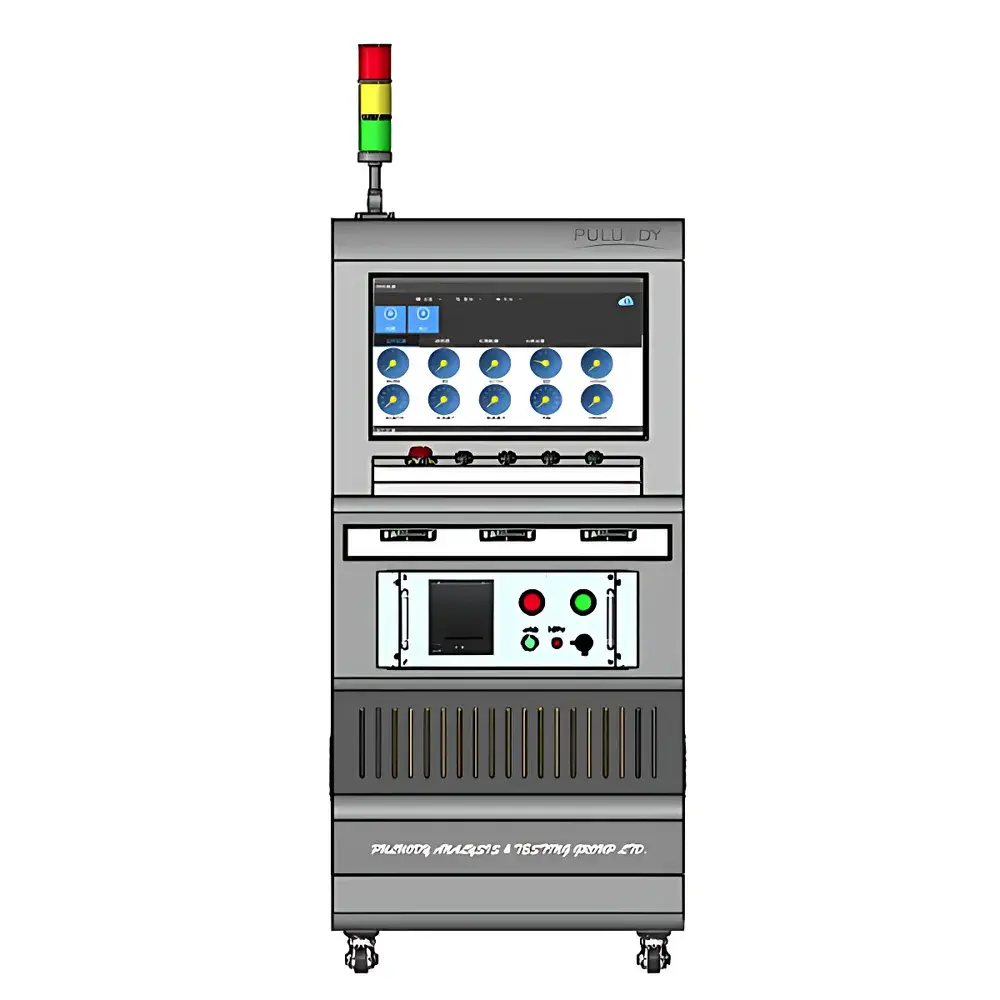
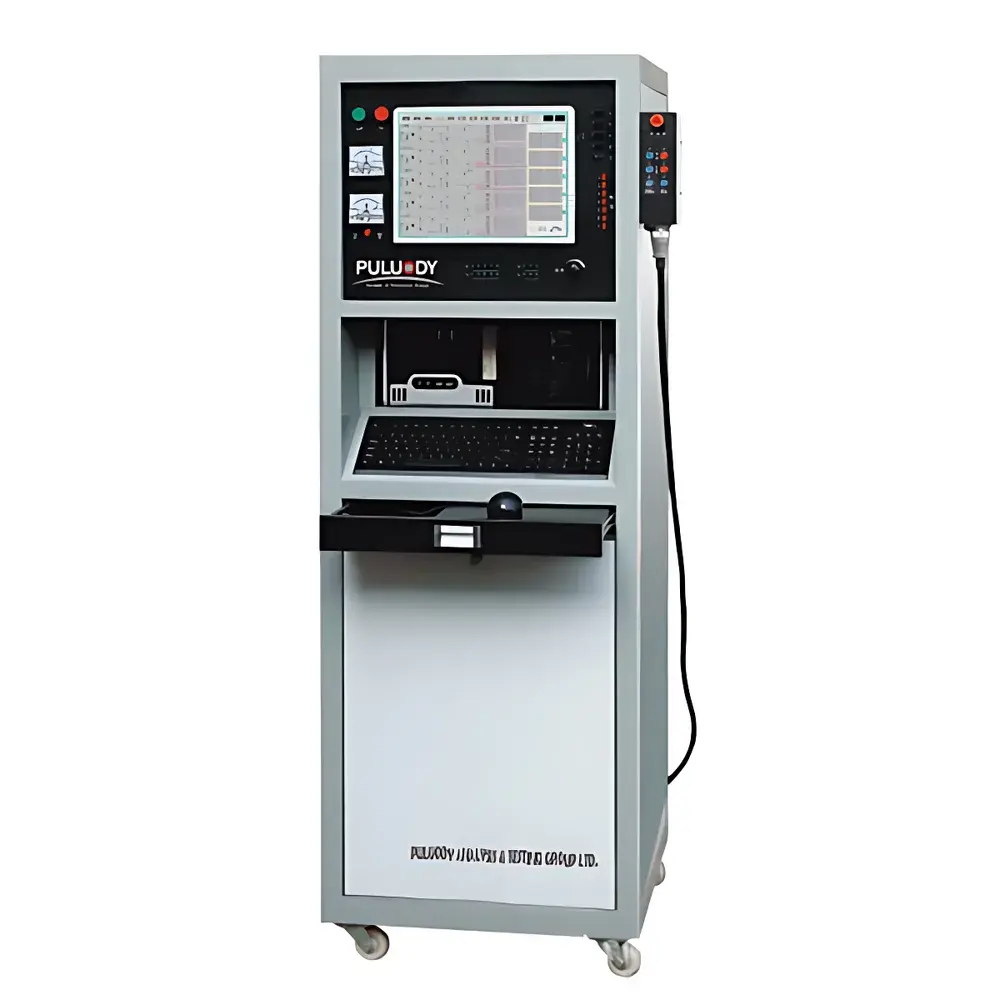
PULUODY OMS-IIA Integrated Oil Particle Contamination Test System
| Brand | PULUODY |
|---|---|
| Origin | Shaanxi, China |
| Manufacturer Type | Authorized Distributor |
| Product Category | Domestic |
| Model | OMS-IIA |
| Instrument Type | Optical Liquid Particle Counter |
| Detection Principle | Light Obscuration (LO) |
| Standards Compliance | ISO 4406, NAS 1638, ISO 11171, GB/T 18854, USP <788>, EP 2.9.19, ASTM F658, MIL-STD-1246, GJB 420B |
| Measurement Range | 0.03–3000 µm (configurable) |
| Sensitivity | 1 µm (ISO 4402), 4 µm(c) (ISO 11171 / GB/T 18854) |
| Channel Count | Up to 1000 user-definable size channels |
| Accuracy | <3% |
| Repeatability | ≤5% CV |
| Coincidence Limit | 10,000 particles/mL (≤5% coincidence error) |
| Resolution | ≥90% @ 60 mL/min |
| Sample Volume | 1–200 mL (programmable) |
| Viscosity Range | Offline: 0–99 mm²/s |
| Online | 0–500 mm²/s |
| Flow Rate | Sampling: 5–60 mL/min |
| Cleaning | 5–150 mL/min |
| Operating Pressure (Online) | 0–0.6 MPa (standard), up to 31.5 MPa (with pressure regulator) |
| Temperature Range | Sample: 20–65 °C |
| Ambient | 0–50 °C |
| Power Supply | 220 V AC, 50 Hz, <80 W |
| Output Interfaces | RS232, RS485, MODBUS, 4–20 mA, 0–5 V analog |
| Data Storage | Up to 6000 test records (200 tests) |
| Software Platform | P6.4 Particle Analysis Suite (Integrated & PC Edition) |
Overview
The PULUODY OMS-IIA Integrated Oil Particle Contamination Test System is an advanced optical liquid particle counter engineered for high-precision, real-time, and offline analysis of solid particulate contamination in hydraulic fluids, lubricants, aviation oils, transformer insulating oils, and other industrial liquids. Based on the internationally recognized light obscuration (LO) principle—where particles passing through a focused laser beam generate proportional voltage pulses—the OMS-IIA delivers trace-level detection across a broad dynamic range (0.03–3000 µm), with configurable multi-channel resolution up to 1000 size bins. Designed for both continuous online monitoring and laboratory-grade offline analysis, the system meets the stringent requirements of aerospace, power generation, defense, and semiconductor manufacturing sectors where fluid cleanliness directly correlates with equipment reliability, service life, and mission-critical safety.
Key Features
- Seventh-generation dual-laser narrow-beam sensor architecture ensures superior signal stability, reduced noise floor, and enhanced detection repeatability under variable flow and viscosity conditions.
- Modular hardware design supports seamless integration into existing DCS/SCADA environments via RS232, RS485, MODBUS, and analog 4–20 mA / 0–5 V outputs—including programmable alarm thresholds for real-time contamination alerts.
- Industrial-grade embedded controller with color TFT touchscreen interface enables standalone operation without external PCs; integrated thermal printer provides immediate hardcopy output of ISO 4406 or NAS 1638 classification reports.
- Auto-calibration and self-cleaning protocols comply with GLP-aligned operational workflows; onboard memory stores up to 6000 test records with timestamp, operator ID, and sample metadata for audit-ready traceability.
- Robust mechanical housing rated for IP54 environmental protection; capable of continuous operation at ambient temperatures from 0–50 °C and sample temperatures up to 65 °C—validated for deployment in turbine halls, naval engine rooms, and field-deployed maintenance units.
Sample Compatibility & Compliance
The OMS-IIA accommodates a wide spectrum of liquid media including mineral-based hydraulic oils, synthetic esters, phosphate ester fire-resistant fluids, aviation turbine fuels (Jet A-1, JP-8), insulating oils (IEC 60296), glycol-based coolants, ultra-pure water (UPW), and aggressive solvents (pH 2–12). It conforms to over 510 international and industry-specific standards—including ISO 4406:2021, NAS 1638 Class Code, SAE AS4059F, GJB 420B, USP and , EP 2.9.19, JP 16, and Chinese pharmacopoeial monographs. Calibration traceability follows ISO 17025–accredited reference materials (e.g., NIST-traceable PSL spheres per ASTM F658, ISO 11171 MTD, or ACFTD per ISO 4402), with optional third-party calibration certification available upon request.
Software & Data Management
The P6.4 Particle Analysis Software Suite—available in both embedded and Windows PC editions—provides full control over measurement configuration, statistical evaluation, and regulatory reporting. Users may define custom particle size channels (1–100 µm, 0.1 µm resolution), assign pass/fail limits per ISO or internal specifications, and generate compliance-ready PDF or CSV reports. The software enforces FDA 21 CFR Part 11–compatible electronic signatures, audit trails, and role-based access control. Data export supports LIMS integration via ODBC and HL7-compatible formats. All raw pulse data, histogram distributions, cumulative counts, and trend curves are retained with full metadata tagging for retrospective analysis and root-cause investigation.
Applications
The OMS-IIA serves as a core diagnostic tool across multiple high-integrity domains: real-time wear debris monitoring in gas turbine lube systems (per ISO 12171); filter performance validation per ISO 16889 and GB/T 30176; cleanroom process fluid qualification in semiconductor fab wet benches; particulate clearance verification for parenteral drug manufacturing (USP ); and military-grade hydraulic fluid certification per MIL-STD-1246C Level 100. It is routinely deployed for condition-based maintenance of naval propulsion systems, aircraft hydraulic reservoirs, wind turbine gearboxes, nuclear plant coolant loops, and heavy-duty off-highway machinery—enabling predictive maintenance strategies grounded in quantitative contamination metrics rather than time-based replacement schedules.
FAQ
Does the OMS-IIA support both online and offline measurement modes?
Yes—its dual-mode architecture allows direct in-line installation with pressure-rated flow cells (up to 31.5 MPa with regulator) or benchtop operation using the integrated sampling chamber and precision syringe pump.
Can the instrument be calibrated to meet ISO 11171 requirements?
Absolutely—the system supports full traceable calibration using ISO 11171–compliant MTD reference materials, with built-in routines for linearity verification, threshold adjustment, and resolution validation.
Is the software compliant with FDA 21 CFR Part 11 for regulated environments?
Yes—P6.4 software includes electronic signature enforcement, immutable audit logs, user authentication, and data integrity safeguards required for pharmaceutical and medical device quality systems.
What is the maximum viscosity the system can handle during online testing?
Up to 500 mm²/s at operating temperature, achieved through optimized flow-path geometry and adaptive pump control algorithms.
How does the OMS-IIA ensure measurement accuracy in high-particle-concentration samples?
Through real-time coincidence error correction (≤5% at 10,000 particles/mL) and dynamic dilution capability, ensuring valid counts even in heavily contaminated fluids such as used engine oil or post-filtration bypass streams.



