
PULUODY OPC-1800D Optical Particle Counter for Ultrapure Water
| Brand | PULUODY |
|---|---|
| Model | OPC-1800D |
| Instrument Type | Optical Particle Counter (Light Obscuration Principle) |
| Detection Range | 1–450 µm |
| Channel Count | 1000 adjustable size channels |
| Resolution | <10% (per JJG 1061 or NIST-traceable latex standard calibration) |
| Accuracy | ±3% typical |
| Coincidence Limit | 10,000 particles/mL (5% coincidence error) |
| Sampling Precision | <±1% |
| Flow Rate (Sample) | 5–60 mL/min |
| Flow Rate (Flush) | 5–500 mL/min |
| Fluid Temperature Range | 0–80 °C |
| Operating Ambient | −15–50 °C |
| Interface | RS232, RS485-to-USB, USB, MODBUS RTU |
| Output | 4–20 mA analog, digital report (particles/mL + ISO/USP/NAS grade) |
| Power | 100–265 VAC, 50–60 Hz |
| Compliance | GB/T 11446.9–2013, USP <788>, USP <789>, EP 8.0, JP 16, ISO 21501-4, ISO 11171, ISO 4406, NAS 1638, ASTM F312-19, JJG 1061 |
Overview
The PULUODY OPC-1800D Optical Particle Counter is a high-precision, laboratory-grade instrument engineered for quantitative analysis of insoluble particulate contamination in ultrapure water (UPW), pharmaceutical aqueous solutions, and other low-viscosity transparent liquids. It operates on the light obscuration (LO) principle—also known as the optical blocking or photometric extinction method—in accordance with ISO 21501-4 and ASTM F312-19. A collimated dual-laser (7th-generation narrow-beam) detection system illuminates particles suspended in laminar flow; transient reductions in photodiode signal intensity are converted into pulse amplitudes proportional to particle cross-sectional area. This enables trace-level quantification of particles from 1 µm to 450 µm with 1000 programmable size thresholds—supporting simultaneous multi-standard reporting per USP , EP 8.0, JP 16, and ISO 4406:2021 without manual recalibration.
Key Features
- 1000-channel high-resolution sizing architecture, enabling flexible binning (e.g., 4-, 8-, 16-, or 32-bin configurations) aligned with pharmacopoeial or industrial grading schemes.
- Dual-wavelength narrow-beam laser sensor optimized for low-noise detection in ultratransparent matrices—including UPW (resistivity ≥18.2 MΩ·cm), WFI, and electronic-grade water—minimizing false positives from refractive index artifacts.
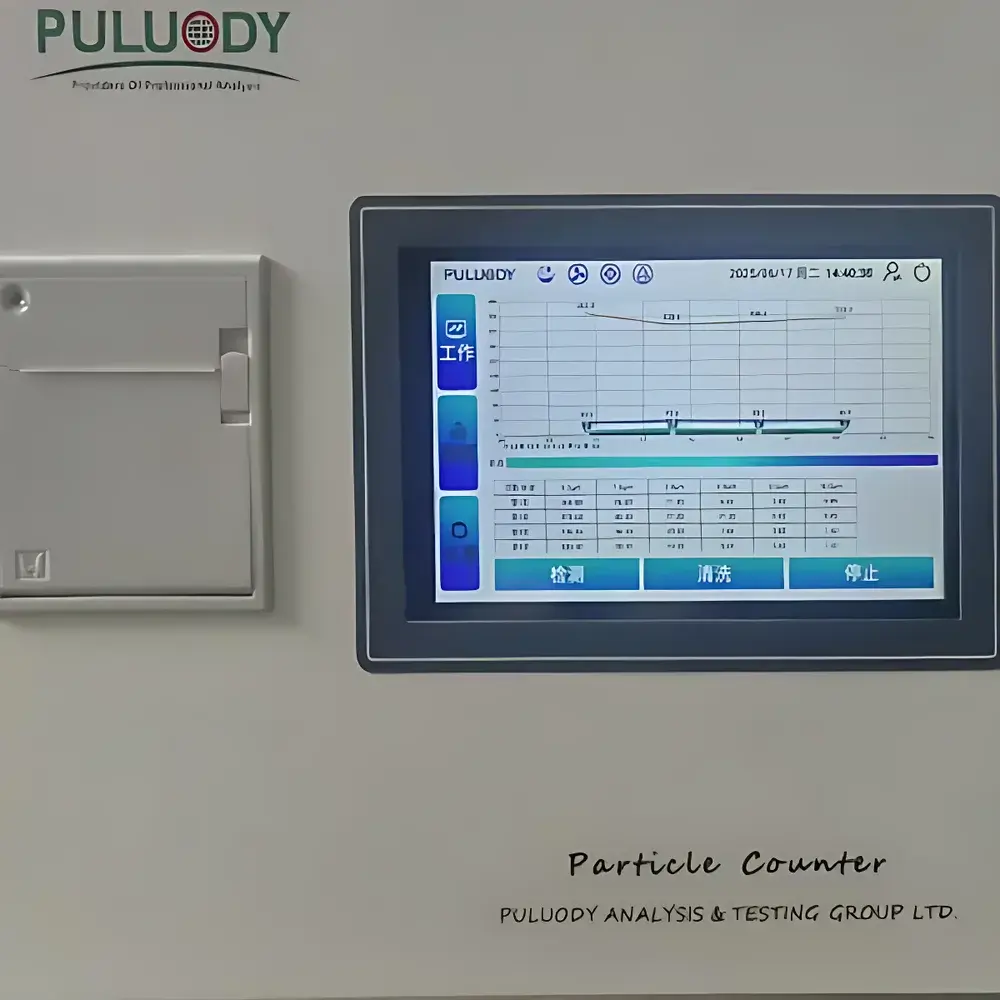
- Integrated industrial PC or ruggedized embedded controller with 7-inch color capacitive touchscreen interface, supporting full local operation without external computing hardware.
- Precision metering pump with ±1% volumetric accuracy and programmable flow control (5–60 mL/min), validated per JJG 1061 metrological requirements for liquid particle counters.
- Onboard data storage for ≥20,000 test records; expandable via USB mass storage or network export (MODBUS RTU over RS485/USB); raw pulse data export compatible with third-party statistical process control (SPC) platforms.
- Traceable calibration support: Optional NIST-traceable GBW-certified latex standards and formal verification reports issued by National Northwest Metrology Center (CNAS-accredited) or Defense Science & Technology Commission Level-1 Particle Metrology Station No. 116.
Sample Compatibility & Compliance
The OPC-1800D is validated for use with aqueous systems including purified water, water-for-injection (WFI), dialysate, ophthalmic solutions, parenteral nutrition, beverages, semiconductor process chemicals, and reclaimed injection water. It meets the physical and procedural requirements of GB/T 11446.9–2013, USP and , EP 8.0 Annex 8, JP 16 General Test Chapter 6.07, and WHO TRS 992 Annex 5. For non-aqueous applications, optional viscosity compensation (up to 99 mm²/s offline, 500 mm²/s pressurized) and thermal stabilization (0–80 °C fluid path) extend utility to glycol-water mixtures and low-conductivity solvents. All firmware and reporting logic comply with ALCOA+ data integrity principles and support 21 CFR Part 11 audit trail configuration when deployed in GMP-regulated environments.
Software & Data Management
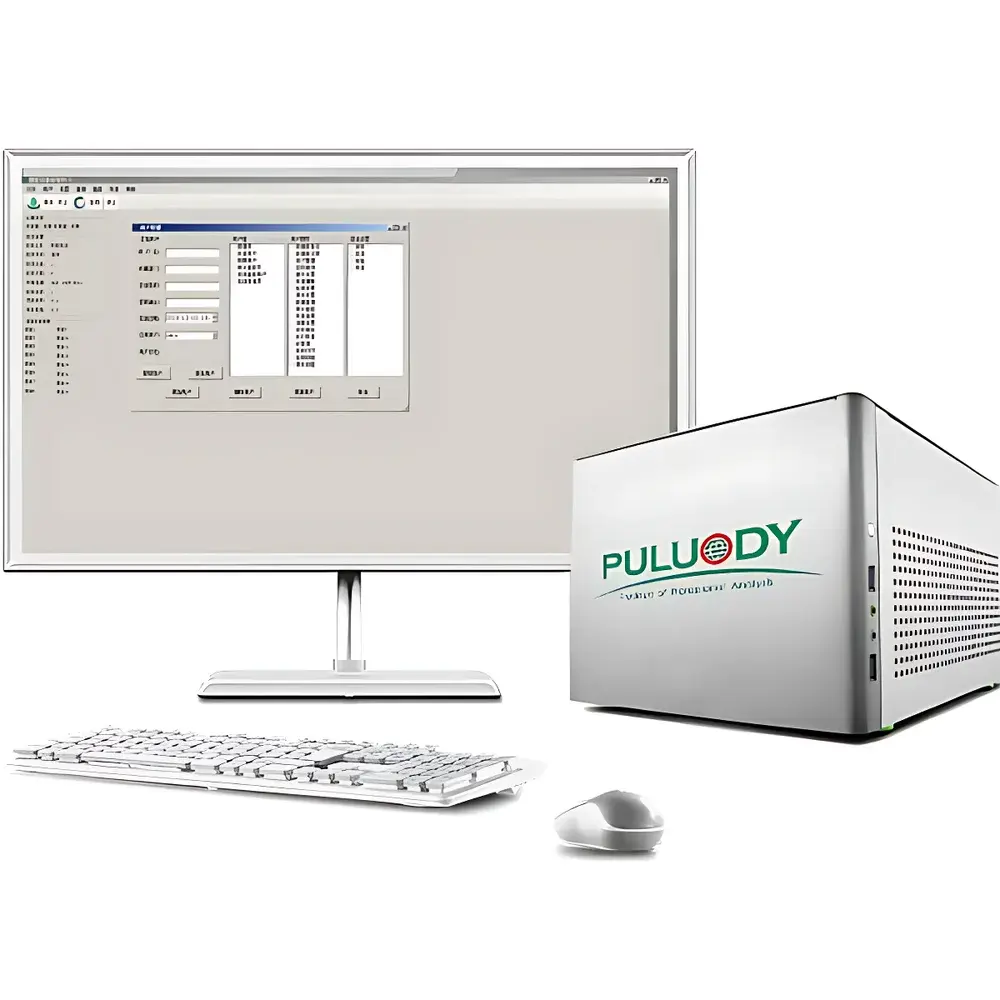
The instrument runs P6.4 Analysis Software (integrated and PC editions), providing ISO/USP/NAS grade assignment, cumulative/differential histograms, trend analysis, and automated pass/fail evaluation against user-defined limits. Data files conform to ASTM E2919-20 metadata schema and include embedded timestamps, operator ID, calibration status flags, and environmental sensor logs (fluid temperature, ambient temperature). Export formats include CSV, PDF (FDA-compliant), and XML for LIMS integration. The software supports electronic signatures, role-based access control (RBAC), and configurable audit trails meeting GLP/GMP documentation requirements. Remote diagnostics and firmware updates are enabled via secure HTTPS endpoint.
Applications
- Pharmaceutical QC labs: Routine monitoring of WFI, purified water, and final-fill solutions per USP , ensuring compliance with endotoxin-free particulate limits.
- Semiconductor fabs: UPW certification at point-of-use for 28 nm node and below, where sub-2 µm particles directly impact wafer yield.
- Power generation: Assessment of turbine lube oil cleanliness (ISO 4406) and condensate polishing system efficiency.
- Medical device manufacturing: Verification of particulate levels in saline rinses, dialysis fluids, and single-use bioprocess bags.
- Research institutions: Fundamental studies of nucleation kinetics, filtration breakthrough behavior, and colloidal stability in deionized aqueous media.
- Third-party testing labs: Accredited particle counting services under CNAS ISO/IEC 17025:2017 scope, with documented measurement uncertainty budgets.
FAQ
Does the OPC-1800D meet USP requirements for subvisible particle testing?
Yes. Its optical design, calibration traceability, flow precision, and reporting logic fully satisfy USP Sections 1–4, including mandatory verification of counting efficiency, size threshold accuracy, and coincidence limit validation.
Can it be used for online continuous monitoring?
The OPC-1800D is configured for offline batch analysis by default. With optional pressure-rated flow cell and external PLC interface (MODBUS RTU), it may be integrated into semi-automated loop sampling systems—though real-time 24/7 online deployment requires custom engineering per ISO 21501-4 Annex C.
Is calibration documentation provided with the instrument?
A factory calibration certificate referencing JJG 1061 and NIST-traceable GBW latex standards is included. Optional accredited calibration reports from National Northwest Metrology Center (civilian) or Station 116 (defense) are available upon request.
What maintenance is required to maintain measurement validity?
Annual recalibration using certified reference materials is recommended. Daily system suitability checks (SSC) per USP —including background count verification and sensitivity test with 10 µm polystyrene beads—are supported through built-in SOP templates.
How is data integrity ensured in regulated environments?
The P6.4 software supports electronic signatures, immutable audit trails, and configurable user permissions. When operated in “21 CFR Part 11 mode”, all critical actions (e.g., result deletion, parameter modification) are timestamped, attributed, and non-erasable—fully auditable during FDA or EMA inspections.



