
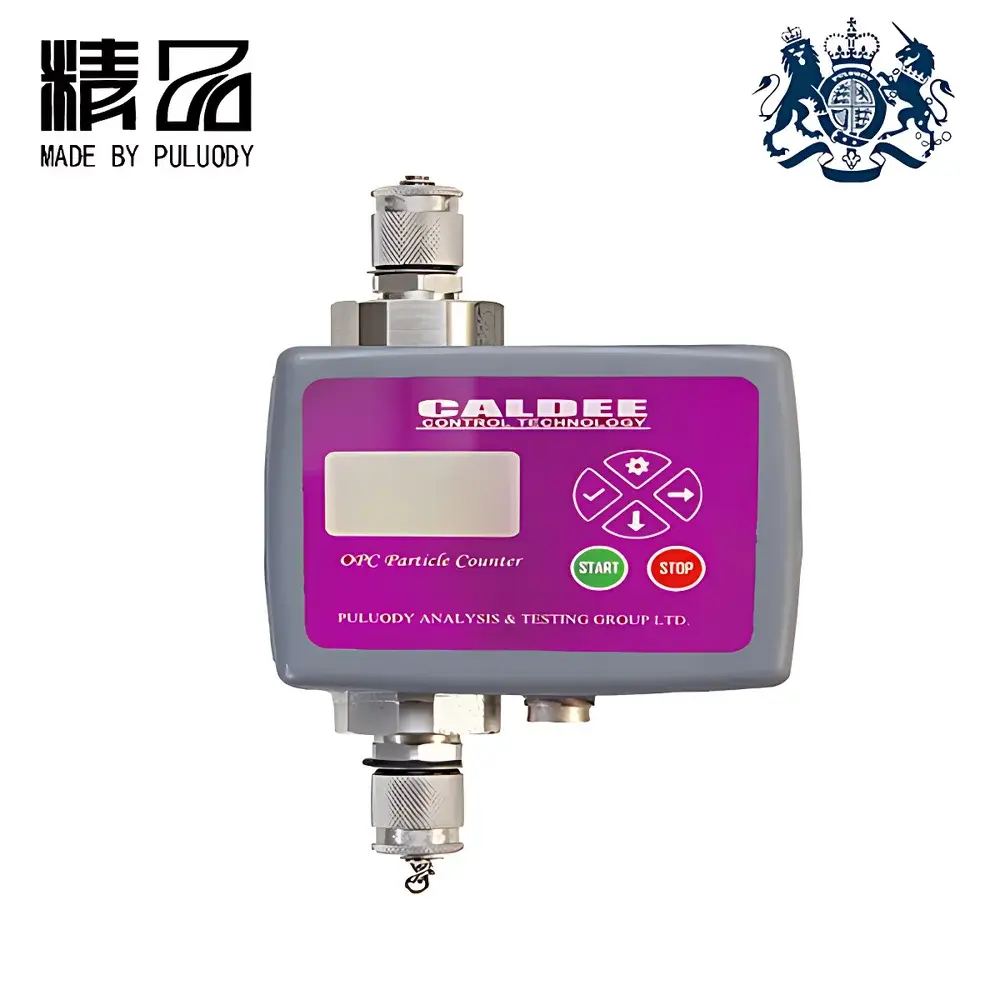
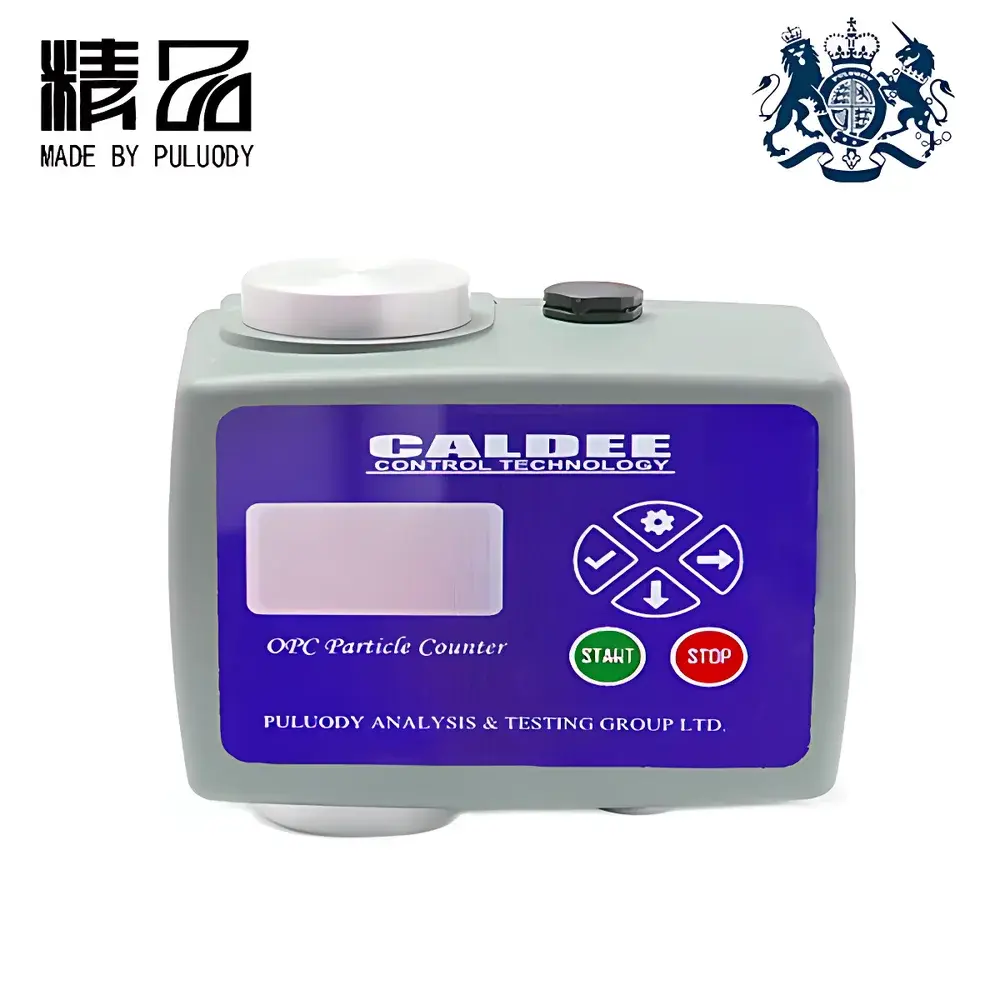
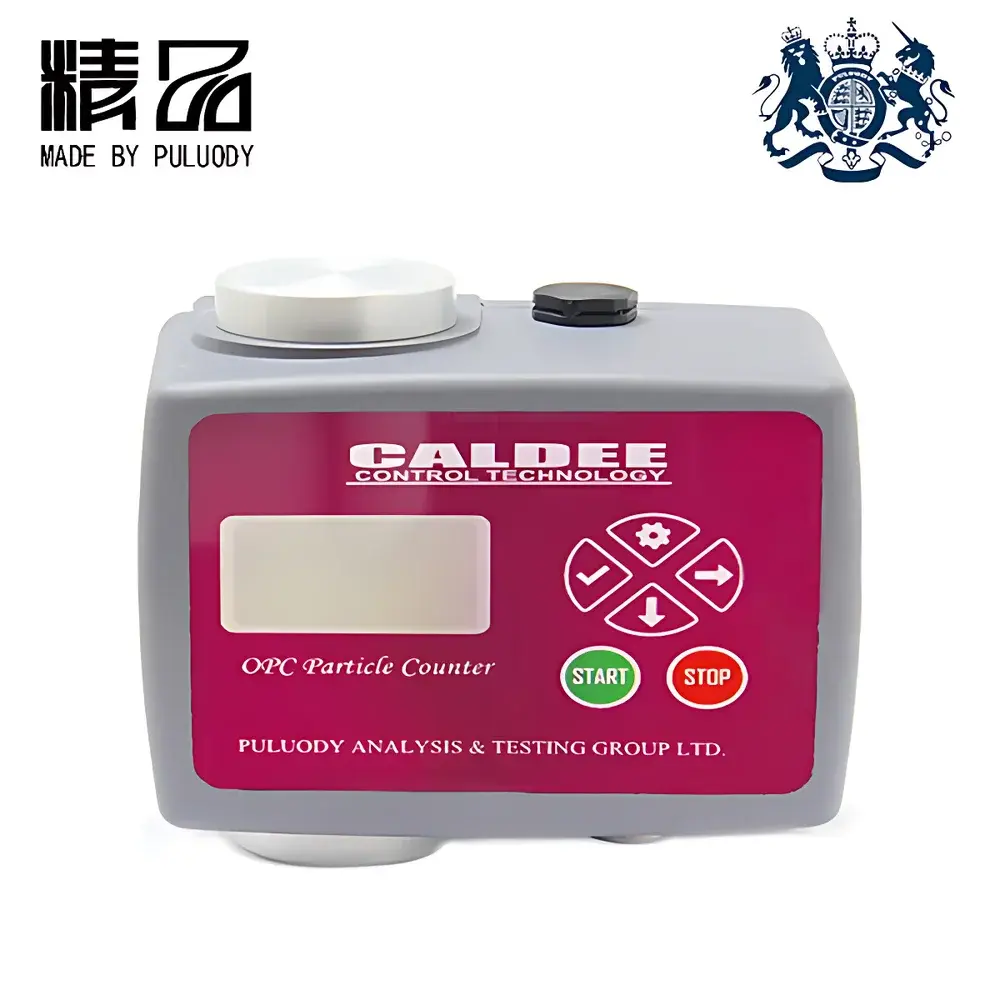
PULUODY OPC Online Oil Particle Counter
| Brand | PULUODY |
|---|---|
| Origin | Shaanxi, China |
| Manufacturer Type | Manufacturer |
| Product Category | Domestic |
| Model | OPC |
| Price | ¥58,000 |
| Dispersion Method | Wet Dispersion |
| Instrument Type | Online Laser Particle Counter |
| Measurement Range | 1–150 µm |
| Repeatability | 1% |
| Measurement Time | 10 s |
Overview
The PULUODY OPC Online Oil Particle Counter is an industrial-grade, real-time particulate contamination monitoring system engineered for continuous in-line analysis of hydraulic oils, lubricants, turbine oils, and other critical industrial fluids. Based on the seventh-generation dual-laser narrow-beam light scattering technology licensed from PULUODY Analytical Testing Group (UK), this instrument delivers high-fidelity particle counting and sizing performance under dynamic process conditions. Unlike benchtop laser diffraction or static microscopy-based analyzers, the OPC operates on the principle of single-particle optical sensing (SPOS) — where individual particles passing through a precisely collimated laser beam generate discrete pulses proportional to their cross-sectional area. This enables direct, traceable quantification of particle concentration per milliliter (particles/mL) across eight calibrated size channels, supporting compliance-driven cleanliness classification per internationally recognized standards.
Key Features
- Real-time, continuous online monitoring with 10-second measurement cycle time and automatic alarm triggering upon threshold exceedance
- Dual-laser narrow-beam optical detection architecture ensuring superior signal-to-noise ratio, long-term stability, and immunity to fluid turbidity or air bubble interference
- Operational pressure range: 0–1.0 MPa (standard configuration); up to 0–31.5 MPa with integrated pressure-reduction valve
- Wide fluid compatibility: viscosity range 0–500 cSt; temperature tolerance –10 °C to +80 °C; flow rate adjustable from 15 to 500 mL/min
- Ruggedized IP65-rated enclosure with corrosion-resistant housing, suitable for harsh industrial environments including offshore platforms, mobile hydraulics, and high-vibration test benches
- Flexible analog and digital outputs: RS232, RS485 (Modbus RTU), and optional 4–20 mA / 0–5 V analog signals for seamless integration into DCS, SCADA, or PLC systems
- Onboard data logging and embedded reporting engine generating ISO 4406, NAS 1638, GJB 420B, ISO 11171, and GB/T 14039-compliant cleanliness certificates
Sample Compatibility & Compliance
The OPC is validated for use with mineral oils, synthetic lubricants, phosphate esters, water-glycol fluids, and ultra-pure aqueous solutions. It complies with core international calibration and performance standards including ISO 11171 (calibration reference materials), ISO 4402 (obsolete but referenced for legacy validation), and ASTM D7647 (standard practice for particle counting in hydraulic fluids). The instrument supports full traceability to NIST-traceable reference emulsions and is compatible with third-party verification protocols required under ISO/IEC 17025-accredited laboratories. Its software architecture meets GLP data integrity requirements, including electronic signature support, audit trail logging, and user-access-level controls — essential for regulated sectors such as aerospace maintenance, naval engineering, and power generation asset management.
Software & Data Management
The integrated firmware includes a configurable, menu-driven HMI with local display of real-time particle counts, cumulative histograms, trend graphs, and pass/fail status against user-defined limits. Data export is supported via USB flash drive or serial interface in CSV and PDF formats. Optional PC-based software provides advanced analytics: temporal contamination trending, wear debris pattern recognition (via size distribution slope analysis), predictive maintenance alerts, and automated report generation aligned with ISO 4406:2023 or NAS 1638:2015 grading schemes. All software modules adhere to FDA 21 CFR Part 11 principles, featuring role-based access control, immutable audit trails, and electronic record retention for ≥25 years.
Applications
- Condition-based monitoring of hydraulic systems in construction machinery, wind turbine pitch/yaw actuators, and aircraft ground support equipment
- Filter efficiency testing per ISO 16889 and ISO 11171 using challenge particle suspensions
- Wear debris analysis during component endurance testing (e.g., servo valves, pumps, bearings)
- Contamination control in turbine oil systems for thermal and nuclear power plants (DL/T 432, DL/T 1096)
- Offshore drilling rig hydraulic integrity assurance (API RP 17N, ISO 10438)
- Quality release testing of new oil batches prior to system commissioning
- Military platform readiness assessment per MIL-STD-1246C and GJB/T 420A/B specifications
FAQ
Does the OPC require periodic recalibration?
Yes — annual calibration using ISO 11171-certified reference particles is recommended and supported by PULUODY’s authorized service centers. Calibration certificates include uncertainty budgets compliant with ISO/IEC 17025.
Can the OPC be installed upstream or downstream of filters?
It is designed for both configurations: upstream installation monitors system-generated wear debris; downstream placement evaluates filter performance and breakthrough events.
Is the instrument compatible with non-oil fluids such as glycol-water mixtures or phosphate esters?
Yes — provided fluid viscosity remains within the specified 0–500 cSt range and optical clarity permits sufficient laser transmission.
What communication protocols are supported for integration into plant-wide monitoring networks?
Standard RS232 and RS485 (Modbus RTU) are included; optional PROFIBUS-DP, EtherNet/IP, or HART interfaces are available upon request.
How is particle size resolution achieved across the 1–150 µm range?
Size discrimination is based on pulse height analysis of scattered light intensity, calibrated using monodisperse polystyrene latex (PSL) standards traceable to NIST SRM 1960.



