
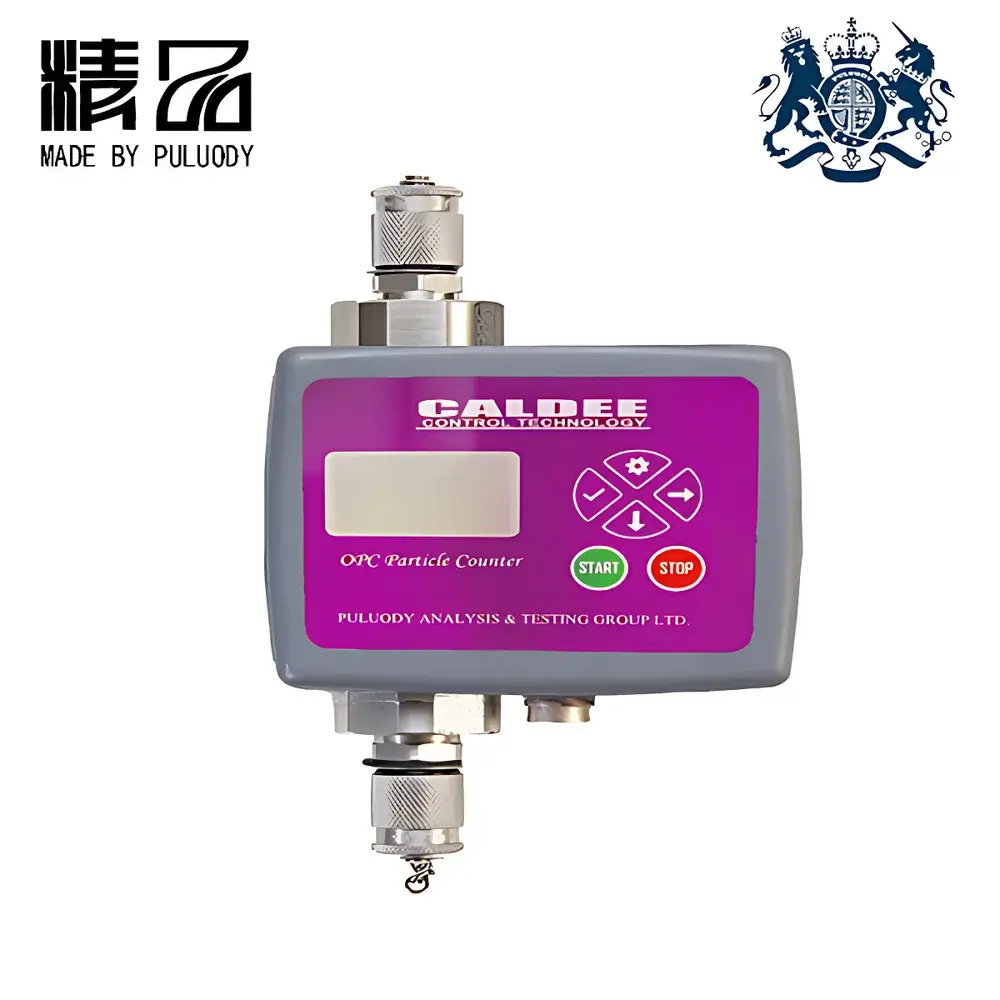
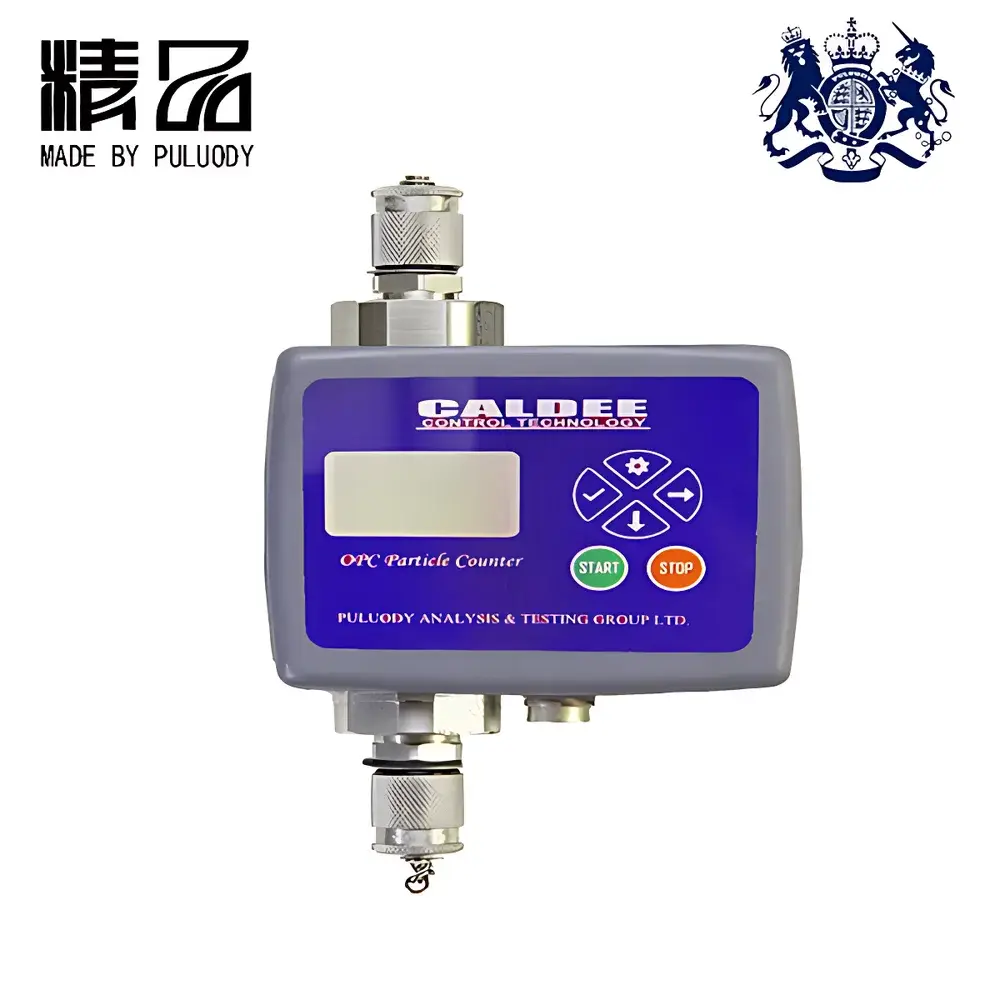
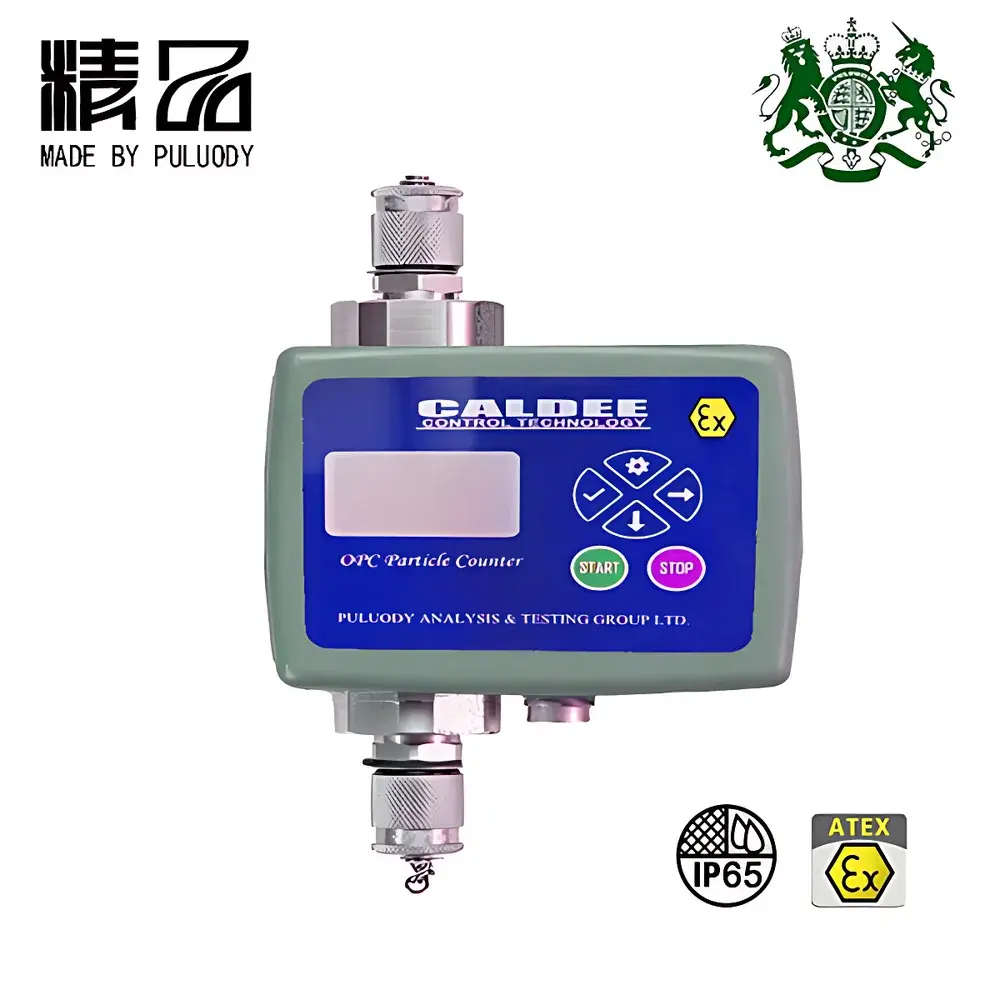
PULUODY OPCI Series Online Oil Contamination Monitor (Laser Particle Counter)
| Brand | PULUODY |
|---|---|
| Origin | Shaanxi, China |
| Manufacturer Type | Manufacturer |
| Regional Classification | Domestic |
| Model | OPCI Series |
| Price | ¥58,000 |
| Dispersion Method | Wet Dispersion |
| Instrument Type | Online Laser Particle Size Analyzer |
| Measurement Range | 1–150 µm |
| Repeatability | ±1% |
| Measurement Time | 10 s |
Overview
The PULUODY OPCI Series Online Oil Contamination Monitor is an industrial-grade, real-time laser particle counter engineered for continuous in-line monitoring of particulate contamination in hydraulic oils, lubricants, turbine oils, and other critical process fluids. It implements the seventh-generation dual-laser narrow-beam optical sensing principle—based on light extinction (obscuration) and calibrated pulse-height analysis—to deliver traceable, ISO 11171-compliant particle counting across a dynamic range of 1–150 µm. Unlike offline laboratory analyzers, this system integrates directly into pressurized fluid loops (up to 31.5 MPa with integrated pressure regulation), enabling uninterrupted sampling at flow rates from 6 to 500 mL/min. Its core function is not merely size distribution reporting, but real-time condition-based assessment of fluid cleanliness per internationally recognized standards—including ISO 4406, NAS 1638, SAE AS4059, MIL-STD-1246D, and GB/T 14039—thereby supporting predictive maintenance, filter performance validation, and wear debris trend analysis in mission-critical hydraulic systems.
Key Features
- Dual-laser narrow-beam optical detection architecture ensures high signal-to-noise ratio and minimal coincidence error, even at elevated particle concentrations.
- Real-time in-line operation with continuous sampling—no manual intervention or fluid interruption required.
- Integrated pressure handling: 0–0.6 MPa standard; 0–31.5 MPa with optional pressure-reduction module.
- Wide operating temperature range: −10 °C to +80 °C, compatible with industrial hydraulic environments.
- Robust stainless-steel wetted parts and IP65-rated enclosure for use in harsh, high-vibration, or high-humidity locations.
- Simultaneous analog (4–20 mA) and digital (RS232) outputs for seamless integration with DCS, SCADA, PLC, and HMIs.
- User-configurable alarm thresholds with relay output for automatic notification upon exceedance of preset cleanliness limits.
- Onboard calibration traceability aligned with ISO 21501-4 and ASTM F312-18; supports annual third-party verification per ISO/IEC 17025 requirements.
Sample Compatibility & Compliance
The OPCI Series is validated for use with mineral oils, synthetic lubricants, phosphate esters, water-glycol fluids, and low-viscosity solvents (online viscosity limit: ≤500 SSU / ~108 cSt). It complies with key international standards governing particle measurement methodology and reporting, including ISO 11171 (calibration standard), ISO 4406 (contamination code assignment), ISO 11943 (on-line particle counting), ASTM D6786 (standard test method for particle count in aviation turbine fuels), and GB/T 18854 (Chinese national standard equivalent to ISO 11171). All reported contamination grades are generated algorithmically from raw particle counts per size bin (e.g., ≥4 µm(c), ≥6 µm(c), ≥14 µm(c), ≥21 µm(c)), ensuring full auditability and GLP/GMP-aligned data integrity.
Software & Data Management
The instrument operates with embedded firmware and optional PC-based configuration software (Windows-compatible) that enables remote parameter setup, historical data export (CSV/Excel), and customizable report generation—including time-stamped particle count trends, pass/fail status against user-defined limits, and multi-standard grade conversion (e.g., simultaneous ISO 4406 and NAS 1638 outputs). Data logs retain full metadata: timestamp, flow rate, temperature, pressure, and operator ID (if authenticated via optional login module). For regulated environments, the system supports FDA 21 CFR Part 11-compliant electronic records when deployed with validated software and access controls.
Applications
- Continuous monitoring of hydraulic systems in aerospace ground support equipment, wind turbine pitch/yaw actuators, and naval propulsion systems.
- Filter efficiency testing and life-cycle validation for coalescing, depth, and membrane filters in power generation and marine applications.
- Wear debris trending in gearbox oil circuits during accelerated life testing (ALT) and field reliability programs.
- Contamination control in cleanroom-compatible hydraulic test benches and servo-valve qualification rigs.
- Offshore platform lube oil monitoring where manual sampling is logistically constrained or safety-prohibited.
- Validation of purification efficacy in mobile filtration units used in construction and mining equipment fleets.
FAQ
Can the OPCI Series be calibrated onsite by the end user?
Yes—field calibration using NIST-traceable reference particles (ISO MTD or ISO Medium Test Dust) is supported per manufacturer guidelines and documented in the calibration certificate.
Does the system meet ISO 11171 calibration requirements?
Yes—the optical sensor is factory-calibrated against ISO 11171 reference materials, and calibration verification procedures are included in the user manual.
Is it possible to integrate the OPCI Series with existing plant asset management (PAM) platforms?
Yes—via Modbus RTU over RS232 or 4–20 mA analog output, enabling direct ingestion into CMMS and PdM platforms such as Siemens Desigo, Honeywell Experion, or GE Digital Predix.
What maintenance intervals are recommended for long-term operational stability?
Optical window cleaning every 3–6 months (depending on fluid cleanliness); annual verification of flow path integrity and sensor baseline stability; no consumables required beyond routine gasket replacement.
Can the instrument operate in explosive atmospheres?
Not intrinsically safe by default; however, explosion-proof enclosures (ATEX Zone 1 or Class I Div 1) are available as custom-engineered variants upon request and certification.



