
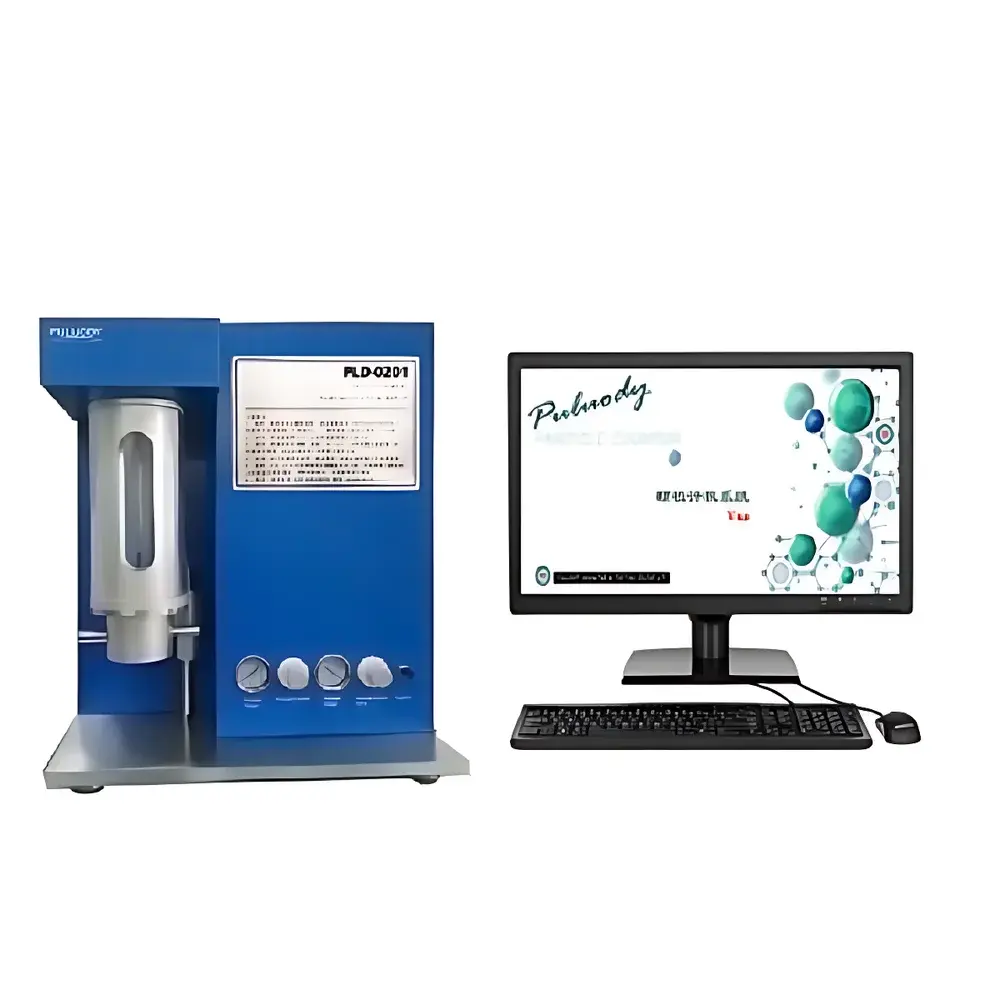
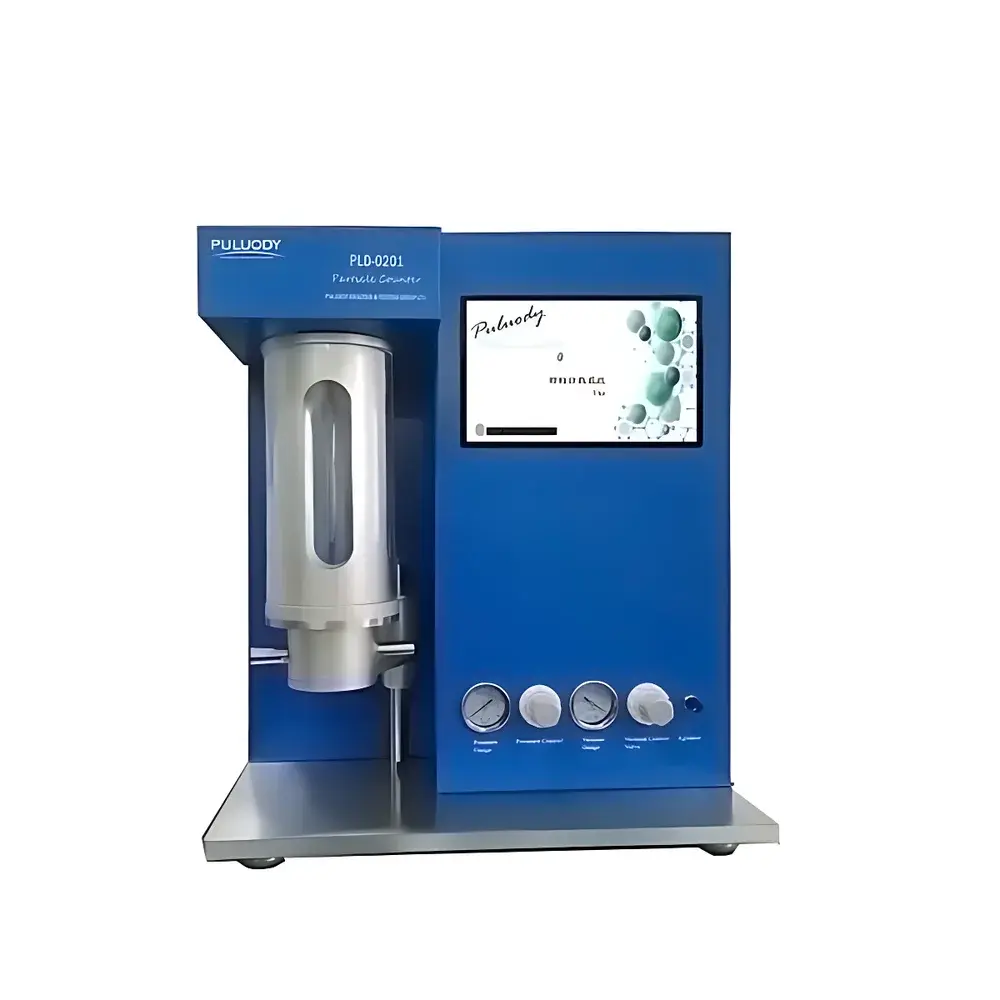
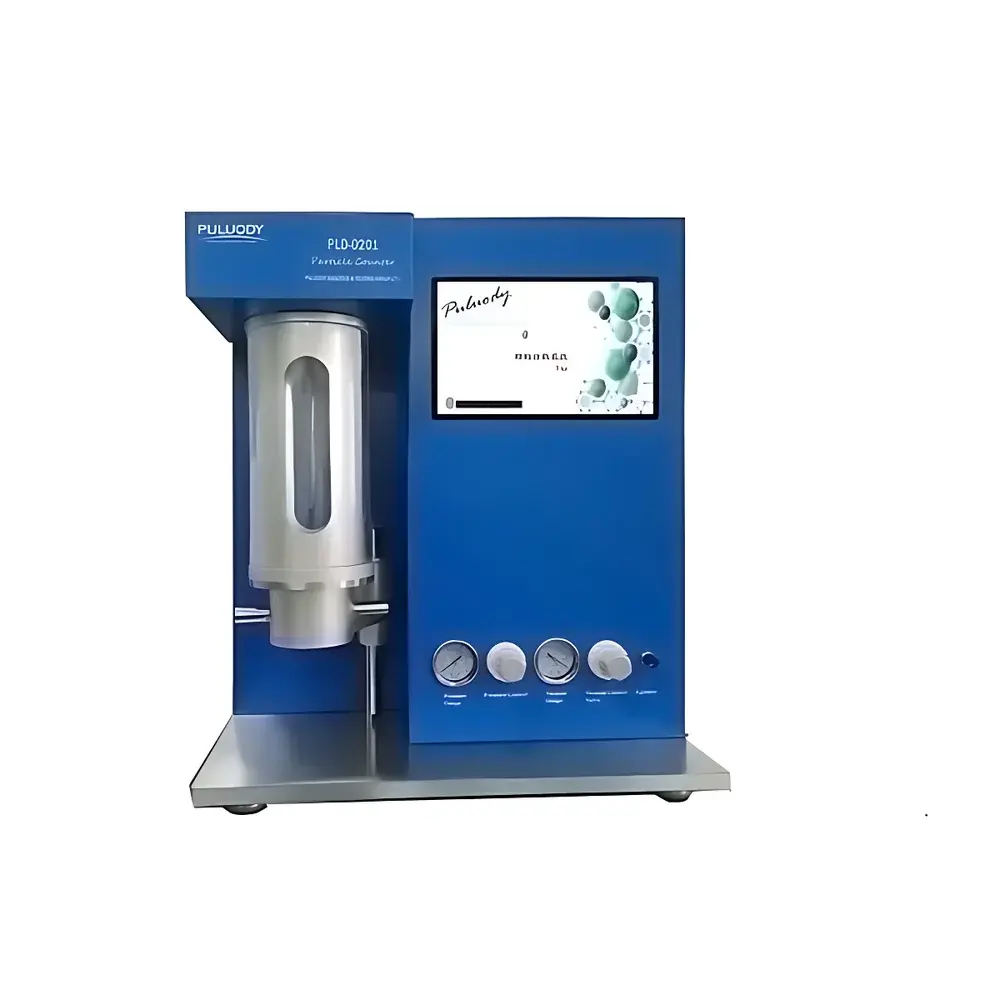
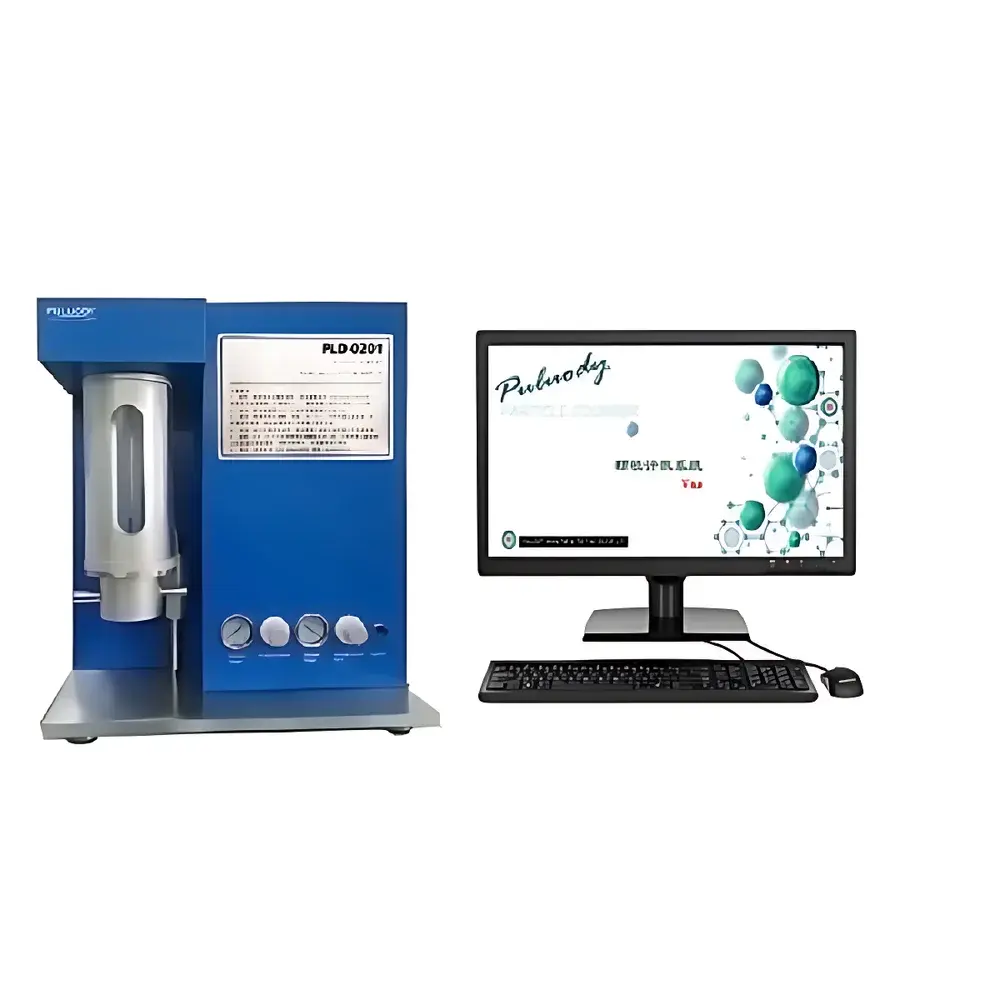
PULUODY PLD-0201-01 Optical Particle Counter for Power Plant Oil Contamination Monitoring
| Brand | PULUODY |
|---|---|
| Origin | Shaanxi, China |
| Model | PLD-0201-01 |
| Instrument Type | Optical Particle Counter |
| Detection Principle | Light Obscuration (LO) / Photometric Blocking |
| Calibration Standards | ISO 11171, ISO 4402, GB/T 18854 |
| Sensitivity | 1 µm (per ISO 4402), 4 µm(c) (per ISO 11171 & GB/T 18854) |
| Measurement Range | 1–1000 µm (sensor-dependent) |
| Channel Resolution | Up to 1000 user-configurable size channels |
| Sample Volume Accuracy | ±1% |
| Flow Control | Precision piston pump + electromagnetic flow regulation (5–60 mL/min) |
| Viscosity Handling | ≤450 mm²/s |
| Operating Temperature | Ambient to 65 °C |
| Pressure Range | −0.08 to 0.8 MPa (dual-polarity pre-treatment system) |
| Data Storage | 3000 tests onboard |
| Compliance | DL/T 1096, GJB 420B, NAS 1638, ISO 4406, MOOG, ISO 11218, DL/T 432, ISO 11500 |
Overview
The PULUODY PLD-0201-01 Optical Particle Counter is an industrial-grade, fully integrated instrument engineered for precise quantification of solid particulate contamination in lubricating oils and insulating fluids used across thermal, nuclear, and hydroelectric power generation facilities. It operates on the internationally standardized light obscuration (photometric blocking) principle—where particles suspended in a flowing oil stream interrupt a collimated laser beam, generating voltage pulses proportional to particle cross-sectional area. This method is traceably aligned with ISO 11171 (calibration), ISO 4402 (historical reference), and GB/T 18854 (Chinese national standard), ensuring metrological consistency with global laboratory practices. Designed specifically for high-reliability environments, the PLD-0201-01 delivers repeatable particle counts per milliliter across 1–1000 µm, supporting direct assignment of contamination codes per ISO 4406:1999/2017, NAS 1638, and DL/T 1096—critical for predictive maintenance of turbine bearings, servo-valves, and transformer insulation systems.
Key Features
- Eight-generation dual-laser narrow-beam sensor architecture for enhanced signal-to-noise ratio, reduced coincidence error (<5% at 10,000 particles/mL), and improved stability under variable viscosity conditions.
- Integrated dual-mode fluid handling system: programmable positive/negative pressure pre-treatment (−0.08 to 0.8 MPa), built-in magnetic stirrer, and vacuum-assisted degassing module—enabling representative analysis of high-viscosity oils (up to 450 mm²/s) without offline dilution or filtration.
- High-precision volumetric control via servo-driven piston pump and closed-loop electromagnetic flow regulation; sample volume programmable from 1 mL to unlimited, with accuracy better than ±1%.
- 1000-channel configurable particle sizing matrix, supporting custom binning (e.g., 1–10 µm, 10–25 µm, 25–50 µm, etc.) and real-time pulse-height histogramming per ASTM D7619 guidance.
- Onboard embedded industrial control unit with 7-inch color TFT touchscreen, QWERTY keyboard interface, and integrated thermal printer—enabling standalone operation without external computing resources.
- Comprehensive data acquisition suite: automatic generation of particle distribution histograms, cumulative count curves, differential concentration plots, and pass/fail grading against user-defined contamination thresholds.
Sample Compatibility & Compliance
The PLD-0201-01 is validated for direct analysis of unfiltered, undiluted samples including turbine oil (ASTM D4378), transformer oil (IEC 60296), hydraulic fluid (ISO 15242), gear oil, and aviation lubricants. It accommodates temperature-controlled sampling from ambient to 65 °C and supports automated post-test system rinse (10–100 mL/min cleaning flow). Regulatory alignment includes full traceability to ISO 11171 calibration protocols, with optional certification available from accredited national metrology institutes—including the AVIC Particle Metrology Center (China Aviation Industry) and Northwest National Metrology Center (CNIM). The instrument satisfies documentation requirements for GLP-compliant laboratories and provides audit-ready electronic records compatible with FDA 21 CFR Part 11 when connected to validated PC-based data management software (P6.4 Analysis Suite).
Software & Data Management
The embedded firmware and optional P6.4 Analysis Software (PC version) support dual-mode operation: autonomous field testing and centralized lab data governance. All measurements are timestamped, instrument-logged, and stored with full metadata—including operator ID, sample ID, calibration status, flow rate, temperature, and pressure. Data export formats include CSV, PDF, and XML, facilitating integration into LIMS platforms. The software enables comparative trending across fleets, statistical process control (SPC) charting per ISO 21501-4, and automated report generation compliant with DL/T 432 (China’s power industry standard for oil particle analysis). Audit trails record all parameter modifications, result deletions, and calibration events—meeting internal QA and external regulatory review expectations.
Applications
This instrument serves as a primary contamination monitoring tool in power plant condition-based maintenance programs. Typical use cases include routine surveillance of steam turbine lube oil reservoirs, online sampling of electro-hydraulic control (EHC) systems, acceptance testing of new transformer oil batches, and forensic analysis following bearing wear events. Its adaptability extends to aerospace ground support equipment, marine propulsion hydraulics, wind turbine gearbox oils, and semiconductor manufacturing coolant loops—where sub-5 µm particle detection directly correlates with component fatigue life and dielectric breakdown risk. It also supports R&D applications in polymer solution filtration validation and pharmaceutical excipient suspension characterization per USP .
FAQ
Does the PLD-0201-01 require annual recalibration?
Yes. Per ISO 11171 and GB/T 18854, annual verification using certified reference materials (CRM), such as NIST-traceable ISO MTD or GBW particle standards, is required. PULUODY provides calibrated reference suspensions and coordinates third-party certification through authorized national metrology labs.
Can it analyze water-glycol hydraulic fluids?
Yes—provided the fluid’s refractive index and viscosity fall within operational limits (viscosity ≤450 mm²/s; no phase separation during aspiration). Optional wetted-material upgrades (e.g., Hastelloy fluid path) are available for aggressive aqueous-organic blends.
Is RS232 the only communication interface?
Standard configuration includes RS232; optional Ethernet or USB-C interfaces are available for enterprise network integration and remote diagnostics.
How is sample carryover mitigated between tests?
The system executes an automated multi-stage flush cycle (solvent + air purge) post-analysis, verified by blank-run baseline confirmation. Residual contamination is monitored via real-time background noise tracking in the sensor chamber.
What does “OIL17 Service Star” cover?
A comprehensive 365-day service agreement including priority technical support, firmware updates, two remote system health checks, one on-site preventive maintenance visit, and expedited spare parts logistics—structured to align with ISO 55001 asset management frameworks.



