
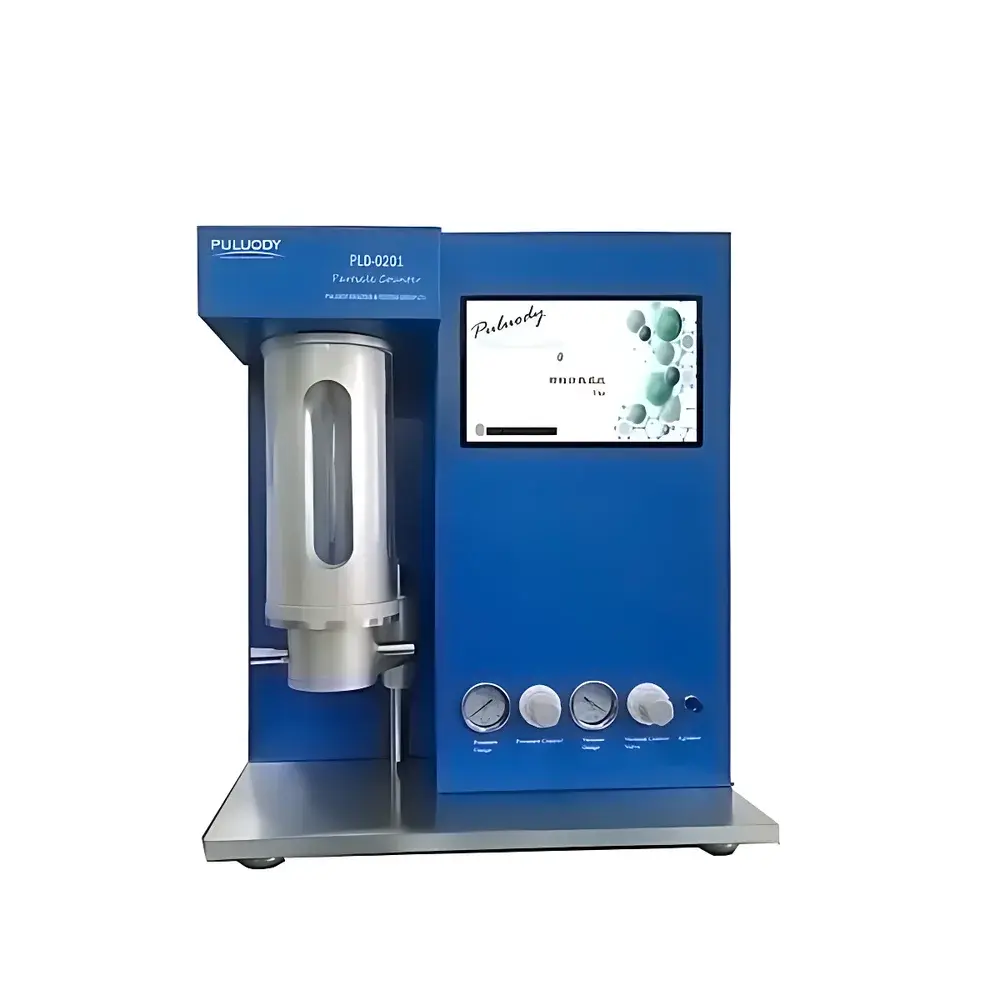
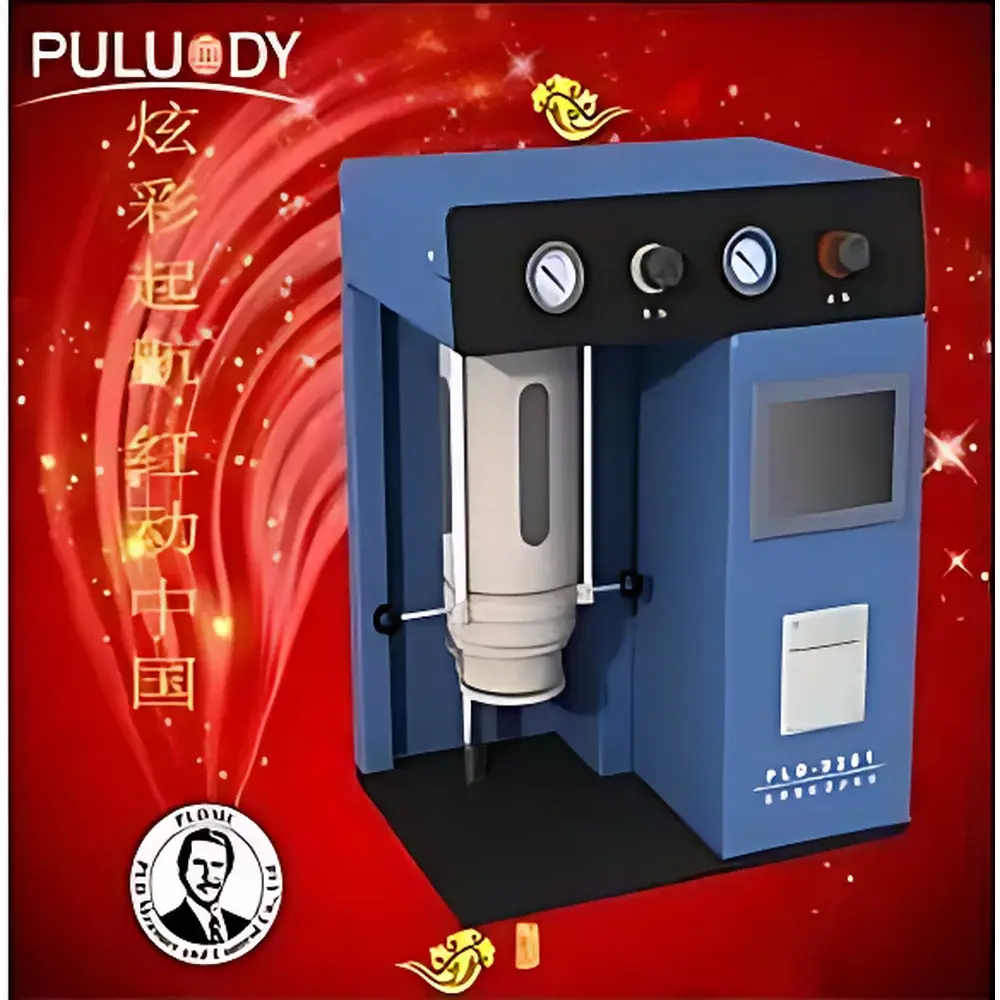

PULUODY PLD-0201 Desktop Laser Particle Size Analyzer for Filter Media Evaluation
| Brand | PULUODY |
|---|---|
| Origin | Shaanxi, China |
| Manufacturer Type | Direct Manufacturer |
| Instrument Type | Laboratory Laser Particle Size Analyzer |
| Dispersion Method | Dry & Wet Dispersion |
| Measurement Range | 1–450 µm |
| Repeatability | <5% |
| Measurement Time | 20 s |
Overview
The PULUODY PLD-0201 Desktop Laser Particle Size Analyzer is a dedicated instrument engineered for quantitative evaluation of filtration media performance through precise particle size distribution (PSD) analysis. It operates on the principle of laser diffraction—where a collimated laser beam passes through a dispersed sample, and angular scattering intensity is detected by an array of photodiodes to reconstruct particle size distribution via Mie or Fraunhofer optical models. Designed specifically for filter characterization workflows, the system enables rapid assessment of pore structure integrity, capture efficiency, and loading behavior by analyzing challenge particles before and after filtration. Its 1–450 µm dynamic range covers typical test aerosols (e.g., ISO Fine Test Dust, ACFTD, MTDS) and industrial process particulates relevant to hydraulic, lubricating, and coolant fluids. The analyzer meets foundational requirements for laboratory-based filter validation per ISO 16889, ISO 11171 (for calibration traceability), and ASTM F312-20 (Standard Test Methods for Microscopic Characterization of Particulate Contaminants in Fluids).
Key Features
- Integrated dual-mode dispersion system supporting both dry powder dispersion (via controlled air jet) and wet dispersion (with built-in ultrasonic probe and magnetic stirrer), enabling consistent de-agglomeration of filter challenge particles across diverse media types.
- High-stability dual-laser optical module with narrow-beam geometry, optimized signal-to-noise ratio, and extended sensor lifetime—engineered to maintain measurement fidelity over extended operational cycles without recalibration drift.
- 1000-channel detection resolution with user-configurable channel binning, allowing granular analysis of sub-micron breakthrough events and coarse retention profiles critical for multi-layer or graded-density filter evaluation.
- Automated sampling module featuring positive-displacement piston pump, electromagnetic flow control, and programmable aspiration volume (1 mL to unlimited), ensuring volumetric accuracy ±0.5% and flow-rate stability ≤±1% during continuous or batch-wise filtration effluent analysis.
- Self-contained embedded operating system with 10.1-inch capacitive touchscreen, bilingual (English/Chinese) GUI, and optional localization support for Japanese, Korean, German, French, and Spanish interfaces—designed for multilingual lab environments without external PC dependency.
- Onboard thermal printer and RS232 serial interface for direct result output or networked data logging; compliant with GLP audit trail requirements via timestamped, operator-ID-tagged measurement records.
Sample Compatibility & Compliance
The PLD-0201 accommodates aqueous suspensions, oil-based emulsions, organic solvents, and dry powders commonly used in filter testing protocols—including ISO Medium Test Dust (MTD), Arizona Road Dust (ARD), and synthetic polymeric microspheres (1–100 µm). Its wet dispersion cell supports viscosity up to 500 cP, while dry dispersion handles cohesive powders via adjustable shear airflow. Calibration traceability follows ISO 11171:2017 (hydraulic fluid calibration standards) and ISO 4402:1991 (for legacy verification). Instrument validation documentation—including optional third-party metrological certification from PU-YAN Testing Institute (CNAS-accredited)—is available upon request. The system supports custom reporting formats aligned with NAS 1638, ISO 4406:2017, and SAE AS4059F contamination codes.
Software & Data Management
PULL 8.1 Analysis Software provides full statistical processing: cumulative/differential PSD plots, D10/D50/D90 metrics, histogram overlays, and comparative delta-analysis between upstream/downstream samples. It includes configurable pass/fail thresholds per channel, automated grade assignment per ISO 4406, and export to CSV, PDF, or XML for LIMS integration. Audit-ready features include electronic signatures, change logs, and 21 CFR Part 11–compliant user access levels (admin/operator/viewer) when deployed with external authentication servers. Raw pulse-height data and Mie-model fitting residuals are stored with each measurement for retrospective reprocessing.
Applications
- Quantitative assessment of absolute/ nominal filter ratings per ISO 16889 and ISO 2942.
- Filter media degradation studies under cyclic pressure or thermal stress.
- Comparative analysis of depth vs. surface-loading mechanisms using time-series effluent sampling.
- Validation of filter bypass valve response by correlating particle count spikes with differential pressure thresholds.
- R&D of nanofiber-coated membranes via sub-5 µm resolution of penetration profiles.
- QC release testing for aerospace hydraulic filters, pharmaceutical vent filters, and semiconductor slurry filtration cartridges.
FAQ
Does the PLD-0201 comply with ISO 11171 calibration requirements?
Yes—the optical path and detector array are factory-aligned to ISO 11171 reference materials, and certified calibration verification reports are provided with each unit.
Can it analyze high-viscosity filter oils without dilution?
It supports undiluted analysis of oils up to 500 cP using the integrated heated wet dispersion cell (optional) and variable-shear mixing protocol.
Is remote software update supported?
Firmware and PULL 8.1 software updates are delivered via USB or Ethernet; no cloud dependency or internet connection required for operation.
What particle standards are included for verification?
NIST-traceable polystyrene latex (PSL) spheres (10 µm, 50 µm) and ISO MTD reference dust are supplied with initial commissioning kits.
How is data integrity ensured during regulatory audits?
All measurements embed digital signatures, real-time clocks, and immutable metadata (sample ID, operator, environmental temp/humidity); raw data files are SHA-256 hashed and archived automatically.



