
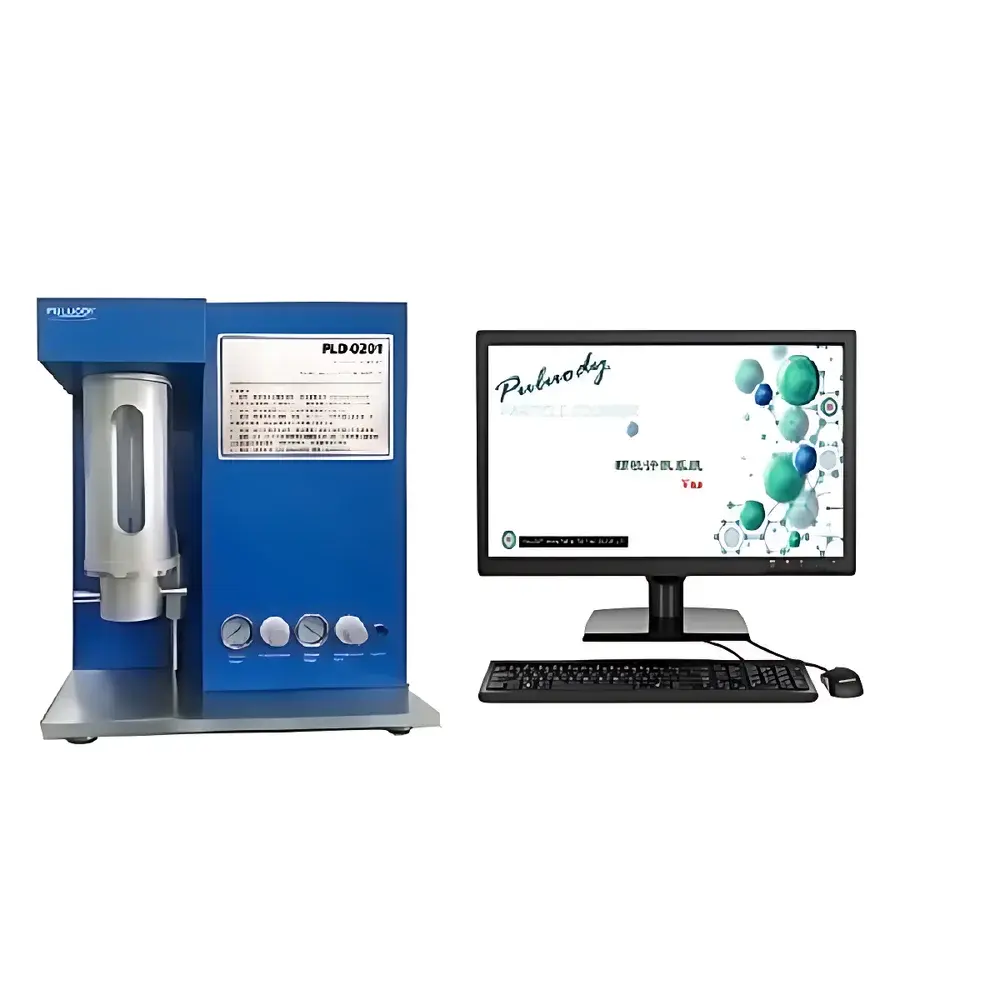
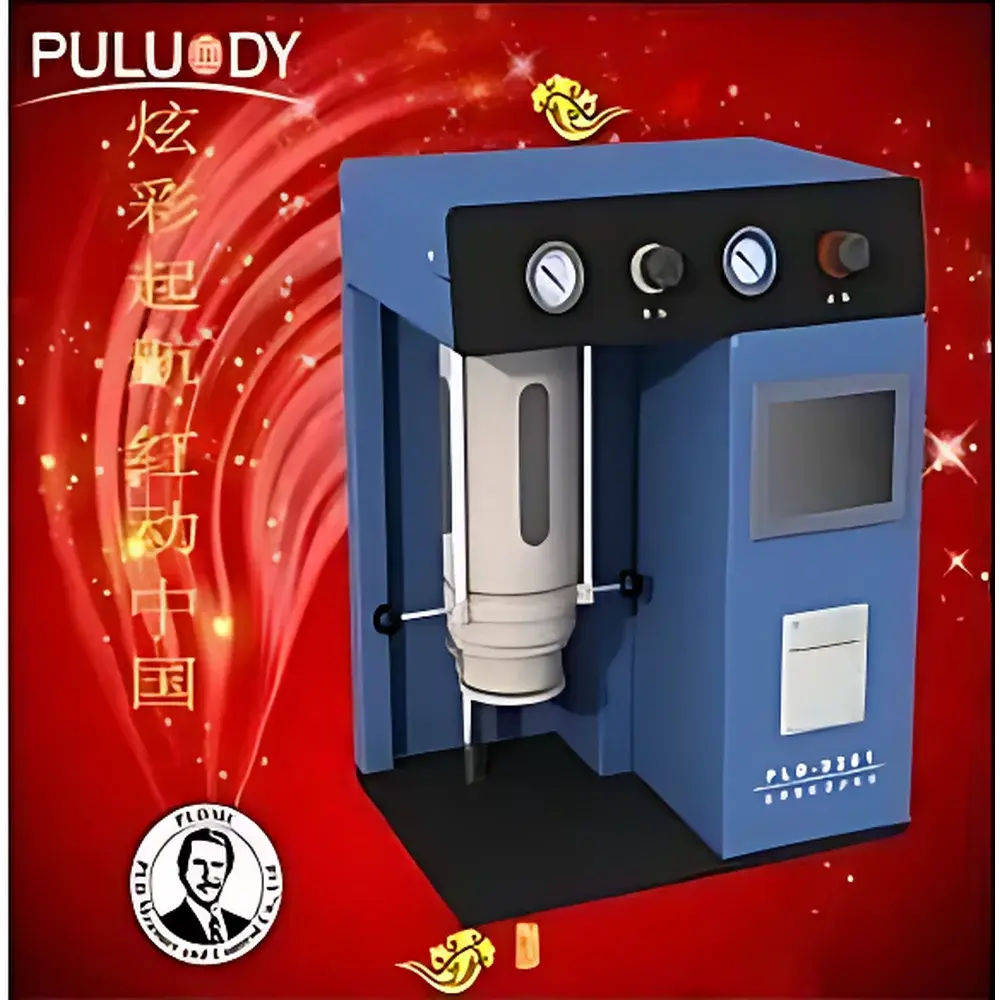
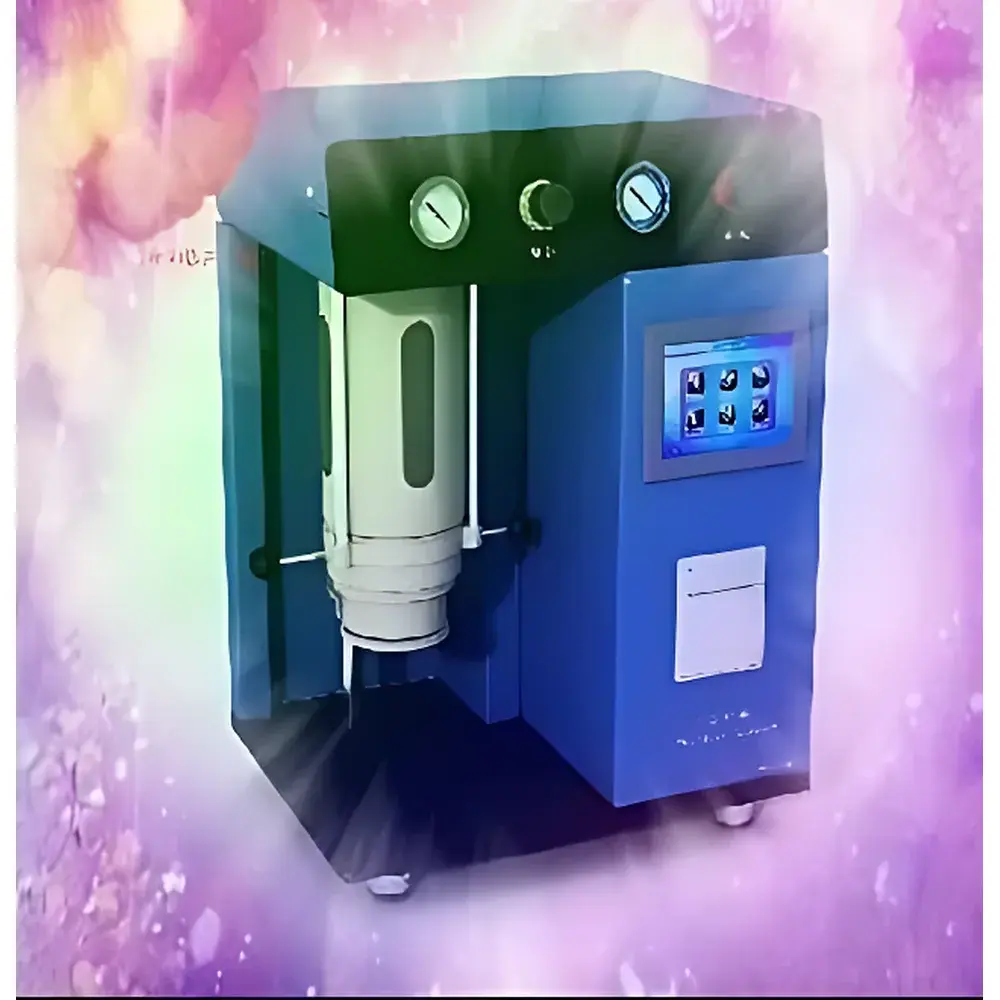
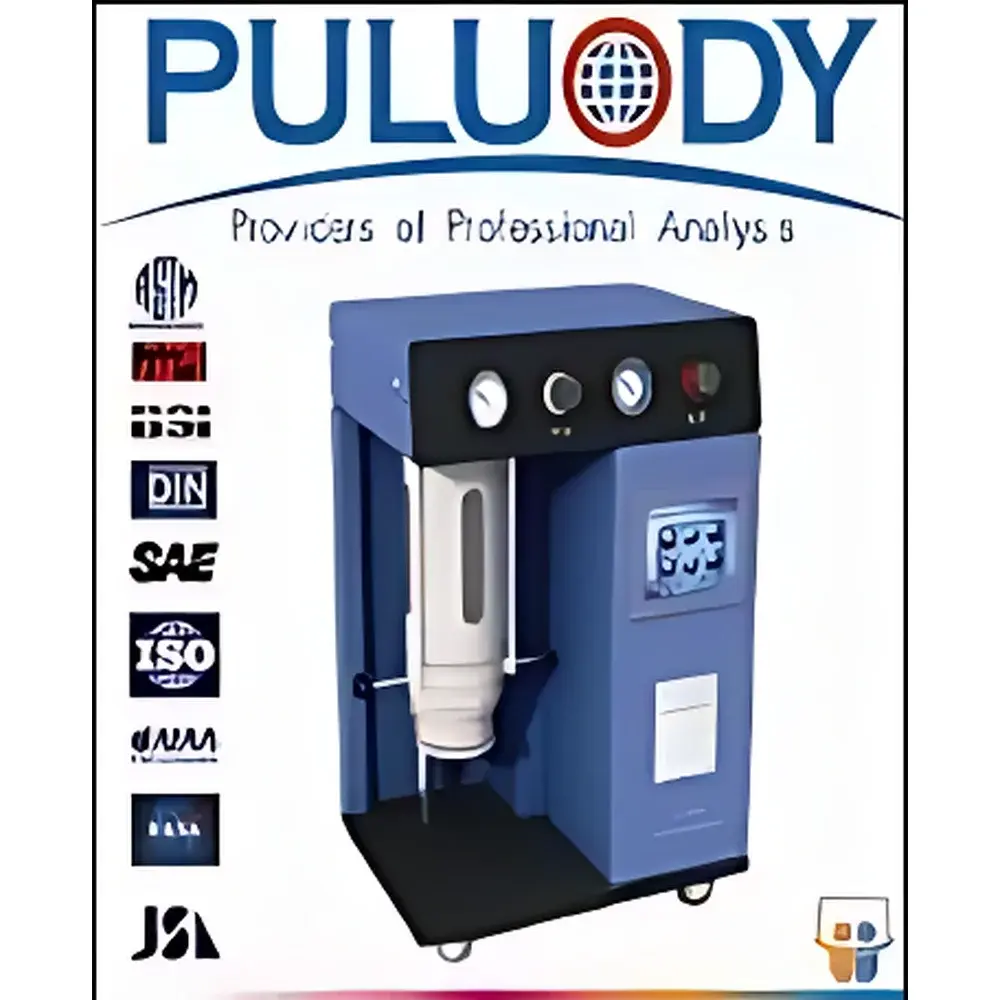
PULUODY PLD-0201 Laboratory Optical Obstruction Particle Counter
| Brand | PULUODY |
|---|---|
| Origin | Shaanxi, China |
| Manufacturer Type | Manufacturer |
| Regional Category | Domestic |
| Model | PLD-0201 |
| Instrument Type | Optical Particle Counter |
Overview
The PULUODY PLD-0201 Laboratory Optical Obstruction Particle Counter is a high-precision, dual-laser narrow-beam optical particle counter engineered for quantitative analysis of insoluble particulate contamination in liquid media—primarily hydraulic oils, lubricants, turbine oils, insulating oils, aviation fuels, water-based fluids, polymer solutions, and ultrapure water. It operates on the principle of light extinction (optical obstruction), where particles suspended in a laminar-flow stream pass through a precisely collimated laser beam; each particle generates a transient pulse proportional to its cross-sectional area. This signal is digitized and classified across up to 1000 user-configurable size channels, enabling compliance-driven reporting per ISO 4406, NAS 1638, ISO 11171, GJB 420B, DL/T 432, and other international and national standards. Designed for laboratory-grade reproducibility, the instrument integrates a dual-piston precision metering pump and ultra-stable electromagnetic flow control to ensure volumetric accuracy better than ±1% and consistent flow rates from 5 to 60 mL/min—critical for statistically valid particle counts in low-volume or high-viscosity samples (≤450 mm²/s).
Key Features
- Eighth-generation dual-laser narrow-beam sensor architecture delivering enhanced signal stability, extended service life (>10,000 hours), and improved detection sensitivity down to 0.01 µm (with optional sub-micron sensors)
- Integrated pre-conditioning chamber with programmable positive/negative pressure, magnetic stirring, and vacuum-assisted degassing—enabling reliable analysis of viscous, aerated, or heterogeneous samples without manual pretreatment
- Modular sensor configuration supporting 13 selectable detection ranges—from 0.01–0.10 µm (nanoparticle mode) to 40–1000 µm (macro-debris mode)—each with channel counts optimized for resolution and dynamic range
- Real-time, simultaneous operation of measurement and calibration routines via independent software threads, eliminating interference between routine testing and traceable verification
- Onboard industrial PC with embedded OS, 3000-test local storage, color TFT touchscreen interface, and integrated thermal printer—enabling fully autonomous operation without external computing hardware
- RS232 serial interface compliant with ASTM E2457 and ISO/IEC 17025 data logging requirements; supports GLP-compliant audit trails when connected to validated LIMS or ELN systems
Sample Compatibility & Compliance
The PLD-0201 accommodates organic and inorganic liquids—including hydrocarbon-based oils, glycol-water mixtures, phosphate esters, silicone fluids, aqueous electrolytes, and semiconductor-grade deionized water. It meets the physical and metrological requirements of ISO 11171 (calibration standard), ISO 4402 (reference method), GB/T 18854 (Chinese national standard), JJG/T 066 (metrological verification regulation), and USP for non-volatile particulates. Its dual-standard ACFTD/MTD calibration capability ensures traceability to NIST-traceable reference materials (GBW certified). Optional certification reports are available from accredited third-party laboratories including the Aviation Industry Particle Measurement Station and Northwest National Metrology Center—supporting regulatory submissions under FDA 21 CFR Part 11, ISO 9001, and IATF 16949 quality management frameworks.
Software & Data Management
PULUODY P6.4 Analysis Software (multi-language edition: English, Chinese, Japanese, Korean, German, French, Spanish, Russian, Arabic, Portuguese) provides full metrological separation between test execution and calibration validation. The platform supports customizable report templates aligned with ISO 4406 coding (e.g., “18/16/13”), NAS 1638 class assignment, histogram generation, cumulative distribution plots, and statistical outlier detection. All raw pulse data—including amplitude, width, and timestamp—is retained for retrospective reanalysis. Data export formats include CSV, XML, and PDF; cloud synchronization and API integration are supported for enterprise-scale deployment. Audit logs record operator ID, method version, calibration status, and environmental parameters (temperature, pressure) per GLP/GMP documentation requirements.
Applications
This instrument serves critical contamination control workflows across aerospace (hydraulic system health monitoring), power generation (turbine oil cleanliness verification), semiconductor manufacturing (ultrapure water qualification), automotive R&D (lubricant wear debris analysis), and pharmaceutical production (injectable solution particulate testing). It is routinely deployed for: wear particle analysis in component bench testing; incoming fluid acceptance per OEM specifications; predictive maintenance program support; qualification of filtration efficiency; and compliance auditing against MIL-STD-1246C, ISO 12103-1, and DL/T 1096. Its ability to quantify particles from 0.01 µm to 1000 µm enables cross-domain use—from nanoscale agglomerate detection in battery electrolytes to macroscopic fiber identification in transformer oil.
FAQ
What particle size ranges does the PLD-0201 support?
Standard configurations cover 1–1000 µm; optional sensors extend detection down to 0.01 µm (nanoparticle mode) or up to 2000 µm (macro-debris mode), with channel count and resolution tailored to application-specific standards.
Is the instrument compliant with FDA 21 CFR Part 11?
Yes—when operated with P6.4 software in networked mode and paired with electronic signature-enabled LIMS, it supports audit trail generation, role-based access control, and electronic record integrity per Part 11 Annex 11 requirements.
Can it analyze high-viscosity oils without dilution?
Yes—the integrated positive/negative pressure system and temperature-controlled flow path (up to 65°C) enable direct analysis of oils up to 450 mm²/s viscosity, eliminating solvent-based dilution artifacts.
How is calibration traceability maintained?
Calibration uses NIST-traceable ACFTD and MTD suspensions per ISO 11171; optional third-party certification reports from CNAS-accredited metrology institutes are available upon request.
Does the system support automated cleaning between samples?
Yes—fully programmable rinse cycles (10–100 mL/min) execute automatically post-analysis, minimizing carryover and reducing manual intervention time.
Related Products



