
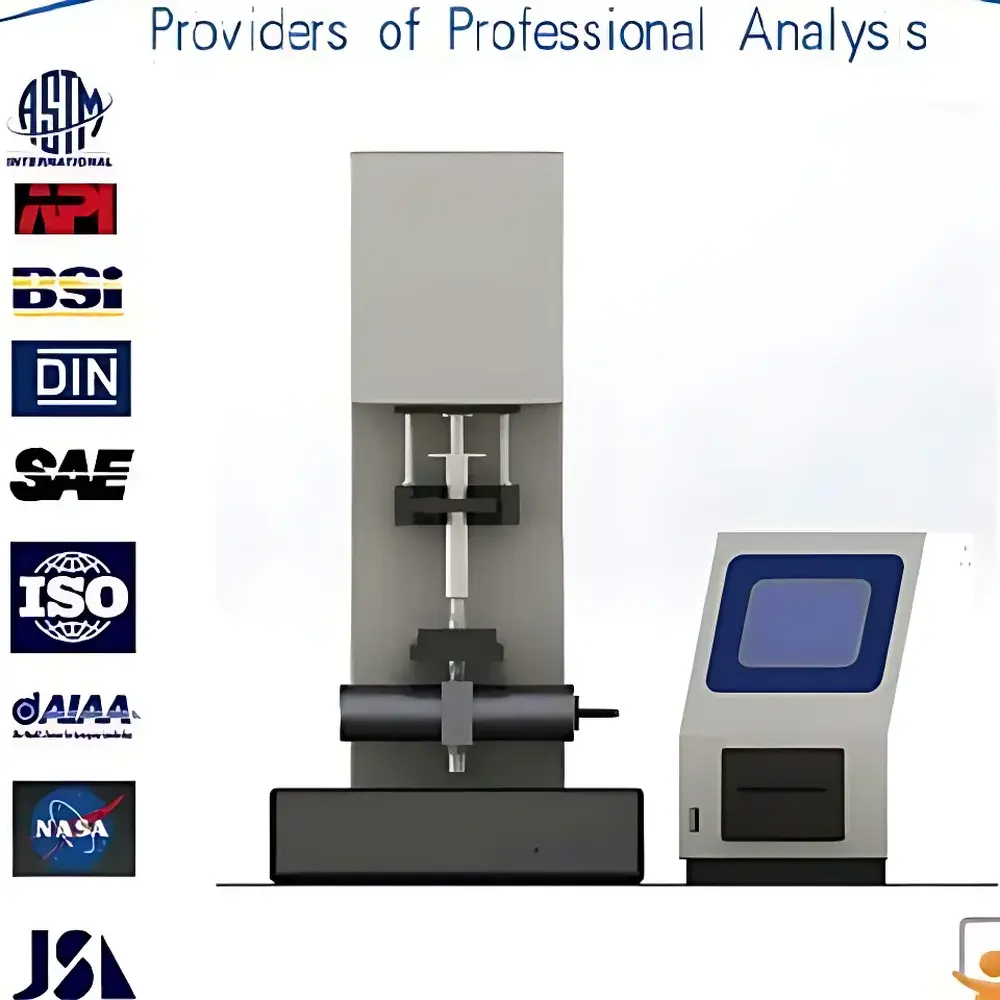
PULUODY PLD-820X-1 High-Viscosity Lubricant Additive Particle Counter
| Brand | PULUODY |
|---|---|
| Origin | Shaanxi, China |
| Manufacturer Type | Authorized Distributor |
| Regional Category | Domestic (China) |
| Model | PLD-820X-1 |
| Instrument Type | Optical Particle Counter |
| Detection Principle | Light Obscuration (LO) |
| Measurement Range | 1–450 µm |
| Sensitivity | 1 µm (per ISO 4402) or 4 µm(c) (per ISO 11171 / GB/T 18854) |
| Channel Resolution | 1000 adjustable channels (up to 16 active per test) |
| Viscosity Handling | ≤1850 mm²/s (cSt) |
| Sample Volume | 1 mL to unlimited (user-defined) |
| Flow Control | Precision piston pump + electromagnetic flow regulation (5–60 mL/min, accuracy ±1%) |
| Test Duration | Configurable, default 20 s |
| Repeatability | ≤5% coincidence error at 10,000 particles/mL |
| Operating Temp. | Ambient to 65 °C |
| Ambient Temp. | 0–50 °C |
| Power | 220 V, 50 Hz, <80 W |
| Compliance Standards | ISO 11500, ISO 4406, ISO 11171, NAS 1638, GJB 420A/B, GJB 380, MIL-STD-1246, DL/T 432, DL/T 1096, ROCT 17216, GB/T 18854–2002 |
| Calibration Reference | NIST-traceable GBW standard particles |
| Data Storage | 3000 tests onboard (industrial PC), unlimited via external PC |
| Interface | RS232, optional Wi-Fi/Bluetooth (customizable) |
| Display | 8.2″ color TFT-LCD touch interface running PULUODY ColorOS v8.2 |
| Software | P6.4 Particle Analysis Suite (embedded & PC versions) |
| Optional Modules | Water saturation detection, moisture content analysis |
Overview
The PULUODY PLD-820X-1 High-Viscosity Lubricant Additive Particle Counter is an industrial-grade optical particle counter engineered for direct, non-invasive measurement of solid particulate contamination in highly viscous fluids—without dilution, heating, or solvent addition. It operates on the light obscuration (LO) principle: as particles suspended in a flowing liquid pass through a collimated laser beam, they generate transient reductions in detected light intensity proportional to their cross-sectional area. This analog pulse signal is digitized and classified into user-defined size channels using seventh-generation dual-laser narrow-beam detection optics, delivering enhanced signal-to-noise ratio, reduced coincidence error, and improved stability across extended operation cycles. Designed specifically for the lubricants, additives, greases, and polymer solution sectors, the PLD-820X-1 meets the metrological rigor required by aerospace, power generation, and defense applications where fluid cleanliness directly correlates with system reliability and service life.
Key Features
- Seventh-generation dual-laser narrow-beam sensor architecture optimized for high-viscosity matrices (up to 1850 mm²/s), eliminating need for pre-dilution or thermal thinning
- Precision piston-driven sampling system with closed-loop electromagnetic flow control (5–60 mL/min), ensuring volumetric accuracy better than ±1% and consistent shear history during aspiration
- Full-spectrum sizing capability from 1 µm to 450 µm with 1000 programmable channels; supports simultaneous monitoring of up to 16 user-specified thresholds per run
- Integrated 8.2-inch capacitive touchscreen running PULUODY ColorOS v8.2—fully localized UI with multi-language support (English, Chinese, Russian, Arabic); optionally deployable on Android or iOS-based tablets
- Onboard data processing engine compliant with ISO 4406:1999/2017, NAS 1638, GJB 420B, and MIL-STD-1246; automatic contamination grade assignment, histogram generation, and cumulative distribution plots
- Self-cleaning fluidic pathway with automated rinse cycle post-analysis; integrated thermal management maintains sample temperature stability between ambient and 65 °C
- RS232 serial interface standard; optional Wi-Fi or Bluetooth modules available for wireless data export and remote diagnostics under secure TLS 1.2 protocols
Sample Compatibility & Compliance
The PLD-820X-1 accommodates undiluted samples including engine oils, gear oils, hydraulic fluids, turbine oils, insulating oils, synthetic esters, lubricant additives, grease suspensions, adhesives, and polymer melts. Its injection-style sampling module enables controlled aspiration of non-Newtonian and thixotropic media without clogging or air entrapment. The instrument satisfies traceability requirements per GB/T 18854–2002 (equivalent to ISO 11171:1999) and is calibrated using NIST-traceable GBW-certified reference particles. It supports full audit trail functionality aligned with GLP and GMP environments—including user authentication, electronic signatures, and immutable test record logging. All firmware and software comply with IEC 62304 Class B for medical device software safety, and data integrity conforms to FDA 21 CFR Part 11 Annex 11 principles when operated with optional validation packages.
Software & Data Management
The embedded P6.4 Particle Analysis Suite provides real-time visualization of particle count vs. size distributions, dynamic threshold adjustment, and comparative trending across multiple batches or time points. Raw pulse data is stored in binary format with metadata tags (operator ID, timestamp, calibration ID, environmental conditions). Export options include CSV, PDF reports with embedded histograms, and XML-compatible structured logs for LIMS integration. The PC version adds advanced statistical tools: Weibull analysis, ANOVA-based inter-lot comparison, and automated alerting upon deviation from user-defined cleanliness thresholds. All software modules undergo annual cybersecurity patching and are validated against ASTM E2500-13 guidelines for analytical instrument software qualification.
Applications
- Quantitative assessment of additive package stability and dispersion homogeneity in formulated lubricants
- In-process monitoring of base oil filtration efficiency prior to blending
- Wear debris analysis in gearbox and bearing sump oils without offline lab dependency
- Validation of filter performance in aviation hydraulic systems per MIL-PRF-28809 and GJB 380
- Quality release testing of transformer oils per DL/T 432 and IEC 60296
- Contamination control in semiconductor manufacturing tool lubricants and wafer carrier greases
- Research-grade particle interaction studies in viscoelastic polymer solutions and nanocomposite suspensions
FAQ
Does the PLD-820X-1 require sample dilution for oils exceeding 1000 cSt viscosity?
No. The instrument’s pressure-regulated injection module and low-shear piston pump enable direct analysis of fluids up to 1850 mm²/s without dilution, heating, or chemical modification.
Can it be used to quantify water-in-oil emulsions or free water content?
Not natively—but optional moisture sensing add-ons (capacitance-based saturation probes) can be factory-integrated to report water activity (aw) and percent saturation alongside particle data.
Is firmware upgrade supported remotely?
Yes. Secure over-the-air (OTA) updates are available via encrypted HTTPS channel after authentication through PULUODY’s OIL17 Service Star portal.
What documentation is provided for regulatory audits?
Each unit ships with IQ/OQ documentation templates, calibration certificates traceable to China’s National Institute of Metrology (NIM), and a complete Design Qualification (DQ) summary per ISO/IEC 17025:2017 Annex A.
How often must recalibration be performed?
Annual recalibration is recommended using GBW reference materials; however, daily verification with check particles is supported via the built-in diagnostic mode.



