
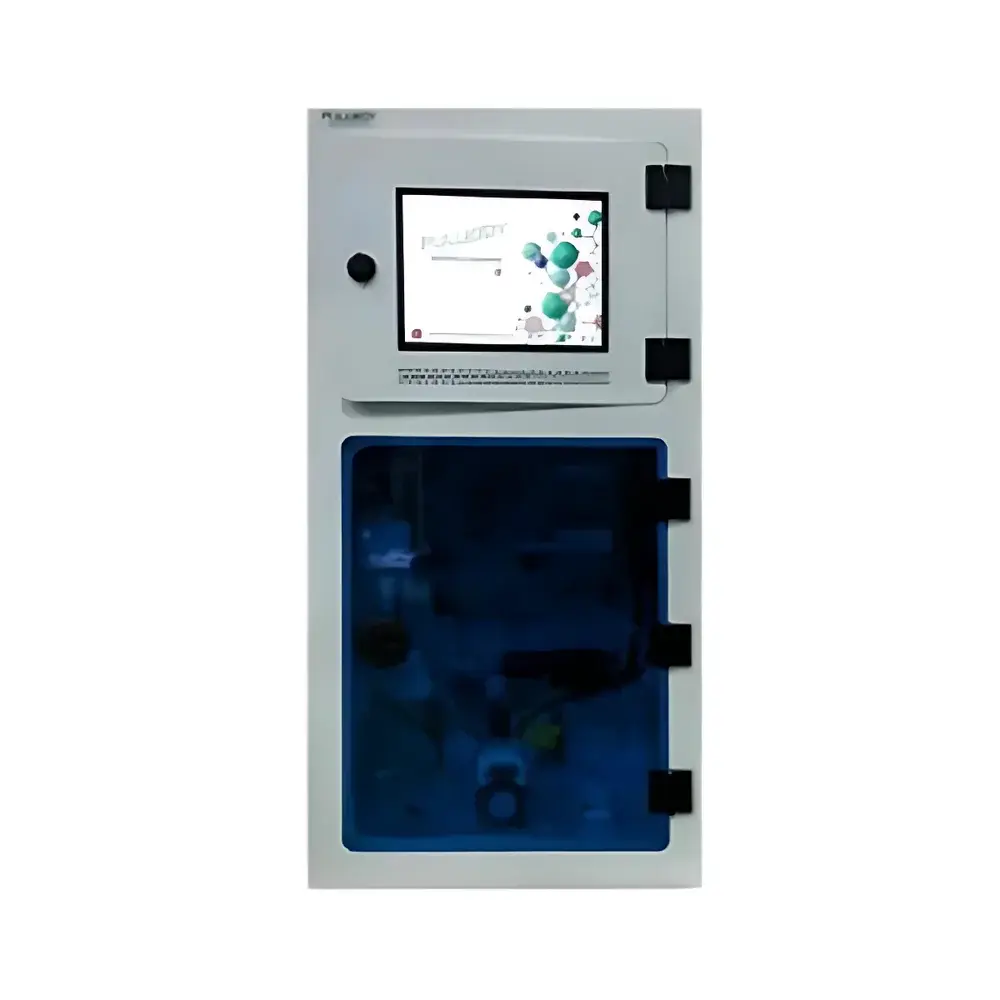
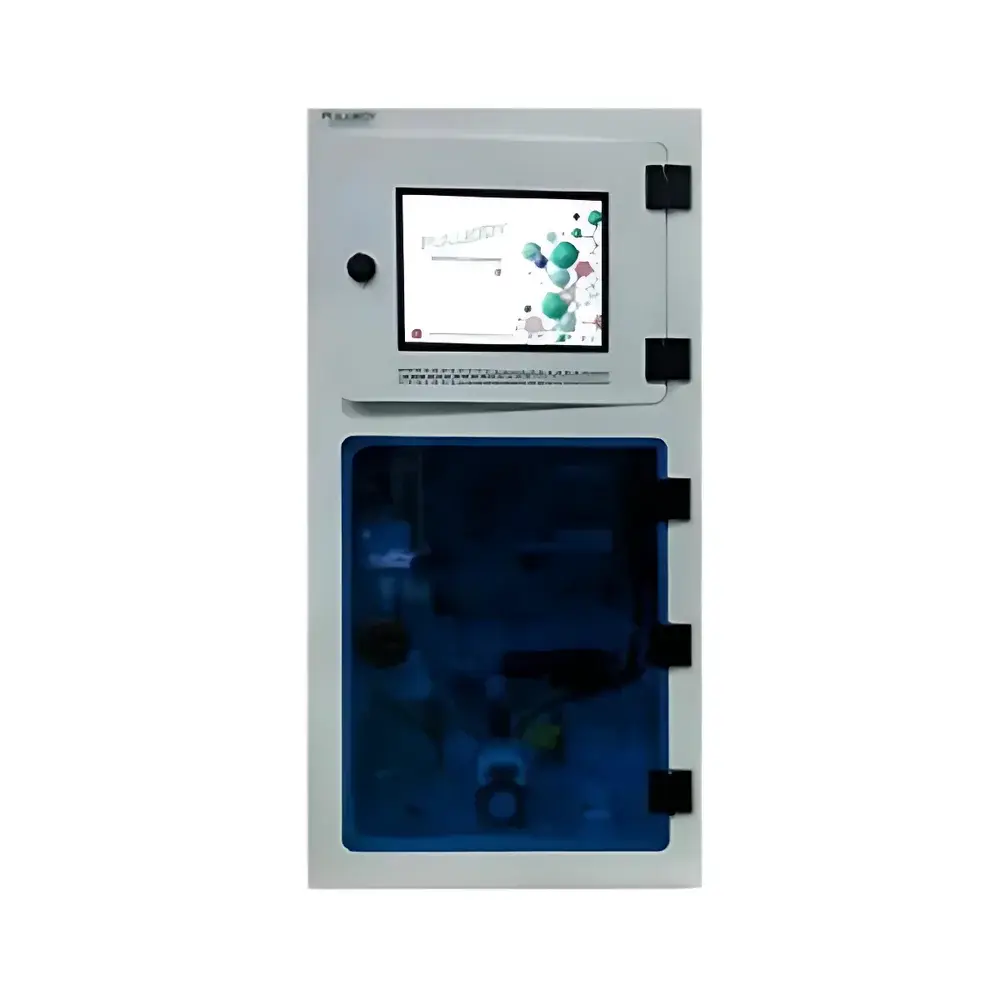
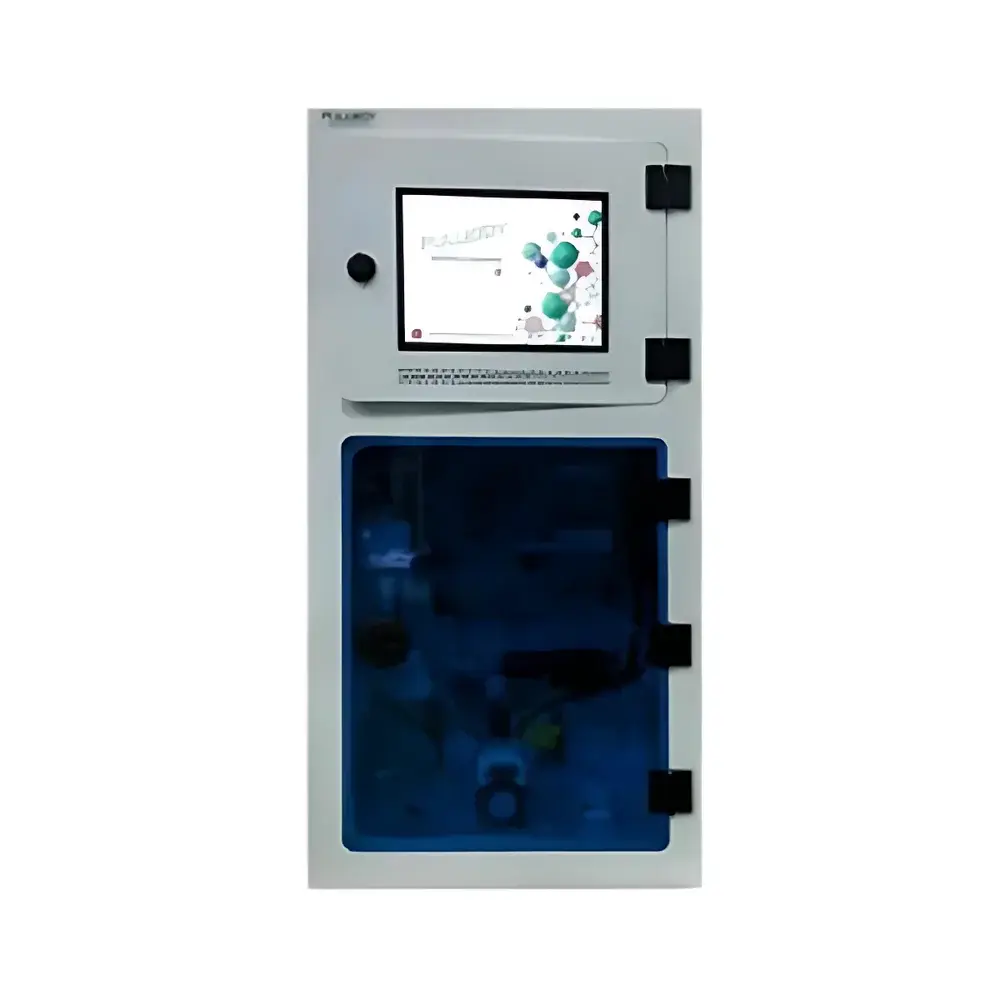
PULUODY PLD-FX-801LX Offline Liquid Particle Counter for Slurry and Ultrapure Fluids
| Brand | PULUODY |
|---|---|
| Model | PLD-FX-801LX |
| Detection Principle | Dual-mode (Light Obscuration + Light Scattering) |
| Sensor Generation | 8th-generation dual-laser narrow-beam particle sensor |
| Measurement Range | 0.5–100.0 µm |
| Customizable Sub-ranges | 1–100 µm or 4–70 µm (c), down to 0.1 µm (c) |
| Sampling Accuracy | <±1% |
| Counting Accuracy | ±3% typical |
| Coincidence Limit | ≤2.5% error at 1000 particles/mL |
| Sample Delivery | Precision metering pump |
| Output | 4–20 mA analog interface with configurable alarm triggers |
| Calibration Standards | JJG 1061, ISO 21501-4, NIST-traceable latex spheres |
| Software | V8.3 Integrated Analysis & Calibration Suite (PC + touchscreen GUI) |
| Compliance Support | GLP/GMP audit trail logging, FDA 21 CFR Part 11–ready configuration options |
| Power Input | 100–265 VAC, 50–60 Hz |
Overview
The PULUODY PLD-FX-801LX Offline Liquid Particle Counter is a high-fidelity analytical instrument engineered for quantitative particulate contamination assessment in critical process fluids—particularly chemical-mechanical planarization (CMP) slurries, ultrapure water (UPW), electronic-grade chemicals, and semiconductor manufacturing excipients. It operates on a dual-detection principle: light obscuration (LO) for robust sizing and counting of opaque or weakly scattering particles, and light scattering (LS) for enhanced sensitivity to submicron and low-refractive-index particles (e.g., silica, alumina, polymers). This hybrid optical architecture enables trace-level large particle counting (LPC) in the 0.5–100.0 µm range with metrological traceability to ISO 21501-4 and national calibration standards (JJG 1061). Designed specifically for offline batch verification—not real-time inline monitoring—the PLD-FX-801LX supports both fixed-laboratory and mobile deployment, delivering statistically valid particle concentration data (particles/mL) and ISO 4406 or NAS 1638 contamination codes essential for CMP slurry qualification, filter integrity validation, and root-cause analysis of wafer surface defects.
Key Features
- 8th-generation dual-laser narrow-beam sensor with independent LO/LS optical paths, minimizing cross-talk and enabling simultaneous multi-parameter acquisition
- Automated offline dilution system with precision metering pump (±1% volumetric accuracy), eliminating manual dilution errors in high-concentration slurries
- Configurable detection thresholds: user-defined channels across 0.1 µm (c) to 100.0 µm, including industry-standard 1.0 µm(c), 5.0 µm(c), and 10.0 µm(c) cutpoints per SEMI F39 and ASTM F321
- Integrated touchscreen HMI (color LCD) with optional wireless keyboard/mouse support for flexible lab operation
- Analog 4–20 mA output with programmable alarm thresholds for integration into facility SCADA or MES systems
- Calibration traceability to NIST-certified latex standards and ISO 21501-4 compliant protocols; full calibration log retention with timestamped operator ID
Sample Compatibility & Compliance
The PLD-FX-801LX accommodates a broad spectrum of non-corrosive, low-viscosity liquids common in microelectronics fabrication: aqueous CMP slurries (SiO₂, Al₂O₃, CeO₂), deionized water (DIW), photoresist solvents, etchants, and cleaning agents. Its wetted path employs chemically inert materials (e.g., fused silica flow cell, PTFE/PFA tubing) compatible with pH 2–12 and conductivity up to 20 µS/cm. The instrument meets functional requirements for GLP-compliant laboratories and supports 21 CFR Part 11 readiness through optional software modules—including electronic signatures, audit trail generation, and role-based access control. All test reports include metadata such as sample ID, operator, calibration status, environmental conditions (optional external sensor input), and uncertainty estimates per GUM (JCGM 100:2008).
Software & Data Management
V8.3 Integrated Analysis Software provides three operational modes: (1) Standalone testing with real-time histogram display and cumulative distribution curves; (2) Calibration management with automated drift correction and multi-point standard verification; (3) Batch reporting with customizable templates aligned to SEMI D39, ISO 14644-9, and internal QC SOPs. Data export supports CSV, PDF, and XML formats; raw count data is stored in encrypted SQLite databases with SHA-256 hashing. Audit trails record every parameter change, report generation, and calibration event—including who made the change, when, and why—ensuring full compliance with pharmaceutical and semiconductor quality systems (ISO 9001, IATF 16949, and JEDEC JESD22-A107).
Applications
- CMP slurry release testing: Quantification of >1.0 µm particles prior to point-of-use (POU) delivery to prevent wafer scratching and defect excursions
- Filter performance validation: Measuring upstream/downstream particle counts to verify removal efficiency of 0.1 µm-rated membrane filters
- Ultrapure water system qualification: Monitoring DIW loop return lines for microbial aggregate shedding or resin fines
- Electronic chemical lot acceptance: Screening developer, stripper, and rinse solutions for particulate contamination exceeding IPC-TM-650 2.3.28 limits
- Root-cause investigation: Correlating particle size distributions with defect maps from KLA-Tencor or Hitachi inspection tools
FAQ
Does the PLD-FX-801LX support ISO 4406 or NAS 1638 coding directly?
Yes—software auto-generates contamination codes based on counted particles per mL in standardized size bins (e.g., ≥4 µm, ≥6 µm, ≥14 µm), fully compliant with ISO 4406:2017 and NAS 1638 Class definitions.
Can it measure particles below 0.5 µm?
The base configuration detects down to 0.5 µm via light obscuration. Optional LS-mode enhancement enables reliable detection at 0.1 µm (c) using calibrated polystyrene latex standards under controlled refractive index conditions.
Is the system suitable for viscous or opaque slurries?
It is optimized for low-viscosity (<5 cP), low-absorbance fluids. Highly opaque or viscous samples require pre-filtration or dilution—both supported via the integrated metering pump and auto-dilution module.
How is calibration verified between scheduled intervals?
Built-in daily verification uses a stable reference suspension; results are logged and compared against baseline calibration curves. Deviations beyond ±2% trigger advisory alerts and optional recalibration prompts.
What documentation is provided for regulatory audits?
Factory calibration certificate (traceable to CNAS-accredited labs), IQ/OQ protocol templates, software validation package (including boundary testing and failure mode analysis), and electronic audit trail export capability.



