
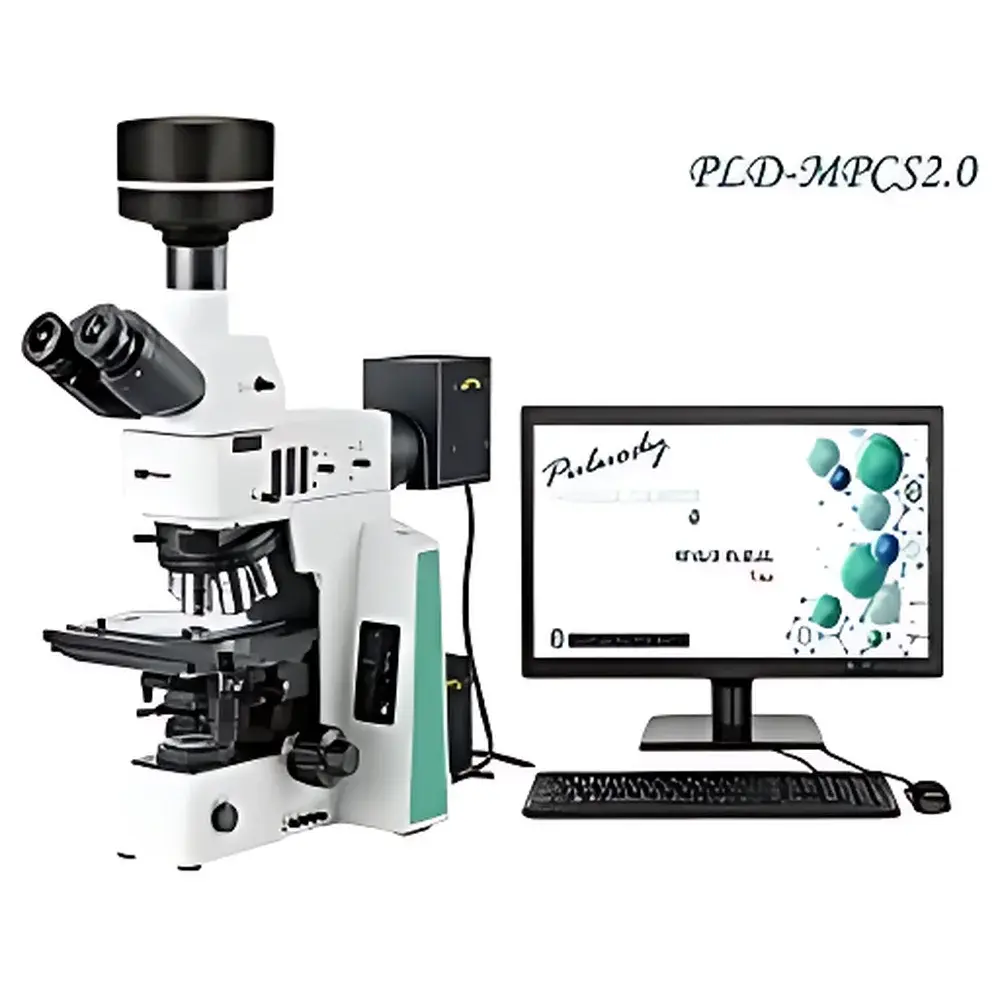
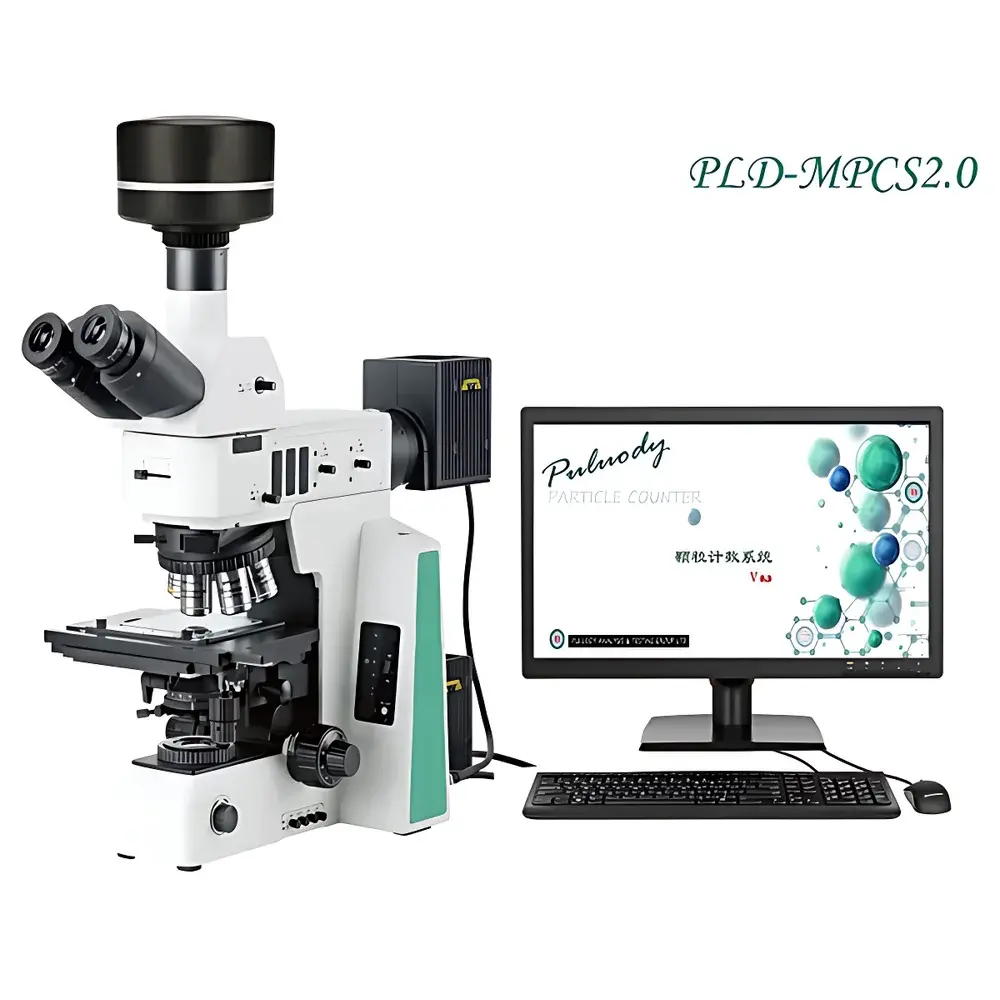
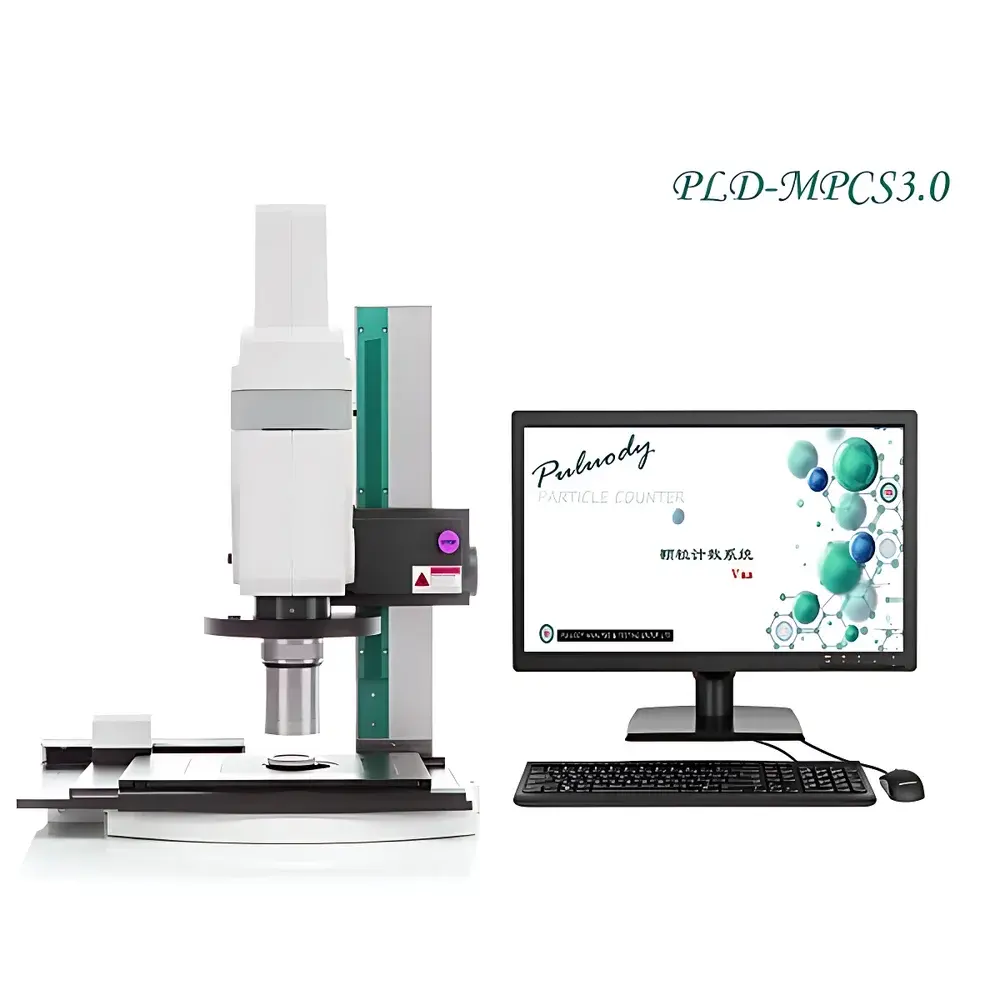
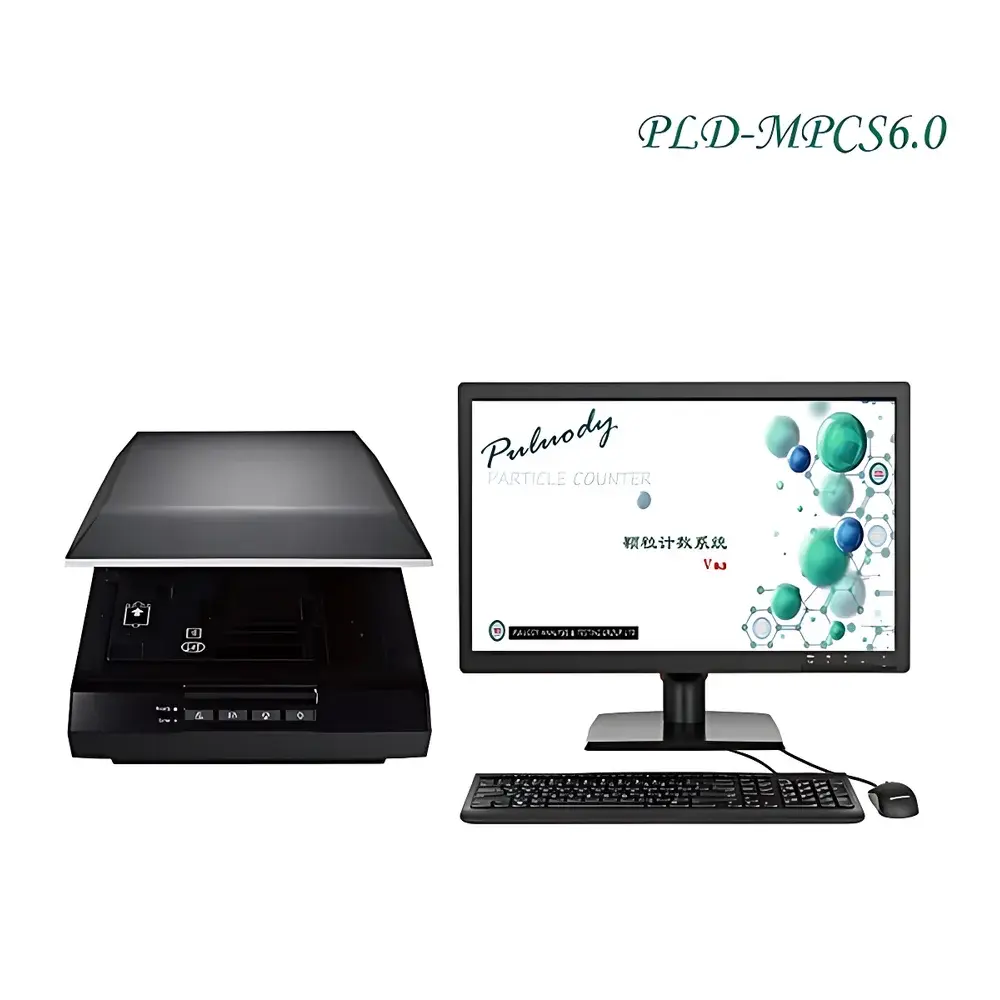
PULUODY PLD-MPCS2.0-B Automated Microscopic Insoluble Particle Counting System
| Brand | PULUODY |
|---|---|
| Origin | Shaanxi, China |
| Manufacturer Type | Authorized Distributor |
| Product Origin | Domestic (China) |
| Model | PLD-MPCS2.0-B |
| Price | USD 53,800 (approx.) |
| Microscope Configuration | Upright |
| Integrated Image Analysis System | Yes |
| Total Magnification Range | 40× to 1000× |
| Eyepiece | 10× |
| Objective Lenses | 10× (standard), with optional 4×, 20×, 40×, 100× oil immersion |
| Camera Resolution | 3 MP CCD |
| Optical Resolution | 0.1 µm |
| Measurement Accuracy | ±3% (typical) |
| Repeatability Error | <5% (excluding sample preparation variability) |
| Particle Detection Resolution | >95% (calibrated per ChP 2020) |
| Coincidence Limit | 10,000 particles/mL (5% coincidence error) |
| Image Segmentation Speed | <1 sec per frame |
| Segmentation Success Rate | >93% |
| Calibration Validation | Certified by Northwest National Metrology & Testing Center (Civil Products) |
| Software Compatibility | Windows 2000/XP (legacy support) |
| Analytical Outputs | Particle size distribution (1–500 µm), aspect ratio distribution, circularity distribution, particle count per volume, length-weighted mean diameter, projected area equivalent diameter |
Overview
The PULUODY PLD-MPCS2.0-B Automated Microscopic Insoluble Particle Counting System is a regulatory-compliant, image-based analytical platform engineered for quantitative particulate contamination assessment in parenteral pharmaceuticals, biologics, ophthalmic solutions, and medical device rinse fluids. It implements the principle of high-resolution brightfield microscopy combined with digital image acquisition and deterministic pixel-based segmentation algorithms to deliver traceable, morphology-aware particle enumeration and sizing. As a dedicated implementation of the Chinese Pharmacopoeia (ChP) General Chapter 0903 — Method 2 (Microscopic Particle Counting), the system satisfies the core metrological requirements for visual identification and classification of insoluble particles ≥1 µm in suspension. Its optical architecture follows upright metallurgical microscope design principles, enabling consistent focus depth control, uniform Köhler illumination, and minimal parallax across magnification ranges—critical for GMP-aligned QC laboratories requiring audit-ready documentation and repeatable inter-operator results.
Key Features
- Upright metallurgical-grade optical platform optimized for transmitted-light particle imaging on membrane filters (e.g., Nuclepore®, Millipore®) and liquid-suspended samples
- Configurable magnification range from 40× to 1000× via interchangeable objective lenses (10× standard; optional 4×, 20×, 40×, 100× oil immersion), supporting both wide-field screening and high-magnification morphological verification
- 3-megapixel monochrome CCD camera with 0.1 µm pixel-limited resolution, synchronized shutter control, and low-noise analog-to-digital conversion for high-fidelity grayscale capture
- Deterministic image segmentation engine achieving >93% successful particle isolation per field-of-view, with sub-second processing latency and adaptive thresholding for variable contrast conditions
- Calibration-traceable stage micrometer integration (0.1 µm刻度) and software-based spatial calibration validation per ISO/IEC 17025 practices
- Robust mechanical stage with motorized X-Y translation and Z-axis fine-focus encoder, enabling automated grid-based scanning of filtration membranes per USP and EP 2.9.19 protocols
Sample Compatibility & Compliance
The PLD-MPCS2.0-B supports aqueous and non-aqueous liquid samples filtered through 0.45 µm or 0.22 µm pore-size membranes, including but not limited to saline, dextrose, lipid emulsions, monoclonal antibody formulations, and vaccine suspensions. It complies with ChP 2020 Appendix 0903 Method 2, USP Microscopic Particle Count Test, European Pharmacopoeia 2.9.19, and ISO 21501-4:2018 for light-scattering and image analysis–based particle characterization. All measurement outputs—including particle counts per mL, size histograms (binned at 1 µm intervals), aspect ratio (length/width), and circularity (4π·area/perimeter²)—are generated in accordance with GLP/GMP data integrity standards. Audit trails, electronic signatures, and instrument calibration logs are maintained within the software environment to support FDA 21 CFR Part 11 readiness.
Software & Data Management
The proprietary MPCS Analysis Suite operates under Windows XP/2000 (with backward compatibility mode) and provides full workflow automation: from image acquisition and auto-focus optimization to batch membrane scanning, particle classification (by size, shape, and contrast), and report generation in PDF or Excel-compatible formats. Raw images are stored with embedded EXIF metadata (timestamp, magnification, calibration ID, operator ID). The software enforces role-based access control, configurable user permissions, and immutable audit trails for all analysis parameters, corrections, and export actions. Calibration certificates from the Northwest National Metrology & Testing Center (civil products division) are digitally linked to instrument serial numbers and version-controlled within the database.
Applications
- QC release testing of injectables, infusions, and lyophilized reconstituted products per pharmacopoeial mandates
- Root cause investigation of filter clogging, vial particulates, or container-closure integrity failures
- Comparative evaluation of formulation stability under thermal, mechanical, or oxidative stress
- Characterization of protein aggregates, silicone oil droplets, cellulose fibers, and glass delamination fragments
- Method development and validation studies aligned with ICH Q5A(R2) and Q5C guidelines
- Supporting regulatory submissions with fully documented, instrument-qualified particle data packages
FAQ
Does the system meet FDA 21 CFR Part 11 requirements for electronic records?
Yes—the software includes electronic signature capability, audit trail logging, and user authentication mechanisms compliant with Part 11 Annex A expectations for closed systems.
Can it analyze particles smaller than 1 µm?
No. The optical resolution limit is 0.1 µm, but reliable detection and sizing begin at ≥1 µm per pharmacopoeial definitions; submicron particles require complementary techniques such as light obscuration or nanoparticle tracking analysis.
Is hardware calibration performed on-site or at the factory?
Initial factory calibration is traceable to national standards; field recalibration services—including stage micrometer verification and illumination uniformity mapping—are available through PULUODY’s authorized service network in China.
What file formats does the software export for LIMS integration?
CSV and XML exports are supported for structured particle count and distribution data; custom API hooks may be developed upon request for enterprise-level LIMS interoperability.
How is particle coincidence error managed during high-concentration analysis?
The system applies dynamic dilution guidance and implements a 5% coincidence correction algorithm validated at 10,000 particles/mL; users are alerted when local particle density exceeds recommended thresholds per USP .




