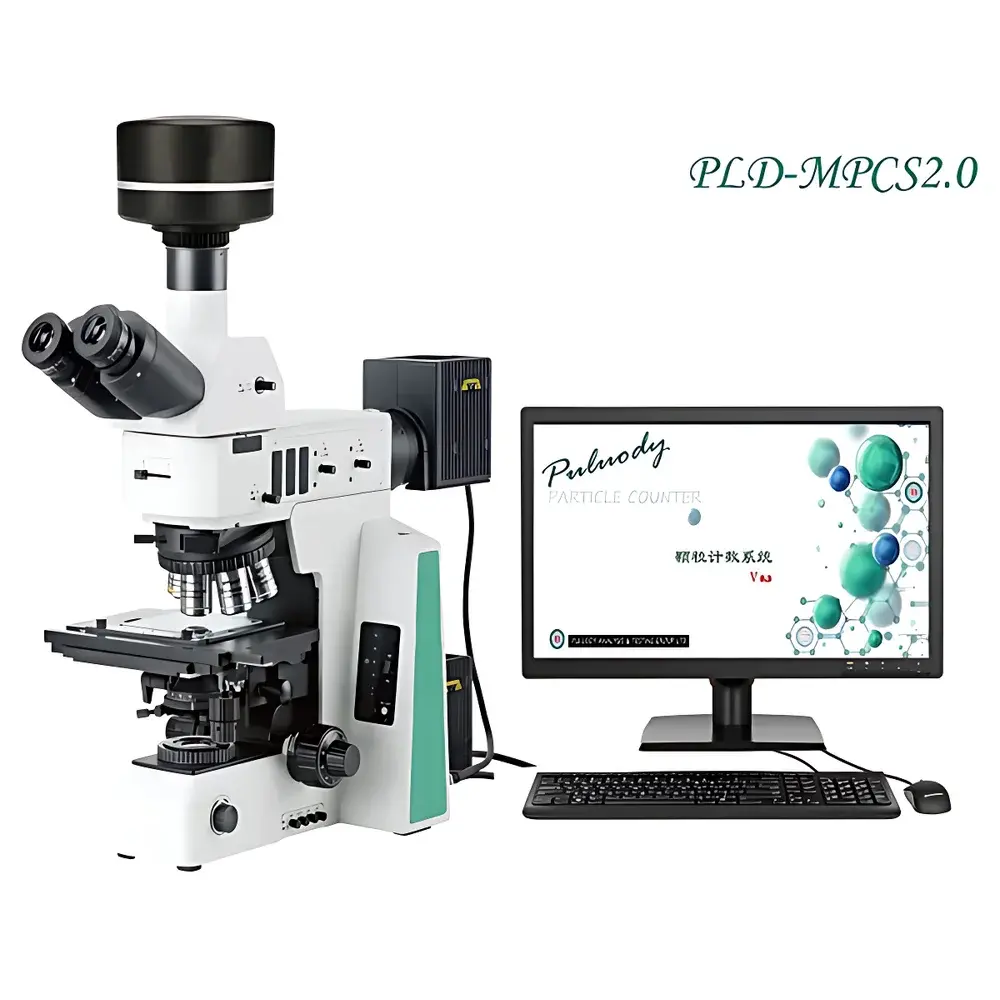
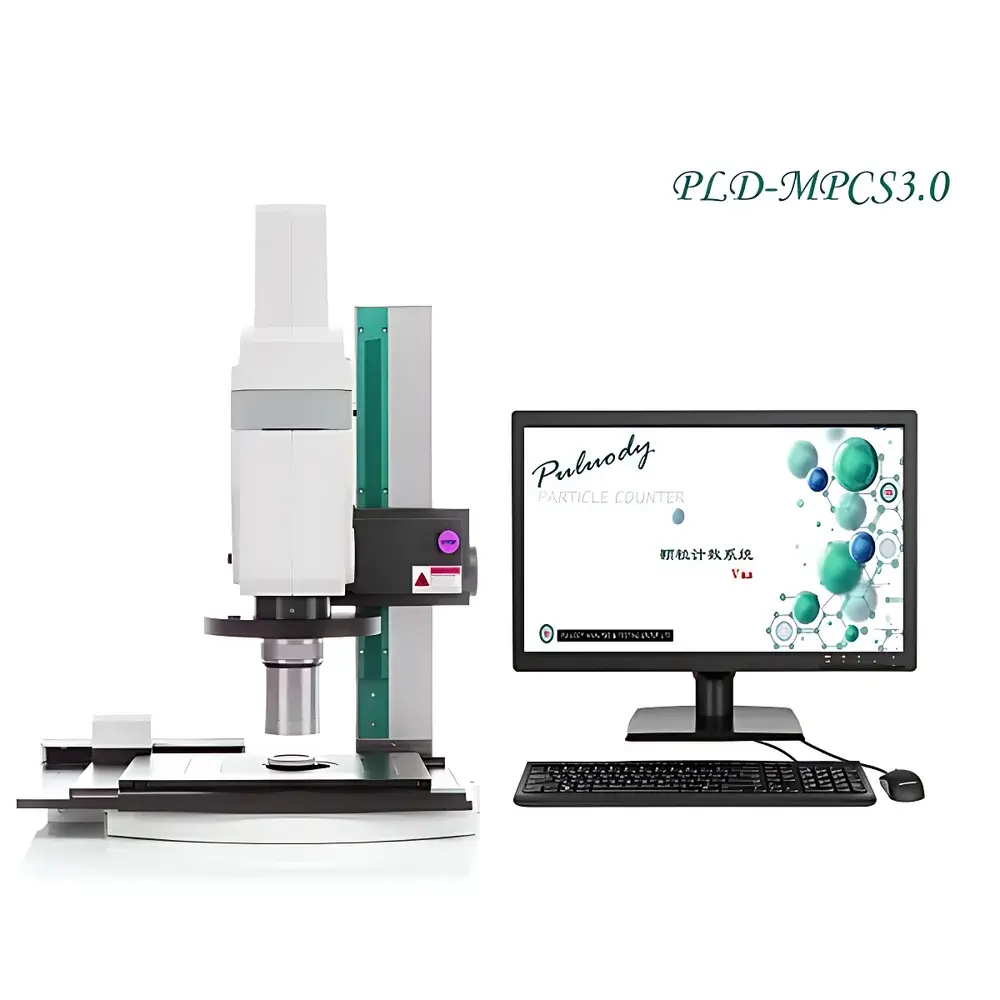
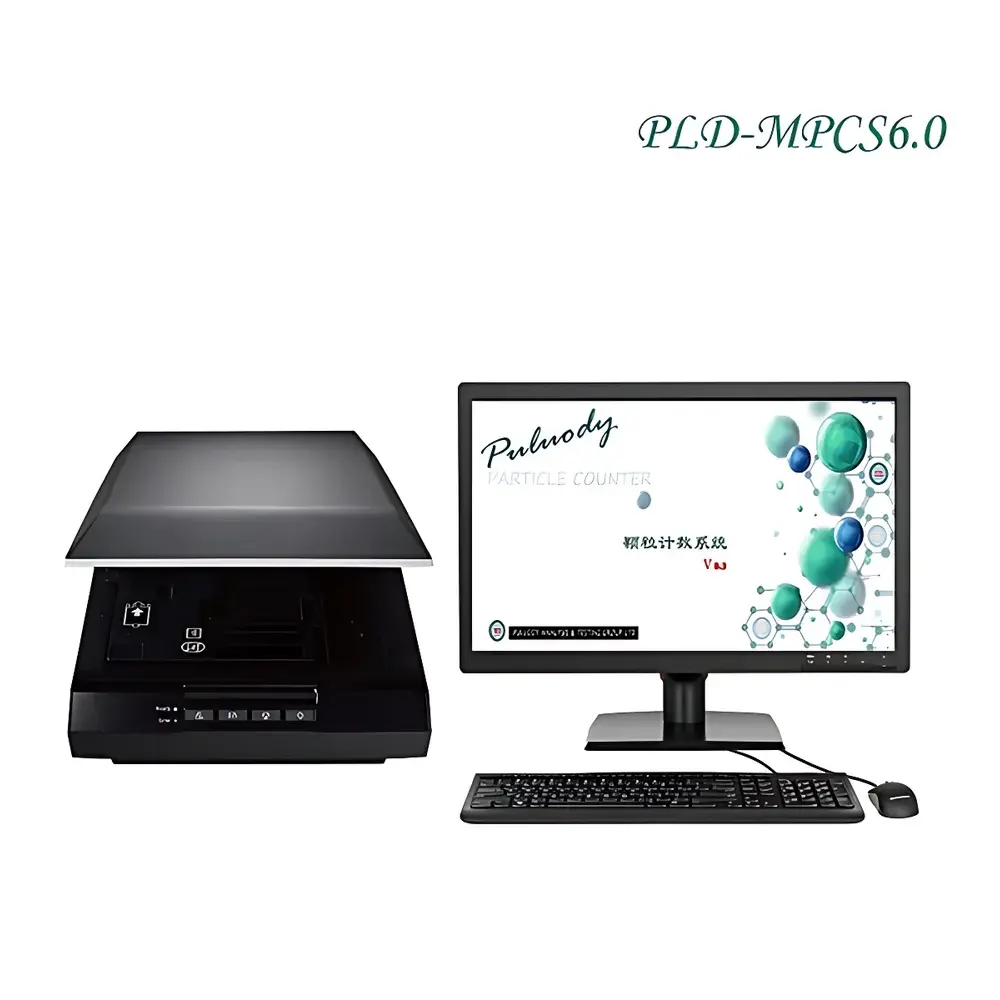
PULUODY PLD-MPCS2.0 Insoluble Particle Microscopic Counting System
| Brand | PULUODY |
|---|---|
| Origin | Shaanxi, China |
| Manufacturer Type | Authorized Distributor |
| Product Origin | Domestic (China) |
| Model | PLD-MPCS2.0 |
| Price | USD 51,200 (FOB China) |
| Compliance | ChP 2020 Appendix 0903 Method 2 (Microscopic Particle Counting), USP <788>, USP <789>, EP 8.0, ISO 21501-4, ISO 21510, GB/T 11446.9-2013 |
| Measurement Principle | Bright-field Microscopy + Digital Image Analysis |
| Particle Detection Range | 1–500 µm |
| Magnification | 40×–1000× |
| Resolution | 0.1 µm |
| Repeatability Error | <5% (excluding sample preparation variability) |
| CCD Sensor | 3 MP monochrome digital camera |
| Calibration Traceability | Northwest Metrology & Testing Center (Civil Products) |
| Software Platform | Windows XP/7/10 (32/64-bit), RS232/USB interface |
| Image Processing Speed | <1 sec per frame segmentation |
| Segmentation Success Rate | >93% |
| Accuracy | ±3% typical (ChP 2020 reference), >95% resolution (ChP 2020), <10% misclassification rate (USP/ISO 21501-4) |
| Reporting | ASTM E2457-compliant output, GLP audit trail enabled, FDA 21 CFR Part 11 optional module available |
Overview
The PULUODY PLD-MPCS2.0 Insoluble Particle Microscopic Counting System is a regulatory-grade, image-based particle analysis platform engineered for precise enumeration and morphological characterization of insoluble particulates in parenteral and ophthalmic pharmaceuticals, high-purity process liquids, and critical fluid systems. Unlike light-blockage (light obscuration) or laser diffraction methods, this system employs bright-field optical microscopy coupled with high-resolution digital imaging and deterministic pixel-level segmentation algorithms to deliver traceable, morphology-aware particle data. It implements the second method specified in Chinese Pharmacopoeia (ChP) 2020 Appendix 0903 — the Microscopic Particle Counting Method — and is fully aligned with USP , USP , European Pharmacopoeia 8.0, ISO 21501-4 (for microscopic counting), and ISO 21510. The system is designed for laboratories requiring full compliance with GMP/GLP environments, where visual verification, operator intervention capability, and auditable image archives are mandatory.
Key Features
- Regulatory-validated optical architecture: Integrated research-grade upright microscope with 40×–1000× magnification, precision mechanical stage, and adjustable Köhler illumination optimized for transparent and semi-transparent particles in filtered membrane mounts.
- Dedicated 3-megapixel monochrome CCD camera with 12-bit dynamic range and hardware-level synchronization to eliminate motion blur during automated scanning.
- Fully automated membrane scanning: Motorized XYZ stage enables seamless tiling of 25 mm × 20 mm filter areas with sub-micron positional repeatability; stitching algorithm ensures geometrically accurate mosaics without interpolation artifacts.
- ChP 2020–compliant particle recognition engine: Adaptive thresholding, watershed segmentation, and morphological filtering distinguish true particles from debris, air bubbles, and fiber artifacts; supports user-defined shape filters (circularity, aspect ratio, convexity).
- GLP-ready software framework: Role-based access control (administrator/operator/analyst), electronic signature support, full audit trail (including image capture timestamp, focus position, exposure settings), and configurable report templates meeting FDA 21 CFR Part 11 requirements (with optional validation package).
- Multi-standard reporting: Preloaded test protocols for ChP, USP, EP, ISO, and NAS 1638; automatic grade assignment per pharmacopoeial limits (e.g., ≥10 µm and ≥25 µm thresholds); exportable CSV, PDF, and XML outputs compatible with LIMS integration.
Sample Compatibility & Compliance
The PLD-MPCS2.0 accommodates standard 25 mm mixed-cellulose-ester (MCE) or polycarbonate membranes used in pharmacopeial filtration procedures. It supports direct analysis of membrane-mounted samples following ChP 0903 Section 2.2 preparation protocols — including rinsing, drying, and mounting under coverslip. Validation documentation confirms conformance with ICH Q5A(R2) for biopharmaceutical particulate assessment and ISO 13408-1 Annex C for aseptic processing monitoring. All calibration procedures follow ISO/IEC 17025 guidelines and are traceable to national standards via Northwest Metrology & Testing Center certification reports. The system meets the essential design criteria outlined in ASTM E2457–18 (“Standard Guide for Validation of Microscopic Particle Counting Methods”) and supports periodic requalification per EU Annex 11 and USP .
Software & Data Management
PULUODY ParticleVision™ v4.2 software provides an integrated environment for acquisition, annotation, measurement, and reporting. Core modules include: (1) Real-time focus assist with contrast-based Z-stack optimization; (2) Batch processing queue supporting unattended overnight runs; (3) Image archive manager with SHA-256 checksum integrity verification; (4) Comparative analysis dashboard for trend evaluation across batches or timepoints; (5) Export modules compliant with CDISC SDTM and WHO PQS data submission formats. Raw image files (TIFF 16-bit) and processed metadata are stored in a relational SQLite database with built-in backup scheduler and encryption-at-rest options. Audit logs record every user action, parameter change, and result modification — satisfying requirements for regulatory inspections under FDA PAI, MHRA GMP audits, and PMDA pre-approval reviews.
Applications
- Pharmaceutical Quality Control: Quantitative assessment of insoluble particles in injectables (solution, lyophilized powder, concentrate), ophthalmic solutions, vaccines, sterile APIs, WFI, and container-closure system extracts per ChP 2020 and USP .
- Medical Device Evaluation: Filter efficiency testing of IV sets, infusion pumps, and terminal sterilizing filters using challenge suspensions per ISO 8536-4 and GB 8368.
- High-Purity Fluid Monitoring: Particle contamination grading of ultrapure water (UPW), semiconductor process chemicals (CMP slurries), photolithography solvents, and battery electrolytes per SEMI F57 and ISO 14644-9.
- Industrial Hydraulics & Lubricants: Cleanliness verification of aviation hydraulic fluids, turbine oils, and gear oils per ISO 4406 and NAS 1638 — extended to morphological classification (metallic vs. non-metallic, fibrous vs. spherical).
- Research & Development: Morphometric profiling (aspect ratio, convexity, Feret diameter) for nanoparticle aggregation studies, crystallization kinetics, and formulation stability screening.
FAQ
Does the PLD-MPCS2.0 comply with FDA 21 CFR Part 11 requirements?
Yes — when configured with the optional Part 11 Compliance Module, the system provides electronic signatures, audit trail logging, and role-based security controls validated per Annex 11 and ALCOA+ principles.
Can it analyze particles smaller than 1 µm?
No — the optical resolution limit is 0.1 µm, but reliable detection and statistical confidence begin at ≥1 µm per ChP 2020 and ISO 21501-4; sub-micron analysis requires TEM or NTA instrumentation.
Is manual focus required during operation?
Yes — the system retains manual fine-focus capability as mandated by ChP 0903 for operator verification of particle identity and edge definition, ensuring analytical transparency.
What sample preparation standards does it support?
It is validated for use with ChP 0903 Section 2.2 (membrane filtration), USP Procedure B, and ISO 21501-4 Annex A; custom SOPs can be embedded into test templates.
How is calibration verified?
Using NIST-traceable particle size standards (e.g., Duke Scientific 3000 series) and certified reference membranes; annual recalibration is recommended and supported by PULUODY’s ISO/IEC 17025-accredited service network.