
PULUODY PMT-2-1 Advanced Optical Particle Counter for High-Purity Chemical Liquids
| Brand | PULUODY |
|---|---|
| Origin | Shaanxi, China |
| Manufacturer Type | Authorized Distributor |
| Country of Origin | China |
| Model | PMT-2-1 |
| Instrument Type | Optical Particle Counter |
| Detection Principle | Dual-Laser Narrow-Beam Light Scattering |
| Sensor Generation | 8th-Generation Dual-Laser Optical Sensor |
| Measuring Range | 0.5–5.0 µm (standard) |
| Sampling Method | Precision Metering Piston Pump + Electromagnetic Flow Control |
| Sample Volume Accuracy | < ±1% |
| Counting Accuracy | < ±3% (typical) |
| Coincidence Limit | ≤2.5% error at 1000 particles/mL |
| Output Interface | 4–20 mA analog output |
| Alarm Function | Configurable超标 alarm |
| Reporting | Particles per mL & ISO 4406 / NAS 1638 contamination codes |
| Compliance Standards | USP <788>, EP 2.9.19, BP, ChP 2015/2020, GB 8368, ISO 21501-4, JJG 1061 |
| Calibration Reference | NIST-traceable latex spheres or ISO 21501-4 compliant standards |
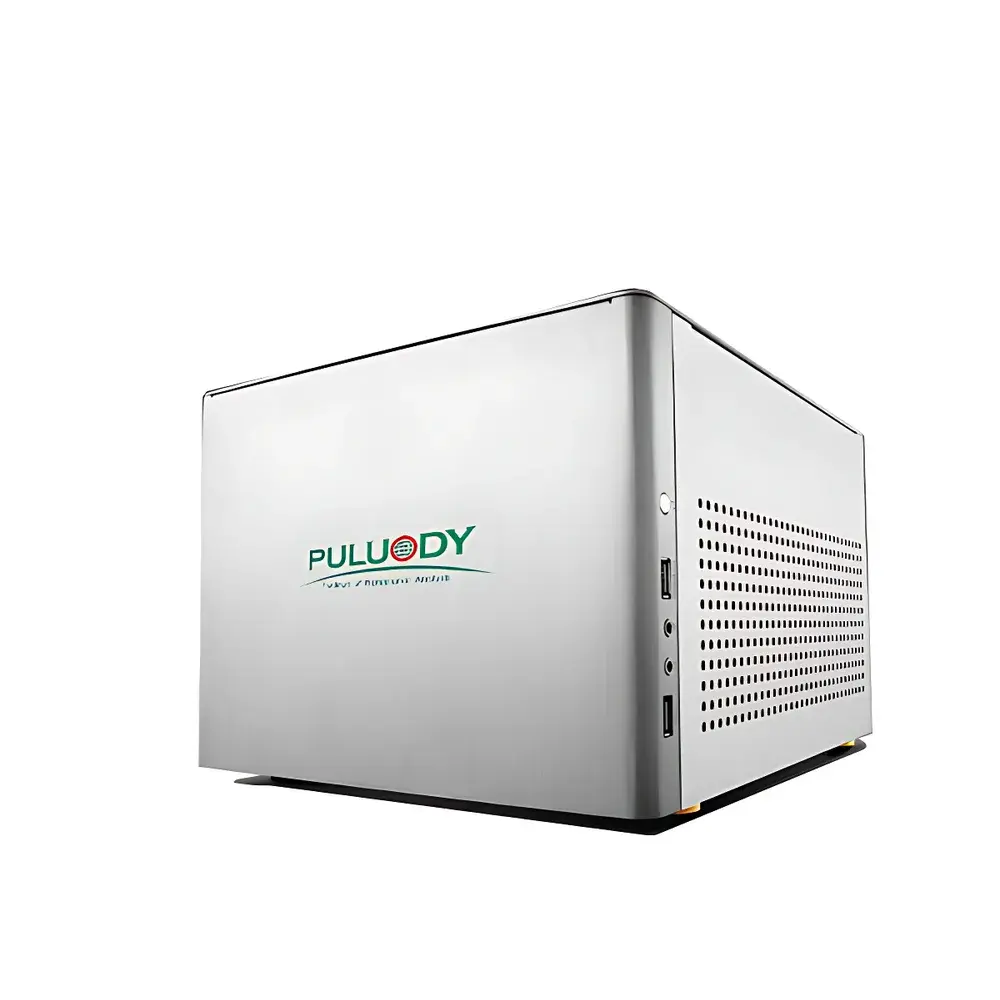
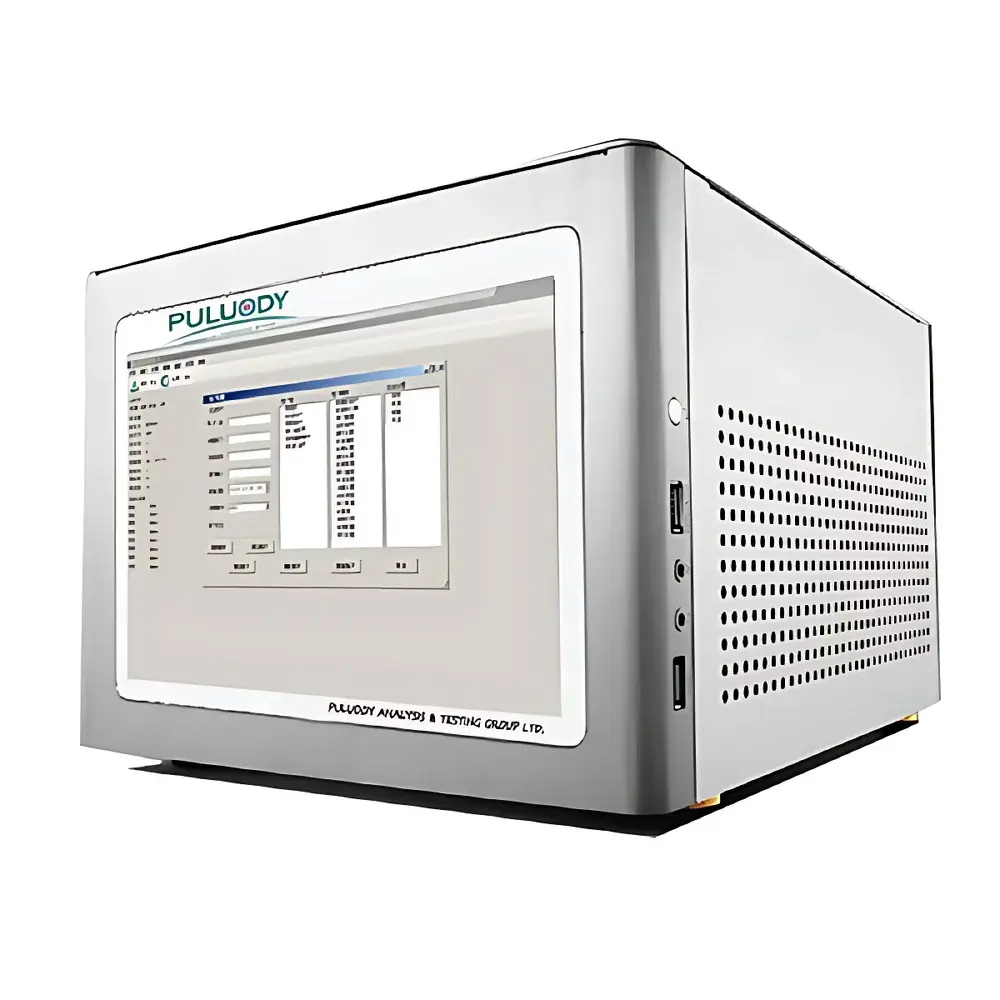
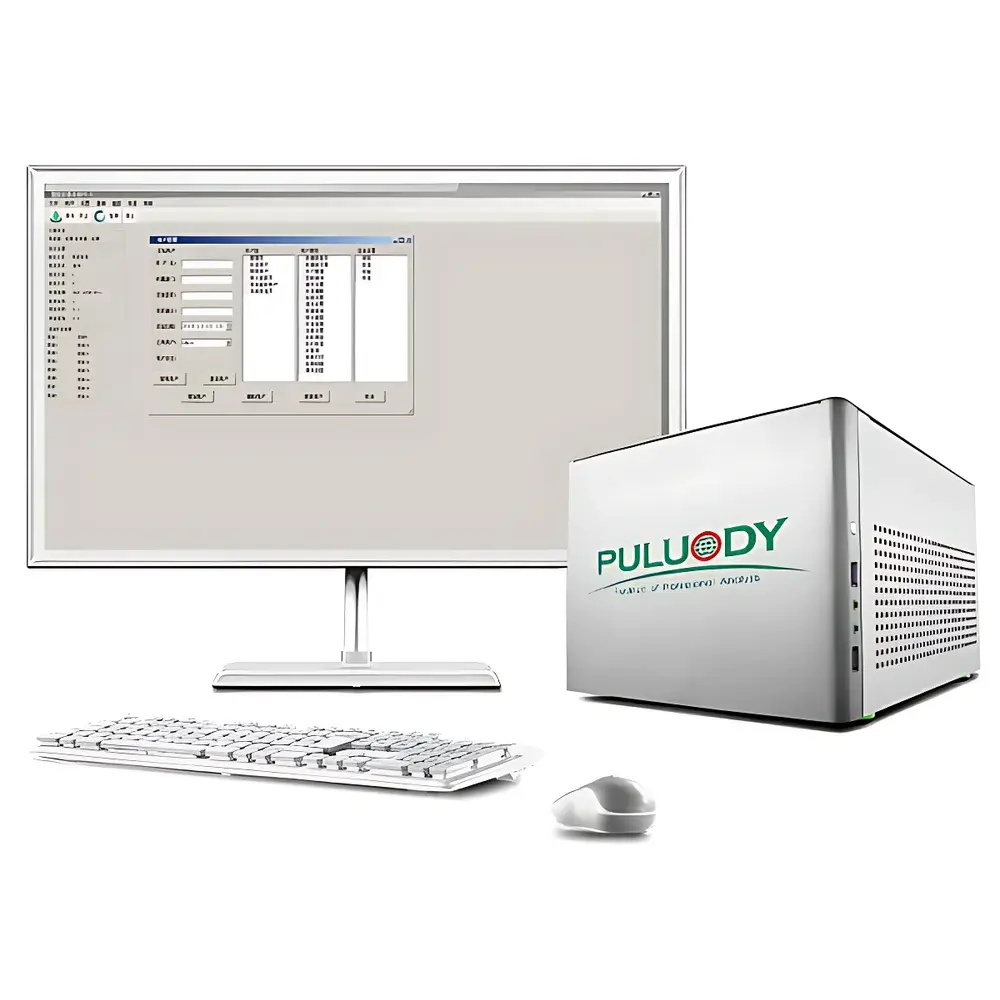
| Software | PULUODY V8.3 Integrated Analysis & Calibration Software (PC + iPad-compatible data acquisition) |
| Display & Control | Color LCD touchscreen + optional wireless keyboard/mouse |
| Power Supply | 100–265 VAC, 50–60 Hz |
| Application Scope | Semiconductor process chemicals, ultrapure water (UPW), electronic cleaning agents, flat-panel display etchants, silicon wafers, optical glass, nanofiltration permeates, polymer solutions, injectables, and insoluble particle analysis in organic solvents |
Overview
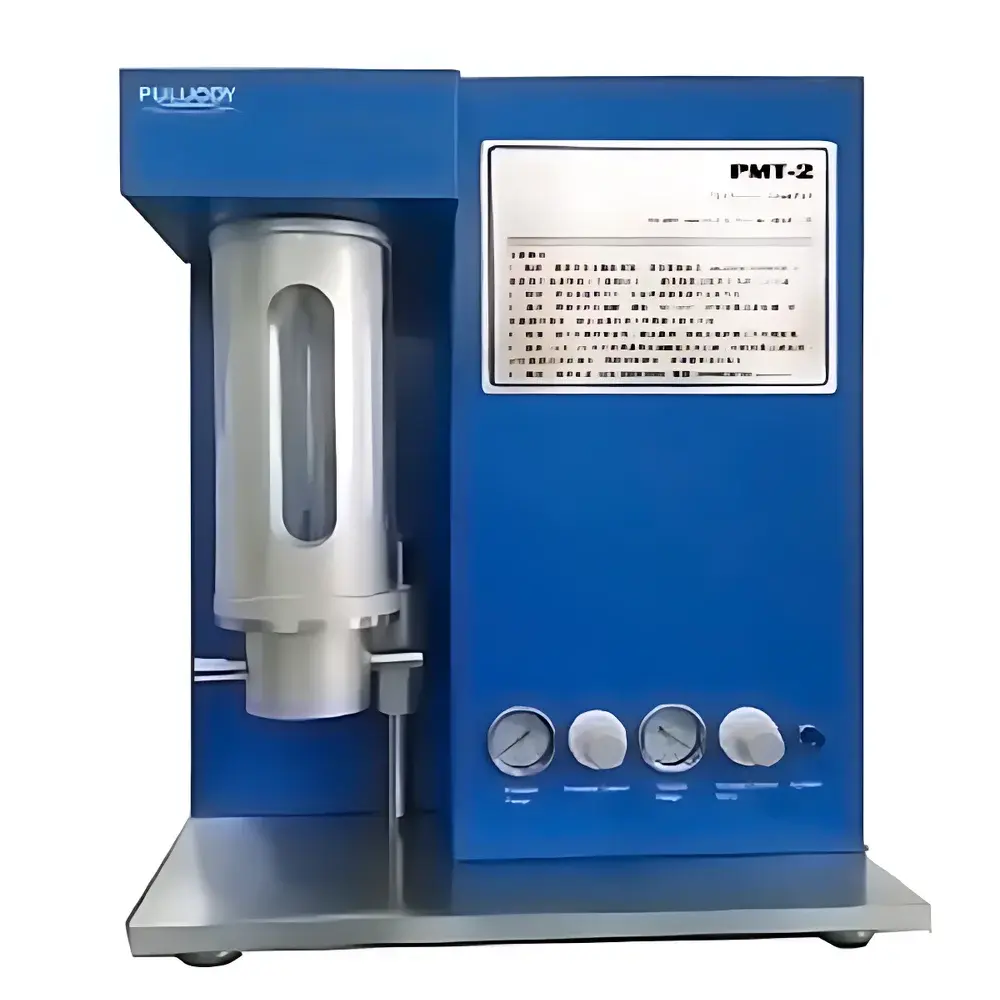
The PULUODY PMT-2-1 is a high-precision optical particle counter engineered for real-time, quantitative monitoring of suspended particulate contamination in ultra-clean liquid process streams. It operates on the principle of dual-laser narrow-beam light scattering—where two spatially offset laser sources illuminate the sample flow path simultaneously, enabling improved signal-to-noise ratio, reduced coincidence error, and enhanced resolution across the sub-micron to low-micron range (0.5–5.0 µm standard). Designed specifically for demanding applications in semiconductor fabrication, pharmaceutical manufacturing, and advanced materials R&D, the instrument meets stringent requirements for trace-level particle detection in high-purity chemical matrices—including aqueous solutions, organic solvents, and viscous polymer formulations. Its architecture integrates a precision metering piston pump with closed-loop electromagnetic flow control, ensuring repeatable volumetric sampling independent of fluid viscosity or backpressure fluctuations—critical for compliance with pharmacopeial and industrial cleanliness standards.
Key Features
- Dual-laser narrow-beam optical sensing system (8th-generation), optimized for high-sensitivity detection of non-opaque, non-absorbing, and weakly scattering particles in transparent liquids.
- Modular flow path design supporting both online bypass loop integration and offline portable measurement configurations—enabling seamless transition between production-line monitoring and lab-based verification.
- V8.3 integrated software platform with dual-mode operation: segregated calibration module (GLP-compliant audit trail) and independent analysis engine—eliminating cross-contamination of reference and test data during routine operation.
- iPad-enabled wireless data acquisition with real-time visualization, configurable alarm thresholds, and automated report generation in ISO 4406, NAS 1638, and custom particle-per-mL formats.
- Compliance-ready hardware architecture: 4–20 mA analog output with programmable alarm relay; full traceability via NIST-traceable calibration spheres or ISO 21501-4 certified references; built-in timestamped event logging.
- Robust fluidic interface accommodating aggressive chemistries (e.g., SC-1, BOE, TMAH, IPA, acetone) through chemically inert wetted materials (e.g., fused silica, PFA, sapphire).
Sample Compatibility & Compliance
The PMT-2-1 supports a broad spectrum of liquid media relevant to critical manufacturing environments. These include deionized water (DIW) and ultrapure water (UPW) used in wafer rinsing, photoresist developers and strippers, CMP slurries, optical coating solvents, injectable drug vehicles, and polymer precursor solutions. Its detection capability extends to insoluble particulates in organic solvents such as THF, DMF, and ethyl acetate—provided refractive index contrast exceeds Δn ≥ 0.02 relative to the bulk medium. The instrument conforms to multiple international regulatory frameworks: USP and for injectables and ophthalmics; European Pharmacopoeia 2.9.19; British Pharmacopoeia Appendix XVII; Chinese Pharmacopoeia 2015/2020 Edition; ISO 21501-4 for calibration validation; and JJG 1061–2010 for metrological verification in China. All firmware and software modules support 21 CFR Part 11-compliant user access controls, electronic signatures, and immutable audit trails when deployed in GMP/GLP-regulated settings.
Software & Data Management
PULUODY V8.3 software provides a unified interface for instrument control, calibration management, statistical analysis, and regulatory reporting. The calibration module maintains separate, version-controlled records for sensor verification (using ISO 21501-4 reference particles), flow rate validation, and background noise profiling—each logged with operator ID, timestamp, and environmental metadata. During analysis, raw pulse-height histograms are stored alongside processed counts per size bin, enabling retrospective re-binning or threshold adjustment without re-acquisition. Data export supports CSV, PDF, and XML formats compatible with LIMS integration. iPad synchronization allows field technicians to initiate sampling sequences, review trending charts (e.g., 7-day moving average of >2.0 µm particles), and trigger alerts directly from cleanroom environments—without compromising network security through air-gapped local storage options.
Applications
Typical deployment scenarios include continuous monitoring of UPW distribution loops in fab facilities; end-point verification of point-of-use filtration systems serving photolithography tools; QC release testing of bulk semiconductor-grade solvents; stability assessment of nanoparticle dispersions in biopharmaceutical excipients; and qualification of final rinse efficacy during medical device manufacturing. In electronics packaging, the PMT-2-1 validates cleanliness of underfill adhesives and conformal coatings prior to curing. For R&D labs, its customizable sizing channels (e.g., 0.1 µm(c) mode) support early-stage colloidal stability studies, while the dual-flow configuration permits comparative analysis of pre- and post-filtration samples within a single run—reducing inter-run variability and accelerating method development cycles.
FAQ
Does the PMT-2-1 require periodic recalibration?
Yes—calibration must be performed at defined intervals per ISO 21501-4 and internal SOPs, typically every 6 months or after maintenance events affecting optical alignment or flow path integrity.
Can it detect transparent polymeric particles in organic solvents?
Yes, provided sufficient refractive index mismatch exists (Δn ≥ 0.02) and particles remain non-agglomerated during transit through the sensing zone.
Is remote diagnostics supported?
The instrument includes embedded Ethernet and optional cellular telemetry for secure remote firmware updates, log retrieval, and diagnostic session initiation under IT-approved protocols.
How is sample carryover mitigated during sequential measurements?
Automated purge-and-rinse cycles—programmable in duration and solvent type—are executed between samples; wetted path materials are selected to minimize adsorption of hydrophobic or charged species.
What documentation is provided for regulatory submissions?
A complete IQ/OQ package—including factory acceptance test reports, calibration certificates traceable to NIST, software validation summary, and electronic record retention policy—is supplied with each unit.



