
PULUODY PMT-2-r High-Performance Optical Particle Counter for Chemical Liquids
| Brand | PULUODY |
|---|---|
| Origin | Shaanxi, China |
| Manufacturer Type | Authorized Distributor |
| Country of Origin | China |
| Model | PMT-2-r |
| Instrument Type | Optical Particle Counter |
| Detection Principle | Dual-Laser Narrow-Beam Light Scattering |
| Measurement Range | 0.5–5.0 µm (standard) |
| Sampling Accuracy | <±1% |
| Counting Accuracy | ±3% typical |
| Coincidence Limit | 1000 particles/mL (2.5% coincidence error) |
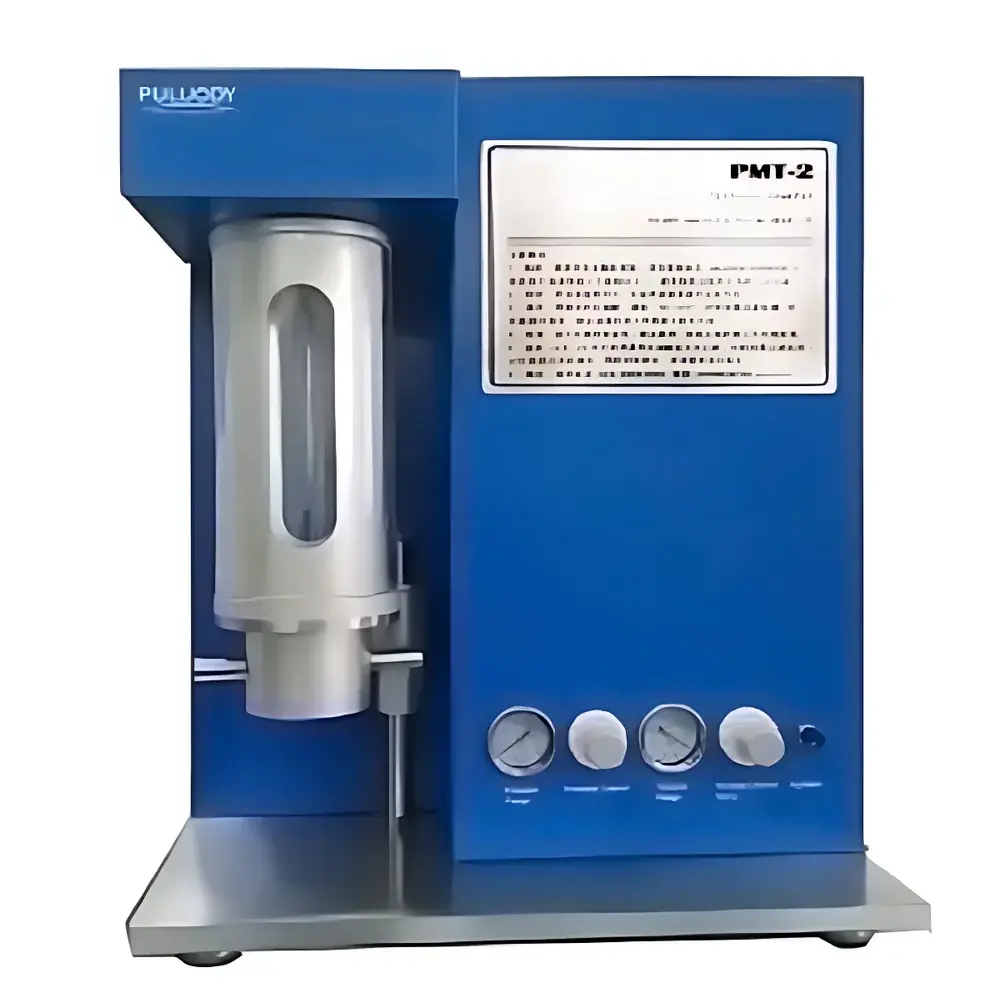
| Flow Control | Precision Piston Pump + Electromagnetic Flow Regulation |
| Calibration Standards | ISO 21501, JJG 1061, Latex Spheres |
| Compliance | Chinese Pharmacopoeia 2015/2020, USP <788>, EP 2.9.19, BP, GB 8368 |
| Output Interface | 4–20 mA analog output with configurable alarm triggers |
| Data Acquisition | iPad-integrated wireless collection |
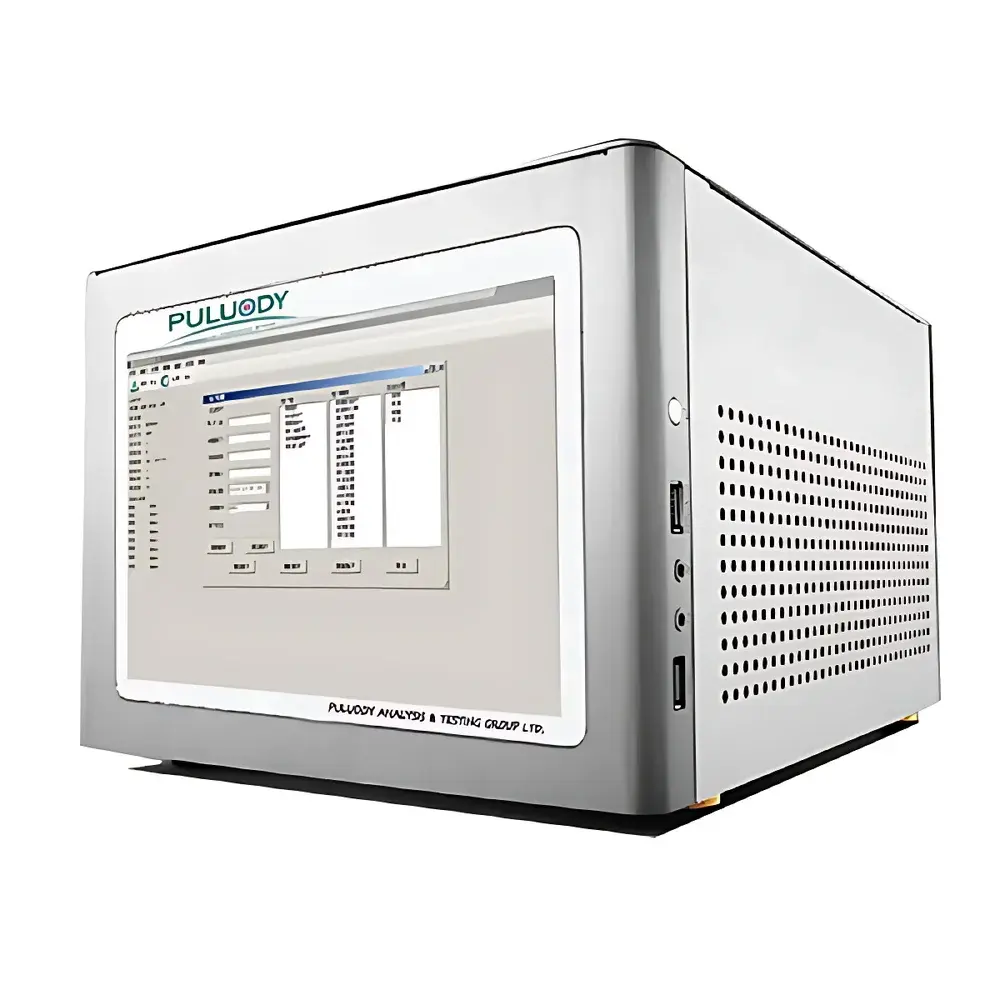
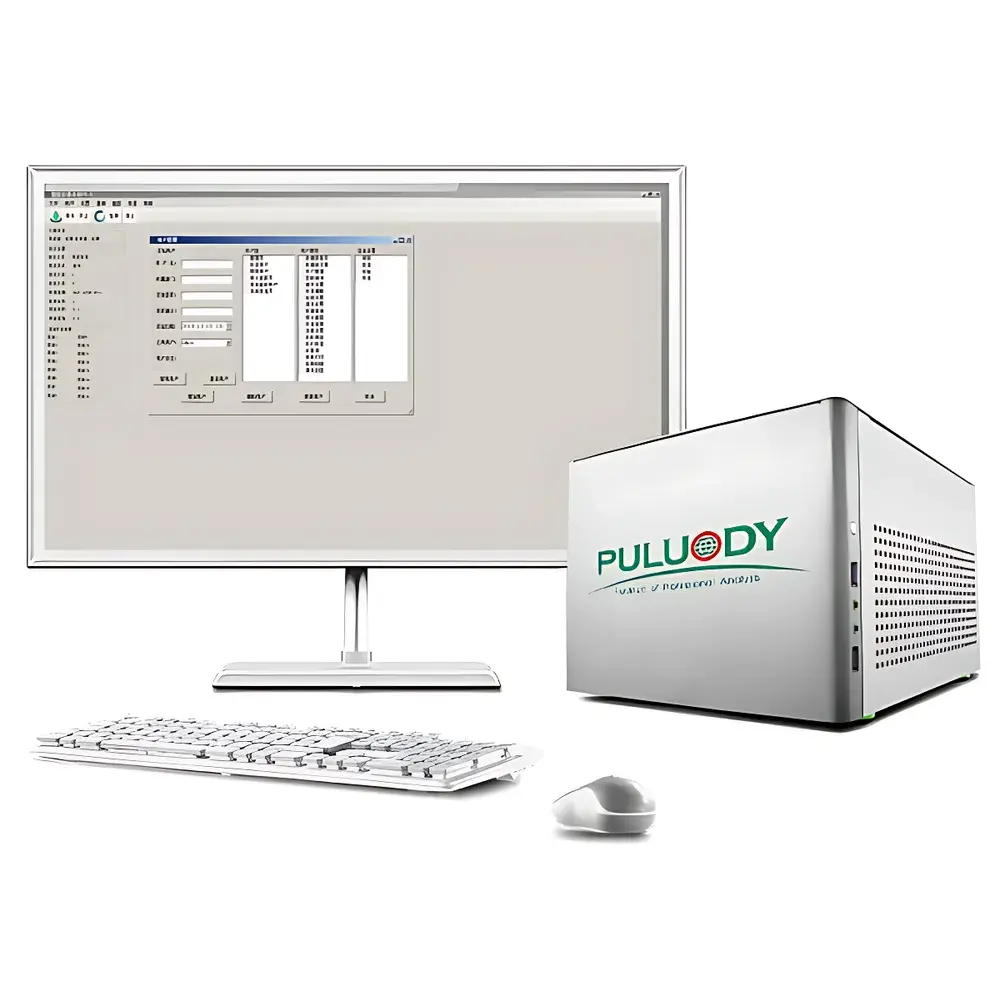
| Software | PULUODY V8.3 Integrated Analysis & Calibration Software (PC version) |
| Display & Control | Color LCD touchscreen + optional wireless keyboard/mouse |
| Power Input | 100–265 VAC, 50–60 Hz |
Overview
The PULUODY PMT-2-r is a high-precision optical particle counter engineered for quantitative analysis of insoluble particulate contamination in high-purity chemical liquids. It operates on the principle of dual-laser narrow-beam light scattering—leveraging two spatially separated laser sources and optimized optical geometry to minimize Mie scattering artifacts and enhance signal-to-noise ratio for sub-micron detection. Unlike conventional single-beam systems, this eighth-generation sensor architecture enables simultaneous differential detection across overlapping size thresholds, significantly improving sizing resolution and counting fidelity in low-conductivity, low-refractive-index media such as ultrapure water, semiconductor process chemicals, photoresist solvents, and electronic-grade etchants. Designed for both online process monitoring and offline laboratory verification, the PMT-2-r meets stringent requirements for cleanroom-compatible instrumentation in microelectronics manufacturing, pharmaceutical excipient qualification, and advanced materials R&D.
Key Features
- Dual-laser narrow-beam optical detection system with independent wavelength optimization for enhanced sensitivity at 0.5 µm and improved dynamic range up to 5.0 µm (extendable to 100 µm via custom calibration)
- Precision volumetric sampling driven by a calibrated piston pump coupled with electromagnetic flow regulation—ensuring <±1% volumetric accuracy and repeatable aspiration under variable backpressure conditions
- Modular hardware architecture supporting field-reconfigurable detection thresholds (e.g., 4–70 µm(c) for filter integrity validation or 0.1 µm(c) for nanoscale colloid characterization)
- Separate analysis and calibration software environments (V8.3 Integrated Edition) to eliminate cross-contamination of measurement logic and metrological traceability pathways
- Real-time analog output (4–20 mA) with programmable alarm thresholds for integration into DCS/SCADA systems; supports automated shutdown or flush initiation upon exceedance events
- IPad-based wireless data acquisition platform enabling mobile deployment, remote configuration, and synchronized timestamped logging compliant with ALCOA+ principles
Sample Compatibility & Compliance
The PMT-2-r is validated for use with non-aqueous and aqueous chemistries including but not limited to TMAH developers, hydrogen peroxide solutions, HF-based etchants, deionized water (≥18.2 MΩ·cm), PEG-based polymer solutions, and silicone oil suspensions. Its wetted path employs chemically inert sapphire flow cells and PFA fluidic tubing rated for continuous exposure to pH 0–14 and temperatures up to 60°C. Regulatory alignment includes full support for pharmacopeial methods: USP Particulate Matter in Injections, EP 2.9.19 Particulate Contamination of Parenterals, Chinese Pharmacopoeia Vol. IV (2015/2020 Edition), and GB 8368–2018 for medical device rinsates. Calibration traceability follows ISO 21501-4 for liquid-borne particle counters and JJG 1061–2010 for national metrological verification in China.
Software & Data Management
The V8.3 software suite provides dual-mode operation: a GMP-compliant “Test Mode” for routine sample analysis and a secured “Calibration Mode” accessible only via role-based authentication. All measurement sessions generate immutable audit trails—including operator ID, environmental metadata (temperature, pressure), sensor health logs, and raw pulse histograms—with export options in CSV, PDF, and XML formats. Electronic signatures, 21 CFR Part 11–compliant user access controls, and automatic backup to network drives ensure data integrity throughout the instrument lifecycle. Reporting conforms to ISO 4406:2017 coding conventions and includes customizable pass/fail criteria against internal SOPs or industry benchmarks (e.g., SEMI F57 for semiconductor slurries).
Applications
The PMT-2-r serves critical quality control functions across multiple high-technology sectors. In semiconductor fabrication, it monitors rinse tank effluent and CMP slurry stability in real time, detecting agglomeration onset before wafer defect rates increase. For pharmaceutical manufacturers, it verifies particulate clearance during final filtration of sterile APIs and assesses extractables from single-use bioreactor bags. In flat-panel display production, it quantifies residual abrasive particles in ITO etchant recirculation loops. Additional use cases include validation of nano-filtration membranes in battery electrolyte purification, trending of catalyst degradation in fine chemical synthesis, and qualification of cleaning efficacy for MEMS packaging substrates.
FAQ
What regulatory standards does the PMT-2-r support for pharmaceutical applications?
It fully complies with USP , EP 2.9.19, Chinese Pharmacopoeia 2020 Edition, and GB 8368–2018, with documented method equivalence studies available upon request.
Can the instrument be integrated into an existing PLC-controlled production line?
Yes—the 4–20 mA analog output and Modbus TCP option enable seamless connection to industrial controllers without requiring middleware or protocol converters.
Is calibration traceable to national metrology institutes?
All factory calibrations are performed using NIST-traceable latex sphere suspensions and certified reference materials aligned with ISO 21501-4; on-site recalibration services are provided by PULUODY Accredited Service Centers.
Does the system support multi-user environments with audit trail requirements?
Yes—V8.3 implements role-based permissions, electronic signatures, and immutable session logs meeting FDA 21 CFR Part 11 and EU Annex 11 requirements.
What maintenance intervals are recommended for continuous online operation?
Optical alignment verification every 6 months; flow path cleaning after every 500 mL of aggressive solvent exposure; annual full metrological revalidation recommended for GLP/GMP-regulated labs.



