
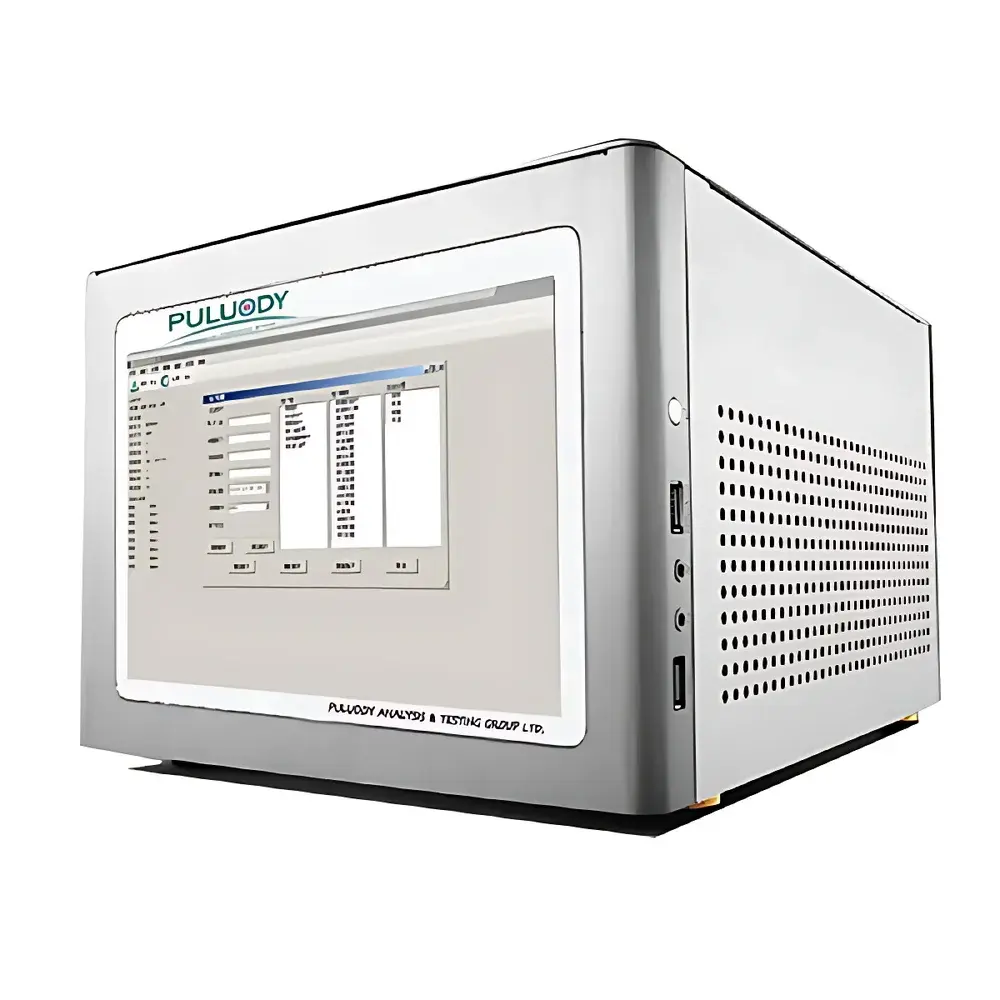
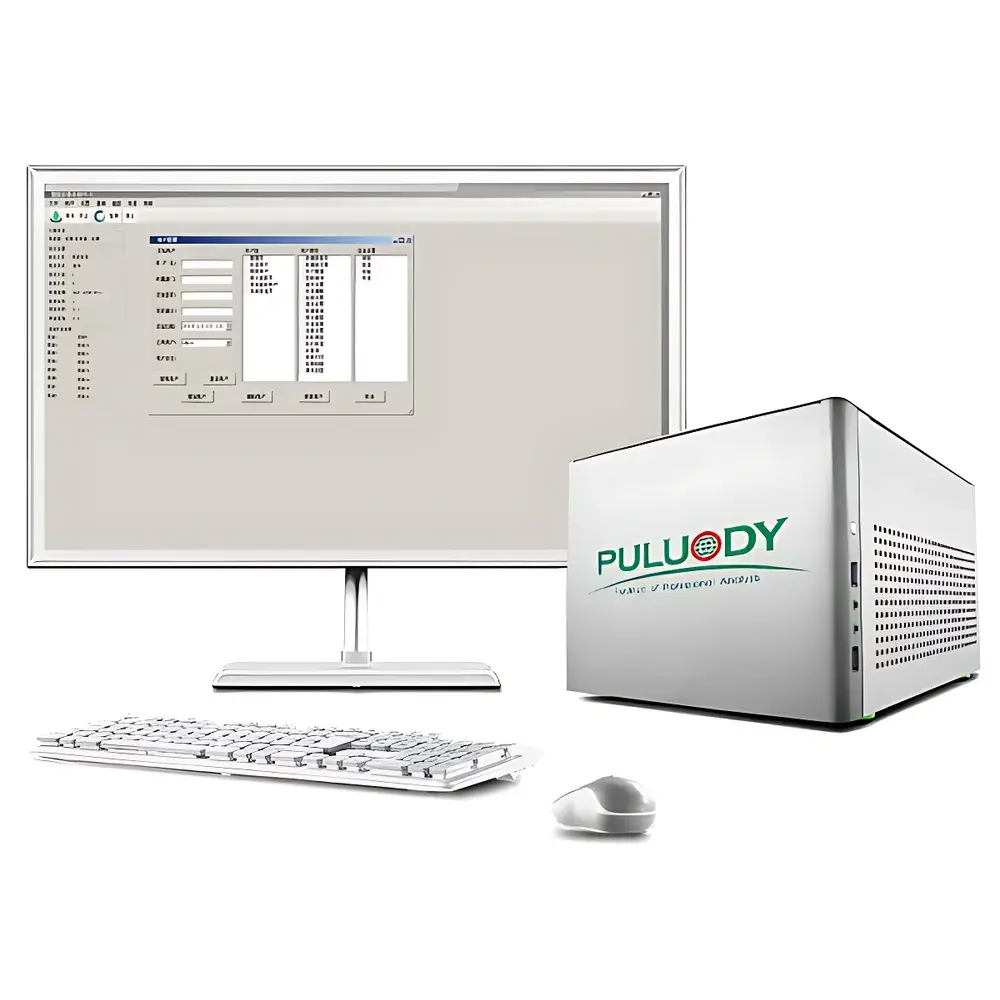
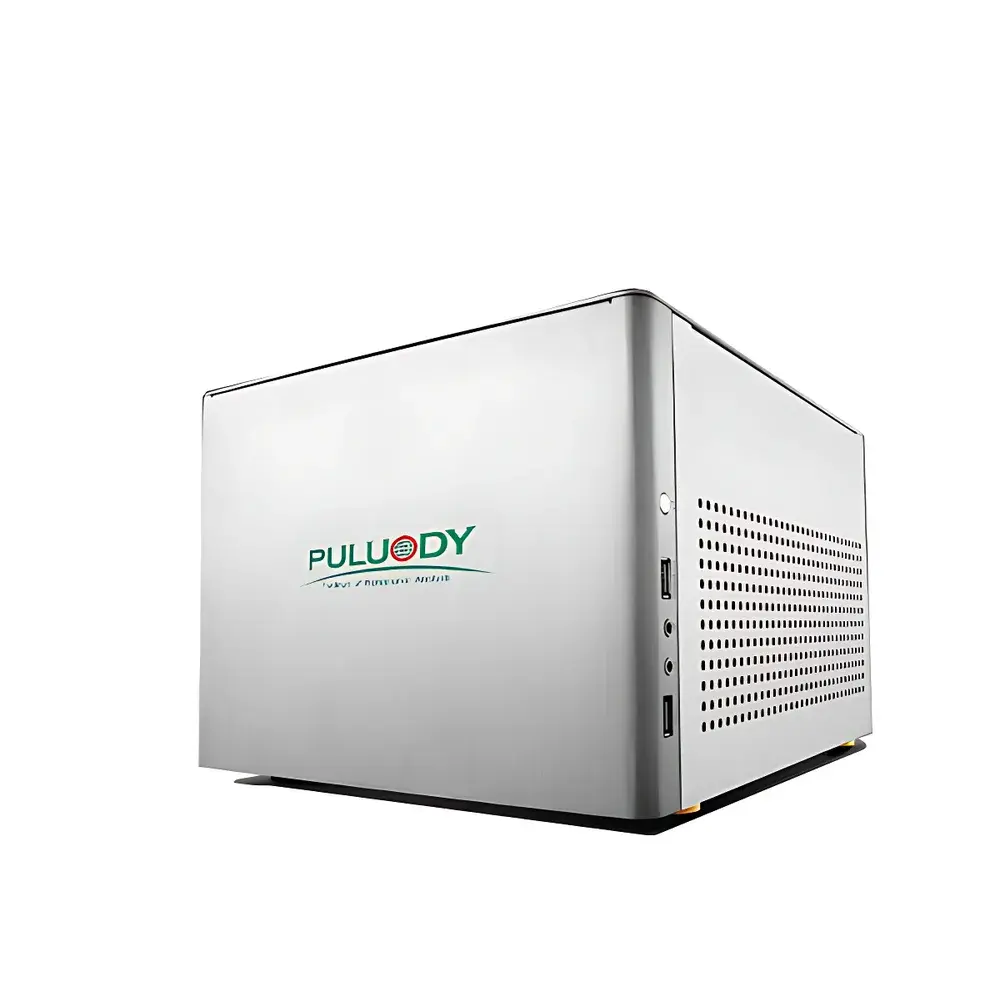
PULUODY PMT-2-E High-Precision Ultrapure Water Particle Counter
| Brand | PULUODY |
|---|---|
| Origin | Shaanxi, China |
| Manufacturer Type | Authorized Distributor |
| Country of Origin | China |
| Model | PMT-2-E |
| Instrument Type | Optical Particle Counter |
| Detection Principle | Dual-Laser Narrow-Beam Light Scattering |
| Sensor Generation | 8th-Generation Dual-Laser Sensor |
| Measurement Range | 0.1–1.0 µm (standard), customizable 1–100 µm or 4–70 µm(c), down to 0.1 µm(c) |
| Sampling Accuracy | < ±1% |
| Counting Accuracy | < ±3% (typical) |
| Coincidence Limit | 1000 particles/mL (2.5% coincidence error) |
| Flow Control | Precision Plunger Pump + Electromagnetic Flow Regulation |
| Calibration Standards | ISO 21501, JJG 1061, Latex Sphere Reference, USP <788>, EP 2.9.19, ChP 2015/2020, GB 8368 |
| Software | V8.3 Integrated Analysis & Calibration Software (PC + Touchscreen GUI) |
| Data Output | iPad-compatible Wireless Acquisition, 4–20 mA Analog Output, Real-time Alert Interface |
| Compliance Support | FDA 21 CFR Part 11 Audit Trail Ready (via optional software module), GLP/GMP Traceable Reporting |
| Power Input | 100–265 VAC, 50–60 Hz |
Overview
The PULUODY PMT-2-E High-Precision Ultrapure Water Particle Counter is an optical particle counter engineered for trace-level contamination monitoring in ultrapure water (UPW), semiconductor process chemicals, and critical microelectronics rinsing fluids. It operates on the principle of dual-laser narrow-beam light scattering—where two spatially separated laser sources illuminate a precisely defined flow path—to enable high-sensitivity detection of sub-micron particulates with minimized signal noise and enhanced sizing resolution. Unlike conventional single-beam instruments, the eighth-generation dual-laser architecture improves signal-to-noise ratio and mitigates Mie scattering artifacts, particularly at the 0.1–0.5 µm range where UPW purity specifications are most stringent. Designed for both online and offline deployment, the PMT-2-E meets the metrological rigor required by ISO 14644-1 Class 1 cleanroom water systems, SEMI F57-0318 for UPW particle specifications, and pharmaceutical water quality control per USP , EP 2.9.19, and ChP 2020.
Key Features
- Dual-laser narrow-beam sensor technology with independent excitation paths for improved size discrimination below 0.2 µm
- Precision plunger pump combined with electromagnetic flow regulation ensures volumetric sampling accuracy better than ±1% across 1–100 mL/min range
- Real-time, continuous online monitoring capability with configurable alarm thresholds and 4–20 mA analog output for integration into SCADA or DCS platforms
- Modular design supports both fixed-installation and portable operation—enabling rapid transition between production line verification and laboratory-grade validation
- Touchscreen GUI (color LCD) and optional wireless keyboard/mouse interface for intuitive local operation without external PC dependency
- Calibration traceability to NIST-traceable latex standards and compliance with ISO 21501-4 for liquid-borne particle counters
Sample Compatibility & Compliance
The PMT-2-E is validated for use with low-conductivity liquids including ultrapure water (resistivity ≥18.2 MΩ·cm), deionized rinse solutions, photoresist strippers, etchants, and polymer-based processing fluids. Its wetted path employs chemically inert materials (e.g., fused silica flow cell, PFA tubing, and sapphire optical windows) to prevent leaching or surface adsorption artifacts. Regulatory alignment includes full support for pharmacopeial methods: USP (Subvisible Particulate Matter), European Pharmacopoeia 2.9.19, Chinese Pharmacopoeia 2020 Edition, and GB 8368 for medical device rinse water. Optional audit trail and electronic signature modules satisfy FDA 21 CFR Part 11 requirements for GMP environments. All calibration records and measurement logs adhere to ALCOA+ principles (Attributable, Legible, Contemporaneous, Original, Accurate, Complete, Consistent, Enduring, Available).
Software & Data Management
The integrated V8.3 analysis platform separates calibration management from routine testing workflows—eliminating cross-contamination of reference data during operational use. The software supports dual-mode acquisition: real-time streaming for online applications and batch-mode import for offline sample analysis. Data export formats include CSV, PDF reports with embedded metadata (operator ID, timestamp, environmental conditions), and XML for LIMS integration. Version-controlled firmware updates ensure long-term compatibility with evolving regulatory reporting templates. For multi-site operations, centralized database synchronization enables cross-facility trend analysis using particle count/ml, cumulative distribution plots, and ISO 4406 or NAS 1638 contamination grading.
Applications
- Real-time UPW loop monitoring in semiconductor fabs (post-EDI, pre-point-of-use)
- In-line verification of nano-filter integrity in pharmaceutical water-for-injection (WFI) distribution systems
- Contamination benchmarking of cleaning agents used in photomask and wafer scrubbing processes
- Validation of final rinse quality for MEMS, display glass, and advanced packaging substrates
- Stability assessment of nanosuspensions and colloidal drug delivery systems under ICH Q5C guidelines
- Qualification of ultrapure solvents used in analytical HPLC mobile phase preparation
FAQ
What particle size ranges can the PMT-2-E detect?
The standard configuration covers 0.1–1.0 µm; optional firmware and calibration kits extend reporting to 1–100 µm or 4–70 µm(c), with certified detection down to 0.1 µm(c) using NIST-traceable 100 nm latex standards.
Is the instrument suitable for online installation in a UPW distribution loop?
Yes—it features pressure-rated flow cells (up to 6 bar), temperature-compensated flow control, and 4–20 mA output with programmable alarm relays for seamless integration into plant-wide monitoring networks.
How does the dual-laser design improve measurement reliability compared to single-laser counters?
Dual-laser illumination reduces false counts from refractive index mismatches and enhances pulse height resolution for particles near the diffraction limit—critical for distinguishing 0.15 µm silica from 0.18 µm organic agglomerates in UPW.
Can the system comply with FDA 21 CFR Part 11 requirements?
When configured with the optional secure login module and electronic signature package, the V8.3 software provides full audit trail, role-based access control, and immutable record retention—meeting predicate rule requirements for regulated biopharma and medical device manufacturing.
What calibration standards are supported?
The PMT-2-E accepts calibrations per ISO 21501-4 using polystyrene latex (PSL) spheres, as well as pharmacopeial references per USP , EP 2.9.19, and JJG 1061 national metrology verification protocols.



