
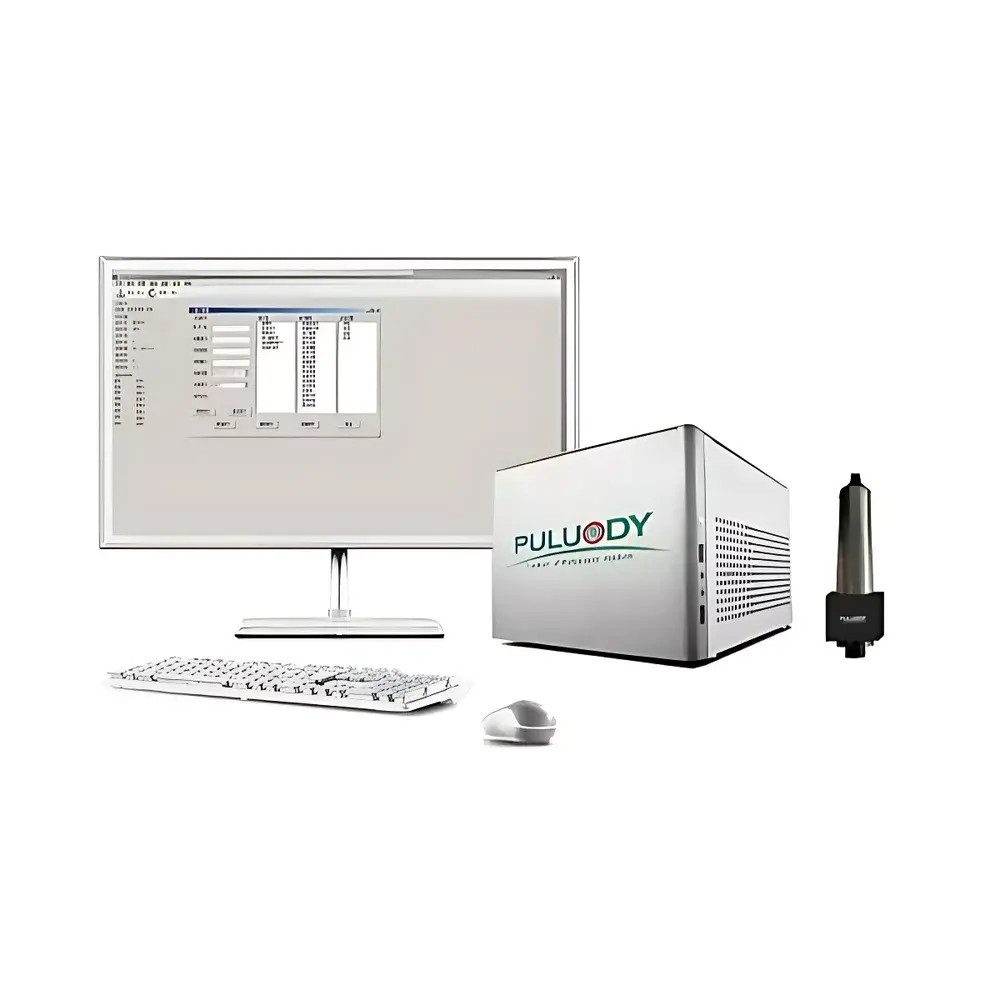
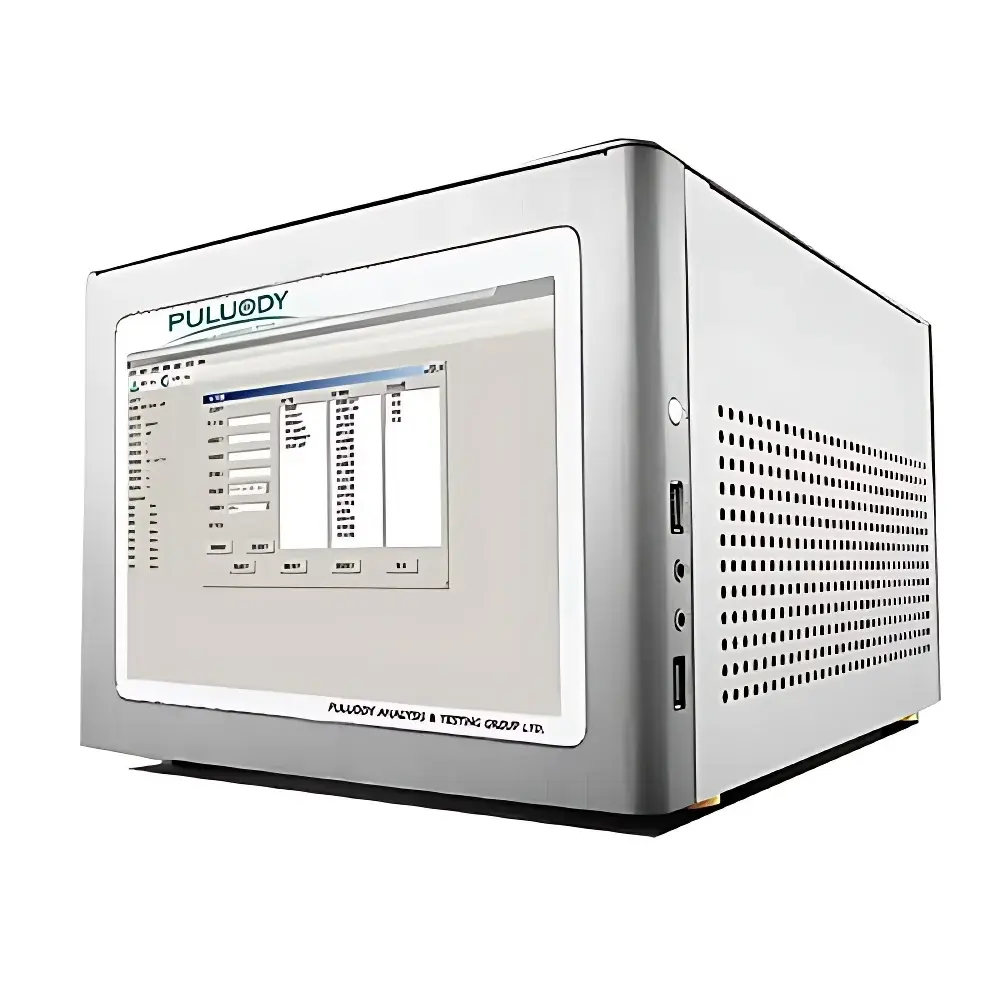
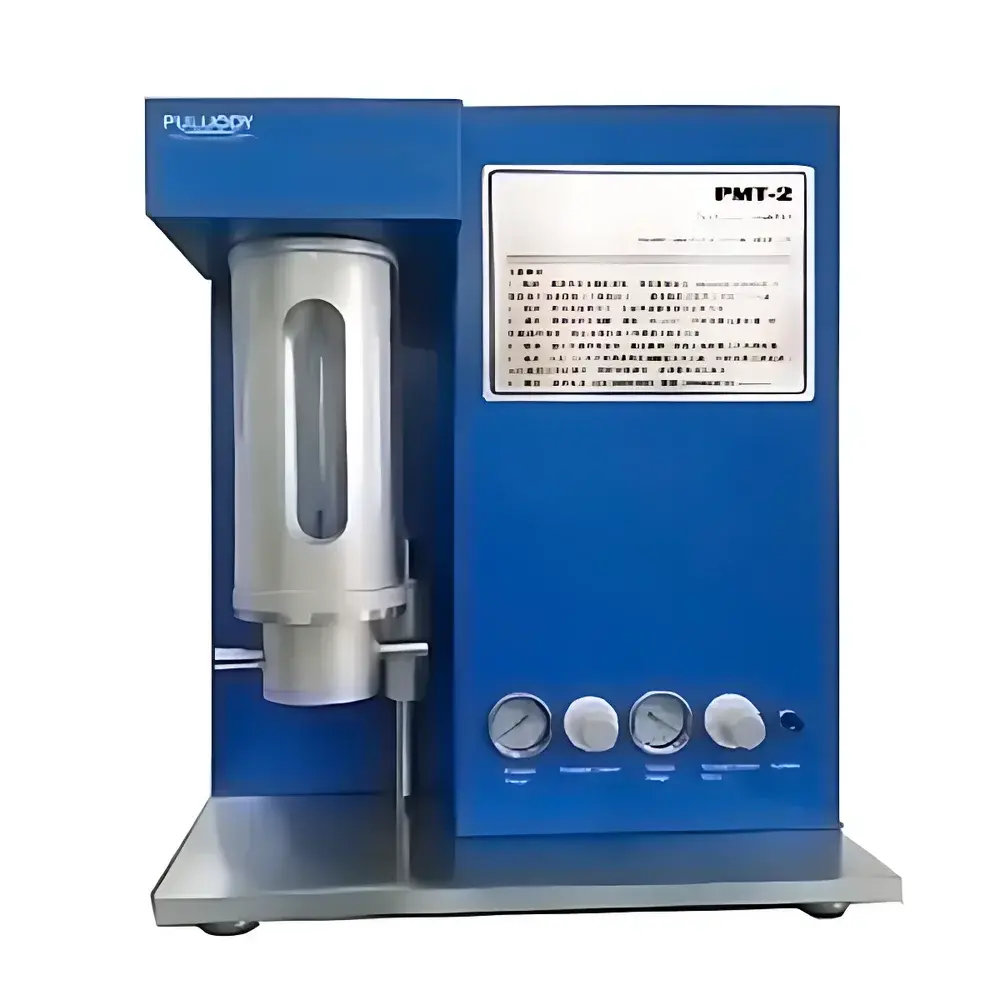
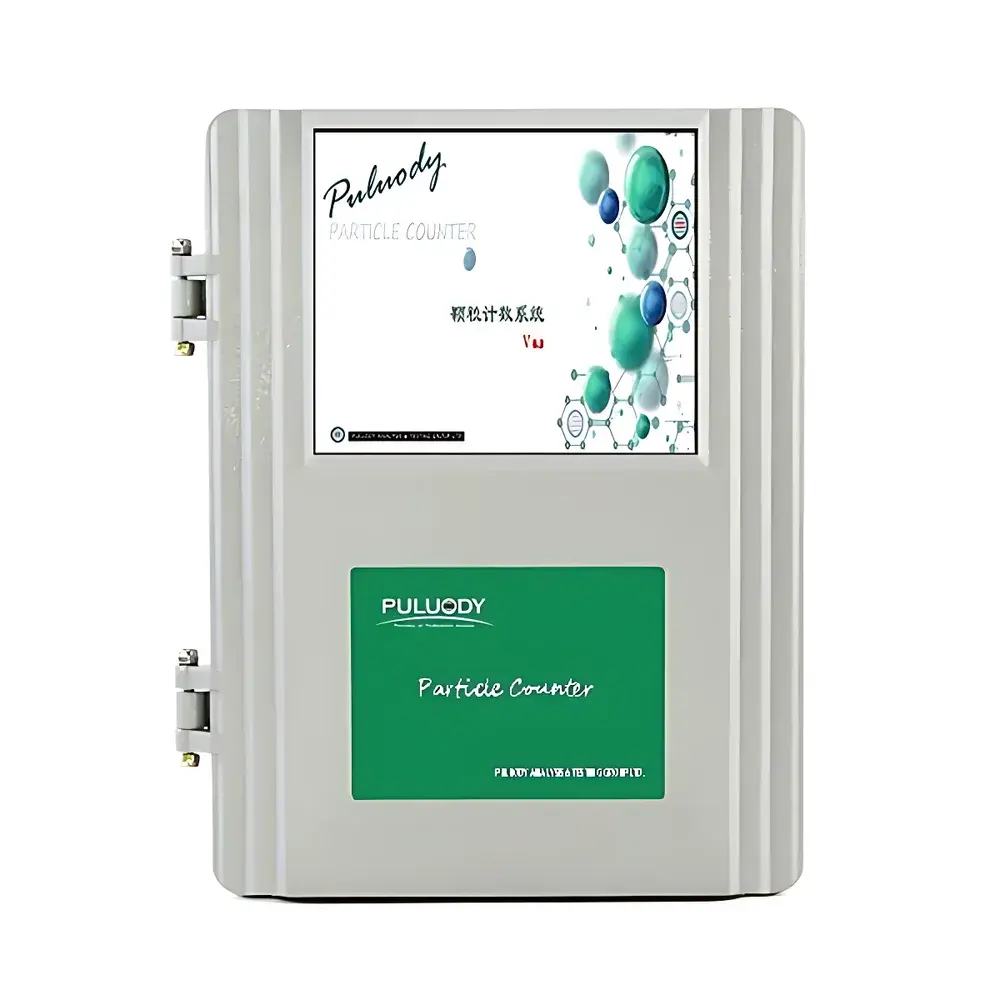
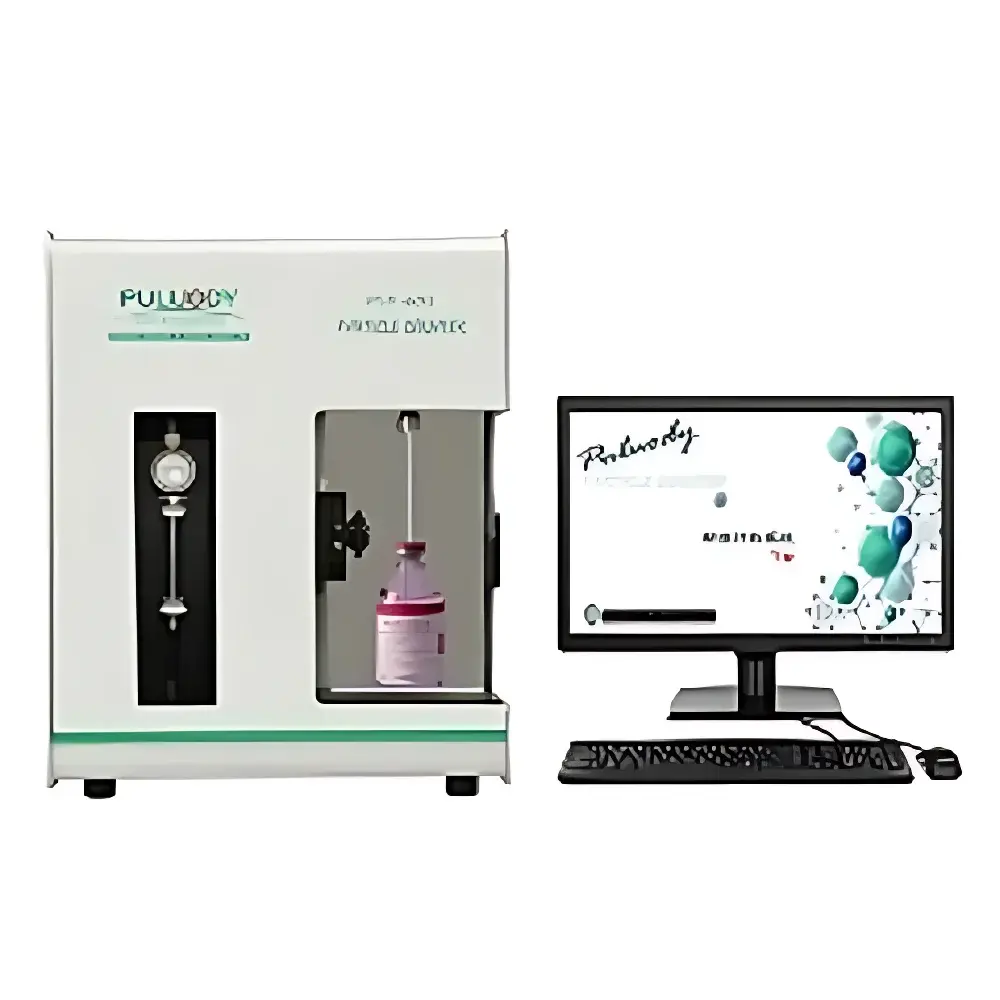
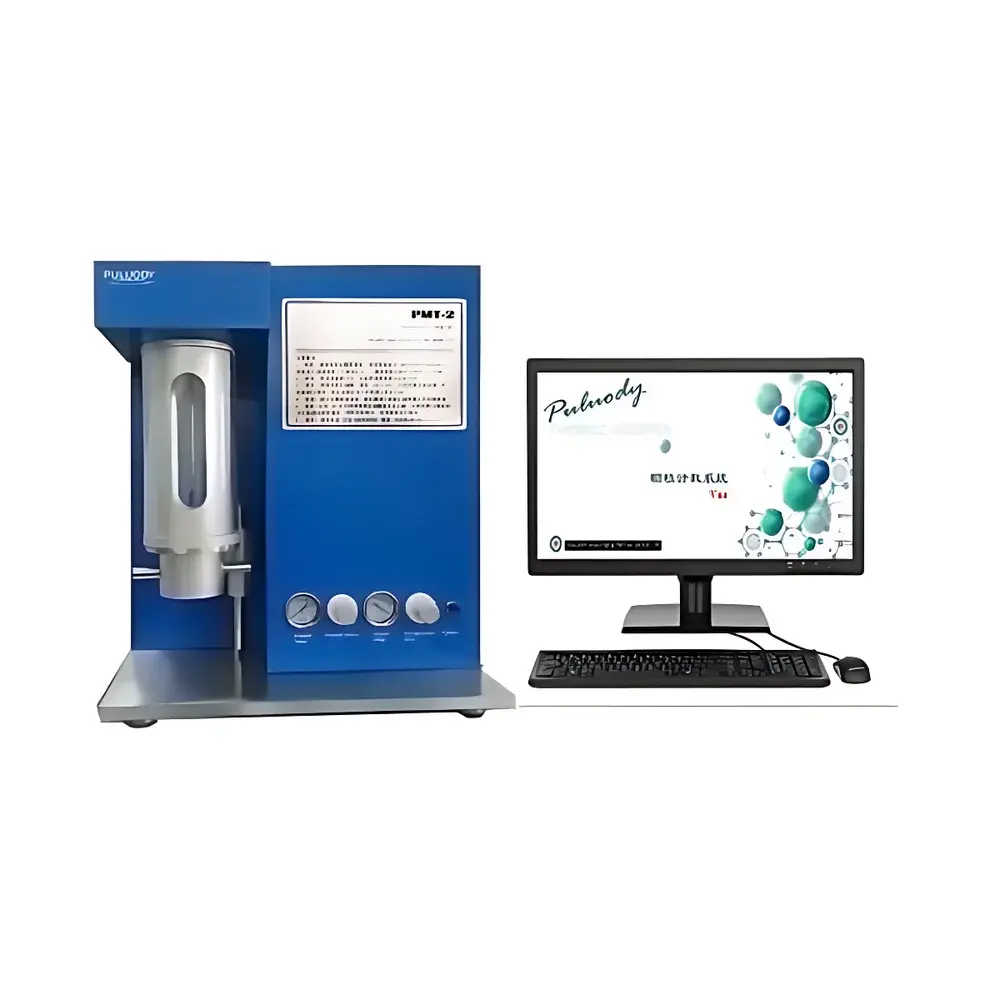
PULUODY PMT-2 High-Purity Chemical Liquid Particle Counter with Dual-Laser Optical Detection
| Brand | PULUODY |
|---|---|
| Origin | Shaanxi, China |
| Manufacturer Type | Authorized Distributor |
| Country of Origin | China |
| Model | PMT-2 |
| Instrument Type | Optical Liquid Particle Counter |
| Detection Principle | Dual-Laser Narrow-Beam Light Scattering |
| Measuring Range | 0.03–3000 µm (configurable sub-ranges: 1–100 µm, 4–70 µm(c), or 0.1 µm(c)) |
| Sampling Method | Precision Metering Piston Pump |
| Flow Control | Dual-Stage Electromagnetic + Precision Piston Regulation |
| Accuracy | ±3% typical |
| Volume Accuracy | <±1% |
| Coincidence Limit | ≤2.5% error at 1000 particles/mL |
| Calibration Standards | JJG 1061, ISO 21501-4, NIST-traceable Latex Spheres |
| Output | 4–20 mA analog signal,超标 alarm (customizable) |
| Data Interface | iPad-compatible wireless acquisition, PC-based V8.3 Analysis & Calibration Software Suite |
| Display & Control | Color LCD touchscreen + optional wireless keyboard/mouse |
| Reporting | Particles per mL and ISO 4406 / NAS 1638 contamination codes |
| Power Input | 100–265 VAC, 50–60 Hz |
| Compliance Context | Designed for GLP/GMP-aligned environments |
Overview
The PULUODY PMT-2 High-Purity Chemical Liquid Particle Counter is an optical liquid particle counter engineered for ultra-sensitive detection and quantification of insoluble particulate contamination in high-value process liquids. It operates on the principle of dual-laser narrow-beam light scattering—where two spatially separated laser sources illuminate the sample stream simultaneously, enabling improved signal-to-noise ratio, reduced coincidence error, and enhanced resolution across a broad dynamic size range (0.03–3000 µm). This architecture is specifically optimized for low-conductivity, low-viscosity, and optically transparent fluids common in semiconductor manufacturing, electronics cleaning, flat-panel display fabrication, and advanced material synthesis. Unlike conventional single-beam counters, the PMT-2’s eighth-generation dual-laser sensor mitigates refractive index dependency and improves sizing fidelity for both spherical and irregular particles in aggressive chemical matrices—including electronic-grade sulfuric acid, SC-1/SC-2 solutions, deionized water, photoresist solvents, and polymer precursor formulations.
Key Features
- Dual-laser narrow-beam optical detection system with independent wavelength alignment and real-time beam stability monitoring
- Two-stage flow control: precision metering piston pump (volumetric accuracy <±1%) coupled with ultra-stable electromagnetic flow regulation for consistent laminar sampling
- Configurable detection thresholds: user-selectable size channels including critical ranges such as 0.1 µm(c), 1–100 µm, and 4–70 µm(c) compliant with SEMI F39 and IEST-STD-CC1246D
- Integrated analog output (4–20 mA) with programmable alarm thresholds for integration into SCADA and MES platforms
- V8.3 analysis software suite supporting dual-mode operation: calibration mode (traceable to JJG 1061 and ISO 21501-4) and measurement mode—physically isolated to prevent configuration drift during routine testing
- Touchscreen HMI with IP65-rated front panel, plus optional wireless keyboard/mouse for lab-based offline analysis
Sample Compatibility & Compliance
The PMT-2 is validated for use with aggressive chemical media including electronic-grade sulfuric acid (≥99.999%), hydrofluoric acid dilutions, hydrogen peroxide blends, ammonium hydroxide solutions, and organic solvents such as PGMEA and cyclohexanone. Its wetted path employs chemically inert materials—quartz flow cell, sapphire windows, and PFA/PCTFE fluidic components—to ensure long-term stability and minimal leachables. The instrument meets mechanical and electrical safety requirements per IEC 61010-1 and is designed to support quality systems aligned with ISO 9001, ISO/IEC 17025, and semiconductor industry standards including SEMI C1–C10 and SEMI F57. When deployed with validated software and documented calibration procedures, it satisfies data integrity expectations under FDA 21 CFR Part 11 and EU Annex 11 for regulated production environments.
Software & Data Management
The V8.3 software platform provides comprehensive data handling capabilities, including automated report generation (particles/mL, ISO 4406 code, NAS 1638 class), trend analysis over time, batch comparison, and deviation flagging. All calibration events, user actions, and result modifications are logged with timestamp, operator ID, and reason-for-change fields—enabling full audit trail reconstruction. The system supports export to CSV, PDF, and XML formats, and integrates with LIMS via ODBC or RESTful API extensions. Optional 21 CFR Part 11 compliance packages include electronic signatures, role-based access control, and secure encrypted database storage.
Applications
- In-line monitoring of ultrapure rinse water in wafer cleaning tools (e.g., spin-rinse dryers, megasonic baths)
- Offline verification of electronic-grade sulfuric acid purity prior to tank replenishment in etch processes
- Contamination trending in CMP slurry delivery lines and reclaim loops
- Validation of nano-filtration membrane integrity in ultrapure chemical distribution systems
- QC release testing of photomask cleaning solutions and display substrate rinses
- Research-grade particle shedding analysis from microfluidic device surfaces and MEMS packaging materials
FAQ
What calibration standards are supported by the PMT-2?
The instrument accepts calibration using NIST-traceable polystyrene latex (PSL) spheres per ISO 21501-4, as well as national metrological verification per Chinese JJG 1061. Custom reference materials may be qualified upon submission of size distribution and refractive index data.
Can the PMT-2 measure particles in undiluted electronic-grade sulfuric acid?
Yes—the optical design and chemically resistant flow path enable direct analysis without dilution. Verification data for 96–98% H₂SO₄ is available upon request under NDA.
Is remote diagnostics and firmware update capability included?
Standard Ethernet connectivity supports remote desktop-assisted troubleshooting. Over-the-air firmware updates require prior authorization and follow a controlled change management protocol compliant with ISO 13485.
Does the system meet requirements for cleanroom environmental monitoring?
While primarily intended for liquid phase analysis, the PMT-2 can be integrated into cleanroom utility monitoring networks when paired with appropriate sampling manifolds and validated purge protocols per ISO 14644-2.
How is data integrity ensured during extended unattended operation?
All measurements are time-stamped with internal RTC synchronized to NTP servers; raw scatter pulse data is retained alongside summary results, and power-loss recovery preserves unsaved buffers in non-volatile memory.



