
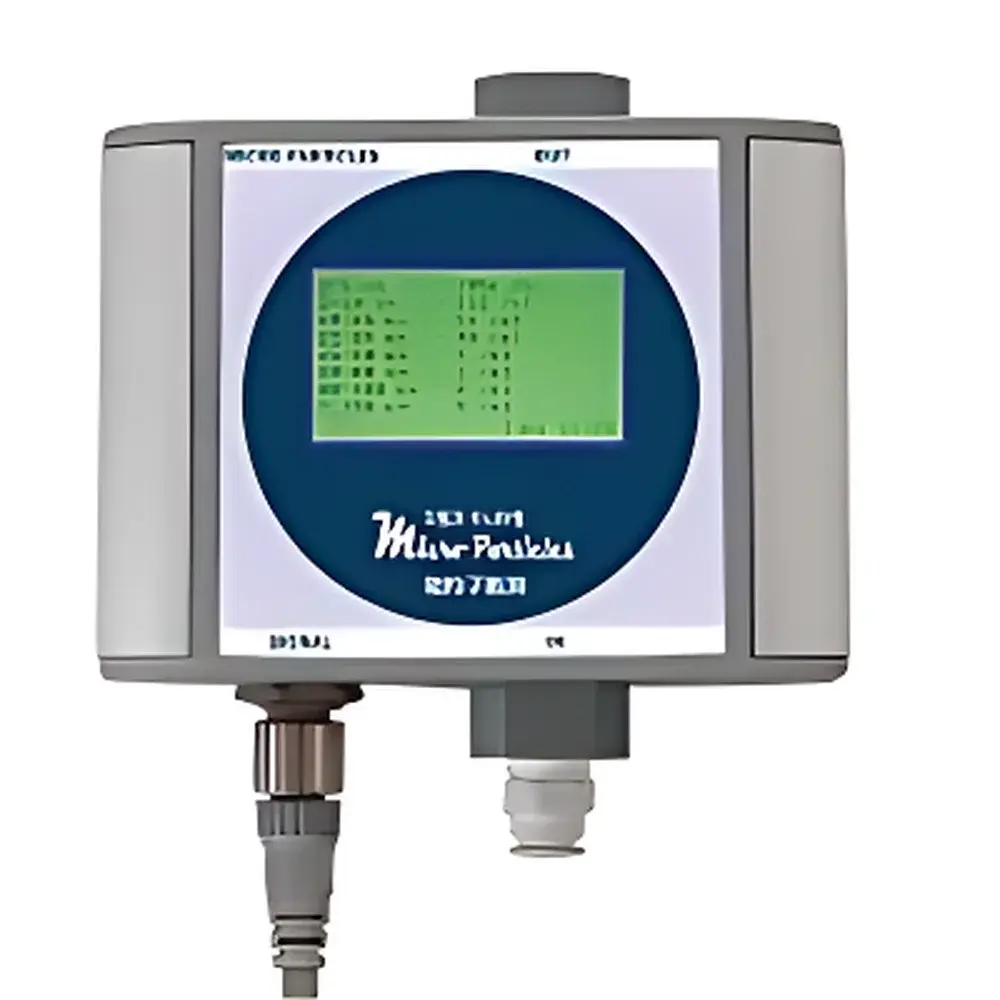
PULUODY PMT-2 Laser Particle Counter for Photoresist
| Brand | PULUODY |
|---|---|
| Model | PMT-2 |
| Detection Principle | Dual-Laser Narrow-Beam Light Scattering |
| Measurement Range | 0.065–0.2 µm and 0.1–0.5 µm (standard) |
| Accuracy | ±3% typical |
| Sampling Precision | <±1% |
| Coincidence Limit | 10,000 particles/mL (2.5% coincidence error) |
| Flow Control | Precision Piston Pump + Electromagnetic Flow Regulation |
| Compliance | USP <788>, USP <789>, EP 2.9.19, BP 2.9.19, ChP 2015/2020, GB 8368, ISO 21501-2, JJG 1061 |
| Output Interface | 4–20 mA analog output with configurable alarm thresholds |
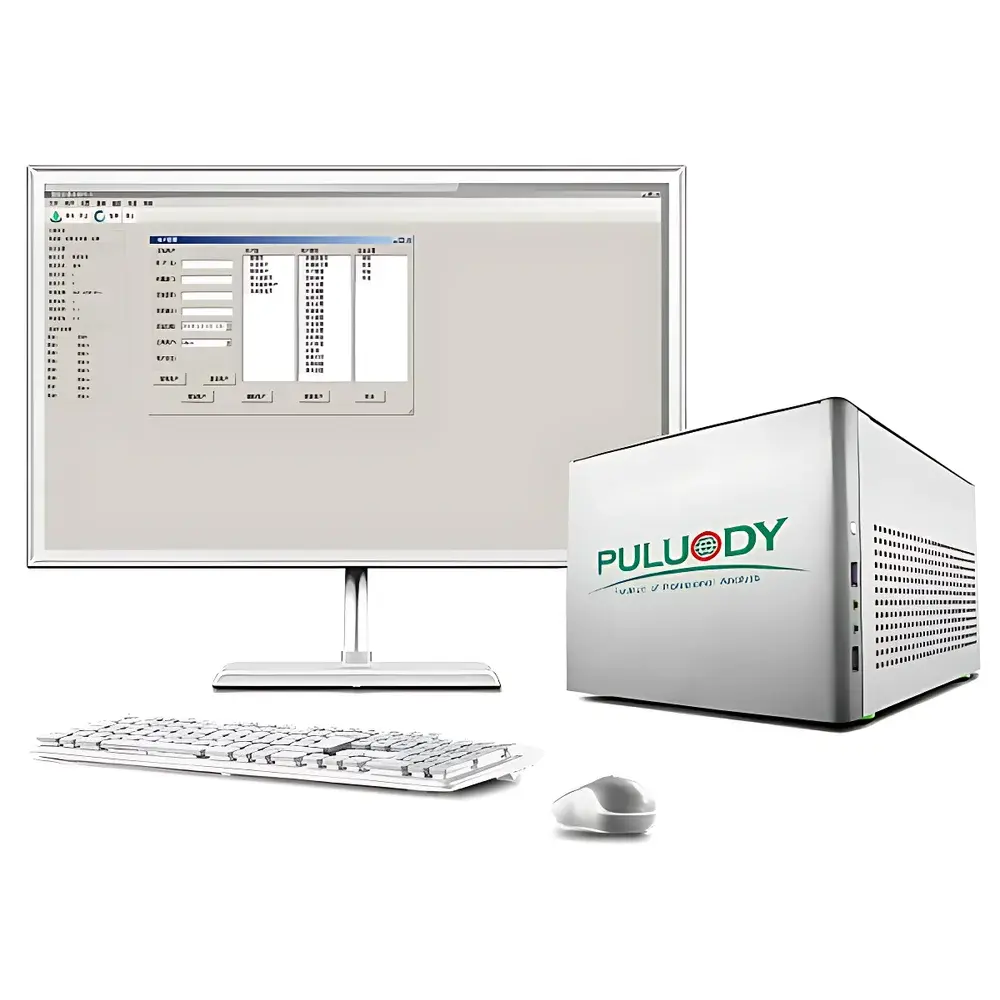
| Data Acquisition | iPad-integrated wireless acquisition & PC-based V8.3 Analysis Software Suite |
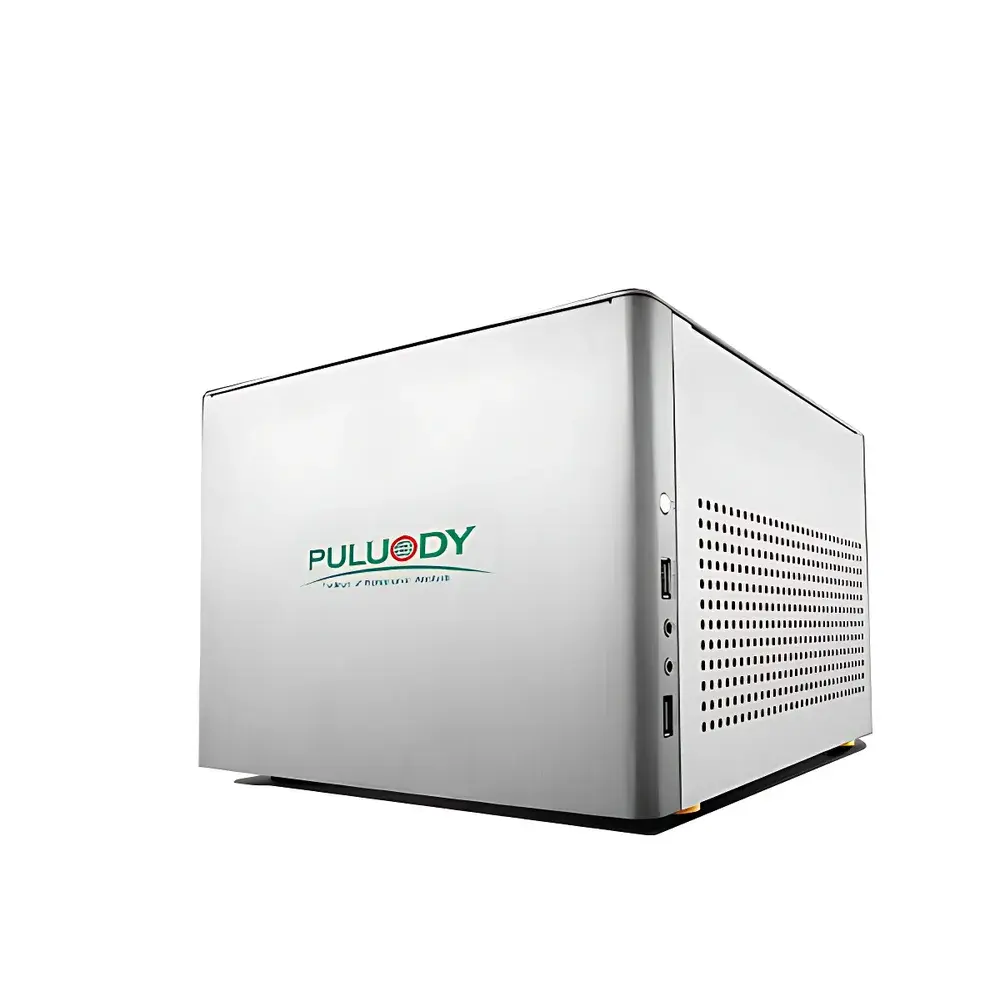
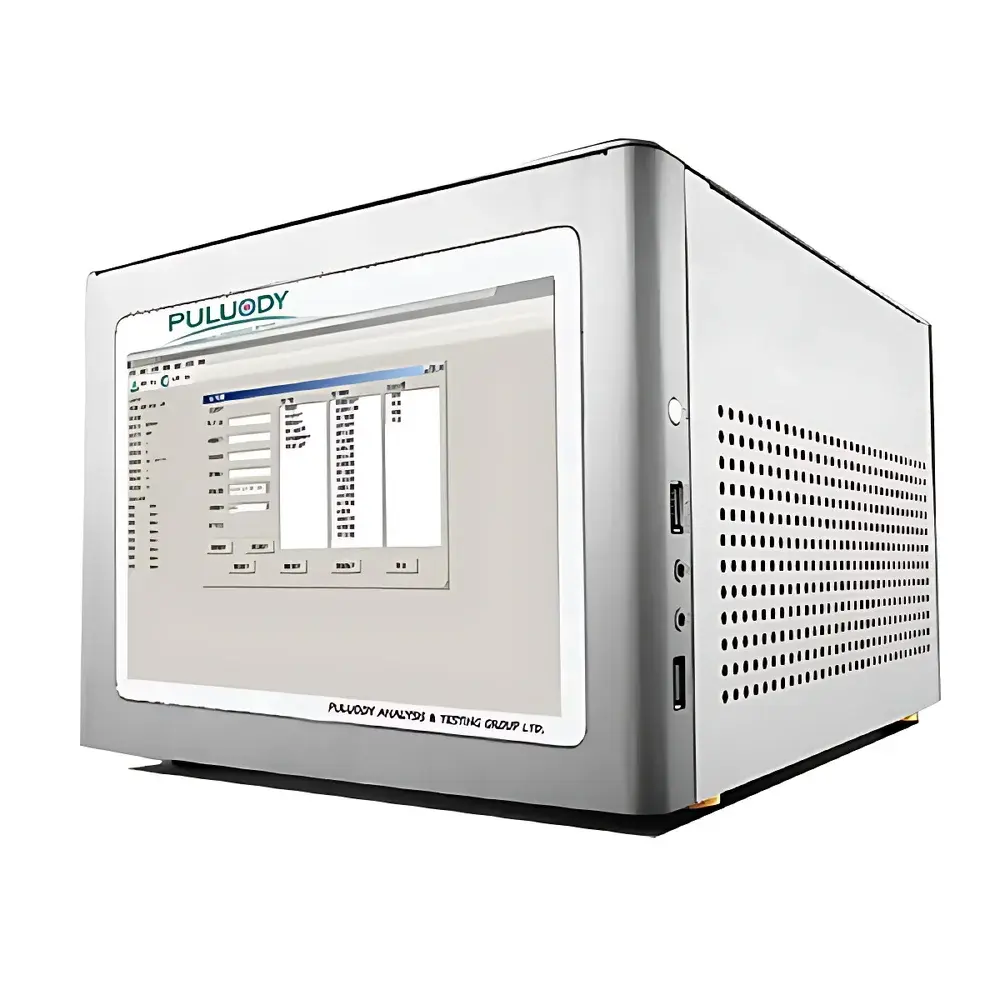
| Display & Control | Color LCD touchscreen + optional wireless keyboard/mouse |
| Power Input | 100–265 VAC, 50–60 Hz |
| Application Domain | Semiconductor photoresist, ultrapure water (UPW), electronic cleaning agents, silicon wafers, flat-panel glass, microelectronics components, nanofiltration, and polymer solutions |
Overview
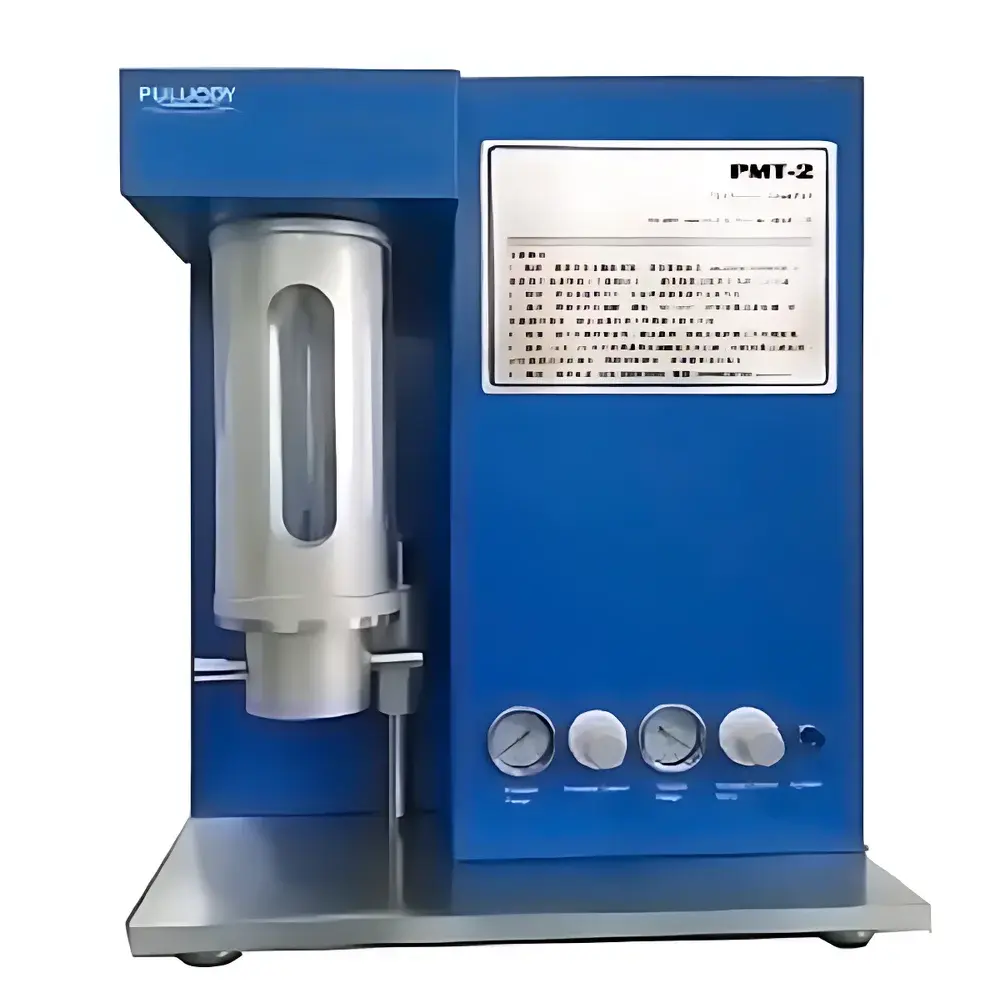
The PULUODY PMT-2 Laser Particle Counter for Photoresist is an advanced inline and offline particulate contamination monitoring instrument engineered specifically for high-purity liquid process streams in semiconductor fabrication, photolithography, and advanced materials R&D. It employs eighth-generation dual-laser narrow-beam light scattering technology—originally developed by the UK-based PULUODY Analytical Testing Group—to resolve sub-100 nm particles with high signal-to-noise ratio and minimal optical interference. Unlike conventional single-wavelength counters, the PMT-2 utilizes two spatially separated laser sources operating at distinct wavelengths, enabling simultaneous differential scattering detection that enhances sizing resolution and reduces false counts from refractive index variations common in organic solvents and polymer-based photoresists. The system is designed for rigorous compliance with particle counting requirements in critical fluid pathways where contamination control directly impacts yield, defect density, and lithographic fidelity.
Key Features
- Dual-laser narrow-beam optical sensor architecture optimized for low-refractive-index photoresist solvents and aqueous UPW matrices
- High-precision volumetric sampling via dual-mode flow control: a calibrated piston pump for absolute volume delivery and an electromagnetic flow regulator for real-time stabilization
- Configurable detection ranges—including 0.065–0.2 µm and 0.1–0.5 µm standard channels—with optional user-defined bins spanning 0.1 µm to 100 µm (c)
- Integrated analog 4–20 mA output with programmable alarm thresholds for integration into SCADA, MES, or fab-wide environmental monitoring systems
- Touchscreen HMI with intuitive workflow navigation; supports optional wireless keyboard/mouse for laboratory or cleanroom benchtop operation
- Modular hardware design permitting field-reconfigurable sensor heads, sample manifolds, and wetted material options (e.g., PFA, quartz, sapphire)
Sample Compatibility & Compliance
The PMT-2 is validated for use with aggressive organic media including PGMEA, ethyl lactate, and proprietary photoresist formulations, as well as aqueous systems such as ultrapure water (ASTM D5127 Class E-1), CMP slurries, and cleaning chemistries (SC-1, SC-2, DHF). All wetted surfaces are constructed from chemically inert, non-shedding materials compatible with ISO Class 1–5 cleanroom environments. Regulatory alignment includes full traceability to pharmacopoeial standards (USP , , EP 2.9.19, ChP 2020), ISO 21501-2 for calibration verification, and national metrological verification JJG 1061. Instrument qualification documentation supports IQ/OQ/PQ protocols under GMP/GLP frameworks and satisfies audit requirements for FDA 21 CFR Part 11-compliant data integrity when used with the V8.3 software suite’s electronic signature and audit trail modules.
Software & Data Management
The PMT-2 operates with the V8.3 Analysis Software Suite—a dual-platform solution comprising both Windows-native desktop application and iPad-native mobile interface. Critical to its deployment in regulated environments, the software implements strict separation between measurement execution and calibration management functions, eliminating procedural cross-contamination risks during routine validation. All particle count data are timestamped, geotagged (when enabled), and stored with full metadata—including flow rate, temperature, pressure, and operator ID. Raw scatter pulse trains are retained for retrospective reanalysis. Export formats include CSV, PDF reports compliant with ISO 14644-1 cleanliness classification, and XML for LIMS integration. Audit trails record all user actions, parameter changes, and report generation events with immutable timestamps and digital signatures.
Applications
Primary deployment contexts include real-time monitoring of photoresist filtration loops, UPW distribution networks, post-CMP rinse stations, and chemical delivery systems in 300 mm wafer fabs. Offline applications cover batch release testing of new photoresist lots, qualification of filter elements (e.g., 20 nm PTFE membranes), and root-cause analysis of pattern defects linked to particulate contamination. Additional use cases span nanomaterial synthesis QC, polymer solution clarity assessment, and validation of sterile filtration processes in biopharmaceutical manufacturing where sub-100 nm insoluble particle quantification is required per ICH Q5C and USP . The system supports both fixed-installation and portable configurations—enabling rapid diagnostics across multiple toolsets without compromising metrological continuity.
FAQ
Does the PMT-2 support calibration traceability to NIST or UKAS-certified reference materials?
Yes—calibration is performed using ISO 21501-2 compliant polystyrene latex (PSL) spheres traceable to NPL (UK) or NIST SRM standards, with full certificate of calibration provided per unit.
Can the instrument be integrated into a factory automation system via Ethernet/IP or Modbus TCP?
While native analog 4–20 mA and RS-232 interfaces are standard, industrial Ethernet protocols (Modbus TCP, EtherNet/IP) are available via optional communication module upon request.
Is the optical sensor resistant to solvent-induced degradation during long-term photoresist exposure?
All optical windows and flow cell components are fabricated from fused silica and fluoropolymer-coated stainless steel, validated for continuous operation in PGMEA and similar solvents over 12-month service intervals.
How does the dual-laser configuration improve sizing accuracy compared to single-laser instruments?
Dual-wavelength scattering enables Mie theory-based refractive index compensation, reducing sizing bias in low-dielectric media and improving resolution in the 0.065–0.2 µm range where single-laser systems exhibit significant uncertainty.
What documentation is supplied for regulatory submissions in pharmaceutical or medical device manufacturing?
A complete validation package—including Design Qualification (DQ), Installation Qualification (IQ), Operational Qualification (OQ), and Performance Qualification (PQ) templates—is included, along with risk assessments aligned with ISO 14971 and data integrity guidance per ALCOA+ principles.





