
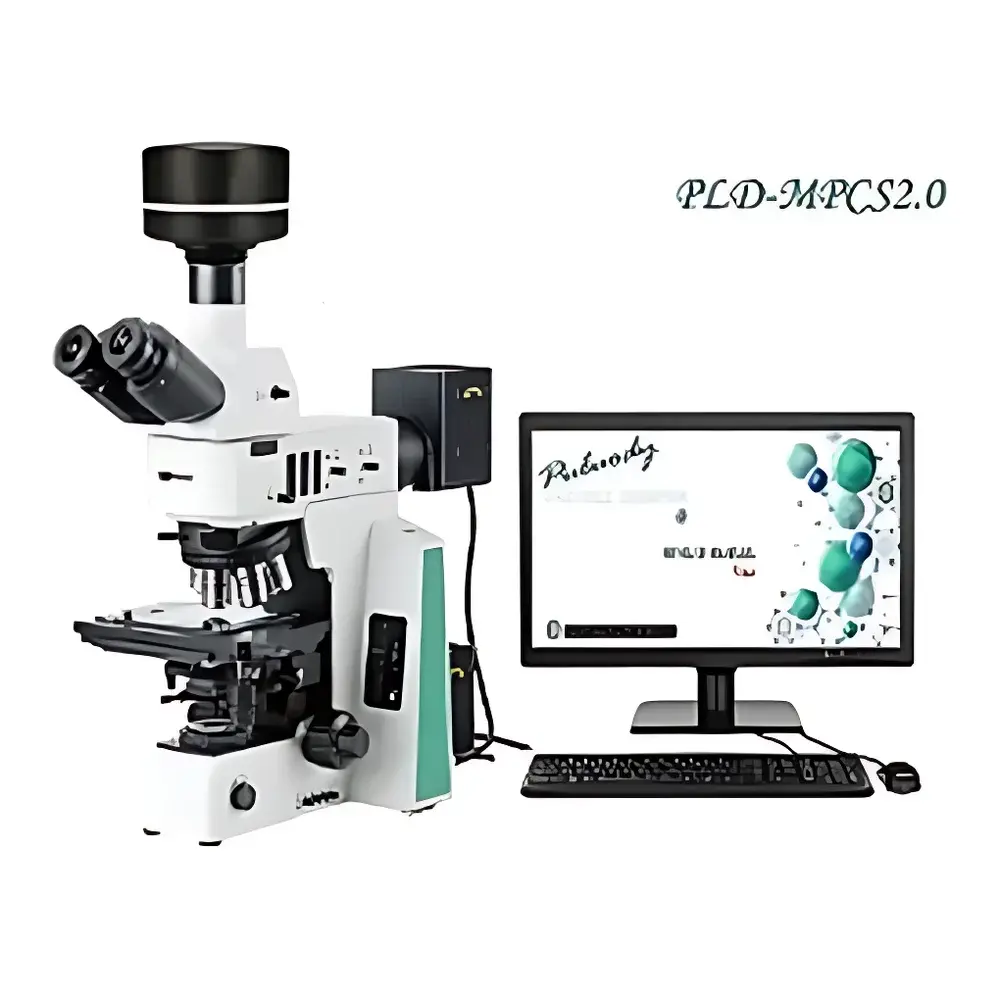
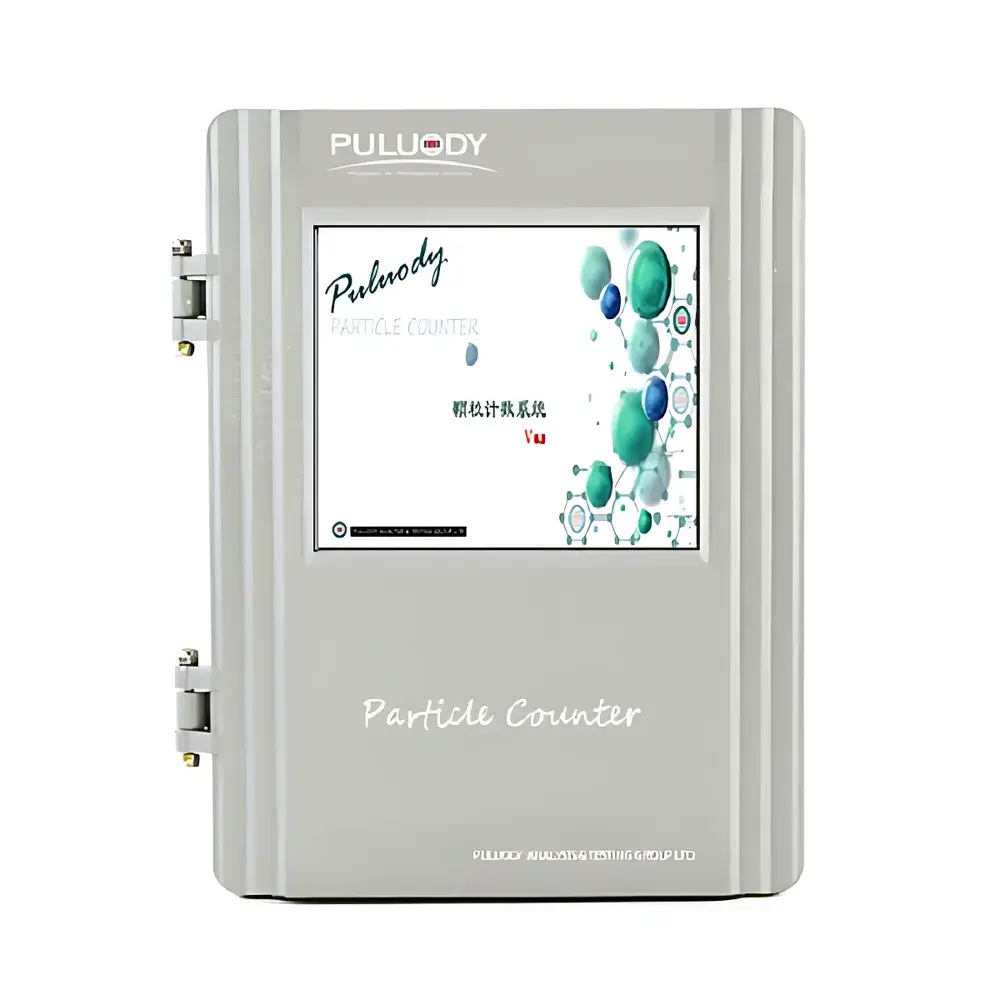
PULUODY PMT-2 Optical Liquid Particle Counter for Chemicals
| Brand | PULUODY |
|---|---|
| Origin | Shaanxi, China |
| Manufacturer Type | Authorized Distributor |
| Country of Origin | China |
| Model | PMT-2 |
| Instrument Type | Optical Particle Counter |
| Detection Principle | Dual-Laser Narrow-Beam Light Scattering |
| Measurement Range | 0.03–3000 µm (sensor-selectable) |
| Calibration Standards | ISO 21501-4, USP <788>, EP 2.9.19, ChP 2015/2020, GB 8368, JJG 1061 |
| Flow Control | Precision Piston Pump + Electromagnetic Flow Regulation |
| Sampling Accuracy | < ±1% |
| Counting Accuracy | ±3% typical |
| Coincidence Limit | ≤2.5% error at 1000 particles/mL |
| Output Options | 4–20 mA analog signal,超标 alarm (customizable) |
| Data Interface | iPad-compatible wireless acquisition |
| Software | V8.3 Integrated Analysis & Calibration Separation Platform |
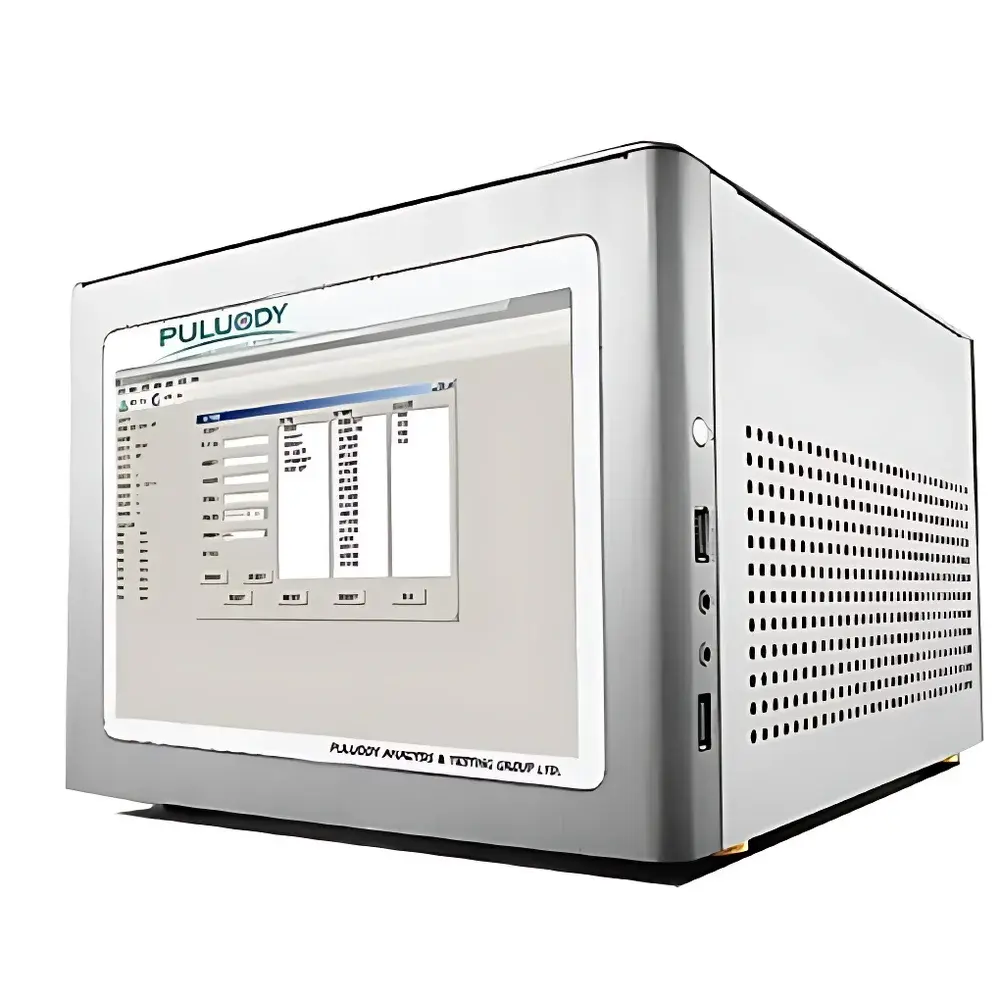
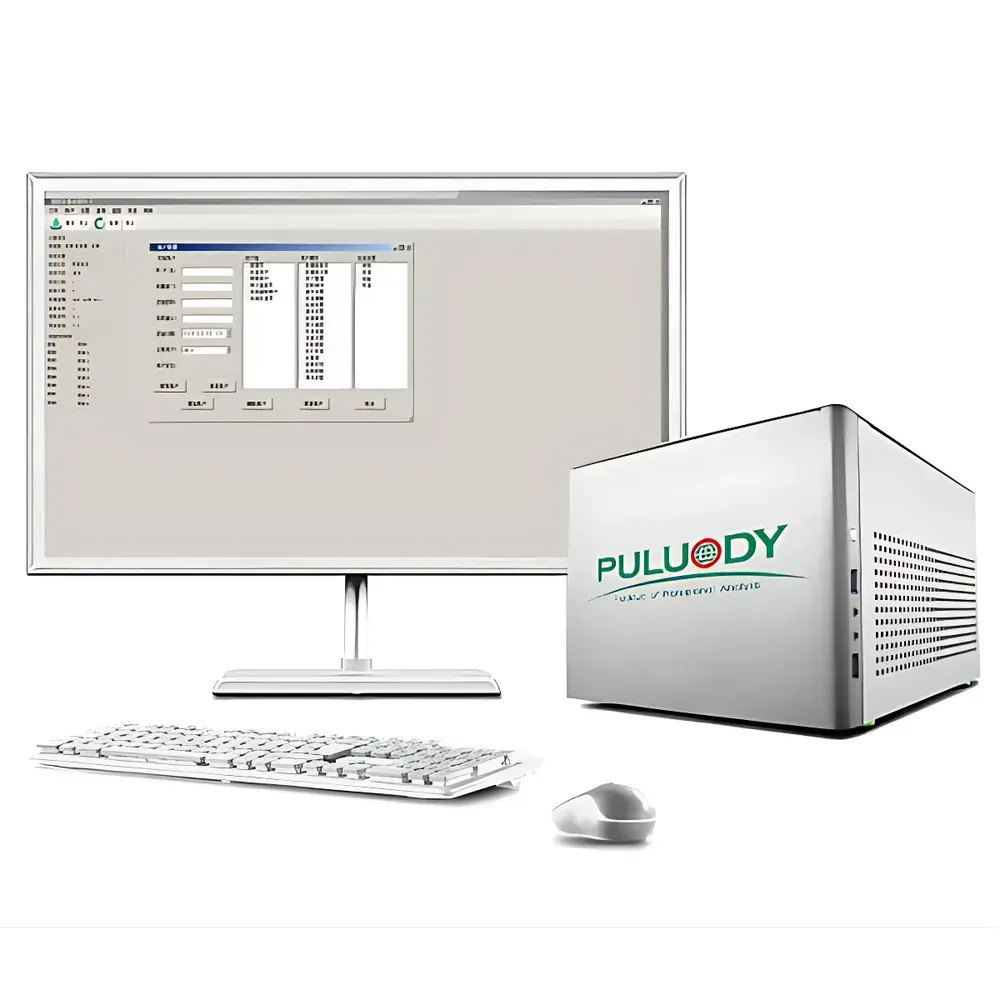
| Display | Color LCD touchscreen + optional wireless keyboard/mouse |
| Power Input | 100–265 VAC, 50–60 Hz |
| Compliance Mode | Civil & Military Standard Separation Architecture |
| Application Modes | Online continuous monitoring & offline portable/fixed measurement |
Overview
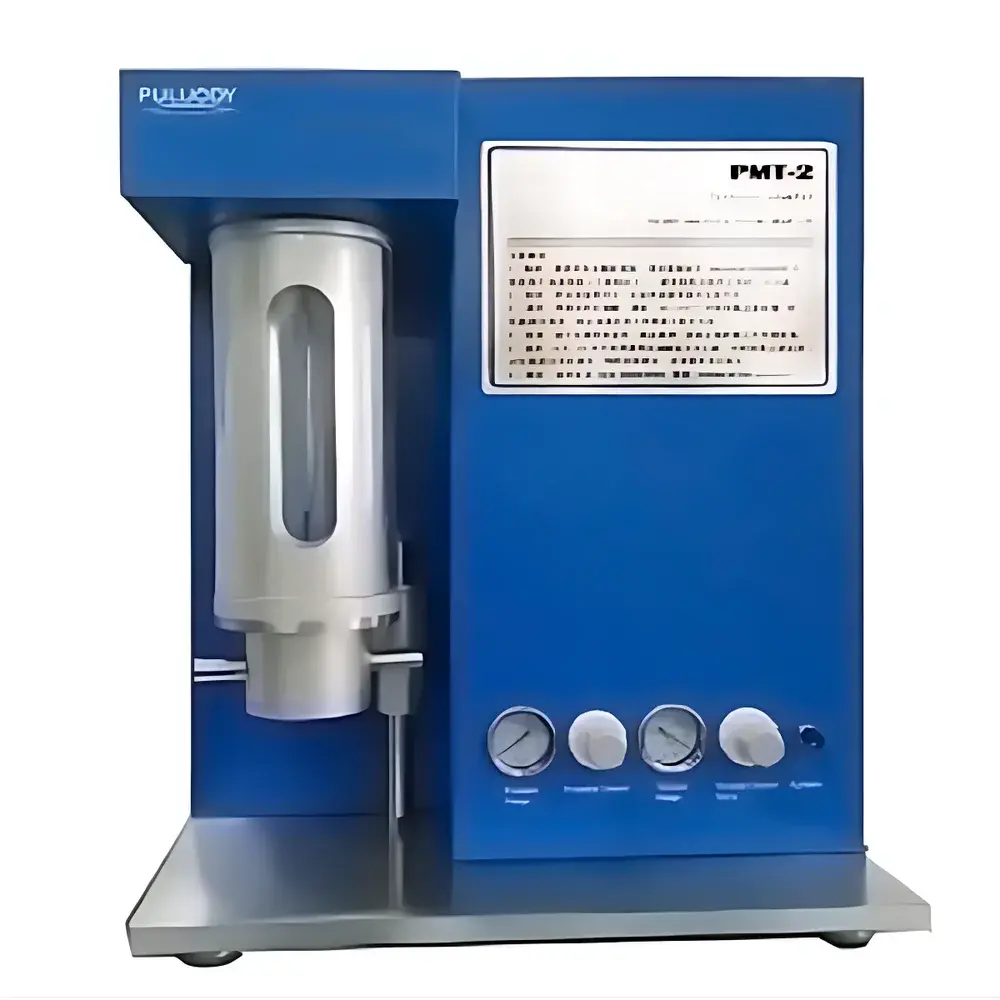
The PULUODY PMT-2 Optical Liquid Particle Counter is an advanced inline and offline particle monitoring instrument engineered for high-sensitivity detection of insoluble particulate contamination in chemically aggressive and ultra-pure liquid media. Based on eighth-generation dual-laser narrow-beam light scattering technology, the PMT-2 delivers stable, reproducible quantification of particles across a broad dynamic range—from sub-30 nm colloidal entities to coarse 3000 µm debris—without requiring dilution or filtration. Its optical architecture employs two spatially separated laser sources with precisely collimated beams, minimizing Mie scattering interference and enabling robust discrimination between refractive index variants (e.g., silica vs. polymer vs. metallic contaminants) in organic solvents, aqueous cleaning agents, semiconductor process chemicals, and ultrapure water (UPW). Designed for integration into GMP-compliant manufacturing environments, the system supports both real-time process surveillance and laboratory-grade validation workflows.
Key Features
- Eighth-generation dual-laser narrow-beam optical sensor with adjustable detection thresholds (configurable channels: 1–100 µm or 4–70 µm(c), down to 0.1 µm(c))
- High-fidelity volumetric sampling via precision piston pump and electromagnetic flow regulation (< ±1% volumetric accuracy)
- Calibration traceability to ISO 21501-4, USP , EP 2.9.19, Chinese Pharmacopoeia 2020, and national metrological standard JJG 1061
- Dual-mode operation: fully automated online continuous monitoring with 4–20 mA analog output and configurable alarm thresholds; or offline portable/fixed measurement with iPad-integrated wireless data acquisition
- V8.3 analysis software featuring segregated calibration and testing modules to eliminate software-induced bias during regulatory audits
- Civil/military standard separation architecture—enabling independent configuration of reporting formats, pass/fail criteria, and data retention policies per application domain
- Touchscreen HMI with optional wireless keyboard/mouse interface for glove-compatible operation in cleanroom Class 100 or ISO 5 environments
Sample Compatibility & Compliance
The PMT-2 is validated for use with low-conductivity and high-viscosity liquids including semiconductor-grade sulfuric acid, ammonium hydroxide, hydrogen peroxide blends, photoresist strippers, deionized water (≥18.2 MΩ·cm), nano-dispersions, polymer solutions (e.g., PVDF, PTFE), and pharmaceutical excipient solvents. It meets material compatibility requirements for wet benches and chemical delivery systems (CDS) per SEMI F57 and ASTM D7157. Regulatory compliance includes full alignment with FDA 21 CFR Part 11 (electronic records/signatures), EU Annex 11 (computerized systems), and GLP/GMP audit readiness—supported by built-in audit trail logging, user access control, and calibration event timestamping. All test reports generate dual-format outputs: raw particle count per mL and ISO 4406 / NAS 1638 contamination grade codes.
Software & Data Management
The V8.3 software platform operates under a strict separation-of-concerns architecture: calibration routines execute in a locked, read-only environment with cryptographic hash verification, while sample analysis runs in a separate sandboxed module. This design prevents inadvertent parameter drift during routine operation and satisfies requirement 5.2.3 of ISO/IEC 17025:2017 for measurement uncertainty management. Data export supports CSV, PDF, and XML formats compliant with LIMS integration protocols (ASTM E1482, HL7). Historical trend analysis includes SPC charting (X-bar/R, CUSUM), batch deviation mapping, and root-cause correlation against process variables (flow rate, temperature, pressure). All electronic records are time-stamped, digitally signed, and stored with immutable revision history.
Applications
The PMT-2 serves as a critical quality assurance tool across multiple regulated sectors: semiconductor front-end fabrication (wafer cleaning chemistry purity verification), flat-panel display manufacturing (ITO etchant particle load monitoring), biopharmaceutical buffer preparation (sub-visible particle control per USP ), medical device rinse water validation (GB 8368 compliance), nanofiltration membrane integrity testing, and R&D of colloidal drug delivery systems. Its ability to detect both intrinsic (e.g., agglomerated nanoparticles) and extrinsic (e.g., stainless-steel wear debris from pumps) contaminants makes it suitable for failure mode analysis in closed-loop chemical recirculation systems.
FAQ
What particle size ranges can the PMT-2 detect?
The standard configuration covers 0.03–3000 µm; selectable sensor modules enable optimized resolution in critical bands—such as 0.1–10 µm for UPW qualification or 4–70 µm(c) for hydraulic fluid cleanliness grading.
Is the system compliant with pharmacopeial standards for injectables?
Yes—it satisfies USP , EP 2.9.19, and ChP 2020 requirements for sub-visible particle enumeration in parenteral preparations, including method suitability validation per ICH Q5A(R2).
Can the PMT-2 operate unattended in hazardous chemical environments?
When installed with optional explosion-proof enclosures (ATEX Zone 2 / IECEx nA) and chemically resistant fluid path materials (e.g., sapphire flow cell, PFA tubing), it supports 24/7 deployment in semiconductor fab wet areas.
How is calibration verified during routine use?
Daily verification uses NIST-traceable polystyrene latex (PSL) microspheres; annual full calibration follows ISO 21501-4 procedures with multi-point reference standards across the operational range.
Does the software support 21 CFR Part 11 compliance?
Yes—V8.3 implements role-based authentication, electronic signatures with biometric or PKI options, and tamper-evident audit trails meeting FDA requirements for electronic records retention and retrieval.



