
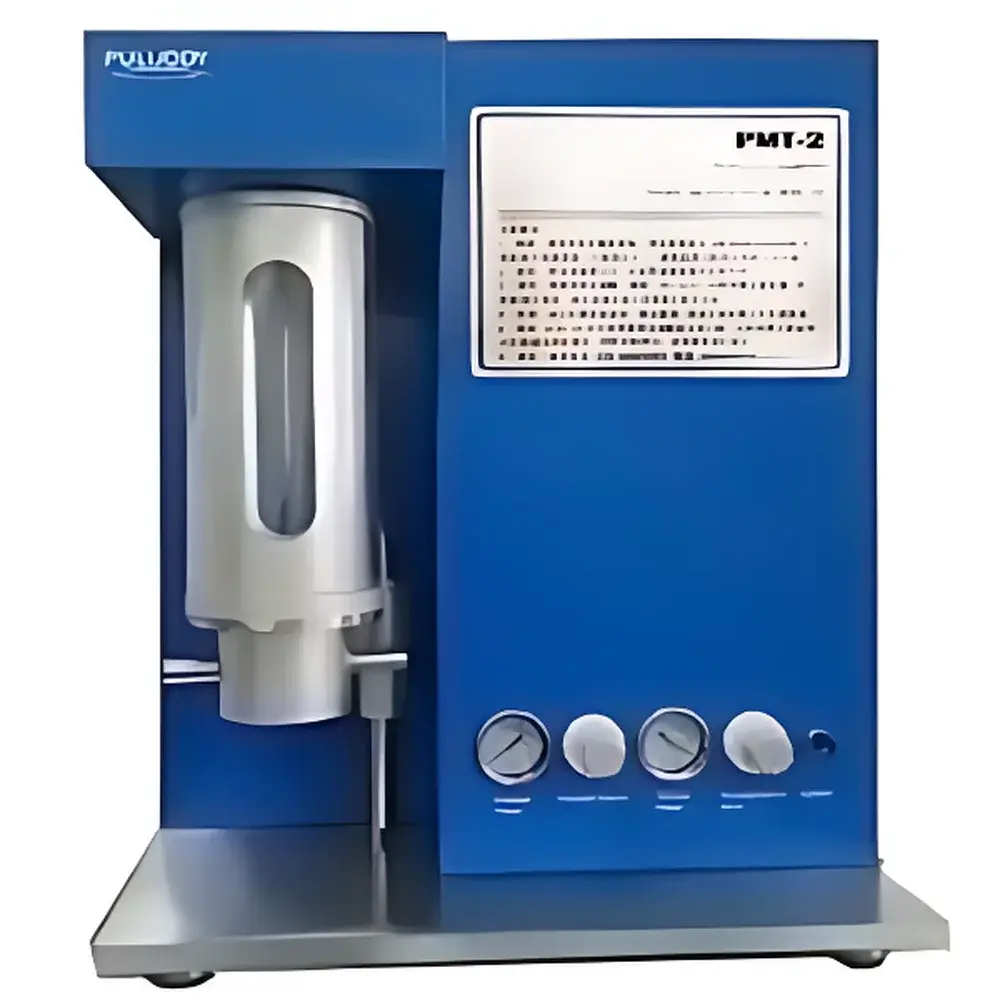
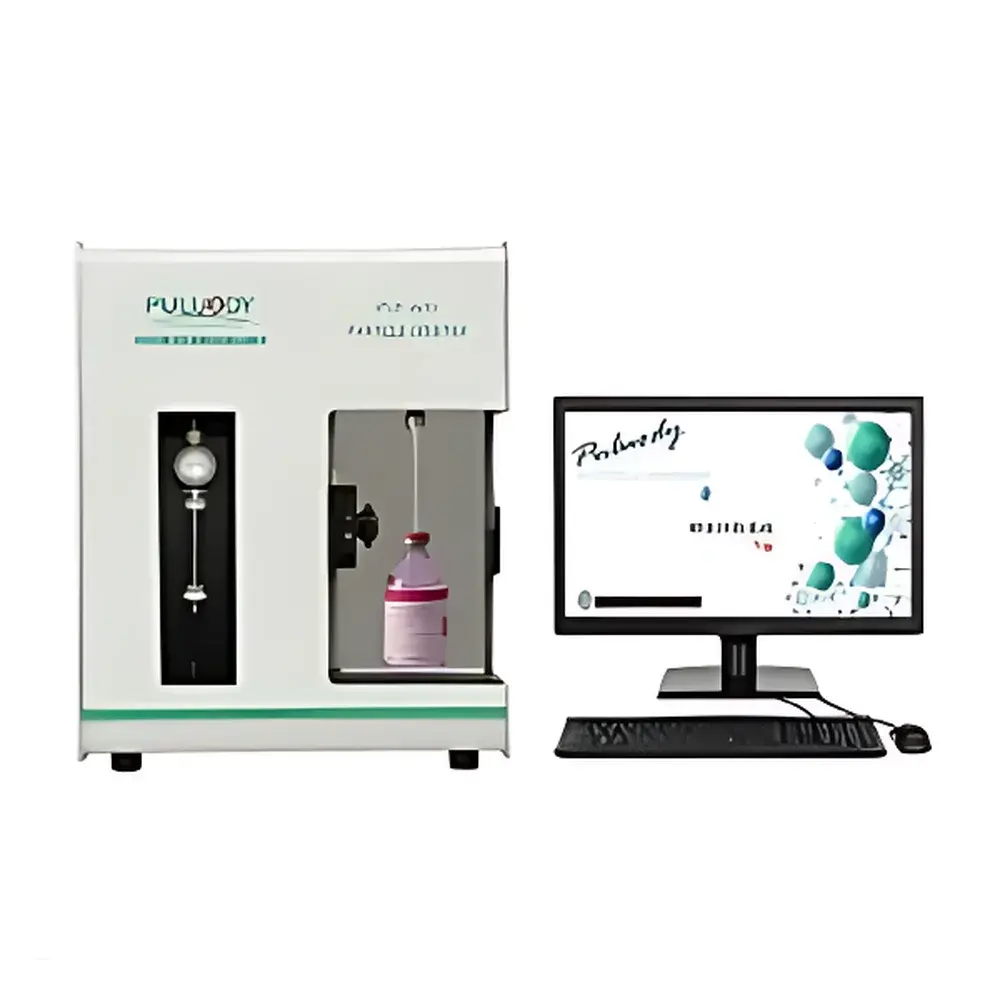
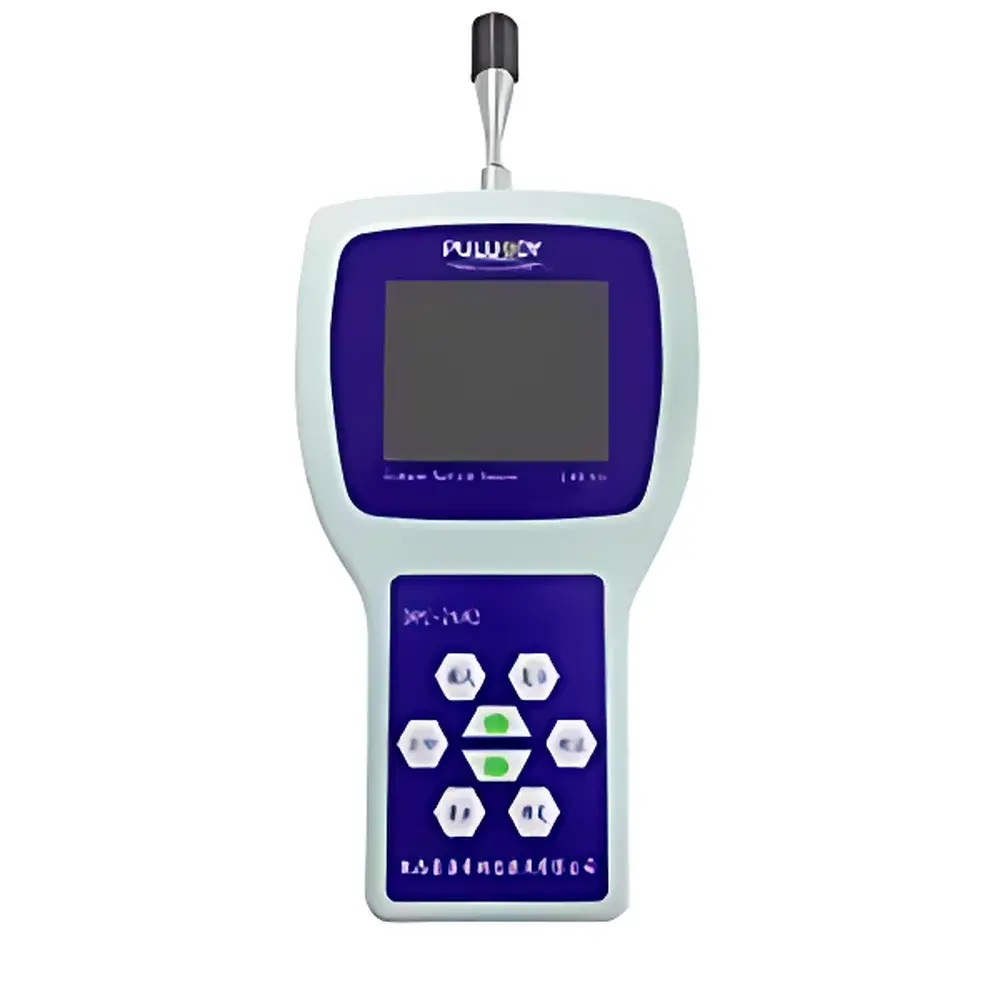
PULUODY PMT-2 Wipe Cloth Liquid Particle Counter (Compliant with IEST RP CC004.3)
| Brand | PULUODY |
|---|---|
| Origin | Shaanxi, China |
| Manufacturer Type | Authorized Distributor |
| Country of Origin | China |
| Model | PMT-2 |
| Price | USD 72,800 (FOB Shanghai, ex-factory) |
| Detection Principle | Dual-Laser Narrow-Beam Light Scattering |
| Sensor Generation | 8th-Generation Dual-Laser Optical Detector |
| Flow Control | Precision Piston Pump + Ultra-Stable Electromagnetic Flow Regulation |
| Calibration Standards | ISO 21501-4, USP <788>, EP 2.9.19, ChP 2020 Vol IV, GB/T 18854-2015 |
| Measurement Range | 0.1–100 µm (user-configurable sub-ranges: 0.1–0.5 µm, 0.1–1.0 µm, 4–70 µm(c), or custom 1–100 µm) |
| Sample Volume Accuracy | ±1% |
| Counting Accuracy | ±3% typical (NIST-traceable latex standards) |
| Coincidence Limit | ≤2.5% error at 1000 particles/mL |
| Reporting Output | Particles/mL + ISO 4406 / NAS 1638 / SAE AS4059F contamination codes |
| Interface | 4–20 mA analog output,超标 alarm relay (customizable), iPad-compatible wireless data acquisition |
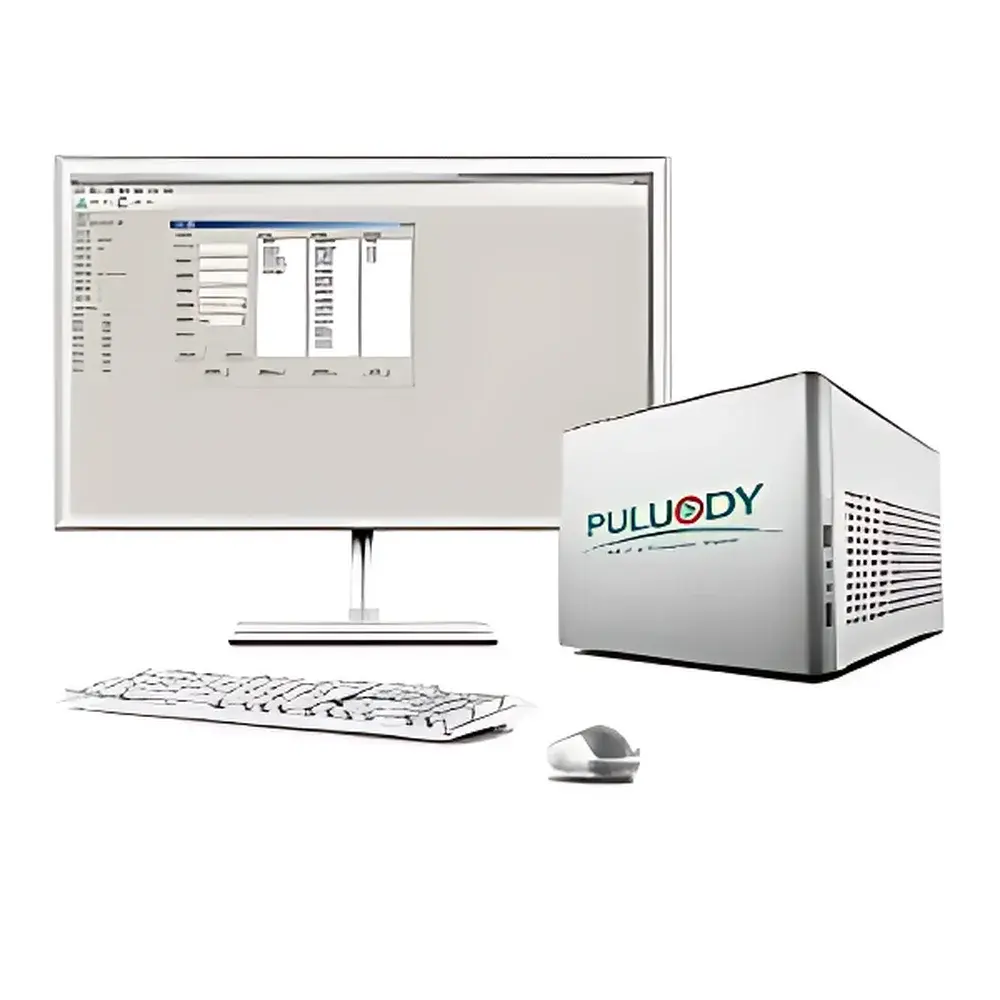
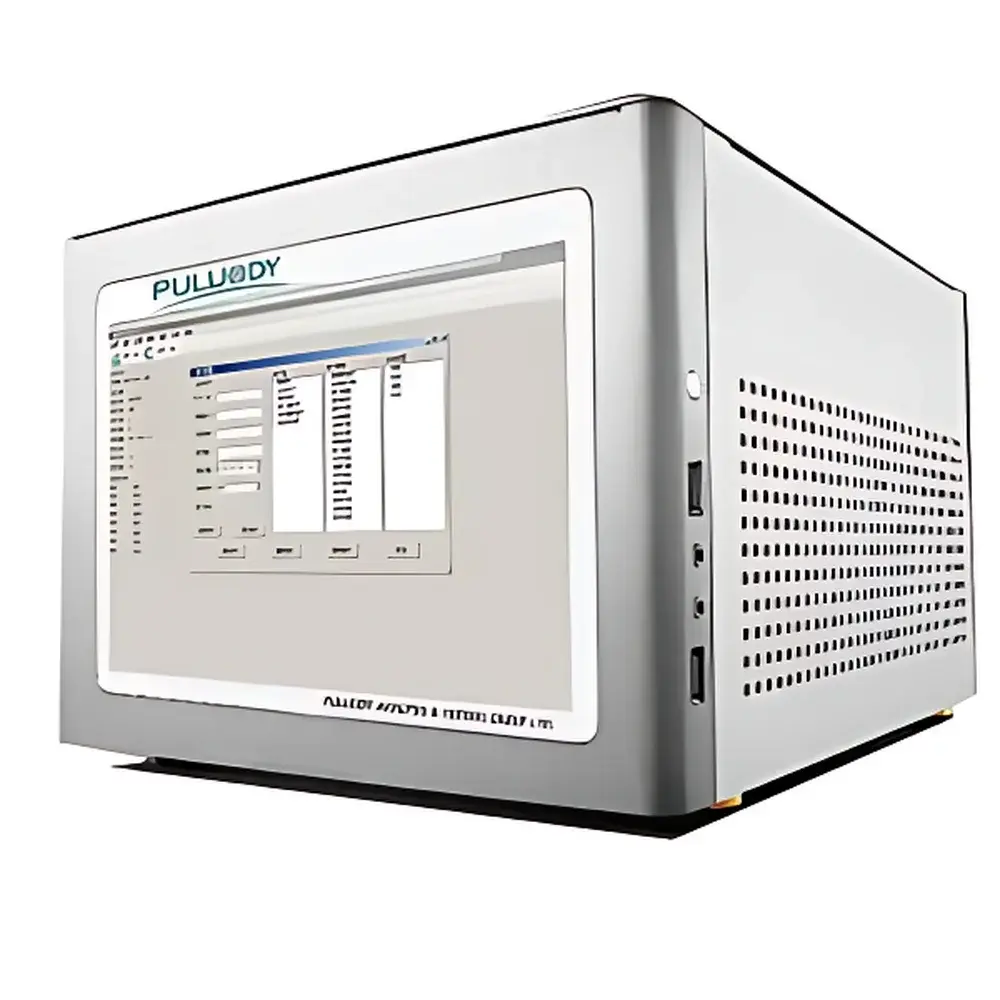
| Software | PULUODY V8.3 Analytical Suite (PC & tablet-native, 21 CFR Part 11-compliant audit trail, GLP/GMP-ready calibration logging) |
| Display | Color TFT touchscreen (7″) + optional wireless keyboard/mouse |
| Power Input | 100–265 VAC, 50/60 Hz |
| Compliance | Designed to meet IEST RP-CC004.3 Annex A (Wipe Cloth Extraction & Analysis Protocol), ASTM F3231-21, and JIS Z 8901 Class 5 particle counting requirements for cleanroom consumables validation |
Overview
The PULUODY PMT-2 Wipe Cloth Liquid Particle Counter is an engineered solution specifically designed to quantify extractable particulate contamination from cleanroom-grade wiping materials—fully aligned with the methodology and performance criteria defined in IEST RP-CC004.3, “Testing Cleanroom Wiping Materials.” Unlike generic liquid particle counters, the PMT-2 integrates a purpose-built fluidic pathway optimized for low-volume, high-viscosity eluates generated during standardized wipe extraction (e.g., ultrasonic or agitation-based protocols per IEST RP-CC004.3 Section 5). Its dual-laser narrow-beam optical detection system operates on the principle of Mie scattering, enabling high-sensitivity discrimination of sub-micron particles suspended in aqueous or organic solvents—including IPA, deionized water, and fluorinated cleaning agents. The instrument supports both offline extract analysis (per IEST RP-CC004.3 Annex A) and inline monitoring of rinse solutions in automated wipe qualification workflows. Its architecture meets the stringent reproducibility, traceability, and reporting requirements essential for ISO 14644-1 cleanroom certification audits and semiconductor front-end process control.
Key Features
- 8th-generation dual-laser optical sensor with independent wavelength channels (650 nm + 405 nm) for enhanced refractive index discrimination and reduced false counts from agglomerates or bubbles
- Patented dual-stage flow control: precision metering piston pump (±1% volumetric accuracy) coupled with closed-loop electromagnetic flow regulation ensures consistent sample delivery across viscosity ranges (0.8–50 cP)
- IEST RP-CC004.3–specific protocol library embedded in firmware—including default settings for 100 mL extraction volume, 5-min sonication, and 0.45 µm membrane filtration pre-analysis
- V8.3 analytical software with dual-mode operation: segregated calibration mode (ISO 21501-4 traceable) and routine test mode (USP /ChP 2020 compliant), preventing configuration drift during GxP operations
- Wireless iPad integration via encrypted Wi-Fi for real-time data capture, remote instrument control, and cloud-synced report generation with digital signature support
- Configurable reporting engine supporting ISO 4406:2017, NAS 1638 Class, and SAE AS4059F contamination coding—automatically applied based on user-defined particle size thresholds (e.g., ≥4 µm(c), ≥6 µm(c), ≥14 µm(c))
Sample Compatibility & Compliance
The PMT-2 is validated for analysis of extract solutions derived from nonwoven, knitted polyester, cellulose, and polyurethane wipes commonly used in ISO Class 3–5 cleanrooms. It accommodates solvents including deionized water (resistivity ≥18.2 MΩ·cm), isopropyl alcohol (≥99.9%), and fluorinated solvents (e.g., Vertrel XF). All hardware and software modules comply with regulatory frameworks governing pharmaceutical, biotech, and microelectronics manufacturing: 21 CFR Part 11 (electronic records/signatures), EU Annex 11 (computerized systems), and ISO/IEC 17025:2017 (testing laboratory competence). Instrument qualification documentation includes IQ/OQ/PQ templates aligned with ASTM E2915-20 and IEST-G-CC1002. Calibration is performed using NIST-traceable polystyrene latex (PSL) standards (e.g., Duke 3000 series) and verified per JJG 1061–2010 or ISO 21501-4 Annex B.
Software & Data Management
PULUODY V8.3 is a modular, audit-ready software platform built on a relational SQLite database architecture. It enforces role-based access control (RBAC) with three-tier user permissions (Operator, Supervisor, Administrator). All calibration events, method changes, and result exports are logged with immutable timestamps, operator ID, and reason-for-change fields—satisfying ALCOA+ principles (Attributable, Legible, Contemporaneous, Original, Accurate, Complete, Consistent, Enduring, Available). Data export supports CSV, PDF (with embedded digital signatures), and XML formats compatible with LIMS integration (ASTM E1482-19). The software includes automated trending tools for longitudinal wipe lot qualification, statistical process control (SPC) charts (X̄/R, CUSUM), and deviation alerting triggered by user-defined contamination thresholds.
Applications
The PMT-2 serves as a critical quality assurance tool across multiple high-reliability sectors: validating wipe cleanliness per IEST RP-CC004.3 for semiconductor photomask handling; quantifying extractables from wipes used in aseptic filling line interventions (FDA Guidance for Industry, Sterile Drug Products); verifying low-particulate performance of wipes employed in OLED display panel assembly; and supporting supplier qualification programs for medical device manufacturers subject to ISO 13485:2016. It is routinely deployed in QC labs performing routine release testing of wipe batches, R&D labs developing next-generation low-shedding materials, and third-party certification bodies conducting ISO 14644-1 cleanroom consumables audits.
FAQ
Does the PMT-2 meet the specific sampling and reporting requirements outlined in IEST RP-CC004.3 Section 6?
Yes—the instrument’s firmware includes a dedicated IEST RP-CC004.3 mode that auto-configures flow rate (15 mL/min), sample volume (100 mL), and reporting format (particles per 100 mL at ≥5 µm and ≥15 µm) per Annex A.
Can the PMT-2 analyze extracts from hydrophobic wipes without surfactant addition?
Yes—its dual-laser optical design minimizes dropout errors caused by poor particle dispersion; however, for optimal recovery of hydrophobic contaminants, we recommend following IEST RP-CC004.3 Section 5.3.2 (sonication with 0.1% Tween-20).
Is 21 CFR Part 11 compliance implemented at the firmware level or only in software?
Both: electronic signature enforcement, audit trail integrity, and data encryption are enforced at the embedded Linux OS layer and reinforced in V8.3 application logic.
What calibration standards are supplied with the instrument?
Each unit ships with a certified NIST-traceable 10 mL vial of 5.00 ± 0.12 µm PSL standard (Duke 3000 series) and a full calibration certificate per ISO/IEC 17025.
Can the PMT-2 be integrated into a central MES or SCADA system?
Yes—via Modbus TCP/IP or OPC UA protocols; analog 4–20 mA output supports direct connection to PLC-based alarm networks.



