
PULUODY PMT-2DJY Dual-Laser Nanoparticle Counter for Lithium-Ion Battery Electrolytes
| Brand | PULUODY |
|---|---|
| Model | PMT-2DJY |
| Detection Principle | Dual-laser narrow-beam light scattering |
| Sensor Generation | 8th-generation dual-laser optical particle sensor |
| Measurement Range | 0.5–20.0 µm (standard) |
| Accuracy | ±3% typical |
| Sampling Precision | <±1% |
| Coincidence Limit | 1000 particles/mL (2.5% coincidence error) |
| Flow Control | Precision piston pump + ultra-precise electromagnetic flow regulation |
| Calibration Standards | JJG 1061, ISO 21501, NIST-traceable latex spheres |
| Output Interface | 4–20 mA analog output |
| Alarm Function | Configurable particle concentration threshold alarm |
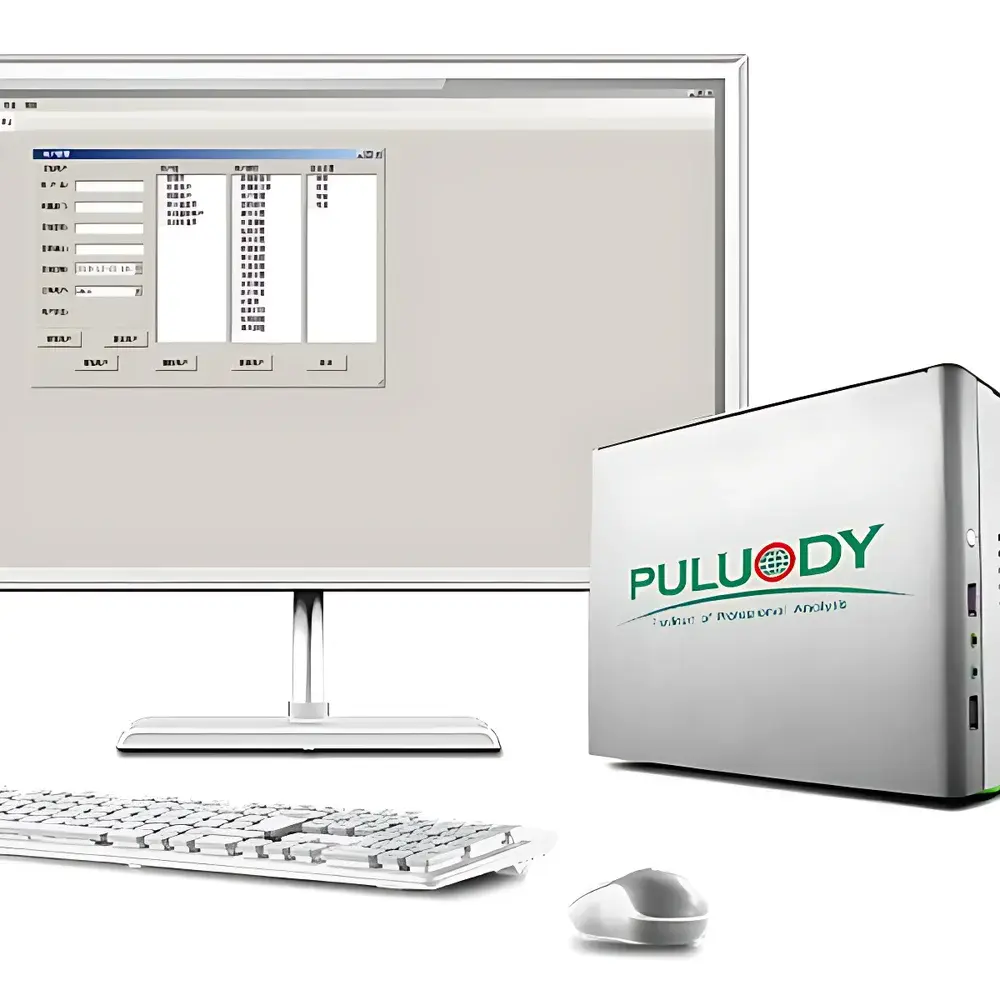
| Data Acquisition | iPad-integrated wireless acquisition |
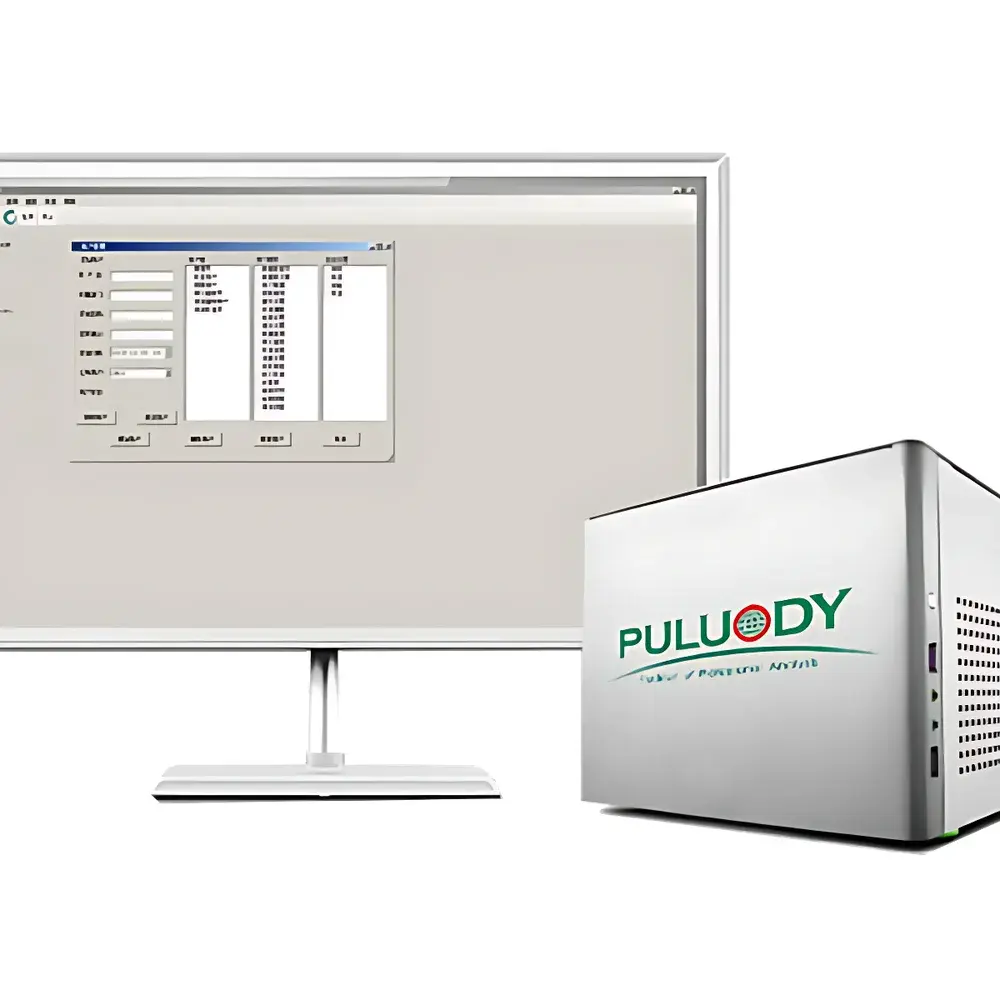
| Software | V8.3 Integrated Analysis & Calibration Software (PC version) |
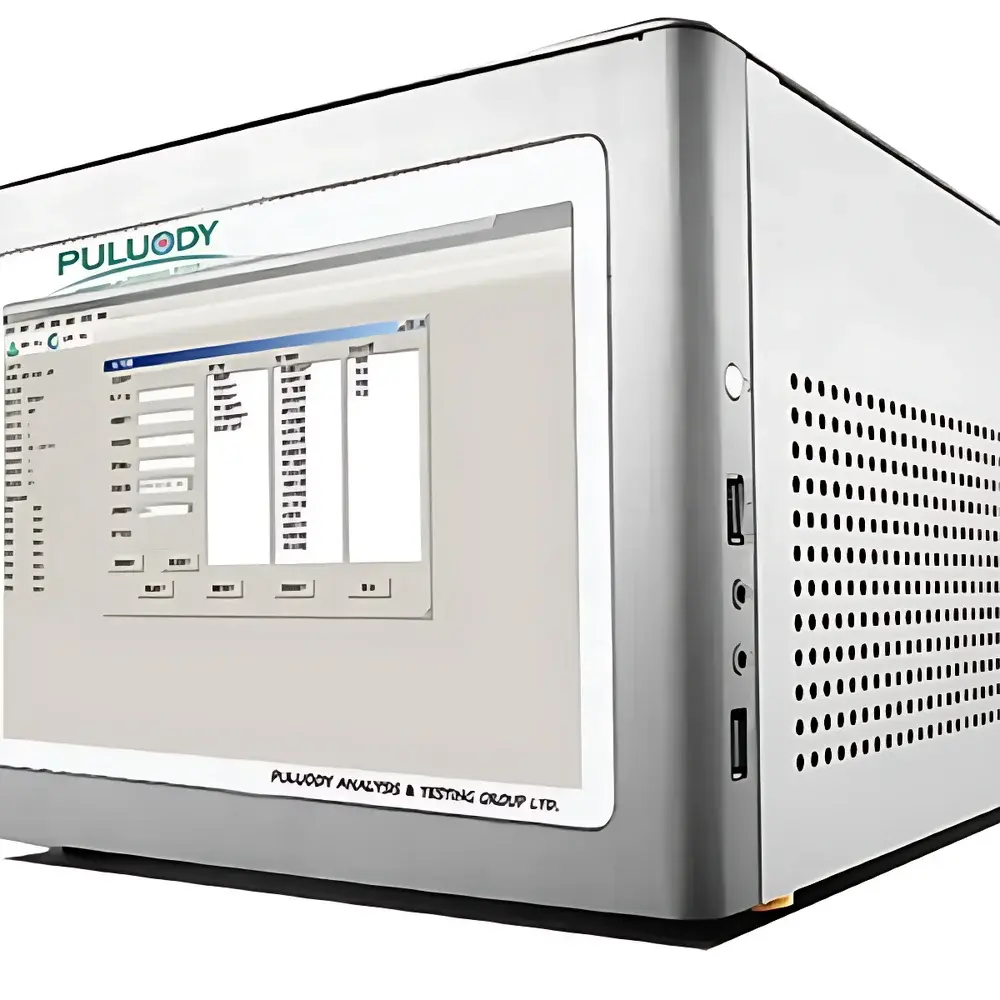
| Display & Control | Color LCD touchscreen + optional wireless keyboard/mouse |
| Power Input | 100–265 VAC, 50–60 Hz |
| Compliance | Designed for ISO 14644-1 cleanroom monitoring, USP <788> and <789> particulate matter testing, and GLP/GMP-aligned data integrity workflows |
Overview
The PULUODY PMT-2DJY Dual-Laser Nanoparticle Counter is a high-sensitivity, laboratory- and production-grade instrument engineered specifically for quantitative particulate contamination analysis in lithium-ion battery electrolytes and other ultra-pure organic liquid media. It operates on the principle of dual-laser narrow-beam light scattering—where two spatially separated, collimated laser sources illuminate the sample stream simultaneously—to enable enhanced signal-to-noise ratio, improved particle trajectory discrimination, and reduced optical interference from refractive index fluctuations common in low-conductivity, low-viscosity electrolyte solvents (e.g., EC/DMC/LiPF6 mixtures). Unlike single-beam systems, this 8th-generation optical architecture minimizes false counts arising from bubble artifacts, agglomerate misclassification, or transient flow turbulence—critical for achieving reproducible sub-micron detection down to 0.5 µm in real time. The system supports both offline batch analysis and fully integrated online monitoring via process-compatible wetted materials (316L SS, PFA, Kalrez), making it suitable for QC release testing, electrolyte purification validation, and continuous in-line surveillance of filling lines or solvent recycling loops.
Key Features
- Dual-laser narrow-beam optical detection with independent beam alignment and synchronized photodetector arrays for cross-validated particle event recognition
- Precision metering piston pump combined with closed-loop electromagnetic flow control ensures volumetric accuracy better than ±1% across variable viscosity ranges (0.5–5 cP)
- Configurable detection thresholds: standard 0.5–20.0 µm; extended modes support user-defined channels from 1–100 µm or 4–70 µm(c), including optional 0.1 µm(c) resolution for nanoscale nucleation studies
- V8.3 Integrated Software Suite separates analytical measurement routines from calibration management—preventing software-induced bias during regulatory audits
- iPad-native wireless data acquisition enables remote operation, real-time dashboard visualization, and timestamped audit trails compliant with FDA 21 CFR Part 11 requirements
- 4–20 mA analog output with programmable alarm thresholds for integration into DCS/SCADA systems; configurable relay outputs for automatic shutdown or filtration activation
Sample Compatibility & Compliance
The PMT-2DJY is validated for use with non-aqueous electrolytes (carbonate-based, ether-based, sulfone-based), polymer gel precursors, and functional additives—including viscous formulations up to 20 cP. Its fluidic path employs chemically inert, low-adsorption materials (PFA tubing, sapphire flow cell, Kalrez seals) to prevent analyte interaction or surface-induced particle shedding. The instrument meets design criteria referenced in ISO 21501-4 (light extinction and light scattering methods), aligns with calibration traceability requirements per JJG 1061 (Chinese national metrology verification regulation), and supports documentation frameworks required under ICH Q5A(R2), USP , and ASTM D7619 for particulate matter in pharmaceutical and electrochemical applications. Full electronic records—including raw scatter pulse data, calibration logs, and operator metadata—are retained with immutable timestamps and user authentication.
Software & Data Management
The V8.3 software platform provides dual-mode operation: standalone PC-based analysis for deep spectral deconvolution and offline trend modeling, and embedded touchscreen interface for rapid pass/fail screening. All calibration events—including reference sphere verification, background noise profiling, and flow-rate validation—are logged separately from routine test runs, satisfying ALCOA+ principles (Attributable, Legible, Contemporaneous, Original, Accurate, Complete, Consistent, Enduring, Available). Data export formats include CSV, PDF reports (with ISO 4406 and NAS 1638 contamination codes), and XML for LIMS integration. Audit trail functionality records every parameter change, user login/logout, and report generation event—with role-based access control (administrator, analyst, reviewer) and electronic signature capability.
Applications
- Quality release testing of Li-ion battery electrolytes per OEM specifications (e.g., ≤50 particles/mL >2 µm)
- In-process monitoring of solvent drying, filtration, and degassing steps in electrolyte manufacturing
- Validation of membrane filter integrity (e.g., 0.45 µm and 0.22 µm PTFE filters) used in electrolyte final filtration
- Contamination root-cause analysis in electrode slurry preparation environments
- Particulate stability assessment of novel solid-state electrolyte suspensions and ceramic composite dispersions
- Supporting ISO 14644-1 Class 5–7 cleanroom qualification for dry room electrolyte handling stations
FAQ
Does the PMT-2DJY comply with FDA 21 CFR Part 11 for electronic records?
Yes—the V8.3 software implements full Part 11 compliance features including electronic signatures, audit trail retention, and system access controls.
Can it measure particles in highly volatile electrolyte solvents such as DMC or EMC?
Yes—its sealed, pressure-balanced sampling module and rapid 1–5 mL/min flow rates minimize evaporation-induced artifacts and bubble formation.
Is calibration traceable to international standards?
Calibration uses NIST-traceable polystyrene latex spheres (PSL) certified to ISO 21501-4, with optional third-party verification through CNAS-accredited laboratories.
What maintenance is required for long-term operational reliability?
Annual optical alignment verification and flow-path cleaning protocol (using compatible solvents per SOP); no consumable sensors—optical components are lifetime-rated.
How does it handle particle coincidence at high concentrations?
Coincidence correction algorithms are applied in real time up to 1000 particles/mL, with documented 2.5% error margin per ISO 21501-4 Annex C.



