
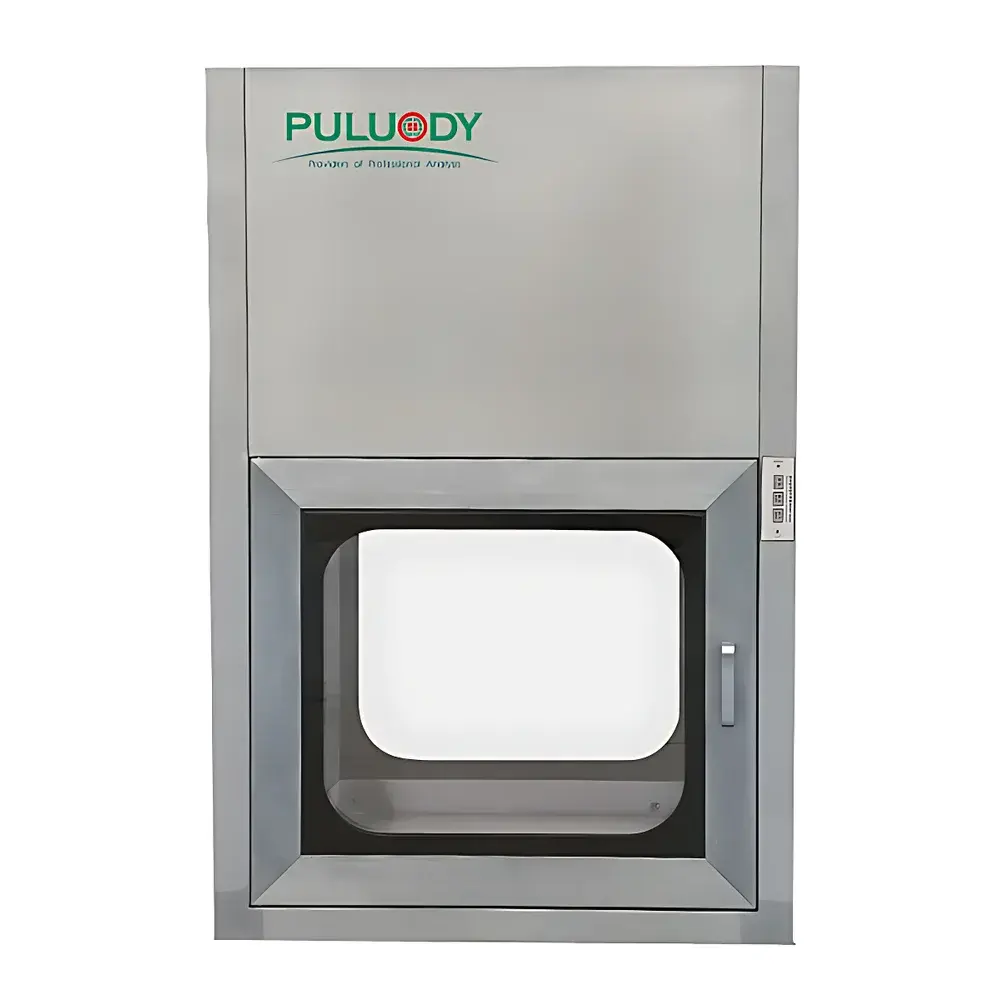
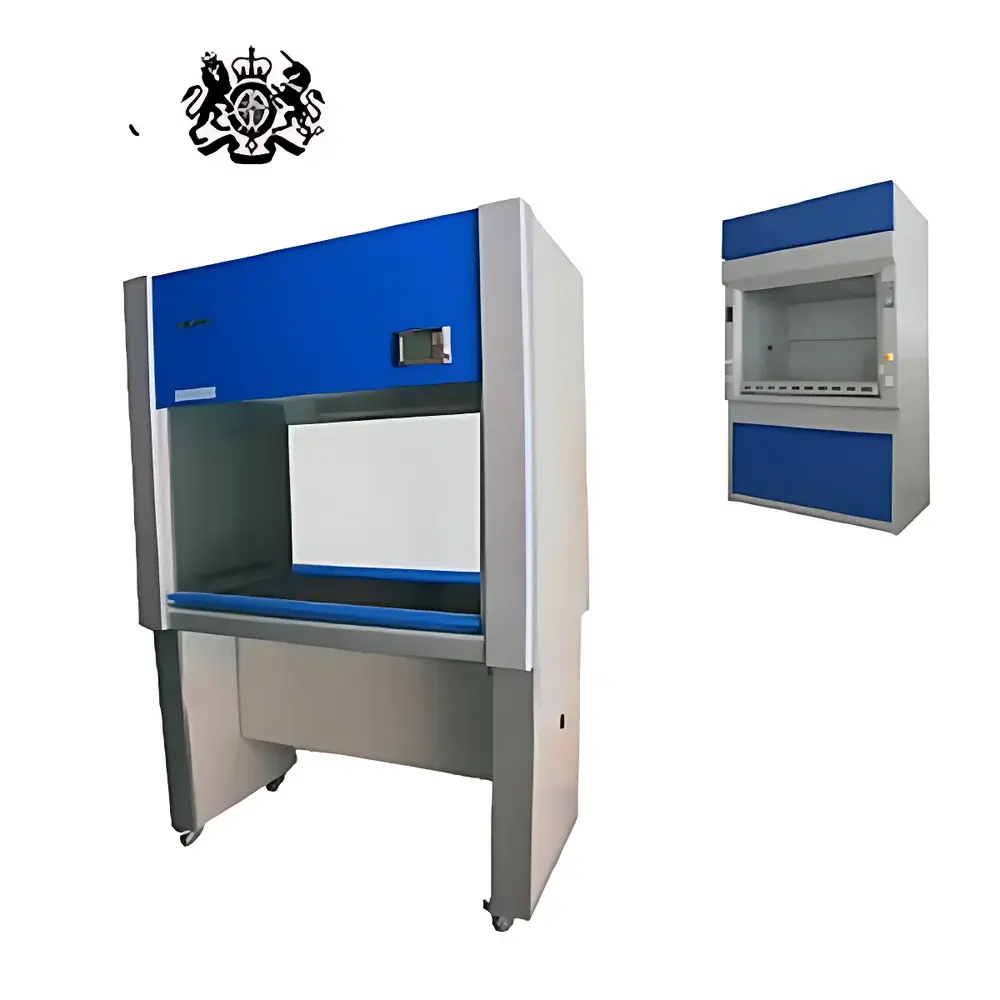
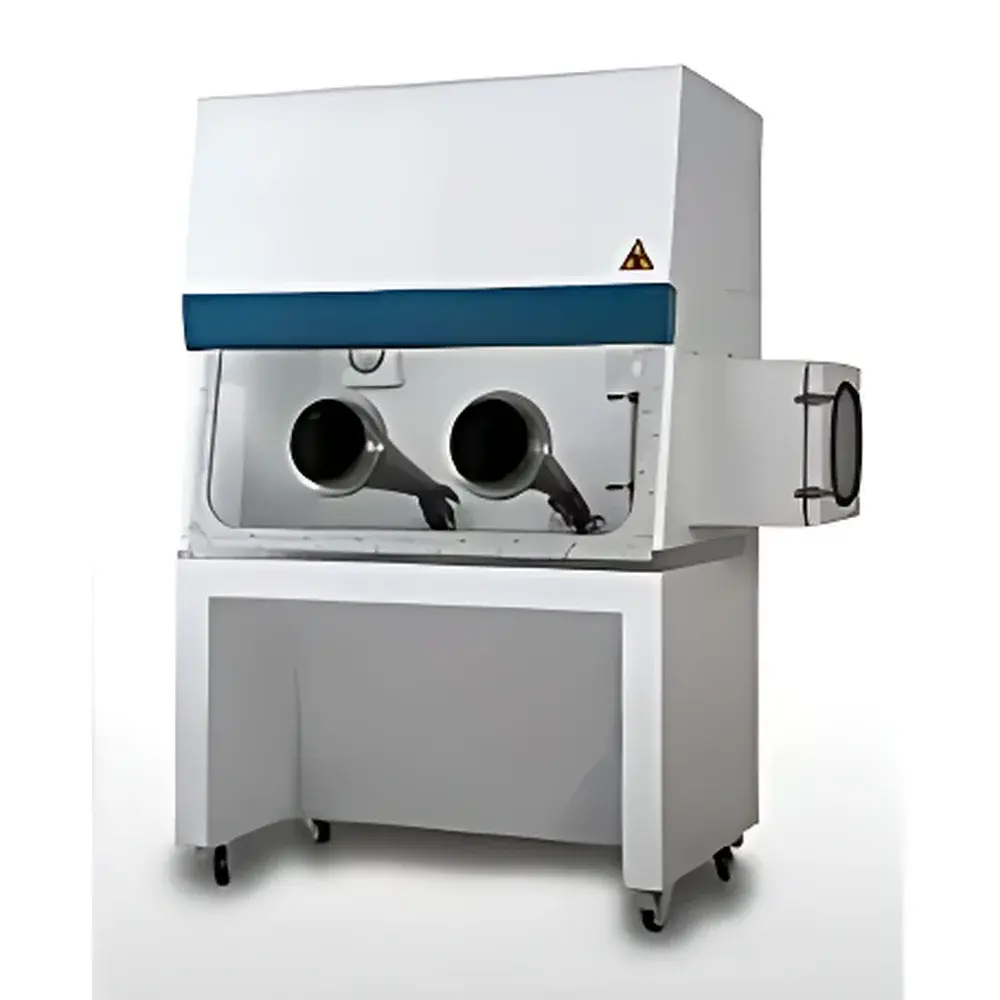
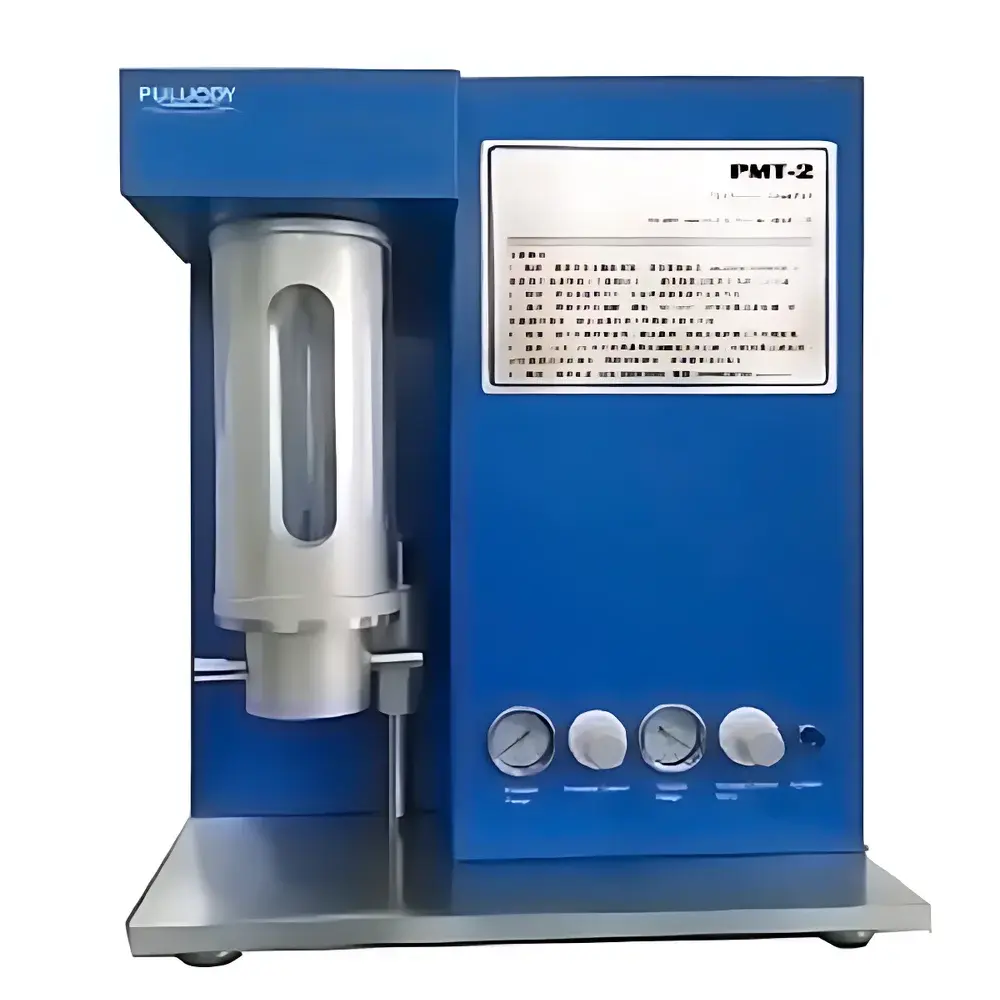
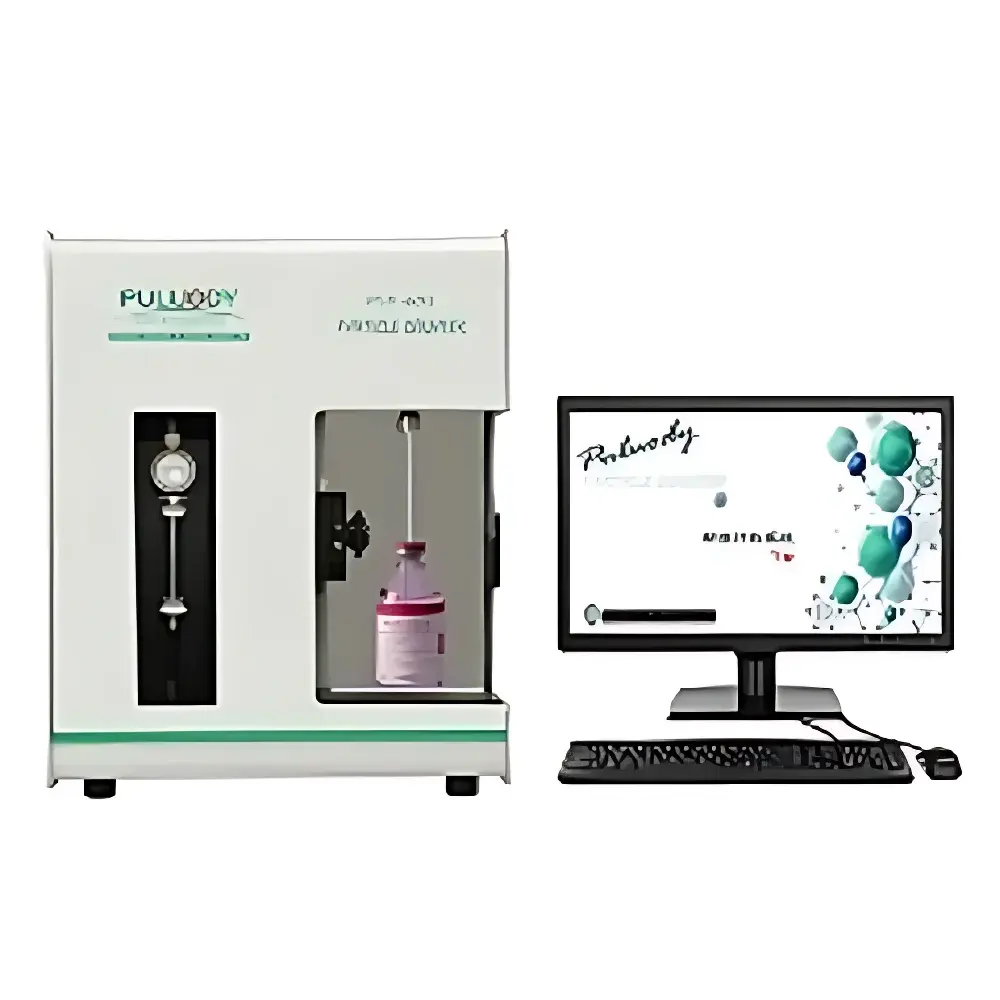
PULUODY PSD-PF100-1A-0.5 Electronic-Grade Sample Vial Decontamination Chamber
| Brand | PULUODY |
|---|---|
| Origin | Shaanxi, China |
| Model | PSD-PF100-1A-0.5 |
| Cleanroom Class | ISO Class 4 (10-grade) & ISO Class 5 (100-grade) |
| Airflow Configuration | Horizontal or Vertical Laminar Flow |
| Filtration | Dual-stage — Pre-filter + HEPA (H14, ≥99.995% @ 0.3 µm) |
| Operating Air Velocity | 0.25 m/s ±10% |
| Vibration Amplitude | ≤3 µm |
| Sound Pressure Level | ≤67 dB(A) |
| UV Germicidal Lamp | 254 nm, 15 W |
| Illumination | Fluorescent, ≥300 lx |
| Power Supply | AC 220 V ±10%, 50 Hz ±1 Hz |
| Ambient Temp. | 10–30 °C |
| Relative Humidity | ≤75% RH |
| Dimensions (W×D×H) | 360 × 450 × 580 mm |
| Construction | Powder-coated steel frame, 304 stainless steel work surface |
| Optional Accessories | High-purity nitrogen inlet with inline filter, articulated nitrogen purge nozzle, programmable bidirectional sample rotator |
Overview
The PULUODY PSD-PF100-1A-0.5 Electronic-Grade Sample Vial Decontamination Chamber is an engineered solution for pre-entry decontamination of sampling containers prior to transfer into controlled environments—specifically ISO Class 4 (10-grade) and ISO Class 5 (100-grade) cleanrooms used in semiconductor manufacturing, pharmaceutical excipient handling, high-purity chemical synthesis, and advanced materials R&D. Unlike general-purpose laminar flow hoods, this chamber integrates dual-stage air filtration (pre-filter + H14 HEPA), precisely regulated unidirectional airflow (0.25 m/s), and optional inert gas purging to eliminate particulate adhesion and surface-borne molecular contamination on vials, ampoules, and flasks. Its design addresses a critical process gap: the introduction of external particulates via sampling vessels that have been exposed to non-controlled ambient conditions. The unit operates on the principle of laminar airflow containment—where filtered air sweeps vertically or horizontally across the work surface at uniform velocity, preventing turbulent eddies that could redeposit particles onto sensitive samples.
Key Features
- ISO Class 4 (10-grade) and ISO Class 5 (100-grade) certified clean air delivery, validated per ISO 14644-1 using particle counters calibrated to JIS B 9921 and ISO 21501-4 standards
- Dual-stage filtration system: G4 pre-filter for coarse particulates (>5 µm) and H14 HEPA filter (≥99.995% efficiency at 0.3 µm) for sub-micron removal
- Stainless steel (304) work surface resistant to acids, solvents, and repeated sterilization cycles; powder-coated structural frame for corrosion resistance and ESD-safe grounding
- Integrated 254 nm UV-C germicidal lamp (15 W) with safety interlock—automatically deactivates when sash is opened or door is unlatched
- Low-vibration mechanical platform (≤3 µm amplitude) minimizes micro-disturbance during precision vial handling and cap manipulation
- Optional high-purity nitrogen interface with inline particulate/moisture/TOC filter and 360° adjustable purge nozzle for localized inert-gas blow-down of vial threads and necks
- Programmable bidirectional sample rotator (optional) enables uniform exposure of cylindrical vials to laminar flow and UV irradiation—critical for consistent decontamination of multi-sided surfaces
Sample Compatibility & Compliance
The chamber accommodates standard electronic-grade sampling vessels including 2 mL, 4 mL, and 10 mL borosilicate glass vials (e.g., Schott Type I, Kimble Chase), polypropylene screw-cap tubes (USP Class VI compliant), and fluoropolymer-lined septa vials. It supports both capped and uncapped configurations during decontamination cycles. All materials in contact with the airflow path meet USP and EU Pharmacopoeia 3.1.1 requirements for extractables and leachables. The unit is designed to support compliance with ISO 14644-1 (cleanroom classification), ISO 14644-3 (testing methods), and SEMI F21-0218 (for semiconductor front-end tooling). While not FDA-cleared as a medical device, its architecture aligns with FDA 21 CFR Part 11 data integrity principles when integrated with validated logging systems.
Software & Data Management
The PSD-PF100-1A-0.5 operates as a standalone hardware platform without embedded firmware or touchscreen UI. However, it is fully compatible with third-party environmental monitoring systems (EMS) via analog 4–20 mA outputs for airflow velocity and digital dry-contact signals for UV status, door position, and power fault. Optional RS-485 Modbus RTU interface enables integration into SCADA or MES platforms for audit-trail recording of operational parameters—including cumulative UV exposure time, filter usage hours, and nitrogen purge duration. When deployed in GLP/GMP-regulated facilities, users typically pair the chamber with calibrated handheld particle counters and temperature/humidity loggers to generate periodic requalification reports per ISO 14644-2.
Applications
- Pre-transfer conditioning of sampling vials used in ultra-trace elemental analysis (ICP-MS, GD-MS) where blank levels must remain below 10 fg/mL for transition metals
- Decontamination of solvent vials prior to introduction into photolithography chemical dispensing lines in 300 mm wafer fabs
- Handling of reference standards and CRM vials in metrology labs accredited to ISO/IEC 17025:2017
- Preparation of high-purity electrolyte solutions for battery R&D, minimizing metallic impurities that accelerate SEI layer degradation
- Supporting ASTM D7259-18 (Standard Practice for Handling and Storage of High-Purity Organic Chemicals) through documented particulate control protocols
FAQ
What cleanroom classifications does this chamber achieve—and how is validation performed?
It delivers verified ISO Class 4 (10-grade) performance under vertical laminar flow and ISO Class 5 (100-grade) under horizontal configuration. Validation requires particle counting per ISO 14644-1 Annex B using a calibrated airborne particle counter (e.g., Met One GT-526 or TSI 3350) at ≥5 sampling locations across the work plane.
Can the unit be integrated into a facility’s central nitrogen supply network?
Yes—via a dedicated 6 mm OD stainless steel inlet port with integrated pressure regulator (0.1–0.3 MPa range) and a replaceable 0.01 µm sintered metal filter cartridge upstream of the articulated purge nozzle.
Is the UV lamp intensity monitored or logged?
No built-in radiometric sensor is included; however, UV irradiance (µW/cm²) can be measured externally using a NIST-traceable UV-C meter (e.g., Sper Scientific 850021), and exposure time is manually recorded per batch log.
Does the chamber meet electromagnetic compatibility (EMC) requirements for laboratory use?
It complies with EN 61326-1:2013 for laboratory equipment immunity and emissions, with CE marking affixed per the EU Machinery Directive 2006/42/EC.
What maintenance intervals are recommended for filter replacement?
Pre-filters should be inspected weekly and replaced every 3 months under continuous operation; HEPA filters require annual integrity testing (DOP/PAO scan per ISO 14644-3) and replacement every 2–3 years depending on ambient particulate load and usage frequency.




