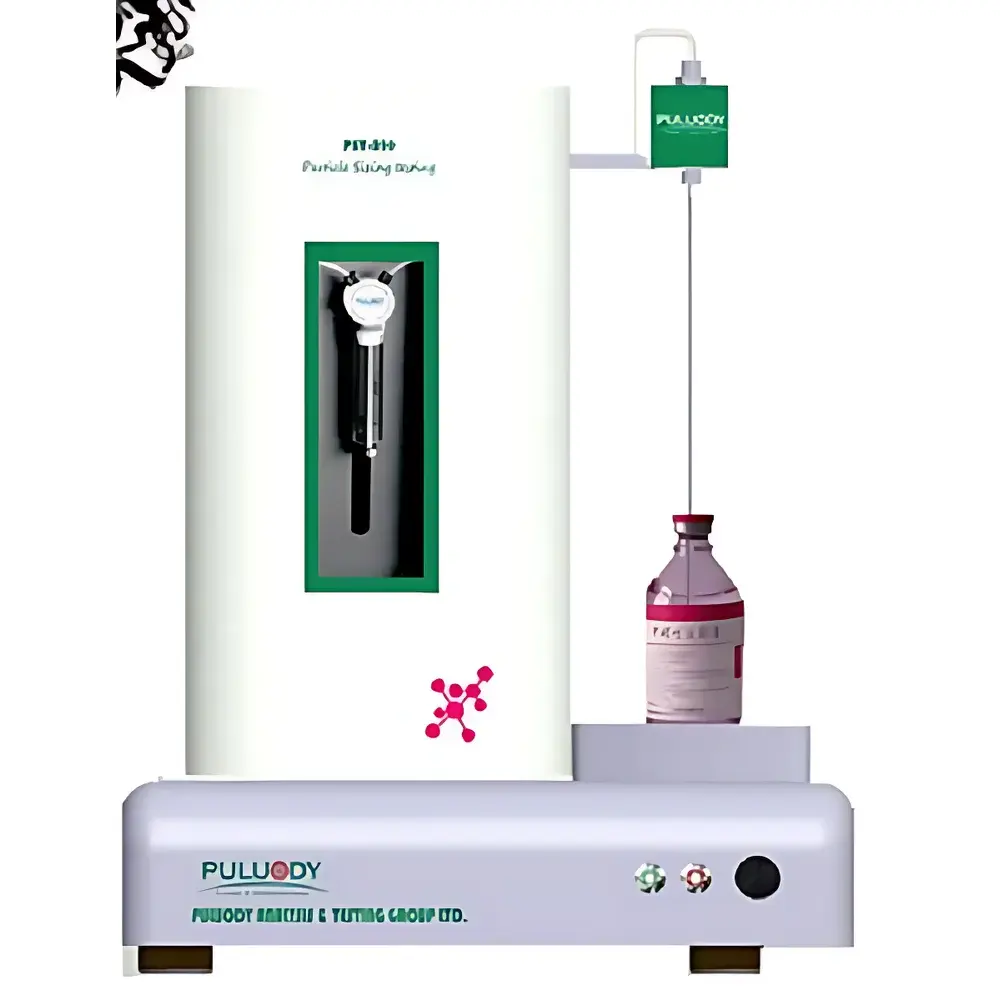
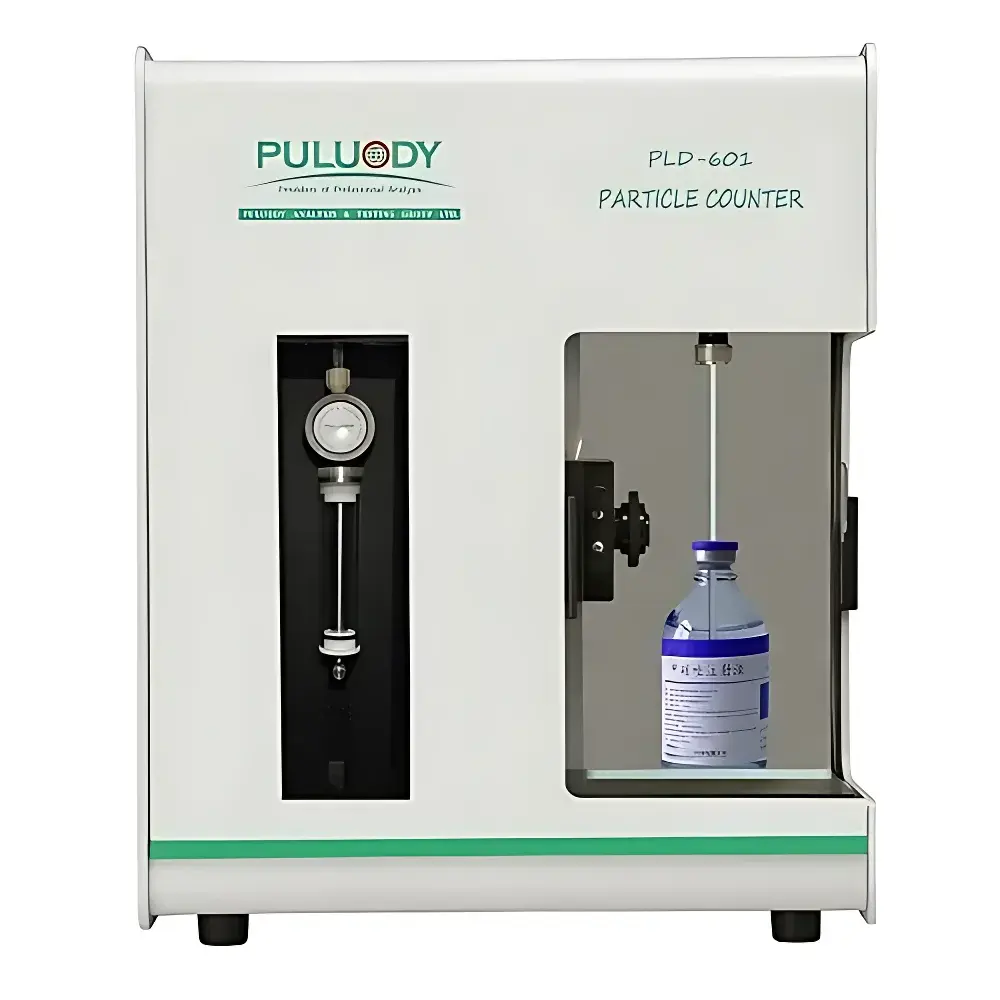
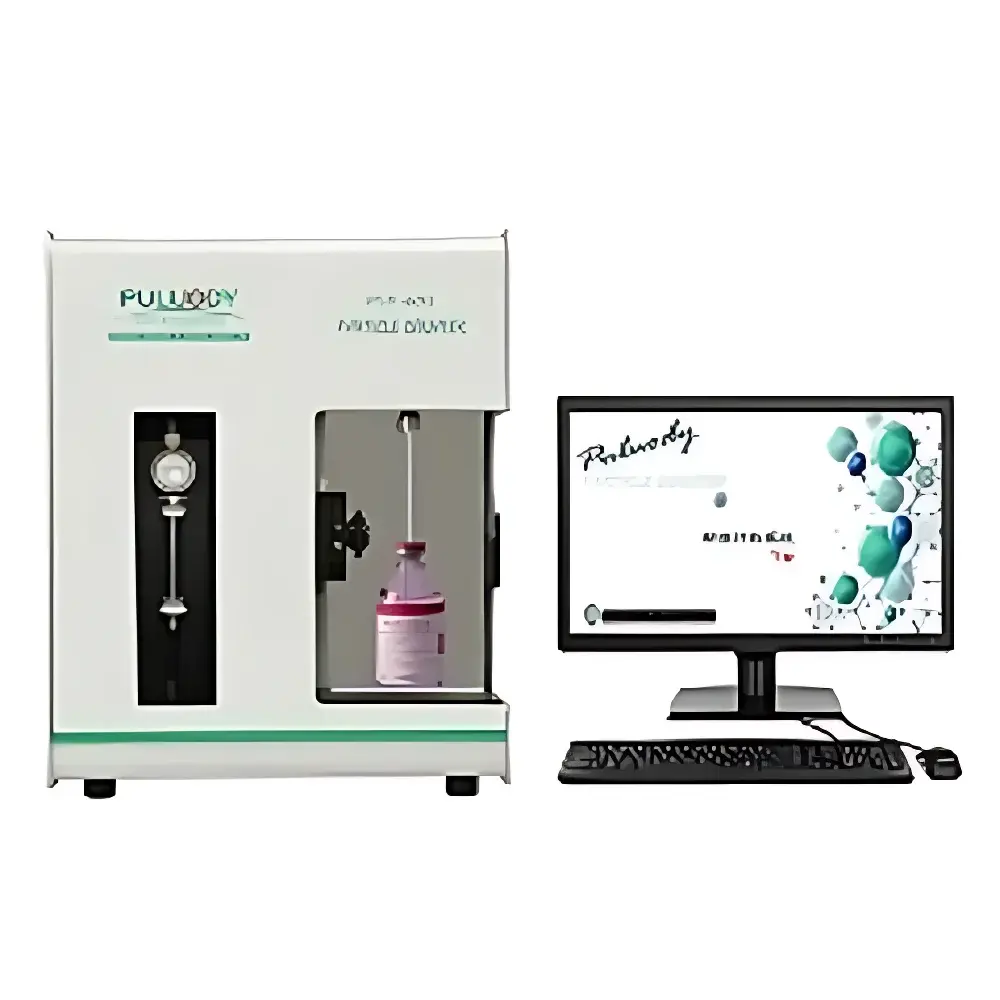
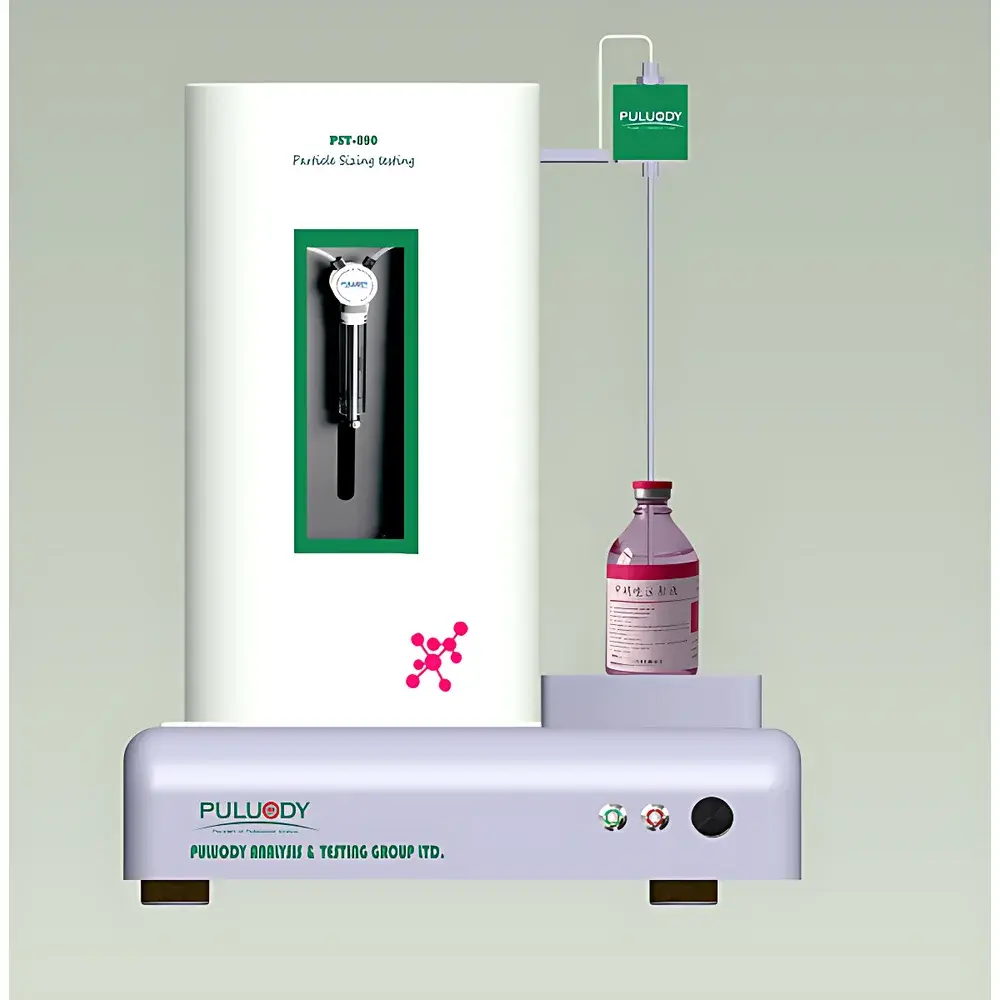
PULUODY PST-890 Insoluble Particle Analyzer for Pharmaceutical Emulsions
| Brand | PULUODY |
|---|---|
| Model | PST-890 |
| Sensor Technology | 8th-Generation Dual-Laser Narrow-Beam Light Obscuration |
| Detection Range | 1–450 µm (optional 0.03–3000 µm) |
| Channel Count | 1000 adjustable channels (down to 4-channel user-defined bins) |
| Sample Flow Rate | 5–150 mL/min |
| Rinse Flow Rate | 5–500 mL/min |
| Accuracy | ±3% typical (per ChP 2020 & USP <788>) |
| Coincidence Limit | ≤2.5% at 1000 particles/mL |
| Resolution | >95% (ChP-calibrated), <10% (ISO 21501-calibrated) |
| Temperature Range (fluid) | 0–80 °C |
| Compliance | FDA 21 CFR Part 11, ASTM D6786, ISO 21501-4, ISO 11171, USP <788>/<789>, EP 10.0, ChP 0903, GB/T 11446.9-2013, YBB00272004-2015, GB 8368 |
| Software | V8.9 Regulatory-Compliant Particle Analysis Suite with Audit Trail, e-Signature, and 5-Tier User Permissions |
| Calibration Standards | NIST-traceable latex spheres, JJG 1061, or ISO 21501-4 reference materials |
| Sample Compatibility | Aqueous & non-aqueous parenterals, lipid emulsions, lyophilized powders (reconstituted), ophthalmic solutions, vaccines, WFI, medical packaging extracts, infusion sets, filter challenge fluids |
Overview
The PULUODY PST-890 Insoluble Particle Analyzer is a regulatory-grade light obscuration (LO) instrument engineered for precise quantification and size distribution analysis of insoluble particulate matter in pharmaceutical liquids. It operates on the principle of single-particle optical sensing (SPOS), where particles suspended in a laminar fluid stream pass through a collimated dual-laser beam; each particle generates a pulse proportional to its cross-sectional area. The 8th-generation dual-laser narrow-beam sensor minimizes signal noise and enhances detection fidelity—particularly critical for low-conductivity, high-viscosity, or optically heterogeneous media such as intravenous lipid emulsions and concentrated biologics formulations. Designed to meet the stringent requirements of global pharmacopoeias—including USP , , and , EP 10.0, ChP 0903, and JP XVII—the PST-890 delivers reproducible, audit-ready data for batch release, filter validation, extractables/leachables assessment, and process monitoring across GMP-compliant manufacturing environments.
Key Features
- Dual-laser narrow-beam optical architecture with real-time signal discrimination, enabling robust performance in turbid or colored solutions without dilution artifacts.
- High-fidelity flow control system integrating a precision metering plunger pump and ultra-stable electromagnetic flow regulation—ensuring volumetric accuracy better than ±1% and repeatability within ±3% (typical).
- 1000-channel resolution with fully customizable binning (4–128 user-defined size ranges), supporting simultaneous compliance with multiple pharmacopoeial thresholds (e.g., ≥10 µm and ≥25 µm per USP , or ≥5 µm and ≥10 µm per EP 10.0).
- V8.9 regulatory software compliant with FDA 21 CFR Part 11: featuring role-based 5-tier permissions, immutable electronic audit trail, time-stamped e-signatures, automated backup/recovery, and power-failure recovery protocols.
- Thermally stabilized fluid path (0–80 °C operating range) and wide ambient tolerance (−15–50 °C), permitting integration into cold-chain QC labs or hot-fill production line support stations.
- Pre-loaded calibration curves traceable to NIST-certified latex standards and validated per JJG 1061, ISO 21501-4, and USP Annexes.
Sample Compatibility & Compliance
The PST-890 accommodates a broad spectrum of pharmaceutical and biopharmaceutical matrices without modification: sterile aqueous injectables, oil-in-water lipid emulsions (e.g., Intralipid® analogs), reconstituted lyophilized powders, ophthalmic solutions, vaccine suspensions, water-for-injection (WFI), and extractants from polymeric packaging or elastomeric stoppers. Its flow path design minimizes adsorption and shear-induced particle generation—validated per ISO 11171 for calibration integrity and ISO 21501-4 for counting efficiency. Instrument qualification includes IQ/OQ documentation aligned with ASTM D6786 and EU Annex 11 expectations. All test reports include metadata required for GLP/GMP audits: operator ID, timestamped method parameters, raw pulse data, calibration verification logs, and digital signatures affixed at result finalization.
Software & Data Management
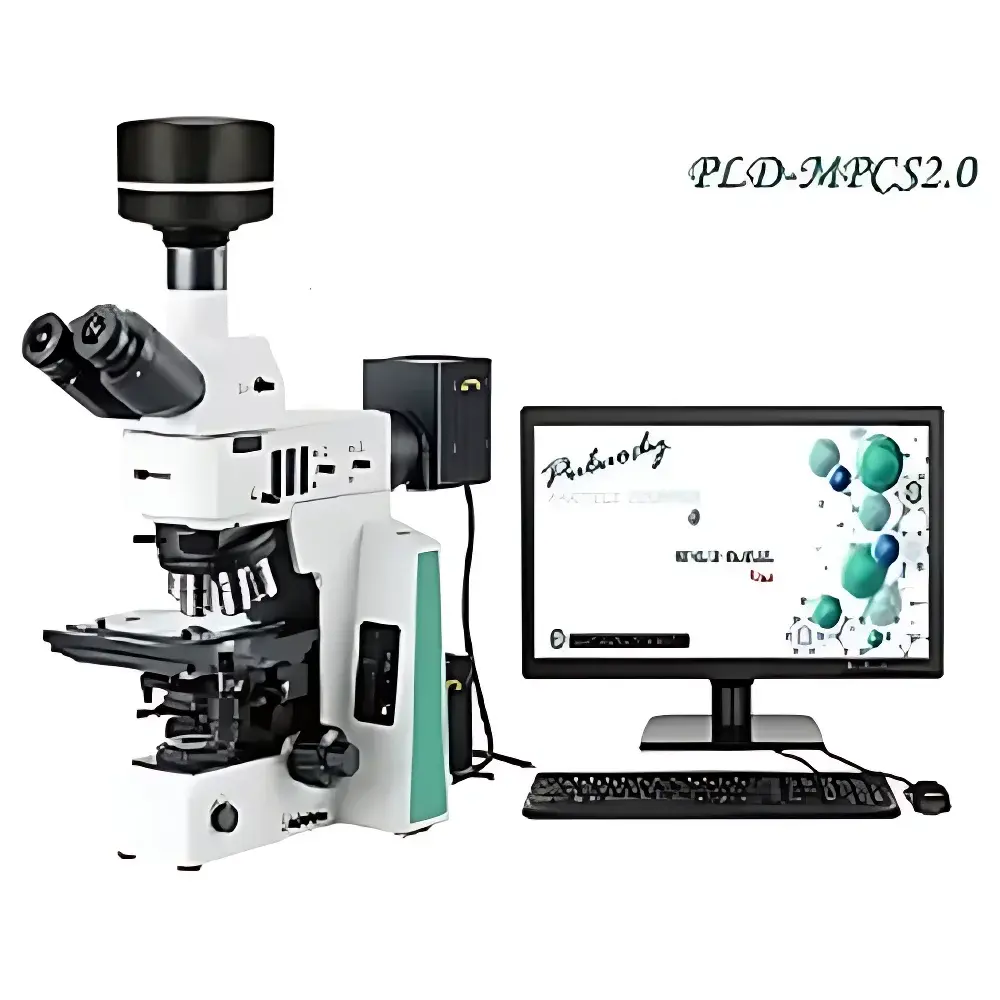
The embedded V8.9 analysis platform provides both touchscreen and PC-hosted operation modes. It supports automated method templates for USP , ChP 0903, EP 10.0, and custom internal specifications—including dynamic threshold switching, multi-sample comparative trending, and filter challenge efficiency calculations (e.g., % retention at 5 µm). All data files are stored in encrypted, tamper-evident .pda format with SHA-256 checksums. Electronic records comply with ALCOA+ principles: attributable, legible, contemporaneous, original, accurate, complete, consistent, enduring, and available. Audit trails record every action—from parameter edits to report exports—with no ability to delete or overwrite historical entries. Data export options include CSV, PDF/A-2, and XML formats compatible with LIMS and ERP systems.
Applications
- Final container testing of IV lipid emulsions per USP and ChP 0903, including differential sizing of triglyceride droplets versus foreign particulates.
- Validation of terminal sterilizing filters (0.22 µm and 0.45 µm) using challenge suspensions and post-filter particle counts to determine log reduction value (LRV).
- Extractables testing of IV bags, tubing, and stoppers per YBB00272004-2015 and USP .
- Monitoring of cleanroom rinse waters, purified water loops, and ultrapure water systems per ISO 8573-4 and SEMI F57.
- Process characterization of CMP slurries and nanoparticle dispersions in semiconductor manufacturing per SEMI F39 and ISO 21501-2.
- Stability-indicating assay for protein aggregation in monoclonal antibody formulations under accelerated stress conditions.
FAQ
Does the PST-890 comply with FDA 21 CFR Part 11 requirements?
Yes—the V8.9 software implements full electronic signature capability, audit trail logging, and secure user authentication per Part 11 Subpart B specifications.
Can it analyze highly viscous or opaque emulsions without sample dilution?
Yes—its dual-laser narrow-beam optics and adaptive signal processing enable direct measurement of undiluted lipid emulsions up to 200 cP viscosity, validated per USP Annex II.
Is calibration traceable to national metrology institutes?
Yes—calibration uses ISO 21501-4–certified polystyrene latex standards, with optional certification from NMIs including China’s NIM Northwest Center or the National Defense Metrology Station No. 116.
What pharmacopoeial standards are pre-configured in the software?
USP , , , EP 10.0, ChP 0903 (2015 & 2020 editions), JP XVII, BP 2019, and YBB00272004-2015 are built-in with auto-threshold application.
How is data integrity ensured during power interruption?
The system features non-volatile memory and automatic resume-on-power restoration, preserving all in-process counts, timestamps, and configuration states without data loss.