
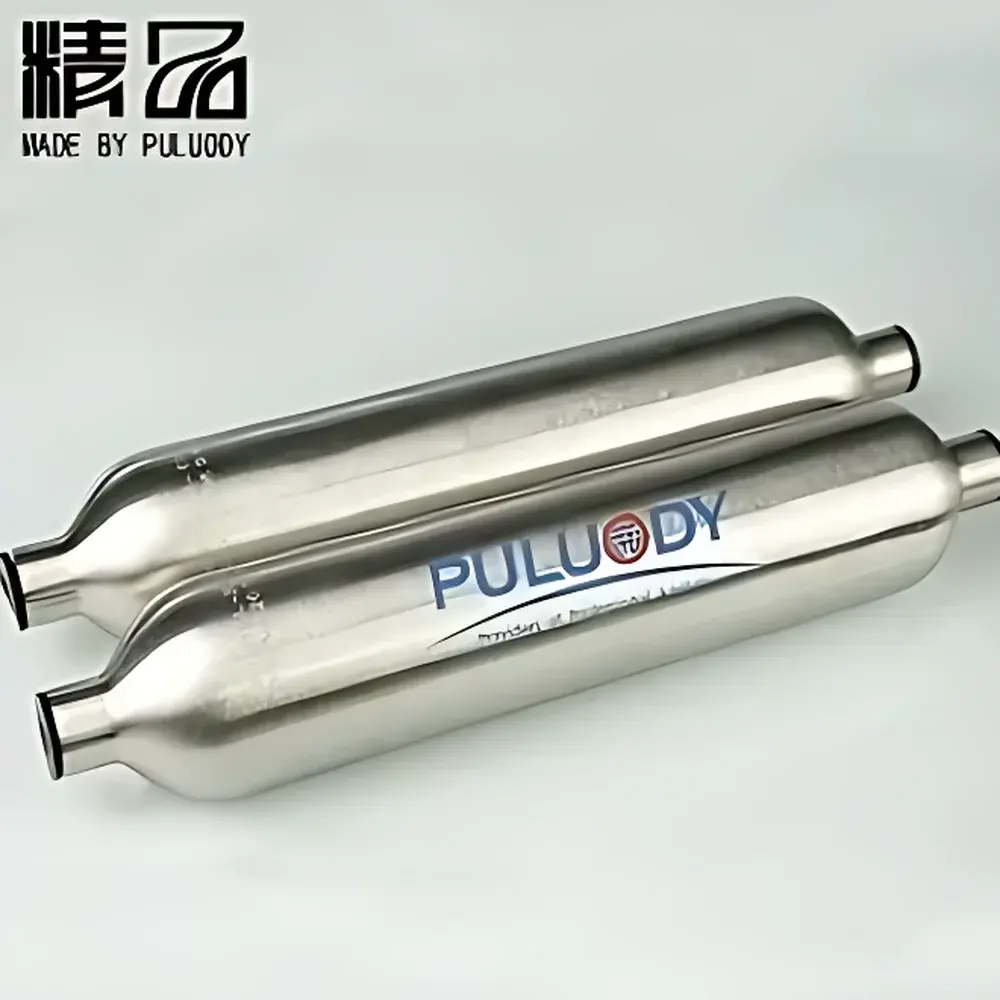
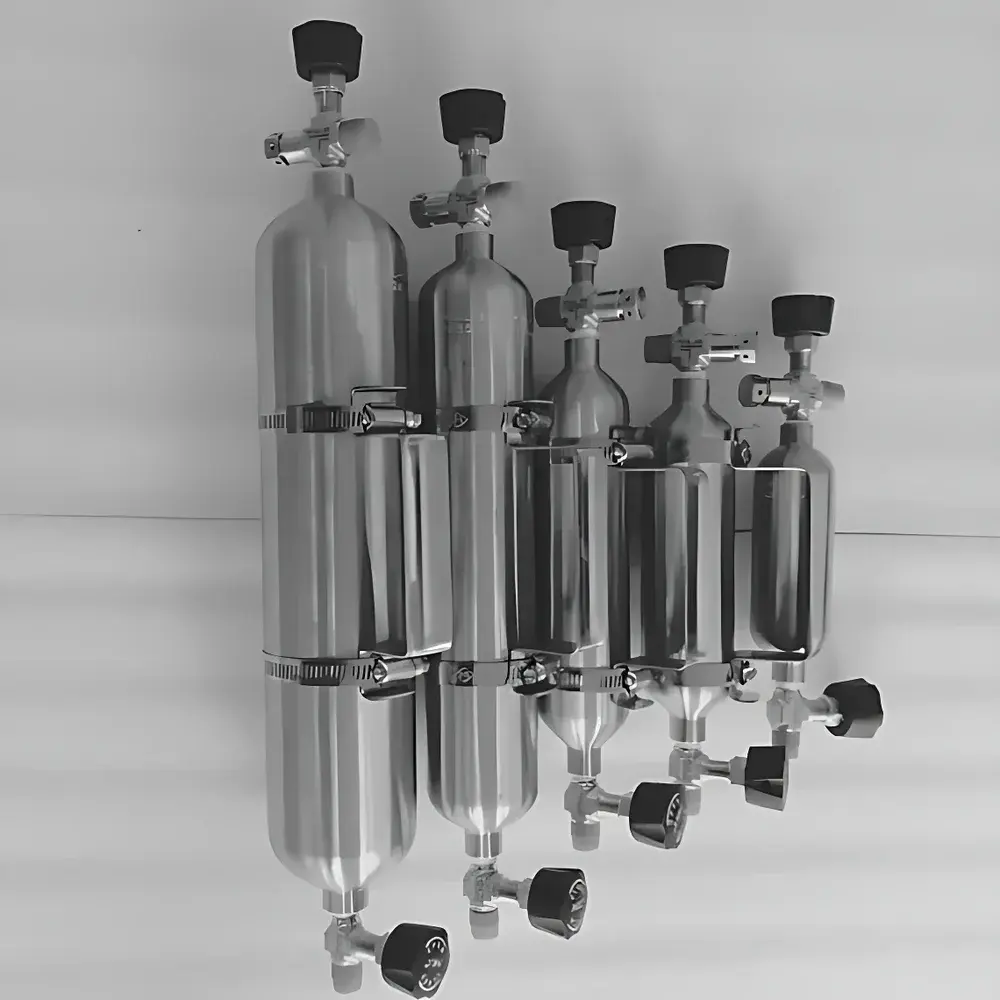
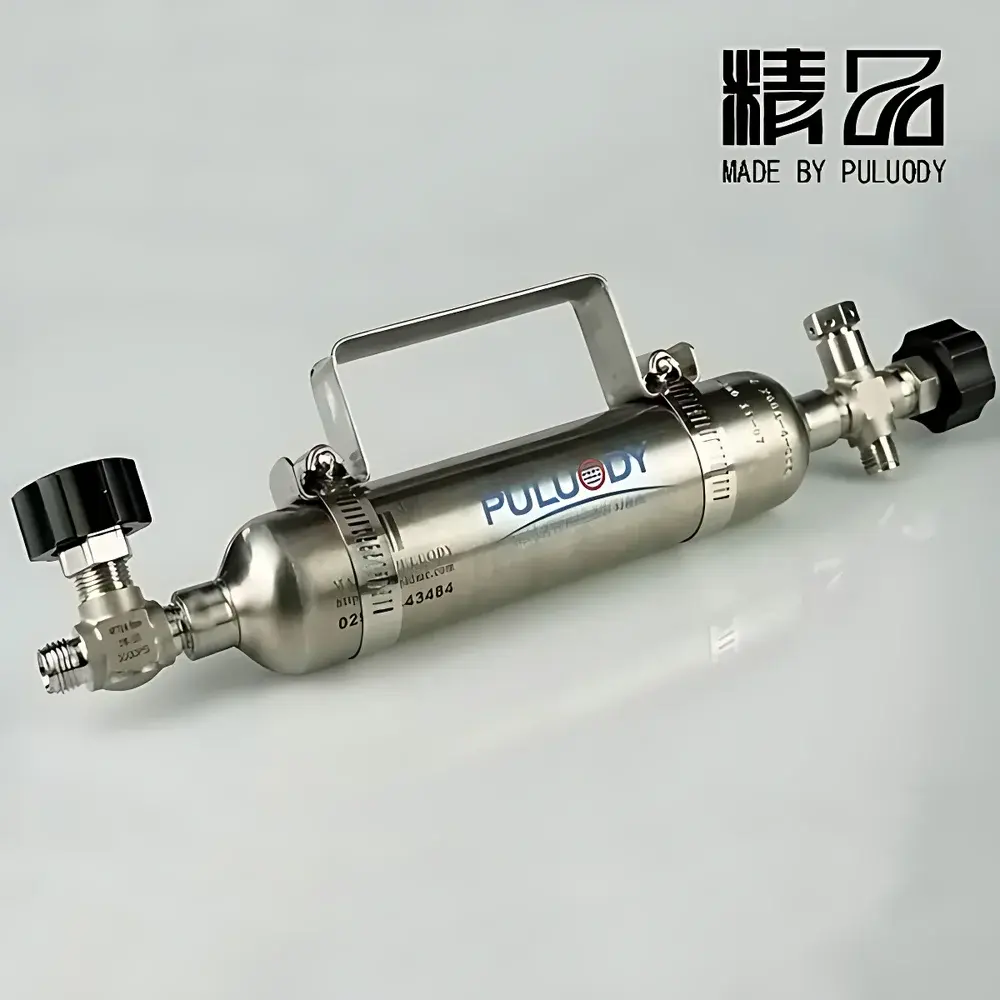
PULUODY PULL-GP20-1000 LNG Sampling Cylinder
| Brand | PULUODY |
|---|---|
| Origin | Shaanxi, China |
| Manufacturer Type | Authorized Distributor |
| Origin Category | Domestic |
| Model | PULL-GP20-1000 |
| Instrument Type | Standard Gas Sampler |
| Configuration | Single-Port Sampling Cylinder |
| Flow Range | 0–20 L/min |
| Maximum Sampling Pressure | 0–20 MPa |
| Flow Stability | ±1% FS |
| Flowmeter Accuracy | ±1% FS |
| Service Life Under Max Flow & Backpressure | ≥100,000 cycles |
| Continuous Operation at Max Flow & Backpressure | 24 h |
| Working Pressure Range | 4–20 MPa |
| Burst Pressure Rating | 7–38 MPa |
| Operating Temperature Range | –60 °C to +80 °C |
| Cylinder Material | ASTM A240 UNS S31603 (316L stainless steel) or GB/T 1220 1Cr18Ni9Ti |
| Internal Coating (Optional) | PTFE lining |
| Pressure Gauge | Integrated bourdon-tube gauge with direct-read dial |
| Valve Configuration | Dual-valve assembly — one standard needle valve, one pressure-relief safety valve with burst disc |
| Mounting Bracket | 304 stainless steel support stand (optional) |
| Volume Capacity | 1000 mL |
| Compliance | SH/T 0233–1992, SY/T ZJ1045 |
Overview
The PULUODY PULL-GP20-1000 LNG Sampling Cylinder is a high-integrity, pressure-rated sampling vessel engineered for the safe, representative, and traceable collection, containment, and transport of liquefied natural gas (LNG), liquefied petroleum gas (LPG), compressed natural gas (CNG), and other volatile hydrocarbon-based fluids under elevated pressure and cryogenic-to-ambient temperature conditions. Designed in strict accordance with SH/T 0233–1992 “Method for Sampling Liquefied Petroleum Gases” and SY/T ZJ1045 technical specifications, this cylinder employs a robust single-port configuration with dual-valve architecture—featuring both a precision-machined stainless steel needle valve and a certified pressure-relief safety valve integrated with a rupture disc—to ensure operational safety during pressurization, sampling, and depressurization phases. Its core function relies on passive phase equilibrium sampling: when connected to a pressurized source, the cylinder fills to match system pressure and temperature, enabling representative capture of both liquid and vapor phases without phase separation or compositional bias.
Key Features
- Pressure-rated construction compliant with ASME B31.4 / B31.8 design margins: working pressure range 4–20 MPa, minimum burst pressure 38 MPa (per EN 13445-3 validation protocol)
- ASTM A240 S31603 (316L) seamless cylinder body with full material certification (MTR) and PMI verification; alternative grade 1Cr18Ni9Ti available per GB/T 1220 for specific regional compliance
- Optional electropolished interior surface with uniform PTFE coating (≥25 µm thickness, ASTM D1747 adhesion class A) to minimize analyte adsorption—critical for trace sulfur, mercury, and aromatic compound analysis
- Integrated 0–25 MPa stainless steel bourdon-tube pressure gauge (EN 837-1 Class 1.0 accuracy) mounted directly on the inlet valve block for real-time internal pressure monitoring
- Dual-valve system: primary needle valve (SS316, ISO 5211 F05 actuation interface) for controlled flow regulation; secondary safety valve with calibrated rupture disc (ASME BPVC Section VIII Div. 1 compliant) for overpressure protection
- Modular accessory compatibility: accepts high-pressure metal hoses (316L braided, 20 MPa rated) or chemically resistant nylon transparent tubing (for visual flow confirmation); optional 304 stainless steel laboratory mounting bracket with anti-slip base and V-groove cradle
Sample Compatibility & Compliance
The PULL-GP20-1000 is validated for use with saturated and unsaturated hydrocarbons—including methane, ethane, propane, butane, isobutane, and their blends—within defined thermal and chemical boundaries. It is compatible with media exhibiting no chloride-induced stress corrosion cracking (SCC) risk against 316L at operating temperatures from –60 °C (cryogenic LNG handling) to +80 °C (warm vapor-phase sampling). The cylinder meets mandatory requirements for field and laboratory gas sampling under ISO 8573-1 (compressed air purity classes), ASTM D1265 (sampling of LPG), and EN 15377-1 (transportable gas containers for analysis). All units undergo hydrostatic proof testing at 1.5× maximum allowable working pressure (MAWP), witnessed and documented per ISO/IEC 17025-accredited procedures. Traceability includes serial-numbered calibration certificates, pressure test reports, and material heat lot documentation.
Software & Data Management
While the PULL-GP20-1000 is a mechanical sampling device with no embedded electronics, it is fully compatible with digital laboratory workflows. Each unit ships with a QR-coded asset tag linked to a downloadable PDF dossier containing full technical specifications, test records, compliance declarations, and maintenance log templates. When used in conjunction with chromatographic or spectroscopic analyzers (e.g., GC-FID, GC-MS, FTIR), sample metadata—including fill date, source pressure/temperature, operator ID, and cylinder serial number—can be entered into LIMS platforms (e.g., LabWare, Thermo Fisher SampleManager) supporting 21 CFR Part 11 audit trails. Optional RFID-enabled brackets allow automated equipment check-in/out tracking in GLP/GMP environments.
Applications
- Upstream: Wellhead gas composition verification, flare gas characterization, and custody transfer sampling at LNG liquefaction terminals
- Midstream: Pipeline quality monitoring (H₂S, CO₂, water dew point), compressor station feedstock analysis, and odorant concentration validation
- Downstream: Refinery LPG blending control, petrochemical feedstock specification checks (e.g., ASTM D2158), and fuel gas certification for turbine operations
- Environmental: Ambient air VOC monitoring via canister-based SUMMA methodology adaptation (with appropriate passivation and blank validation)
- Standards laboratories: Reference material preparation, interlaboratory comparison studies, and method validation per ISO/IEC 17025 clause 7.2.2
FAQ
Is the PULL-GP20-1000 suitable for cryogenic LNG sampling at –162 °C?
No. Its specified operating temperature range is –60 °C to +80 °C. For true cryogenic LNG applications, specialized vacuum-jacketed cylinders with aluminum alloy construction and extended neck designs are required.
Can the PTFE coating be applied post-manufacture?
No. PTFE lining must be applied during the final surface preparation stage prior to final assembly and pressure testing to ensure coating integrity and adhesion validation per ASTM D1747.
Does the cylinder include a volume calibration certificate?
Yes. Each unit is supplied with a volumetric calibration report traceable to NIM (National Institute of Metrology, China), stating nominal capacity (1000 mL ±0.5%) and gravimetric verification data.
What maintenance intervals are recommended for the valves and pressure gauge?
Valves require cleaning and leak testing after every 50 sampling cycles or quarterly—whichever occurs first. Pressure gauges shall be recalibrated annually per ISO 9001 clause 7.1.5.2.
Is third-party inspection documentation available upon request?
Yes. SGS, BV, or TÜV inspection reports—including radiographic weld inspection (RT), ultrasonic thickness mapping (UT), and hydrotest witnessing—can be provided for export or regulatory submission purposes.







