
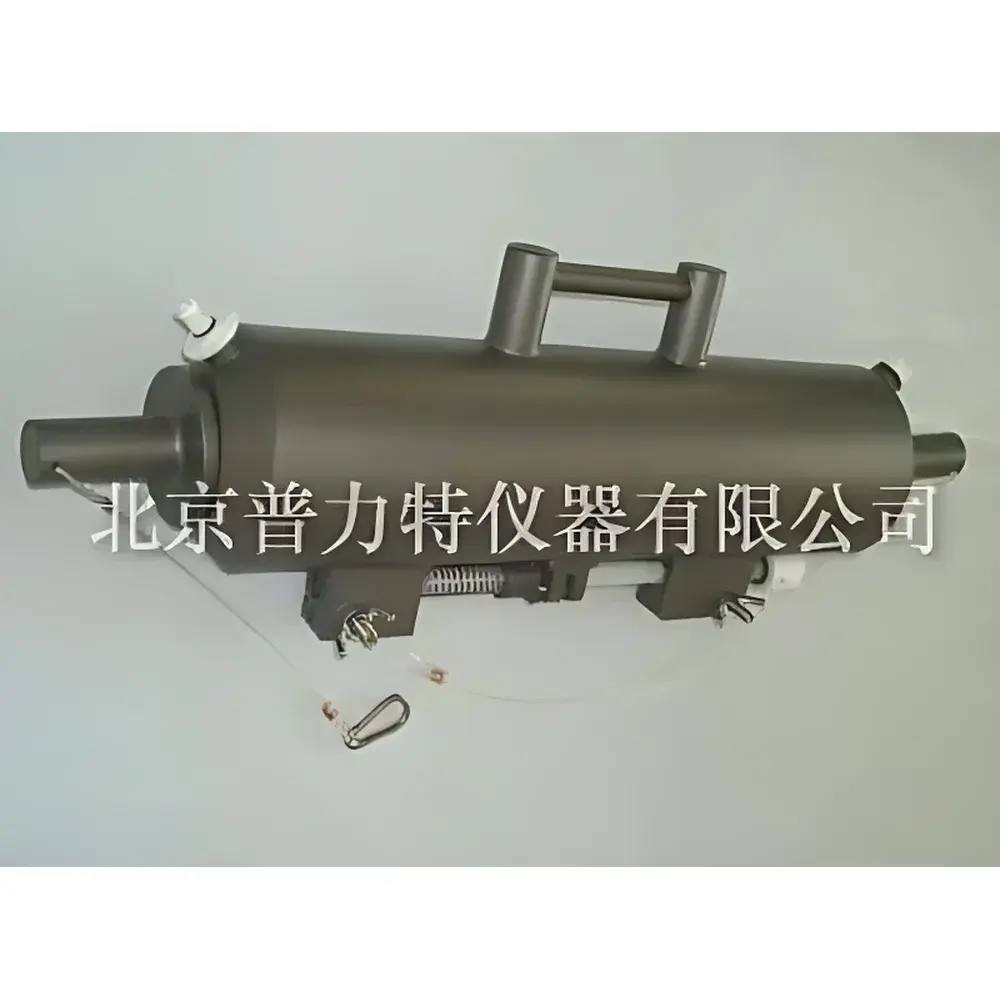

QCC15 Niskin-Style Snap-Closure Water Sampler
| Origin | Beijing, China |
|---|---|
| Manufacturer Type | Authorized Distributor |
| Origin Category | Domestic (China) |
| Model | QCC15 |
| Pricing | Upon Request |
| Configuration | Horizontal & Vertical Mounting Options |
| Material | UPVC (Unplasticized Polyvinyl Chloride) |
| Volumes | 2.5 L, 5 L, 10 L |
| Bottle Drain Time | 2–8 minutes |
| Release Weight | 304 Stainless Steel Trigger Weight |
| Multi-Unit Deployment | Compatible with cascaded hammer-release systems |
Overview
The QCC15 Niskin-Style Snap-Closure Water Sampler is an engineered field instrument designed for discrete depth water sampling in freshwater and marine environments. Based on the internationally recognized Niskin bottle principle, it operates via a mechanical snap-closure mechanism activated by a stainless steel release weight (hammer), enabling reliable, contamination-minimized sample capture at predetermined depths. Unlike continuous-flow or peristaltic samplers, the QCC15 captures a single, representative water parcel without mixing across strata—critical for vertical profiling of dissolved oxygen, nutrient gradients, chlorophyll-a distribution, trace metal speciation, and microbial community stratification. Its robust UPVC construction ensures chemical inertness toward common aqueous analytes (e.g., nitrate, phosphate, ammonium, heavy metals), while maintaining structural integrity under hydrostatic pressure up to 200 m (dependent on configuration and deployment method). The device is compatible with standard oceanographic winch systems, A-frame launches, and hand-deployed rope-and-pulley setups, supporting both research-grade limnological surveys and routine regulatory monitoring programs.
Key Features
- Mechanically triggered snap-closure system using a 304 stainless steel release weight—no electronics, batteries, or pressure sensors required, ensuring operational reliability in remote or low-infrastructure settings.
- Dual mounting configurations: horizontally oriented for integration into rosette samplers or CTD frames; vertically suspended for standalone rope-deployed profiling.
- Three calibrated volume options (2.5 L, 5 L, 10 L) allow optimization between analytical sensitivity (larger volumes for low-concentration analytes) and logistical constraints (weight, handling, storage).
- UPVC body exhibits high resistance to UV degradation, hydrolysis, and adsorption of organic and inorganic solutes—validated per ASTM D1784 for PVC compound performance in aqueous exposure.
- Cascadable design supports synchronized multi-depth sampling: multiple QCC15 units can be daisy-chained on a single line with staggered hammer releases, reducing vessel time and inter-sample contamination risk.
- Drain time of 2–8 minutes (volume- and temperature-dependent) enables efficient post-retrieval sample transfer while minimizing headspace oxidation or CO₂ exchange during handling.
Sample Compatibility & Compliance
The QCC15 is suitable for collecting unpreserved, unfiltered water samples intended for subsequent analysis of physical, chemical, and biological parameters—including but not limited to pH, conductivity, turbidity, dissolved organic carbon (DOC), total phosphorus (TP), nitrate+nitrite (NO₃⁻+NO₂⁻), silicate, alkalinity, bacterial abundance, and eukaryotic plankton enumeration. Its UPVC material meets USP Class VI biocompatibility requirements for non-invasive contact with environmental water matrices and complies with ISO 5667-3:2018 (Water quality — Sampling — Part 3: Guidance on preservation and handling of water samples). While not intrinsically certified for GLP or GMP environments, its mechanical simplicity and traceable deployment protocol support audit-ready documentation when integrated into SOPs aligned with EPA Method 1664, ISO 17294-2, or national surface water monitoring standards (e.g., China’s HJ 493-2019).
Software & Data Management
As a purely mechanical sampling device, the QCC15 does not incorporate embedded firmware, telemetry, or digital interfaces. Depth registration, deployment timing, and sample identification are managed externally via field logbooks, GPS-synchronized timestamps, or integration with CTD data acquisition systems (e.g., Sea-Bird Electronics SBE 19plus, RBRconcerto). Users are advised to maintain chain-of-custody records including: deployment/retrieval time (UTC), GPS coordinates, nominal target depth, actual measured depth (if pressure sensor-equipped), ambient water temperature, and operator ID. Such metadata aligns with FAIR data principles (Findable, Accessible, Interoperable, Reusable) and satisfies minimum reporting requirements under EU WFD (2000/60/EC) and USGS NWIS protocols.
Applications
- Lake and reservoir stratification studies (epilimnion/hypolimnion profiling)
- Riverine cross-sectional and longitudinal nutrient flux assessments
- Coastal upwelling and estuarine mixing zone characterization
- Calibration and validation of in-situ optical sensors (e.g., fluorometers, transmissometers)
- Preparation of reference samples for laboratory method validation (e.g., ISO/IEC 17025 accredited labs)
- Educational field courses in aquatic science and environmental engineering
FAQ
Is the QCC15 suitable for deep-ocean deployment?
It is rated for routine use down to 200 m depth with proper rope selection and tension management; beyond this, custom reinforcement or titanium hardware may be required.
Can the UPVC body withstand acidic or saline conditions over repeated use?
Yes—UPVC demonstrates long-term stability in pH 2–12 and full-strength seawater, as confirmed by accelerated aging tests per ISO 11357-3.
How is depth accuracy ensured during deployment?
Depth is inferred from rope length marked at 1-m intervals and verified against concurrent CTD pressure readings; no onboard depth sensor is included.
Does the sampler require calibration or periodic maintenance?
No calibration is needed; however, visual inspection of O-rings, hinge pins, and closure latches is recommended before each deployment cycle.
Are replacement parts (e.g., hammers, caps, seals) available separately?
Yes—304 stainless steel hammers, UPVC end caps, and EPDM sealing gaskets are stocked and supplied under part numbers QCC15-HM, QCC15-CAP, and QCC15-SEAL respectively.
Related Products







